

If you’re seeing black ants in your kitchen, along your patio, or crawling near baseboards, you might wonder what type of ant you’re dealing with. In Louisiana, two of the most common species of ants are pavement ants and carpenter ants.
While both can become a serious ant problem, they behave very differently. Pavement ants are mostly a nuisance, but carpenter ants can cause structural damage if left untreated. Knowing the difference helps homeowners decide what to do next and when to call for pest control services in Louisiana.
Here are the main differences and what they mean for your home or business.
Key Takeaways
- Carpenter ants nest in wood and can cause structural damage over time.
- Pavement ants nest under concrete and are mainly a nuisance.
- Sawdust or frass often signals a carpenter ant infestation.
- Trails near driveways and patios usually point to pavement ants.
- Professional pest control provides accurate identification and targeted treatment, with retreat services available under applicable service agreements.
Key Differences: Pavement vs Carpenter Ants
Pavement ant or carpenter ant?
Two common Louisiana ants, told apart by size, nesting habits, and the damage they can do.
In South Louisiana, the heat and humidity keep ants active year-round. Knowing the difference between pavement ants and carpenter ants can save you from bigger problems later. While both may look like simple black ants at first glance, their sizes, nesting habits, and potential for damage differ significantly.
Size and appearance
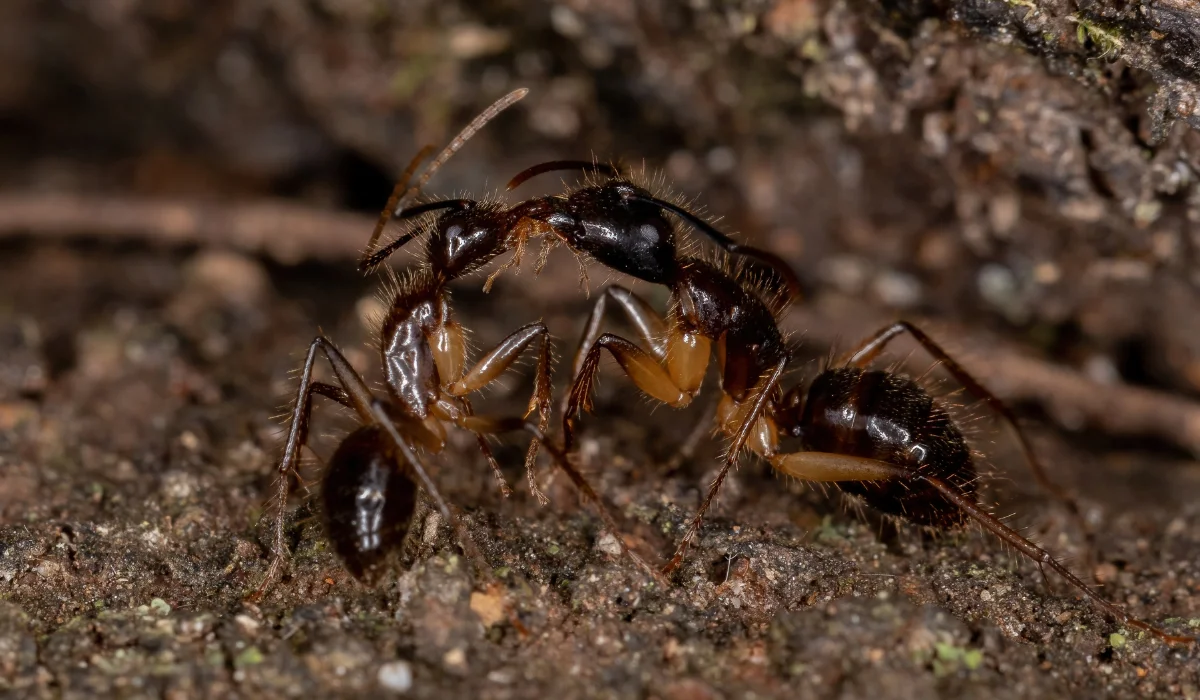
Carpenter ants are much larger than pavement ants. Black carpenter ants can grow up to half an inch long. They are usually dark brown or black ants with a rounded thorax and a smooth back.
Pavement ants are smaller, about 1/8 inch long. Pavement ant workers often appear dark brown to black and have two visible nodes between their body segments. If you see ants in large numbers near driveways or sidewalks, they are often pavement ants, also known as Tetramorium caespitum.
Nesting behavior
Carpenter ants nest in wood. They prefer decaying wood, wall voids, basements, and wooden structures. Unlike termites, carpenter ants do not eat wood. Instead, they tunnel through it to create nesting sites.
As they dig, they push out wood shavings and frass, which looks like fine sawdust. According to the University of Minnesota Extension, frass is one of the clearest signs of a carpenter ant infestation.
Pavement ants build their ant nest in soil under driveways, sidewalks, patios, and foundations. You may notice small piles of sand near cracks in concrete.
Food preferences
Pavement ants feed on greasy foods, crumbs, and sweets inside homes. Outdoors, they gather honeydew from aphids and even feed on dead insects.
Carpenter ants prefer protein-based food sources such as other insects, though they will also eat sugary items and honeydew. When winged ants appear indoors, especially near lights, it may signal an established ant colony inside the structure.
Food-seeking ants are common in Louisiana homes, especially during warmer months. If you’re dealing with persistent kitchen activity, understanding how to get rid of Argentine ants at home can also give you insight into why ants follow certain scent trails and return to the same areas.
Quick ID: What to Look for at Home
In Louisiana’s humid climate, ants can spread quickly once they settle in. If you spot these signs early, you can stop the infestation before it spreads.
Sawdust or wood debris
If you see sawdust or small wood shavings under window frames or near baseboards, you may have carpenter ants. This material, called frass, is a sign that they are hollowing out wood.
Pavement ants do not create sawdust because they do not tunnel in wood.
Trails near driveways and patios
Pavement ants often travel along driveways, sidewalks, or patios, leaving visible trails. They enter homes through cracks and search for food sources.
If your ant infestation starts outside, near concrete areas or pavement, pavement ants are likely the cause.
Ants inside wall voids or basements
Carpenter ants often nest inside wall voids, basements, or areas with moisture problems. If you hear faint rustling in the walls or see large black ants indoors at night, it may indicate ant activity inside wall voids.
Other ant species in Louisiana, such as odorous house ants, pharaoh ants, acrobat ants, or even sugar ants, may also enter homes. Odorous house ants give off a rotten coconut smell when crushed. Correct identification is key before starting ant control.
Which One Is the Bigger Risk
Some ant infestations cause more damage than others. In South Louisiana, where moisture can already weaken wood around your home, knowing which ant you’re dealing with matters.
Structural damage risk
Carpenter ants pose a bigger risk because they can weaken wooden structures over time. A large carpenter ant infestation can contribute to damage in wooden structures such as support beams or window frames, especially where moisture or decaying wood is present.
They are not as destructive as termites, but they can still cause costly repairs if left unchecked.
Nuisance risk
Pavement ants typically do not cause structural damage to wooden structures.
However, a growing ant colony can lead to new colonies forming nearby, increasing the infestation around your home or commercial property.
Misidentification risk
Some homeowners confuse pavement ants or carpenter ants with fire ants, which are aggressive and sting. Fire ants are common in Louisiana yards, but behave differently.
If you are unsure, it is best to contact a pest control professional for proper identification and treatment.
What to Do Next Based on What You See
After you figure out which ant you have, look at where they’re active and how many you’re seeing. Acting early can prevent a small issue from turning into a larger infestation.
If you see small ants near concrete
Small pavement ants may respond to properly placed ant baits, though results vary depending on the species of ants and the size of the ant infestation. Keep food sealed and clean up crumbs quickly.
If the ant problem continues, professional ant control services focus on identifying nesting areas and applying targeted treatments to reduce activity and help prevent future issues.
If you see large black ants indoors
Large black carpenter ants indoors, especially in basements or near wooden structures, should not be ignored. Look for signs of frass or moisture-damaged wood.
At this point, contacting an exterminator is the safest option. A trained pest control professional can inspect nesting sites and apply targeted treatments to help prevent further structural impact.
If you see winged ants
Winged ants inside often mean an established ant colony nearby. Indoor swarming can occur with carpenter ants, pavement ants, or pharaoh ants. When ants begin swarming inside your home, it often indicates a mature ant colony nearby that requires professional help.
Schedule an Ant Inspection for Confirmation
Many ant problems look the same at first, but some can damage your home while others are mostly a nuisance. If activity continues, spreads to new areas, or keeps returning after DIY attempts, it’s time to take the next step.
At LaJaunie’s Pest Control, we serve homeowners across southeast Louisiana with customized ant control solutions designed for our climate and construction styles. From slab homes in Baton Rouge to raised homes in Thibodaux and Houma, treatments are tailored to the conditions around your property.
If ants keep coming back, it’s time to schedule an inspection.
Contact us today to schedule your ant inspection.
FAQs
How can I tell if I have carpenter ants or pavement ants?
Carpenter ants are larger and often leave behind frass or wood shavings. Pavement ants are smaller and usually nest under driveways or patios. Size and nesting location are the biggest clues.
Are carpenter ants as dangerous as termites?
Carpenter ants do not eat wood like termites, but they can still cause structural damage by tunneling through wooden structures over time.
When should I call pest control for an ant infestation?
If you see winged ants, large black ants indoors, or signs of wood damage, contact a pest control professional right away to prevent the infestation from spreading.