

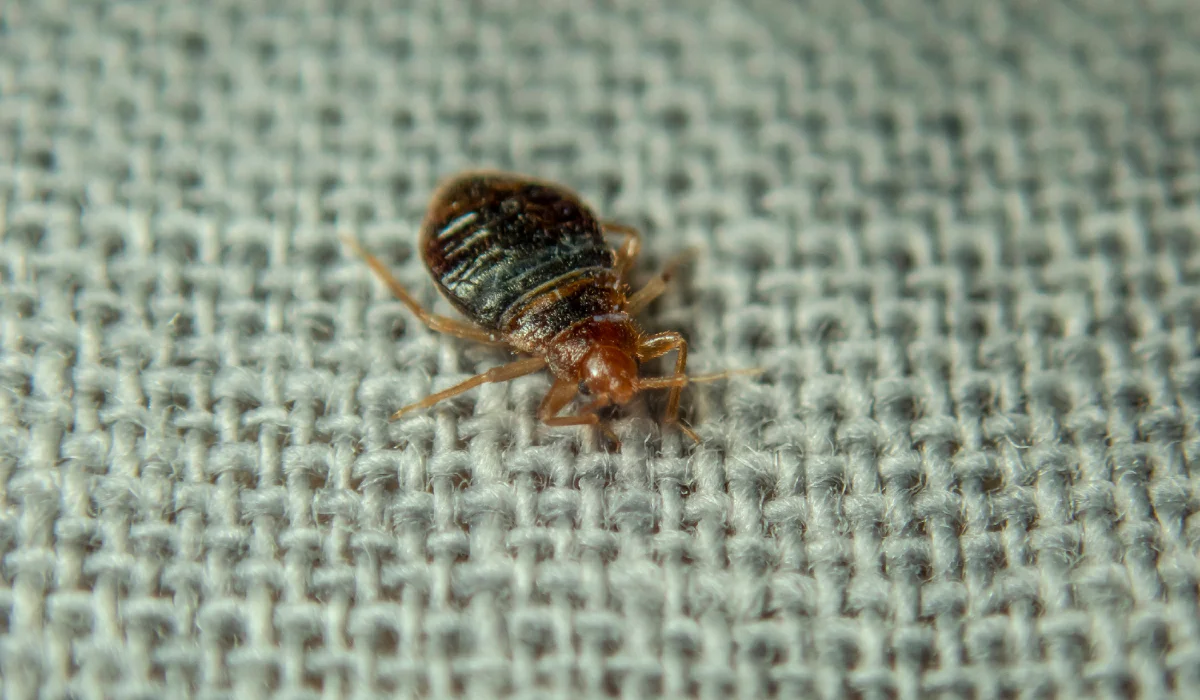
You know what’s worse than finding bed bugs in your bed? Finding out they may be crawling around in your carpet. If you are wondering “can bed bugs live in carpets”, the answer is yes.
Carpet is usually not their first choice. Bed bugs prefer tight hiding places close to where you sleep or rest, such as mattresses, box springs, bed frames, and furniture. But when an infestation spreads or those hiding areas are disturbed, they can also turn up along carpet edges, baseboards, and other protected spots near the floor.
For homeowners across southeast Louisiana, spotting those signs early can help you understand how far the problem may have spread. Here is what to look for, what you can do yourself, and when a more thorough inspection makes sense.
Key Takeaways
- Bed bugs can hide in carpet, especially along edges, baseboards, and areas close to beds or furniture.
- Carpet is usually a secondary hiding place. Bed bugs prefer cracks and crevices near places where you sleep or rest.
- Vacuuming and other home methods may remove some visible bugs, but they can miss eggs and hidden activity.
- If you find bed bugs in several areas, a full-room inspection can help determine how far the infestation has spread.
- Pest control services can treat every hiding spot and offer fast service, follow-ups, and a free quote.
Do Bed Bugs Hide in Carpet?
Yes, bed bugs can live in your carpet, but they would rather stay closer to their food source.
They prefer crevices in bed frames, couches, mattresses, and box springs, but they can use carpet fibers and the gaps around carpet edges as hiding places. This becomes more likely when an infestation is spreading or their usual hiding areas have been disturbed.
Carpets Offer Enough Shelter to Get By
Your carpet contains plenty of small spaces where bed bugs can stay out of sight. Young bed bugs and eggs can be especially difficult to spot near carpet edges, baseboards, and corners where routine vacuuming may not reach.
If a bed bug problem is already underway, you may find live bugs, eggs, shed skins, or dark spotting around the carpeted edges of a room. The U.S. Environmental Protection Agency (EPA) recommends checking cracks, crevices, furniture, and other areas close to where people sleep.
Bed Bugs Are Drawn to the Nearest Food Source
In pest control terms, you are the food source. That is why bed bugs typically stay close to beds and furniture.
If you spend time lying on a carpeted floor, use a floor mattress, or regularly sit close to the ground, the surrounding carpet can become part of the area where bed bugs hide. Finding one there should prompt you to inspect the nearby bed, furniture, and baseboards instead of treating the carpet as an isolated problem.
Why Bed Bugs Can Stay Active Year-Round in Louisiana
Bed bugs can remain active inside Louisiana homes throughout the year. Unlike outdoor pests that may slow down with seasonal temperature changes, bed bugs live indoors near people, furniture, and sleeping areas.
Louisiana’s humidity does not cause bed bugs to move into carpet, and carpet itself does not attract them. What matters more is access to people and protected hiding places. Climate-controlled homes give bed bugs suitable indoor conditions during both hot summers and mild winters.
That means homeowners in Thibodaux, Houma, New Orleans, Baton Rouge, Mandeville, and other southeast Louisiana communities should not expect cooler weather to make an indoor infestation disappear.
How to Check Whether Bed Bugs Are in Your Carpet
If you suspect bed bugs can live in your carpets, inspect the entire sleeping area instead of looking only at the floor. Use a flashlight, move slowly, and avoid carrying furniture or bedding into another room while you check.
1. Check the mattress first.
Look along seams, folds, piping, labels, and the areas closest to the headboard.
2. Inspect the box spring.
Check corners, edges, seams, staples, and the underside.
3. Look over the bed frame and headboard.
Pay close attention to joints, screw holes, cracks, and places where two pieces meet.
4. Inspect the carpet perimeter.
Shine your flashlight along baseboards, carpet edges, and the floor directly around the bed.
5. Check nearby furniture.
Look around nightstands, dressers, couches, chairs, and furniture legs.
6. Watch for more than live bugs.
Dark spotting, shed skins, small eggs, and empty egg casings can also point to bed bug activity.
7. Take a photo of anything suspicious.
A clear image can help with identification before you begin moving or treating items.
What to Do If Bed Bugs Are in the Carpet
Once bed bugs get into your carpet, focus on the surrounding room rather than the floor alone. They can hide in carpet edges, furniture, mattresses, box springs, bed frames, and small cracks nearby.
The EPA bed bug control guidance recommends using several control steps together instead of relying on one method.
Incorporate DIY Carpet Cleaning
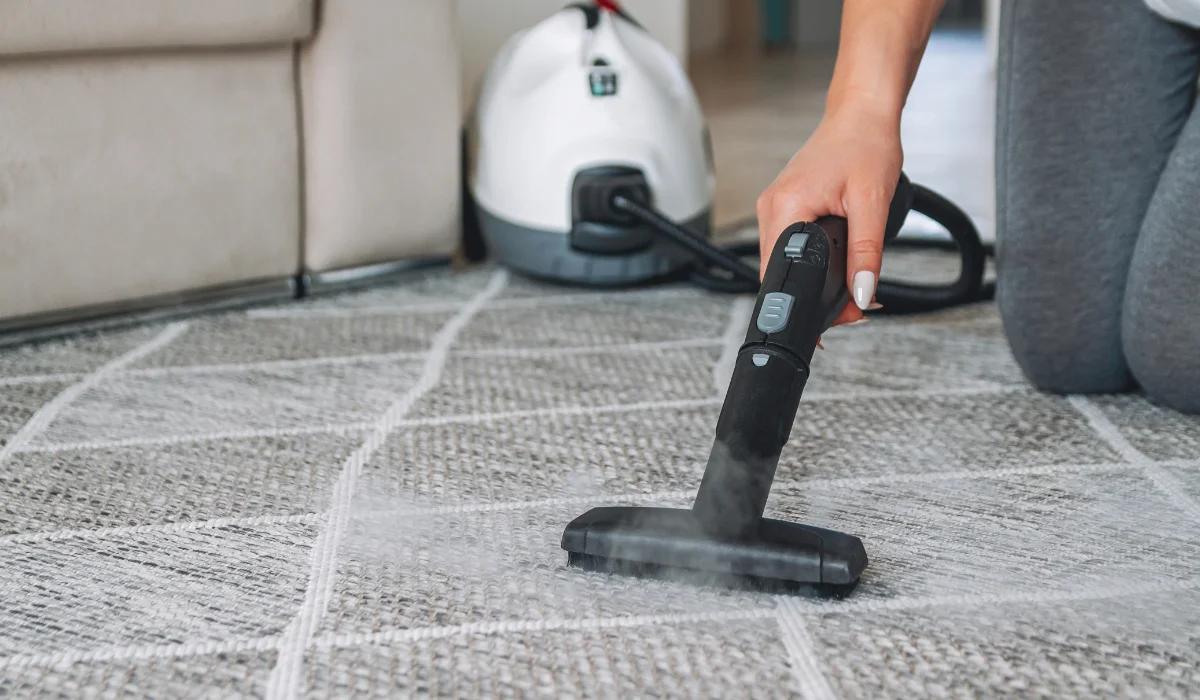
Many homeowners reach for a vacuum first. Vacuuming can remove some visible bed bugs, eggs, shed skins, and debris, especially around carpet edges and baseboards.
Pay close attention to the areas beside the bed and around furniture legs. When you finish, contain the vacuum contents so bugs cannot crawl back into the home.
Vacuuming helps reduce what you can reach, but it does not address bugs or eggs hidden inside furniture, wall gaps, or other protected areas.
Use Steam Carefully
Steam can kill bed bugs when enough heat reaches them directly. The challenge is getting that heat into every hiding place without moving too quickly or missing cracks, furniture joints, and carpet edges.
Follow the steamer manufacturer’s directions, and avoid using steam where heat or moisture could damage materials. Steam is better treated as one part of a broader bed bug plan rather than a stand-alone fix.
Try Diatomaceous Earth

A lot of folks turn to diatomaceous earth when looking up how to get rid of bed bugs naturally. This fine powder can damage the exoskeleton of bed bugs and other critters.
Consider using diatomaceous earth around baseboards and carpet edges. It can affect bed bugs that cross properly applied material, but it should not be treated as a complete solution for an established infestation. It’s a tool, not a complete solution.
Follow the product label exactly and avoid leaving loose dust where children or pets could disturb it. The EPA recommends using only products labeled for bed bug control and following all directions.
Know What You’re Dealing With
One of the biggest mistakes homeowners make is misidentifying pests. Bed bug bites can look similar to flea bites, while carpet beetles and other small pests may also show up around carpet. Bites alone are not enough to confirm bed bugs because people can react differently.
Look for physical signs of bed bugs such as dark spotting, shed skins, eggs, egg casings, and live bugs near sleeping areas. If you are unsure what you found, professional identification can help you avoid treating the wrong pest.
Stop the Spread With Professional Help
If you have found bed bugs around the carpet, mattress, bed frame, or nearby furniture, the problem may extend beyond the spot where you first noticed them. Female bed bugs can continue laying eggs while an infestation is active, which is one reason early inspection matters.
LaJaunie’s bed bug service focuses on the hiding areas where activity is found, including bed frames, headboards, box springs, mattresses, furniture, cracks, and other nearby spaces. The service process also includes preparation instructions and a follow-up visit to check the affected areas again.
If you keep finding activity after vacuuming or see signs in more than one part of the room, scheduling an inspection can help determine how far the infestation has spread.
DIY vs. Professional Bed Bug Treatment
When bed bugs live in carpets, the main challenge is finding every hiding place. DIY bed bug control methods can help with bugs that are exposed. Professional service can address the carpet, furniture, bed, box spring, cracks, and other areas as part of one infestation.
| Approach | What It Can Help With | Main Limitation |
| Vacuuming | Removes some exposed bugs, eggs, shed skins, and debris | Cannot reach every crack or hiding place |
| Steam | Can kill bed bugs reached with sufficient heat | Easy to miss hidden bugs and eggs |
| Diatomaceous earth | Can affect bugs that cross treated areas | Works slowly and should not be used as the only method |
| Professional inspection and treatment | Addresses several hiding areas throughout the room | Requires preparation and scheduled service |
| Follow-up service | Checks for continued activity after the first visit | Works best when preparation instructions are followed |
LaJaunie’s bed bug process includes inspecting and treating areas such as molding, cracks, bed frames, headboards, box springs, mattresses, side tables, and other nearby hiding areas when needed. A follow-up visit is also part of the treatment process.
Getting Ahead of Bed Bugs in Your Louisiana Home
So, can bed bugs live in carpets? Yes, but the carpet is usually only one part of the area you need to inspect. Check carpet edges, baseboards, mattresses, box springs, bed frames, and nearby furniture for live bugs, eggs, shed skins, and dark spotting.
If you keep finding signs or the activity has spread beyond one location, earlier treatment can limit the amount of time bed bugs have to move into other hiding places. LaJaunie’s Pest Control serves homes across southeast Louisiana, including Thibodaux, Houma, New Orleans, Baton Rouge, Mandeville, Covington, Slidell, Metairie, Kenner, and surrounding communities. Contact LaJaunie’s to schedule an inspection and find out what approach fits your home.
Bed Bugs in Carpet: FAQs
Do bed bugs lay eggs in carpet?
Yes. Bed bugs can lay eggs along carpet edges, under baseboards, and in protected gaps near sleeping areas. They are more likely to use tight hiding places than open sections of carpet. If you find eggs near the floor, inspect the bed, furniture, and nearby cracks as well.
Can you vacuum bed bugs out of carpet?
Vacuuming can remove some bed bugs, eggs, shed skins, and debris from accessible carpet. Focus on edges, baseboards, and areas near the bed. Vacuuming alone usually cannot reach every hiding place, so continued signs after cleaning may mean the infestation extends into furniture or nearby cracks.
How do I know if bed bugs are in my carpet?
Check the edges of the carpet near beds and furniture for live bugs, dark spotting, shed skins, eggs, and empty egg casings. Then inspect the mattress, box spring, headboard, and nearby furniture. Because other small pests can look similar, confirm the identification before choosing a treatment.