

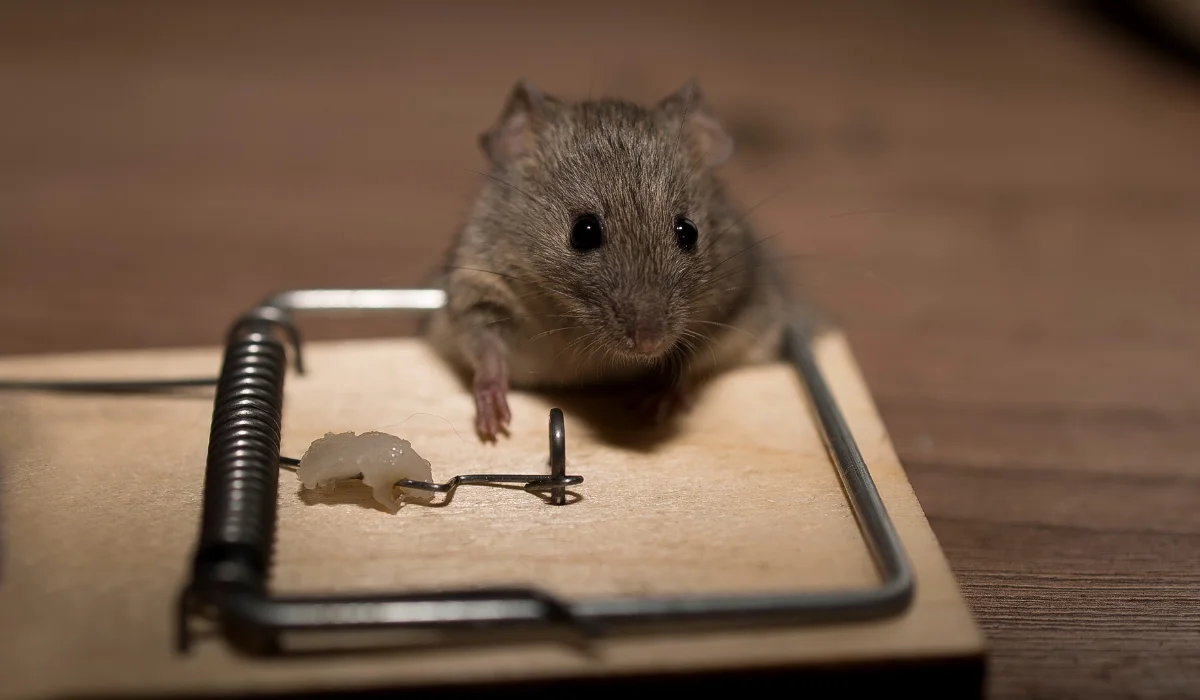
Mice are a common problem in New Orleans homes. Warm weather and older homes make it easy for mice to find food and shelter indoors. They often stay close to food sources and quiet corners.
Many homeowners notice signs of mice at night. You might find droppings, hear scratching near cabinets, or see gnaw marks on food boxes. These are early signs of mice; if ignored, they can lead to a mouse infestation.
Properly placing a mouse trap can help you catch a mouse quickly. This guide shows where to place mouse traps, common mistakes to avoid, and when to call rodent control in New Orleans.
Key Takeaways
- Effective mouse trap placement in kitchens depends on where mice already travel, feed, and hide.
- Baseboards, appliance gaps, cabinet edges, and food storage areas often show the most mouse activity.
- Kitchen traps often underperform when placement ignores travel paths, entry points, or signs of a larger infestation.
- Professional pest control can improve results by matching trap placement to the entire mouse problem, not just a single visible area.
What Effective Mouse Trap Placement Looks Like in Kitchens
Good kitchen trap placement is based on mouse behavior. In most homes, mice do not often cross open spaces. They stay close to edges, cover, and food sources, which is why mouse trap placement matters so much.
Placement Near Baseboards and Edges
Baseboards are among the main travel routes for a house mouse.
In kitchens, mice often move along walls, cabinet edges, and tight spaces where they feel protected. This is why effective trap placement usually focuses on the edges rather than the middle of the room.
A pest control team may place mouse traps where mouse activity is most likely, especially in areas with droppings, gnaw marks, or other signs of mice. In many cases, snap traps are set perpendicular to the wall so the end of the trap meets the travel path.
Placement Near Warm and Hidden Areas
Warm, hidden areas often support a mouse infestation.
Kitchens have several of these spots, especially behind appliances and near plumbing. These spaces can hold food crumbs, moisture, and cover, all of which help mice settle in.
This is one reason the best mousetrap strategy often includes placing traps near appliances rather than in open spaces. In some cases, a glue trap or glue board may also be used in tight spaces where larger traps do not fit well.
Placement Near Food and Entry Areas
Food sources also shape where professionals place mouse traps.
Pantry shelves, trash areas, and cabinets near pet food often show the strongest activity. Entry points near pipes may also matter, since mice can enter kitchens through small gaps behind walls or under sinks.
When signs point to more than one route, teams may place mouse traps in several locations to increase the chance of catching a mouse. This can matter even more when multiple mice are present.
Why Kitchen Mouse Traps Often Underperform
Kitchen traps do not fail only because of the trap itself. Poor setup, the wrong location, or a larger mouse problem can all hurt results.
The Trap Is in the Wrong Spot
One of the biggest issues is poor trap placement. A mouse trap placed in the center of the floor often gets ignored because mice avoid open spaces. Better results usually come from targeting edges, baseboards, and hidden paths.
The Problem Is Bigger Than It Looks
A few signs of mice can point to a larger infestation. If there are repeated droppings, fresh gnaw marks, or activity beyond the kitchen, the issue may extend into attics, basements, or wall spaces. In that case, one glue board or one rodent trap may not be enough.
The Wrong Method Gets Too Much Weight
Some homeowners focus too much on one option, such as live traps, live-catch tools, or other DIY choices, while missing the bigger picture. Others use rat traps, rodenticides, or the right bait without first checking the travel path.
Even peanut butter will not help much if the trap is in the wrong place.
When Trap Placement Points to a Larger Rodent Problem
Traps help manage a small mouse infestation, but larger problems need full rodent control.
Seeing Multiple Mice
If you see multiple mice, you likely have a mouse infestation. In these cases, one trap will not solve it.
Finding Activity in Other Areas
Mice often move between rooms in search of food and shelter. If you see signs in attics, basements, or storage areas, the infestation may be widespread.
Ongoing Mouse Activity
If you keep catching mice but still see activity, entry points may be open. Seal these gaps and use proper rodent control methods to reduce recurring infestations.
Book Rodent Control in New Orleans
Traps work for small mouse problems, but larger infestations need a stronger plan. Without sealing entry points, mice will keep returning to the kitchen.
LaJaunie’s Pest Control serves New Orleans and southeast Louisiana. Technicians inspect kitchens, attics, and basements to identify entry points and signs of mouse activity.
For many homes, the Healthy Home pest control plan includes rodent service, placing bait stations and traps around the property to reduce rodent activity.
Contact us to reduce mouse activity and fix conditions that cause infestations.
FAQs
Where should you place a mousetrap in the kitchen?
Place mouse traps along baseboards, behind appliances, and near food storage areas. These locations match common mouse travel paths and improve trap success.
What bait works best for mouse traps?
Peanut butter is one of the most effective baits. A small amount placed at the end of the trap can quickly attract mice.
When should you call pest control for mice?
If you see multiple mice, signs of infestation in other rooms, or traps keep filling up, professional pest control services can provide more comprehensive rodent control solutions.