

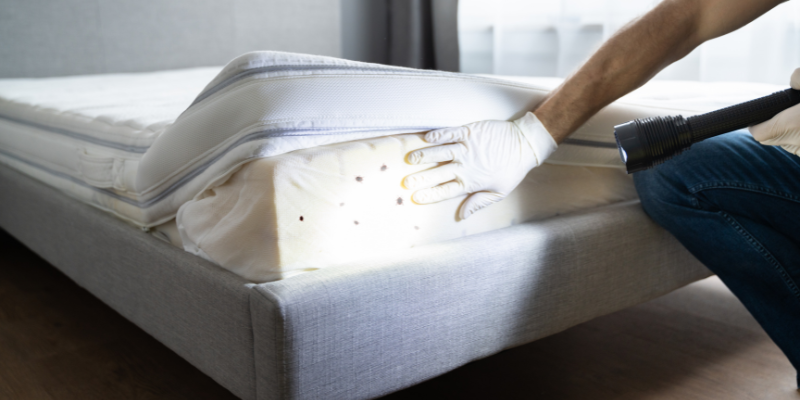
Got bed bugs? Don’t panic! Tackle those sneaky biters with some smart DIY tricks. Start by thoroughly cleaning your place-declutter, vacuum, and wash everything.
But can such measures be safe for the household and effective in the long term? Keep reading to find out.
Key Takeaways
- Bed bugs are challenging to eradicate because they reproduce quickly, survive months without feeding, hide well, are nocturnal, and show increasing pesticide resistance.
- DIY bed bug removal methods may often fail due to the inefficacy of over-the-counter pesticides, difficulty reaching infested areas, and potential health risks from chemical misuse.
- Effective DIY bed bug treatments include using heat to kill bugs at high temperatures, applying diatomaceous earth to dry out bugs, and sealing mattresses with protective encasements.
- It’s best to consult pest control experts when DIY methods fail to control bed bug problems effectively, especially in severe cases that affect sleep and cause discomfort.
WHY BED BUGS ARE HARD TO GET RID OF
Bed bugs in Louisiana are notoriously difficult to control due to their resilience and adaptability. They are masters at evading human attempts to eliminate them.

“When we realized we had bed bugs, every piece of fabric we owned went straight into the dryer. All furniture was pushed to the middle of every room and surrounded by diatomaceous earth powder. We lived out of laundry baskets in the living room on air mattresses for almost an entire year. NO ONE was allowed over. We are not sure we ever truly got rid of them. We replaced our carpets, discarded all furniture, and sold our house. We are truly, all traumatized. ”
- Elizabeth Evans, Tour Support Specialist at EF Go Ahead Tours
Here’s a closer look at the challenges posed by bed bug problems:
| Challenge | Explanation |
| Reproduction Rate | They reproduce quickly, with females laying hundreds of bed bug eggs. |
| Survival Without Feeding | Can survive months without blood, making complete eradication challenging. |
| Small Size & Hiding Ability | Easily hide in tiny cracks, making them hard to find and treat. |
| Nocturnal Behavior | Primarily active at night in hotel rooms or infested rooms, complicating detection and treatment. |
| Durability | Resistant to many forms of physical damage from rubbing alcohol or bed bug spray. |
| Pesticide Resistance | Increasing resistance to chemical treatments like bug bombs and foggers. |
| Lack of Early Detection | Often, go unnoticed until the signs of bed bug infestation are widespread. |
| Spread Through Human Activity | Live bed bugs easily hitchhike in personal belongings, spreading across locations. |
DIY BED BUG REMOVAL LIMITATIONS
Attempting to handle a bed bug infestation with do-it-yourself methods presents several challenges:
- Inefficacy of Over-the-Counter Pesticides: Commonly available pesticides, including some pyrethroids, may only sometimes be effective against bed bugs.
- Difficulty Targeting All Infested Areas: Bed bugs hide in hard-to-reach places, making it difficult to treat all these areas comprehensively.
- Potential to Worsen Infestation: Incorrect application of DIY methods can disperse bed bugs to new areas, potentially worsening the infestation.
- Cost of Failed Attempts: Repeatedly buying and applying insecticides without success can add up, making DIY attempts more expensive in the long run.
- Time and Labor-Intensive: Researching and applying DIY treatments require significant time and effort.
- Health Risks from Chemicals: Misusing or overusing chemical treatments poses health risks.
HOW TO GET RID OF BED BUGS WITH DIY TREATMENTS
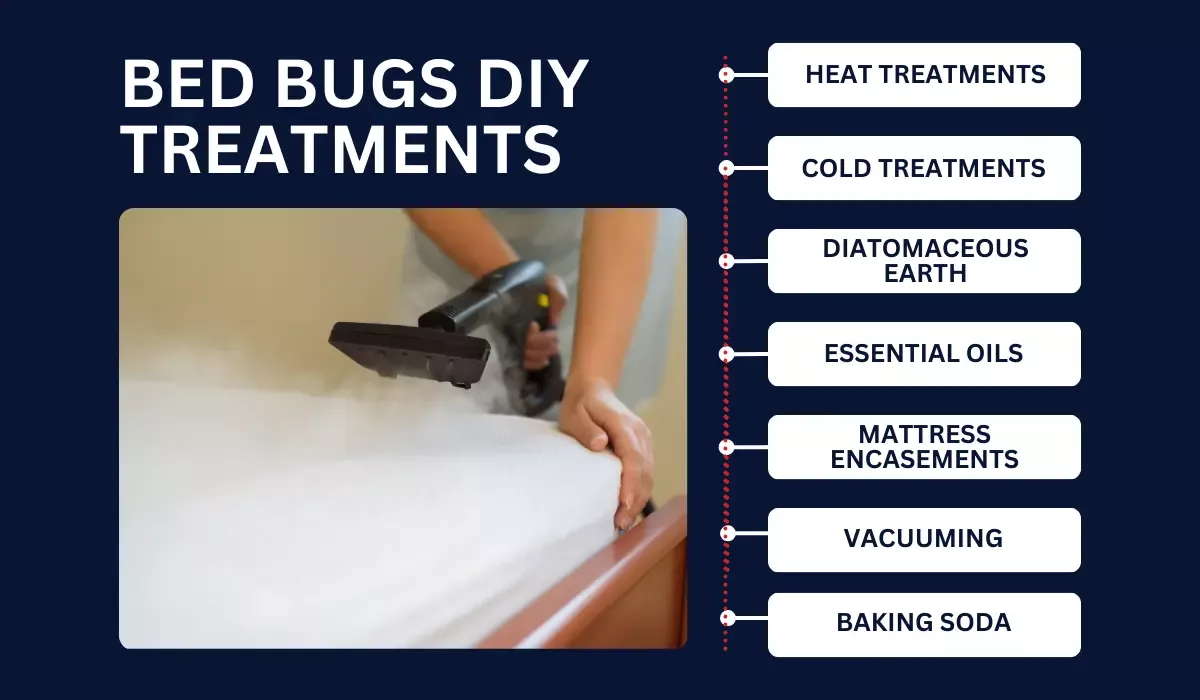
Getting rid of bed bugs can be challenging, but several do-it-yourself methods can help control and eradicate these pests.
When executed correctly, these DIY pest control strategies can reduce bed bug populations and contribute to a bed bug-free home.
Heat Treatments
Heat treatments are an effective way to kill bed bugs as they are susceptible to high temperatures. The key is maintaining a high heat for a prolonged period to penetrate all hiding spots.
Here’s a closer look at the steps for heat treatment at home:
| Steps | Description |
| Wash Bedding and Linens | Wash linens in hot water (at least 120°F) followed by drying on the highest heat setting. |
| Steam Clean Affected Areas | Use a steam cleaner to treat mattress seams, couches, and other furniture. |
| Heat Treatment | Deploy heaters to raise the room temperature to at least 118°F for 90 minutes, which is lethal for bed bugs. |
Cold Treatments
Cold treatments freeze bed bugs, effectively killing them. To ensure all life stages of bed bugs are exterminated, here’s a checklist to guide you.
- Ensure the infested items are placed in a plastic bag.
- Use a freezer set to 0°F or below for the treatment.
- Leave items in the freezer for at least four days.
- Thoroughly check items post-treatment to confirm all bed bugs are exterminated.
Diatomaceous Earth
Diatomaceous earth, composed mainly of silica, is a fine powder that damages the exoskeleton of adult bed bugs. This leads to dehydration and death.
To use it effectively, here are some application tips you can follow:
| Application Areas | Tips |
| Bed Frame & Box Spring | Dust a light layer in joints and crevices. |
| Flooring & Carpets | Apply to edges and beneath furniture where bed bugs hide. |
| Entry Points | The barrier around the room’s perimeter to prevent migration from adjacent rooms. |
Essential Oils
Essential oils can be a natural home remedy for bed bugs, although they may not be as effective as other treatments. Here’s a list of common oils you can use to control bed bugs:
- Tea tree oil: Mix a few drops with water in a spray bottle and apply to infested areas.
- Lavender oil: Its strong scent can repel insects when applied to bedding and furniture.
- Eucalyptus oil: Known to have bed bug-repelling qualities, it can be sprayed around potential entry points.
Mattress Encasements
Mattress encasements trap bed bugs inside and prevent them from infesting the bed. They serve as a long-term solution and a barrier to new infestations.
Here are the features to look for:
| Features | Benefit |
| Zipper Lock | Prevents bed bugs from entering or escaping. |
| Durable Material | Resistant to tears and holes, keeping bed bugs contained. |
| Sealed Seams | Stops bed bugs from sneaking through stitch holes or underneath the zipper. |
Vacuuming
A thorough vacuuming regime can help to reduce bed bug numbers by physically removing them from surfaces.
Learn these vacuuming tips for better results:
- Use a vacuum cleaner with a strong suction, focusing on mattress seams, bed frames, baseboards, and carpet edges.
- Immediately after vacuuming, seal and dispose of the vacuum bag outside the home.
- Place a bed bug trap or interceptor under the bed legs to monitor for further activity.
- Regularly vacuum to maintain pressure on the bed bug population and help prevent future infestations.
Baking Soda
Baking soda is often touted as a home remedy for eliminating bed bugs, but pest control experts debate its effectiveness.
Here’s an overview of how it is purported to work:
| Steps | Description |
| Absorption | Baking soda is believed to absorb the moisture from bed bugs’ bodies. |
| Dehydration | The absorbed moisture is thought to dehydrate and kill the bed bugs. |
| Reapplication | Because baking soda is easily disturbed, it requires frequent reapplication to maintain its effectiveness. |
PROFESSIONAL BED BUG TREATMENTS
When bed bugs invade, pest control companies employ a meticulous, multi-step approach to eliminating them.
At LaJaunie’s Pest Control, our effective method starts with a thorough inspection to confirm the presence of bed bugs, utilizing visual cues and client reports.
Treatment starts with a liquid assault, meticulously deployed using specified products like:
- BnG-Transport
- Tekko
- PBO
Our technicians tackle each nook, molding, and crevice-systematic warfare from the farthest corner to the exit.
| Hiding Places | Details |
| Furniture | Bed frames, headboards, sofas, and even internal compartments of drawer beds are treated. |
| Mattresses and box springs | Attention is given to seams, labels, and previously infested spots. You must remove the box spring’s bottom fabric for complete access. |
| Additional areas | Nightstands, chests of drawers, picture frames, outlets, and windows also receive treatment. |
Post-treatment protocol insists on keeping treated areas closed for at least three hours to ensure product efficacy and safety.
- Follow-up includes a dust application two weeks later, strategically placed around bed components and furniture bases, to create a persistent protective barrier against these pests.
Our professional exterminators leverage specific products and expertise to ensure thorough coverage and a decisive victory over bed bugs. This professional intervention is designed to restore tranquility and bug-free living spaces.
WHEN TO CALL THE EXPERTS?
Nobody enjoys uninvited guests, especially the six-legged kind that likes to bite. If they’re waging war on your peaceful slumber or causing welts from bed bug bites, it might be time to wave the white flag and bring in pest control professionals.
Whether you’re in New Orleans or Baton Rouge, seeking expert help should be easy. For immediate intervention for a severe infestation, let Lajaunie’s bed bug control specialists tailor a solution that’s right for your home.
For more information about the areas we service, visit our location page.