

 Request your free quote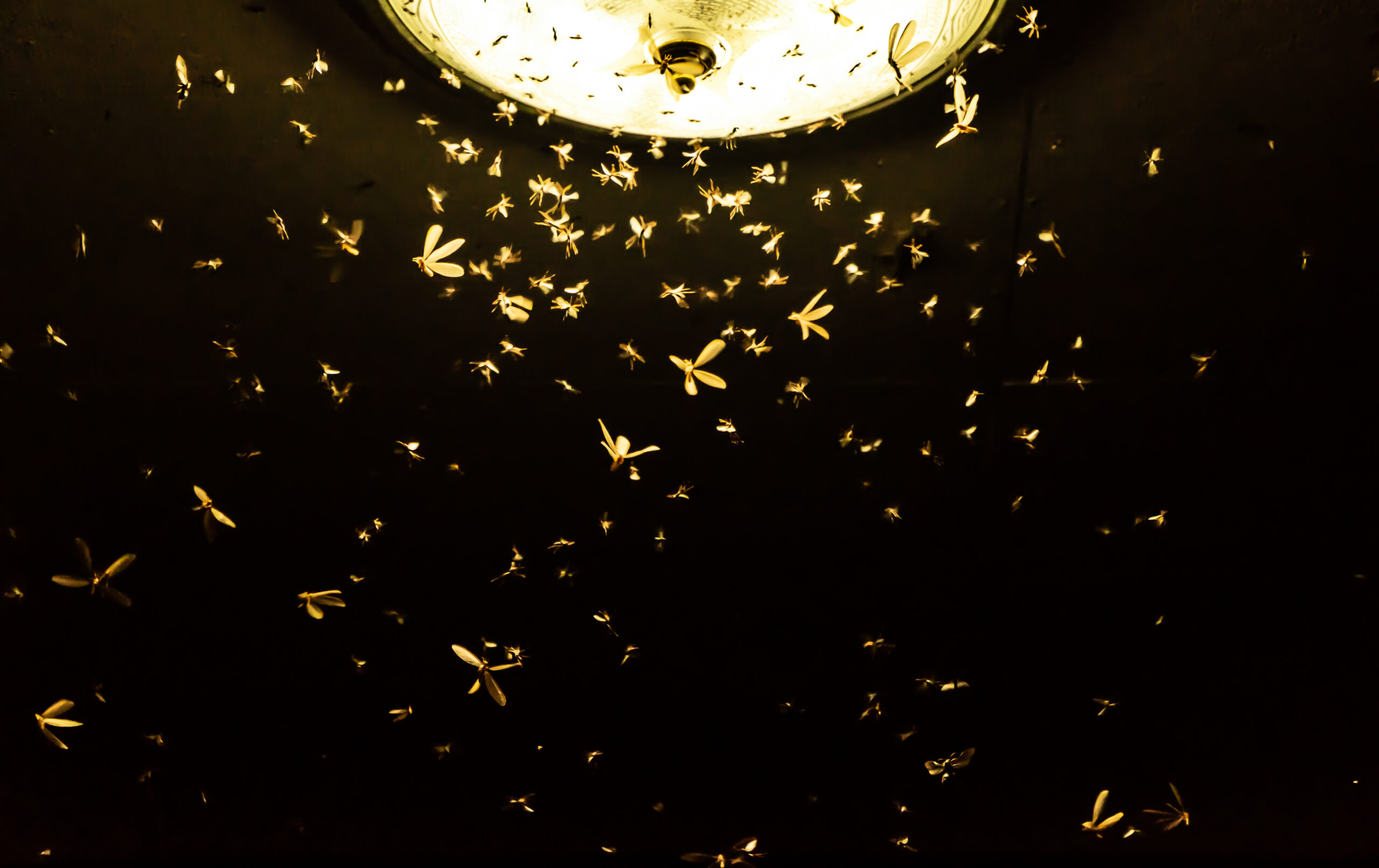
Flying termites and flying ants often appear around Louisiana homes during warm weather, and many homeowners mistake one for the other. At first glance, both insects look similar because they have wings and swarm in groups near windows, doors, porches, and exterior lighting.
The difference matters because termites and ants create very different problems around a home. Termites feed on wood and may cause structural damage over time, while carpenter ants tunnel through wood to create nesting galleries without eating it.
Knowing how to tell flying termites apart from flying ants can help you respond appropriately and decide when it is time for a professional inspection. Looking closely at the wings, antennae, waist shape, and swarm behavior usually provides the clearest clues.
How to Tell Flying Termites and Flying Ants Apart
One of the easiest ways to identify these flying insects is by comparing their body shape. Flying termites have straight waists, while flying ants have narrow, pinched waists between the thorax and abdomen.
Antennae are another important difference. Carpenter ants have elbowed antennae, while termite swarmers have straight antennae. This detail is often easier to notice when looking at a close photo or captured insect.
The wings also look different between the two pests. Winged termites have two pairs of wings that are equal in length. Flying ants have larger front wings and smaller hind wings.
Color and size can vary depending on the species, but many Louisiana homeowners notice swarms near windows, porches, garages, and outdoor lights during humid weather or after rain.
Where Flying Termites and Flying Ants Appear
Flying termites and flying ants usually appear during swarm activity when reproductive males and females leave an established colony to start new nests. Swarms often happen during warm, humid periods in Louisiana.
Homeowners commonly spot swarmers near light fixtures, windowsills, door frames, patios, and exterior lighting. After swarming, you may also find discarded wings collecting along floors, counters, or window tracks.
Subterranean termite swarmers often appear around foundation areas, crawl spaces, and wood structures connected to the soil. Carpenter ant swarmers may emerge from wall voids, damaged wood, attics, or moisture-damaged areas around the home.
Seeing large numbers of winged insects indoors may indicate an active colony somewhere inside or near the structure.
Why Flying Termites and Flying Ants Invade Homes
Both termites and carpenter ants look for moisture, shelter, and suitable nesting areas. Louisiana’s humidity and long warm seasons create ideal conditions for both pests to remain active throughout much of the year.
Subterranean termites live in soil and travel into structures through mud tubes built along foundations and support areas. Once inside, termites feed on structural wood, flooring, trim, and other cellulose materials.
Carpenter ants prefer moist or damaged wood where they can excavate nesting galleries. Leaking roofs, plumbing issues, rotting wood, and moisture-damaged framing often attract carpenter ant activity.
Wood piles, tree stumps, mulch beds, clogged gutters, crawl spaces, and poor drainage may also increase activity around Louisiana homes.
Risks Linked to Flying Termites and Flying Ants
The biggest concern with flying termites is the possibility of an active termite infestation nearby. Swarmers often indicate a mature colony already established around the home or property.
Termites feed on wood continuously and may weaken framing, flooring, support beams, trim, and other structural materials over time. Because much of this activity happens behind walls or beneath floors, damage may continue unnoticed for long periods.
Flying ants may point to a nearby carpenter ant colony. Although carpenter ants do not eat wood, they tunnel through it to create nesting galleries that can weaken moisture-damaged structures.
Carpenter ant activity is commonly linked to damp wood around doors, windows, roofs, decks, and wall voids. In some homes, carpenter ants expand into sound wood after the colony becomes established.
Why Professional Inspections Matter
Many homeowners struggle to tell flying termites apart from flying ants without a close inspection. Because treatment methods differ significantly between the two pests, accurate identification matters before any control plan begins.
Professional inspections help identify whether the insects are termites, carpenter ants, or another winged insect entirely. Technicians also inspect for mud tubes, damaged wood, moisture problems, swarm evidence, and hidden nesting activity throughout the structure.
At LaJaunie’s Pest Control, inspections focus on areas where termite and carpenter ant activity commonly develops, including foundations, crawl spaces, attics, exterior walls, garages, and moisture-prone areas around the home.
Early inspections often help homeowners address activity before structural damage spreads further through the property.
Professional Pest Control for Louisiana Homes
Treatment plans depend on whether the problem involves termites or carpenter ants. Subterranean termite treatments may include liquid barriers or bait station systems designed to target the colony itself.
LaJaunie’s offers the Trelona Advanced Termite Bait System along with liquid termite treatments for active subterranean termite infestations. For drywood termites, localized no-tent treatments may also be recommended depending on the situation.
Carpenter ant treatment focuses on locating nesting areas, reducing moisture conditions, and treating harborage sites around the structure. Ongoing pest control service may also help reduce recurring activity around Louisiana homes.
Because swarm activity often appears suddenly, homeowners should avoid relying only on store-bought sprays without identifying the source of the infestation first.
What Louisiana Homeowners Should Do Next
If you notice flying insects swarming around your home, try to collect a sample or take a close photo before cleaning the area. Looking at the waist shape, antennae, and wing size can help determine whether you are seeing termites or ants.
Discarded wings, mud tubes, damaged wood, sawdust piles, and repeated swarm activity are all signs worth investigating further. Acting early may help reduce the risk of hidden termite damage or expanding carpenter ant colonies.
If you are unsure whether you are dealing with termites or flying ants, the team at LaJaunie’s Pest Control can help. We provide termite and ant inspections throughout Southeast Louisiana with treatment plans designed for local pest pressures and Louisiana homes.
To schedule an inspection or request more information, contact LaJaunie’s Pest Control today.
Frequently Asked Questions About Flying Termites and Flying Ants
Flying termites have straight waists, straight antennae, and two pairs of equal-length wings. Flying ants have pinched waists, elbowed antennae, and larger front wings.
Flying termites often indicate a nearby termite colony. In some cases, the colony may already be active inside or around the structure.
Swarm activity usually happens during warm, humid periods, especially in spring and early summer, although timing varies by species.
Flying ants indoors may point to a nearby carpenter ant colony, especially if activity repeats or appears near moisture-damaged wood.