



Spider egg sacs in Louisiana homes can look like small silk balls, papery bundles, or spiky seed-like structures depending on the species. Homeowners often find them in garages, sheds, attics, closets, beneath outdoor furniture, and other protected areas where spiders can remain undisturbed. Black widows, brown widows, and brown recluses all occur in Louisiana, but their egg sacs have different features. Finding one sac does not automatically mean you have a large spider problem, but its shape, location, and nearby spider activity can help narrow down what you found.
Key Takeaways
- Spider egg sacs vary by species, so shape, texture, location, and the spider nearby are more useful than color alone.
- Brown widow sacs have a distinctive spiky surface, while black widow and brown recluse sacs are smoother and harder to identify without additional clues.
- Several sacs in the same area, recurring webs, or repeated spider sightings provide stronger evidence of ongoing activity than one isolated egg sac.
What Do Spider Egg Sacs Look Like?
Spider egg sacs are silk coverings that protect developing eggs. Their appearance varies widely, so there is no single shape, size, or color that applies to every species found around Louisiana homes.
Shape and Texture
Some egg sacs are round and smooth, while others are flattened, pear-shaped, loosely woven, or covered with pointed silk projections. Brown widow egg sacs are especially distinctive because their outer surface has a spiky appearance.
Black widow and brown recluse sacs are smoother, which makes them easier to confuse with sacs from other spiders. Texture can help, but it should not be used by itself for identification.
Color and Size
Most spider egg sacs are white, cream, tan, or light brown. Dust, moisture, age, and weather exposure can change their appearance over time.
Size also varies by species. Many are roughly marble-sized or smaller, but a sac’s dimensions are much less useful than its shape, location, and the spider associated with it.
Location
Where you find the sac can provide another clue. A sac hidden inside a storage box suggests a different type of spider activity from one suspended beneath patio furniture or carried by a wolf spider.
Louisiana has many common house spiders with different nesting and web-building habits. Identifying the spider nearby often gives you more information than examining the sac alone.
Black Widow, Brown Widow, and Brown Recluse Egg Sacs Compared
Louisiana homeowners are often most concerned about sacs associated with widows and brown recluses. These spiders produce different types of egg sacs, but identification is most reliable when you also consider the adult spider, web, and location.
| Spider | Egg Sac Shape | Typical Color | General Size | Common Locations |
|---|---|---|---|---|
| Southern black widow | Round to slightly pear-shaped with a smooth or papery surface | White, cream, or tan | Around 1/2 inch | Sheds, garages, outdoor furniture, protected corners, overhangs |
| Brown widow | Round with pointed or spiky silk projections | Cream to tan | Around 1/2 inch | Outdoor furniture, railings, sheds, porches, protected exterior crevices |
| Brown recluse | Small, round to slightly flattened | Off-white to cream | Often under 1/2 inch | Boxes, closets, attics, storage rooms |
| Wolf spider | Smooth and round | White to gray | Varies by species | Carried by the female rather than attached to a web |
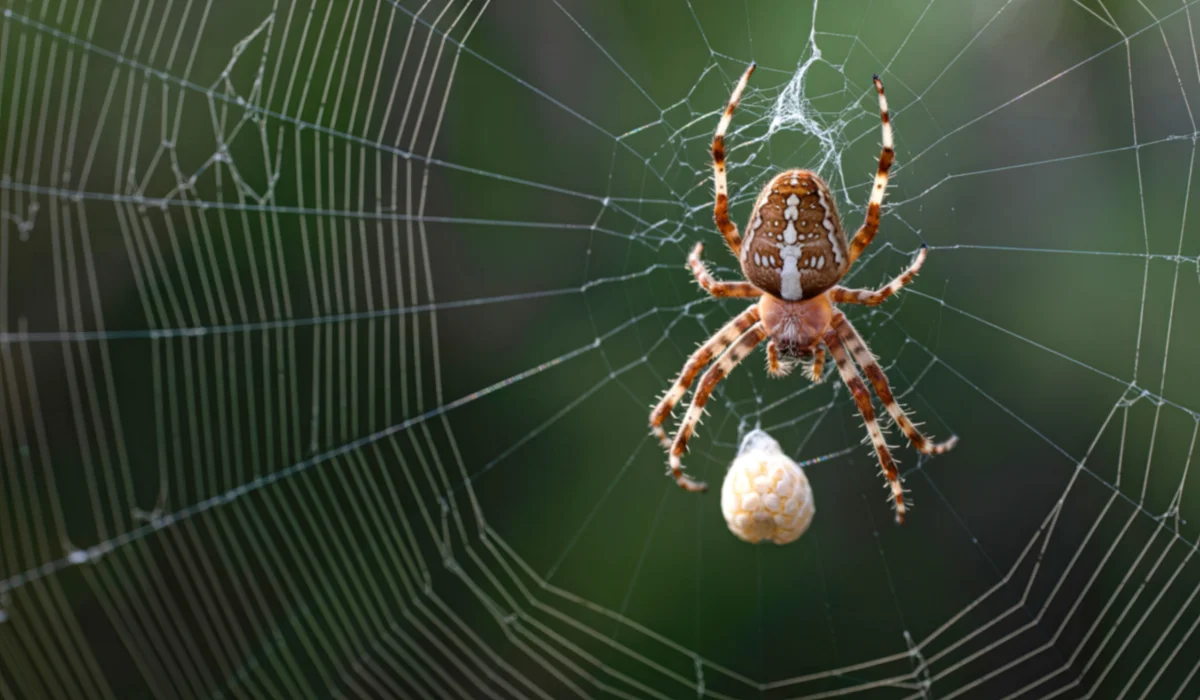
| Orb weaver | Round or oval with thicker silk | Tan, brown, or cream | Varies by species | Shrubs, fences, vegetation, eaves, and outdoor structures |
Weathered or damaged sacs may not retain their original shape. If the spider itself is not present, treat the table as a comparison tool rather than a final identification.
How to Identify a Brown Widow Egg Sac
Brown widow egg sacs are among the easiest spider sacs to recognize. The outer silk forms pointed projections that give the sac a spiky, sandbur-like appearance.
Homeowners may find them beneath patio furniture, along railings, inside sheds, or around protected porch areas. Several spiky sacs in the same sheltered location make brown widow activity a stronger possibility.
The sac should still be considered with the surrounding web and spider. Weathering can flatten or damage the projections, making an older sac harder to identify.
Avoid handling an unfamiliar sac with bare hands. A clear photo of the sac and surrounding web is usually more useful than picking it up for a closer look.
How to Identify a Black Widow Egg Sac
Southern black widow egg sacs are usually smoother than brown widow sacs. They often have a round or slightly pear-shaped form with a firm, papery silk covering that may appear white, cream, or tan.
Black widows favor protected areas where irregular webs are unlikely to be disturbed. Around Louisiana homes, that can include garages, sheds, outdoor furniture, porch corners, and sheltered spaces beneath overhangs.
LaJaunie’s existing Louisiana spider guidance notes that black widow encounters are more common than brown recluse encounters. Still, a smooth egg sac alone cannot confirm a black widow without other signs nearby.
An adult female in the same irregular web is much stronger evidence. If you suspect a widow is present, avoid reaching into the web or moving the sac by hand.
What Does a Brown Recluse Egg Sac Look Like?
Brown recluse egg sacs are usually small, pale silk bundles placed in quiet, protected locations. They do not have the distinctive spiky surface associated with brown widow sacs.
Boxes, closets, attics, stored clothing, and other spaces that remain undisturbed for long periods fit the conditions brown recluses tend to use. A sac found in one of these areas becomes more relevant if similar spiders are also present.
Several brown spiders in Louisiana can be mistaken for brown recluses. Finding a smooth cream-colored sac in a box does not confirm that recluses are reproducing in the home.
The spider itself should be identified whenever possible. A clear photo taken from a comfortable distance can provide more useful information than the egg sac alone.
Where Spider Egg Sacs Are Commonly Found Around Louisiana Homes
Spiders choose egg-sac locations based on shelter, access to prey, and how often an area is disturbed. In South Louisiana homes, both indoor storage spaces and protected exterior areas can provide those conditions.
Attics, Closets, and Storage Areas
Attics, closets, storage rooms, and boxes can remain untouched for months. Spiders that prefer secluded spaces can use these areas without attracting much attention.
Check around shelving, box edges, stored clothing, baseboards, and belongings that have not been moved recently. Finding several sacs, shed skins, or similar-looking spiders in the same location provides more useful information than one isolated sac.
Garages and Sheds
Garages and sheds offer shelter while still giving spiders access to insects. Egg sacs may appear behind stored items, near door frames, around shelving, or inside protected crevices.
Not every spider leaves its sac attached to a structure. Wolf spider females carry their egg sacs with them, so seeing a spider moving across a garage floor with a round silk sac attached is a very different situation from finding a sac fixed inside a web.
Porches, Eaves, and Outdoor Furniture
Widow spiders often use sheltered exterior spaces where their webs remain undisturbed. Patio furniture, porch railings, ledges, eaves, sheds, and protected corners can all provide suitable sites.
These areas also support many other outdoor spiders, so location alone does not confirm a widow. Look at the sac’s shape, the type of web, and the adult spider before drawing a conclusion.
Where LaJaunie’s Technicians Check for Spider Activity
During pest-control visits, LaJaunie’s technicians inspect areas where spiders and their prey commonly remain active. That can include exterior windows, walkways, the base of the home, accessible attics and garages, and sheltered exterior areas.
Technicians also inspect around eaves, overhangs, doors, windows, cracks, and other access points. LaJaunie’s standard service can include removal of accessible webbing from first- and second-story areas up to 25 feet.
These inspections look beyond a single egg sac. Recurring webs, insect activity, clutter, gaps around the structure, and protected hiding spaces can all explain why spiders continue using one part of the property.
That context matters when several sacs keep appearing. Removing the sacs without addressing the conditions around them may result in more spider activity in the same location.
When Are Spider Egg Sacs Most Common in Louisiana?
Louisiana’s long warm season gives spiders more time to remain active than in areas with prolonged cold weather. Homeowners may find egg sacs throughout much of the year, although activity is usually easier to notice from spring through fall.
Spring and Summer
Warmer spring temperatures increase insect activity, giving spiders more available prey. As spider activity increases, homeowners may begin finding sacs around garages, sheds, porches, vegetation, and other protected areas.
Summer warmth keeps many species active around South Louisiana homes. Areas near lights, windows, outdoor furniture, and structures with regular insect traffic can support both adult spiders and egg sacs.
Fall and Winter
Spider activity can continue well into fall because warm conditions often last later in Louisiana than they do in northern states. Moving patio furniture, cleaning garages, or handling stored items can also uncover egg sacs that were produced earlier.
Winter does not eliminate every spider or egg sac. Attics, garages, sheds, and indoor storage areas can continue to provide shelter, so an egg sac found during cooler weather should still be evaluated by its condition and location.
Does Finding Spider Egg Sacs Mean You Have an Infestation?
One egg sac does not automatically mean spiders are established throughout the house. A single female may have found a suitable hiding place without there being widespread activity elsewhere.
Several sacs in the same location are more meaningful, especially when paired with recurring webs, repeated adult sightings, shed skins, or newly hatched spiderlings. Together, those signs suggest that spiders are repeatedly using the area rather than passing through once.
Spiderlings often disperse after hatching, and many will not remain in the same spot. Seeing a cluster of tiny spiders shortly after a hatch can look dramatic without necessarily indicating a house-wide problem.
The location also changes how you should respond. An isolated sac in a quiet outdoor shed is different from several widow-type sacs beside a frequently used doorway, patio chair, or children’s play area.
How to Check a Spider Egg Sac Before Removing It
Before removing an egg sac, look at the surrounding area so you do not discard useful identification clues. The web, adult spider, sac shape, and hiding place can help you understand what you found.
Step 1: Observe the Sac
Look from a comfortable distance and note whether the sac is smooth, papery, loosely woven, or spiky. Check whether an adult spider is nearby and what type of web surrounds it.
Take a photo before disturbing the area. Do not squeeze or open the sac to inspect the eggs inside.
Step 2: Check Nearby Areas
Look for additional sacs, fresh webs, shed skins, or spiders in nearby crevices. Finding several signs together provides more evidence of ongoing activity.
Check sheltered areas such as garage shelving, furniture undersides, closets, eaves, and storage boxes. These are common places for spiders to remain undisturbed.
Step 3: Remove Reachable Sacs
A vacuum can remove an unidentified sac and surrounding web from an easy-to-reach location without direct handling. Empty the vacuum contents into a sealed outdoor trash bag afterward.
Do not climb or stretch from a ladder just to reach a sac under a high eave. If a suspected widow or recluse is beside the sac, leave the area alone rather than reaching into the web.
Step 4: Watch for New Activity
Check the location again over the following days and weeks. Fresh webbing or new sacs indicate current spider activity more clearly than an old abandoned sac.
Reducing clutter, closing practical gaps, and controlling the insects spiders feed on can also make the area less attractive over time.
Spider Egg Sacs vs. Common Lookalikes
Not every small object caught in silk is a spider egg sac. Dust, insect egg cases, cocoons, and outdoor debris can become tangled in webs and look similar from a distance.
Dust and Debris
Old webs collect lint, dust, dead insects, and plant material. These clumps often look uneven because they were not deliberately wrapped into a protective silk structure.
A true egg sac generally has a more defined covering. Debris may crumble or separate when an abandoned web is cleaned.
Cockroach Egg Cases
Cockroach egg cases have a firmer capsule-like structure rather than a soft silk covering. They are commonly brown or reddish-brown and may have a visible ridge along one edge.
Finding one points toward a different pest issue entirely. The absence of silk is one of the easiest differences to notice.
Insect Cocoons
Some insects produce silk cocoons during development, and these can appear around garages, sheds, walls, or vegetation. Their appearance varies widely depending on the insect.
Context helps separate them from spider sacs. A silk structure attached to an active spider web with an adult spider nearby provides much stronger evidence than an isolated cocoon on a plant or wall.
When Spider Egg Sacs Need Professional Attention
Professional identification makes more sense when several sacs keep appearing, widow-type sacs are present in frequently used areas, or you cannot confidently identify the spider associated with them.
LaJaunie’s spider control service can evaluate the surrounding spider activity, including common problem areas such as windows, garages, attics, eaves, overhangs, cracks, and sheltered exterior spaces.
An inspection is also useful when sacs are high off the ground or attached to active widow webbing. Those situations can make DIY removal harder to perform without getting too close to the spider.
The goal is not simply to remove one sac. Identifying the spider, finding where activity is concentrated, and reducing the conditions supporting it can help limit recurring webs and egg sacs.
Handling Spider Egg Sacs Around Your Louisiana Home
Knowing how to identify spider egg sacs in Louisiana starts with looking at more than color or size. Brown widow sacs have a distinctive spiky surface, while black widow and brown recluse sacs require more context from the web, location, and adult spider.
If you find one reachable sac, photograph it first, remove it without direct handling, and monitor the area for more activity. Several sacs, recurring webs, or suspected widow or recluse activity deserve closer attention.
If egg sacs continue appearing or you are unsure which spider produced them, contact LaJaunie’s Pest Control for spider control so the activity around the home can be inspected and the appropriate next step determined.
Frequently Asked Questions About Spider Egg Sacs
What Do Spider Egg Sacs Look Like?
Spider egg sacs can be round, oval, flattened, smooth, papery, or spiky depending on the species. They are often white, cream, tan, or light brown. Brown widow sacs are especially recognizable because pointed silk projections give them a spiky, seed-like appearance.
How Many Spiders Can Be in One Egg Sac?
The number varies by species. Some sacs contain dozens of eggs, while others may contain more. Finding one sac does not mean every spiderling will survive or remain in the home, but several sacs in the same sheltered area can indicate repeated reproduction.
Should I Remove a Spider Egg Sac?
A reachable unidentified sac can often be removed with a vacuum along with the surrounding web. Avoid handling or opening it with bare hands. If the sac is beside a suspected widow or brown recluse, appears repeatedly, or is difficult to reach, professional identification is the safer option.