



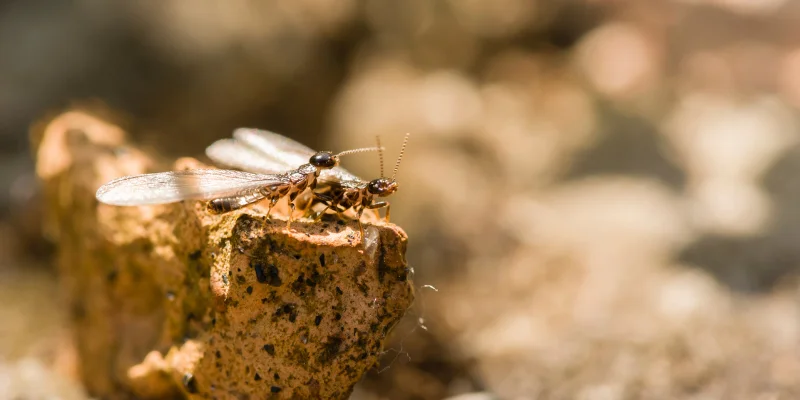
If you’ve seen flying termites around your windows or lights, that’s not a random sighting. These insects-called termite swarmers or alates-mean an active termite colony is nearby. When swarmers show up indoors, they may already be living behind your walls or under your foundation.
Louisiana’s humid climate makes our homes a target for termites.
During the swarming season, which peaks from spring to early summer, these insects take flight to start new colonies. In South Louisiana cities like Houma and Thibodaux, termite activity often increases after heavy rain.
Here’s how to recognize the signs, know the difference between termites and other insects, and take the right steps for termite control.
Key Takeaways
- Termite swarmers indoors mean an active colony nearby.
- Louisiana’s humid climate supports both native and Formosan subterranean termites.
- Look for discarded wings, mud tubes, or hollow wood as warning signs.
- Living trees, mulch, and moisture near your home can attract termites by providing food sources.
- Schedule professional termite control and inspections to protect your home from structural pests.
Signs of Termites You Shouldn’t Ignore Today
Termite swarmers indoors are never harmless. Each sign below means termite activity is already happening in or around your home.
Discarded Wings Near Windows or Doors
After mating, termite swarmers shed their wings near light sources like windows, vents, and street lights. These wings often pile up on windowsills or floors.
If you see wings but no insects, the swarmers may have already moved into hidden wood areas to start a new termite colony.
Mud Tubes on Walls or Foundations
Subterranean termites build mud tubes to travel between the soil and the wood they feed on. These tubes protect them from dry air and predators.
You’ll often find them on foundation walls, near plumbing lines, or along crawl spaces. Homes surrounded by mulch, soil, or living trees are more likely to attract termites since these areas offer natural food sources and moisture.
Soft or Hollow Wood
Tap your baseboards, door frames, or wooden beams. If they sound hollow or feel soft, termites may have eaten the cellulose inside. Over time, this causes damage that can weaken your home’s structure.
Bubbling or blistered paint can also signal termite activity under the surface.
Swarmers Emerging From Walls or Vents
Seeing swarming termites indoors, especially near outdoor light fixtures or air vents, means an active termite colony may already be inside.
Louisiana’s swarming season often peaks around Mother’s Day, but in warm, humid areas like Baton Rouge and New Orleans, it can last longer.
Is It a Termite Swarmer or Something Else?
The LSU AgCenter reports that both native subterranean termites and Formosan subterranean termites thrive in Louisiana. For homeowners, these structural pests can be costly, so spotting swarmers early is key.
Flying ants and termite swarmers can look alike, but knowing the difference helps you act quickly.
Body Shape
Termite swarmers have straight, uniform bodies without a narrow waist. Flying ants have pinched waists and more defined body segments.
Wings
Swarming termites have two pairs of wings that are equal in length and lay flat over their backs. Flying ants have uneven wings, with the front pair longer than the back.
If you find identical wings near windows or light sources, you’re likely dealing with swarming termites.
Antennae
Termite antennae are straight and bead-like, while ants’ antennae bend at sharp angles. A clear photo can help a pest control expert confirm the difference.
Behavior and Timing
Swarming termites appear after rain when the air is warm and humid.
In Louisiana, they usually swarm between March and July. Flying ants, however, can appear any time of year.
What to Do Next (And What Not to Do)
Seeing termite swarmers can be stressful, but quick action can protect your home from more serious termite damage.
Don’t Panic, but Don’t Wait
Swarming termites don’t bite, but they’re a warning sign. They show that a termite colony is nearby or already active.
Call a licensed pest control company right away for a termite inspection.
Don’t Spray or Vacuum Them Away
Spraying or vacuuming swarmers only removes what you can see. The main termite colony lives underground or inside wood. Without professional termite treatment, the infestation will continue to grow.
Schedule a Professional Termite Inspection
A licensed inspector can identify whether you’re dealing with Formosan subterranean termites, native subterranean termites, or another termite species. Each requires a different approach for proper termite control.
At LaJaunie’s Pest Control, our technicians inspect your foundation, attic, and crawl spaces for mud tubes, damaged wood, and early signs of a termite infestation.
Choose a Long-Term Termite Control Plan
Louisiana’s warm, damp environment allows termites to stay active almost all year. That’s why ongoing protection matters.
We offer baiting systems, liquid soil treatments, and annual termite inspections. Our Complete Protection Plan combines pest control and termite control into one year-round plan. We’ll inspect, treat, and protect your home from the ground up. Every service is performed by the Louisiana Department of Agriculture-certified technicians and backed by our satisfaction guarantee.
Contact us today to schedule your inspection and protect your home from damage. We offer same-day service and Saturday availability across Southeast Louisiana.
FAQs
When is the termite swarming season in Louisiana?
Termite season runs from March through July, often peaking near Mother’s Day. Formosan subterranean termites may swarm later, especially after rainfall.
Why are Formosan subterranean termites worse than native species?
Formosan termites are an invasive species from East Asia that arrived after World War II. Their large colonies cause more damage in less time than native subterranean termites.
How can I prevent termite infestations?
Remove wood debris, keep mulch away from your foundation, and trim living trees back from your home. Fix moisture problems and schedule yearly termite inspections with a licensed pest control service provider.