

Ants show up in bedrooms for moisture, shelter, and hidden food sources you may not realize exist. Even a spotless room can attract ants if it offers water, warmth, or wall voids where a colony can nest. Understanding what draws them in is the first step to keeping ants out of your bedroom for good.
Key Takeaways: Dealing With Ants in Bedroom
- Food is not the only reason ants invade a bedroom. Moisture from roof leaks, condensation, or bathroom walls attracts several ant species, including carpenter ants.
- Ants follow pheromone trails. A single scout ant that finds a water source or entry point can recruit hundreds more within days.
- Baits target the whole colony. Spray kills only the ants you see, while bait stations allow foragers to carry the treatment back to the nest.
Common Reasons You Have Ants in Bedroom Spaces
Most homeowners assume ants need food crumbs to justify a bedroom invasion. That is only part of the story. Ants enter bedrooms for three reasons: food, moisture, and nesting opportunities. Certain species prioritize one over the others.
Moisture Problems That Draw Ants in Bedroom Spaces
Water-damaged wood, roof leaks, and condensation around window frames are among the most common reasons ants appear in rooms with no visible food. Carpenter ants, in particular, seek out rotting wood and damp wall voids to excavate new nests. They do not eat wood the way termites do, but they tunnel through it to build colonies.
Moisture ants behave similarly. They nest in wood softened by water damage, and a bedroom sharing a wall with a bathroom or sitting below a leaking roof becomes a target. If you spot ants near a window frame, door frame, or baseboard, check for hidden moisture behind those surfaces.
In Southeast Louisiana, humidity stays high from spring through fall. Homes in New Orleans, Baton Rouge, Slidell, and Thibodaux face constant moisture pressure, which makes bedroom ant problems more common here than in drier climates.
Hidden Food Sources That Attract Ants in Bedroom
Even “no food” bedrooms contain attractants that ants detect. A water glass on a nightstand, a forgotten snack wrapper under the bed, pet food bowls near the bedroom door, or sweet foods left in a nearby trash can all attract ants.
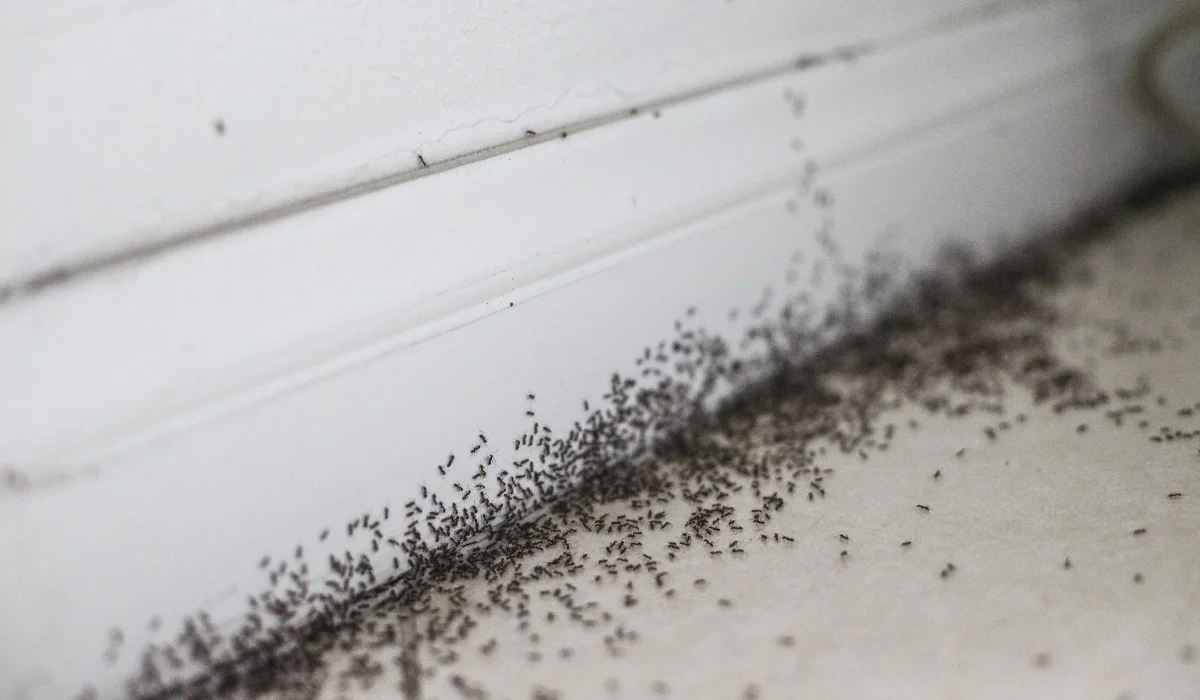
Some ant species have broad food preferences. Odorous house ants eat sugar, grease, and protein. They follow pheromone trails from the kitchen through walls and into the bedroom if a scout discovers anything worth reporting. Tiny ants marching along a baseboard are following a trail another ant laid down hours or days earlier.
Bedroom carpet fibers also trap crumbs you cannot see. Regular vacuuming disrupts ant trails and removes the micro-debris that draws foragers off their main path.
Ants in Bedroom Walls: Dealing With Hidden Nests
If ants appear in the same spot day after day, the nest may be inside the wall. Carpenter ants build satellite colonies in wall voids, attic spaces, and areas near moisture. You may hear faint rustling inside walls at night, which is the sound of ants excavating galleries.
Other ants, like odorous house ants, also nest in wall voids and behind baseboards. The colony sends foragers into the room to find food and water, then retreats back behind the wall. Killing the visible ants with spray does not reach the nest. The colony replaces those foragers within days.
## How Bad Weather Drives Ants in Bedroom Spaces
Heavy rain and flooding push ant colonies to seek higher ground. Fire ants, which are abundant across Southeast Louisiana, build mounds outdoors but move inside during prolonged wet weather. Other ants flood out of ground nests and enter through cracks in the foundation, gaps around pipes, and other entry points leading to the bedroom floor level.
Seasonal storms from June through October trigger these invasions. If you notice ants in your bedroom after a heavy rain event, the colony is likely using your house as temporary shelter.
How to Get Rid of Ants in Bedroom for Good
Treating ants in a bedroom requires two things: stopping the current trail and addressing the colony. A combined approach using baits, entry point sealing, and moisture correction resolves most bedroom ant infestations.
Ant Bait Stations for Controlling Ants in Bedroom
Bait stations reach the colony behind the wall because forager ants carry the bait back to the nest. Forager ants carry bait back to the nest and feed it to other ants, including the queen. This disrupts the whole colony over one to two weeks, depending on colony size and ant species.
Place bait stations along the ant trail, near entry points, and near areas where ants cluster. Do not spray near the bait. Spray repels ants and prevents them from reaching the bait, which defeats the purpose. Ant bait works because ants consume it willingly and distribute it through the colony.
For sugar-feeding species like odorous house ants, use sweet liquid baits. For carpenter ants or species with broader food preferences, protein-based baits match their dietary preferences and increase bait uptake. If you are unsure which ant species you have, a professional pest control technician can identify the species and select the right bait.
Seal Entry Points to Keep Ants in Bedroom From Coming Back
Ants enter through cracks as narrow as 1/16 of an inch. Inspect baseboards, window frames, door frames, and any area where pipes or wires penetrate the wall. Seal cracks and gaps with caulk. Pay close attention to where the floor meets the wall, especially on exterior-facing walls.
Check other entry points too. Gaps around electrical outlets, tears in window screens, and spaces beneath exterior doors all provide access. Sealing these entry points does not just stop ants. It reduces access for spiders, roaches, and other pests that exploit the same gaps.
Fix Moisture Problems to Stop Ants in Bedroom From Nesting
If carpenter ants or moisture ants are the species involved, fixing the water source is not optional. Repair roof leaks, replace water-damaged wood, and ensure bathroom exhaust fans vent to the exterior. A dehumidifier in rooms with persistent condensation removes the moisture that attracts these species.
Without moisture correction, even successful bait treatment provides temporary relief. The conditions that attracted ants remain, and a new colony can move in once the old one is gone.
DIY Methods to Disrupt Ants in Bedroom Trails
White vinegar and essential oils like peppermint oil disrupt ant trails temporarily. Wiping down surfaces with a vinegar solution erases the pheromone trail that guides foragers. Peppermint oil and other strong scents create a short-term barrier that deters scouts.
These methods buy time, but they do not address the nest. Store food in airtight containers. Remove pet food dishes from the bedroom. Vacuum the bedroom carpet and floor regularly. These steps reduce attractants while baits or professional treatment address the colony itself.
When to Call a Professional for Ants in Bedroom Infestations
Call a professional pest control company if ants return within two weeks of DIY treatment, if you find carpenter ants, or if you suspect a nest inside the wall. Carpenter ants cause structural damage to wood framing over time. A professional pest control technician can locate the nest, identify the ant species, and apply targeted treatment that reaches colonies hidden in wall voids and attic spaces.
LaJaunie’s Pest Control serves homeowners across New Orleans, Baton Rouge, Slidell, Thibodaux, and Houma. With a 4.9-star rating across 6,745+ customer reviews, LaJaunie’s technicians handle ant infestations at every scale, from a single trail to a multi-colony carpenter ant problem in the walls. Request a free inspection to identify what is attracting ants to your bedroom and how to stop them.
Frequently Asked Questions About Ants in Bedrooms
Why are ants in my bedroom when there is no food?
Moisture is the most likely reason. Ants, especially carpenter ants and moisture ants, seek out damp wood, roof leaks, and condensation. A bedroom near a bathroom or below a leaking roof attracts ants even without food present. Hidden water sources, wall voids, and warmth also draw certain species indoors.
How do you get rid of ants in the bedroom permanently?
Bait stations combined with entry point sealing and moisture correction produce the longest-lasting results. Baits target the whole colony, not just the visible foragers. Sealing cracks and fixing leaks removes the conditions that attracted ants in the first place. If the ant infestation returns after two weeks, contact a professional pest control technician to locate and treat the nest.
Are ants in my bed harmful?
Most house-invading ant species do not bite or sting in bed. Fire ants are an exception and can deliver painful stings, though they rarely nest indoors. Carpenter ants can bite when disturbed but do not seek out sleeping humans. The bigger concern with ants in your bed is the colony behind the wall. Carpenter ants cause structural damage to wood framing if left untreated.
What ant species are most common in Southeast Louisiana bedrooms?
Carpenter ants, odorous house ants, and fire ants are the species Southeast Louisiana homeowners encounter most. Carpenter ants nest in damp wood and wall voids. Odorous house ants follow trails to sweet foods and moisture. Fire ants nest outdoors but enter homes during heavy rain or flooding to seek higher ground.