



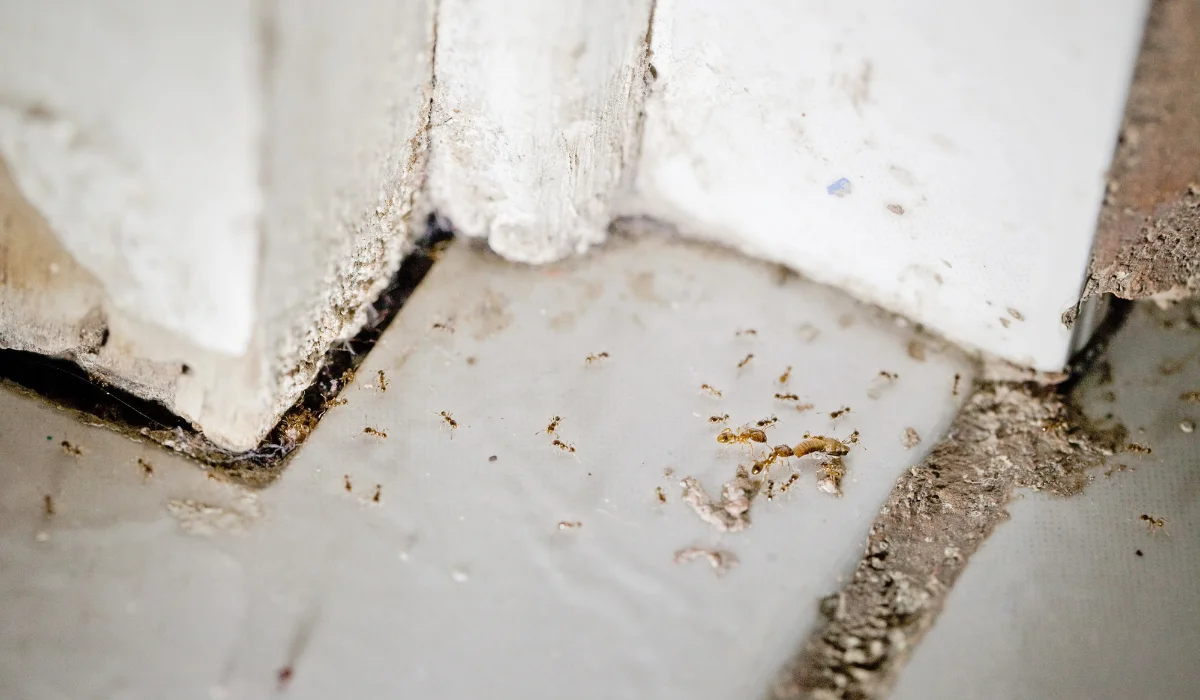
After a stretch of hot, wet weather in South Louisiana, you may notice ants showing up beside a kitchen outlet, bathroom baseboard, or window frame. You clean them up, but they return from the same spot a day later. Repeated activity like this can be one of the signs of ants nesting in walls, especially when moisture or a small opening gives them access to a protected space.
Homes in Thibodaux, Houma, Baton Rouge, New Orleans, and surrounding communities deal with long periods of heat and humidity. Those conditions can support ant activity around plumbing, damp wood, wall voids, and exterior gaps. Some ants are only traveling indoors for food, while others may be using part of the structure as a nesting site.
Knowing the signs of ants nesting in walls can help you tell the difference between a few passing ants and activity that deserves a closer look. The clues below include sounds, debris, trail patterns, moisture problems, and differences between common Louisiana ants.
Key Takeaways
- Soft rustling, ants repeatedly coming from the same opening, or wood debris near trim can point to activity inside a wall.
- Carpenter ants and crazy ants behave differently indoors. Carpenter ants are more closely tied to damp or damaged wood, while crazy ants often move quickly through several sheltered areas.
- Moisture, plumbing gaps, cracks, and openings around windows or utility lines can give ants access to wall voids.
- Treating only the ants you can see may not address the source if the colony or nesting site is hidden elsewhere in the structure.
Signs of Ants Nesting in Walls
One of the first signs of ants nesting in walls can be a faint crackling or rustling sound. You may notice it at night when the house is quiet. A sound by itself does not confirm a nest, but repeated noise near an area where ants are appearing is worth investigating.
Another clue is seeing ants in unusual places. If they repeatedly emerge near electrical outlets, ceiling corners, plumbing openings, door frames, or baseboards, they may be moving through a wall void rather than simply crossing the room from outside.
You may also find small piles of wood shavings or debris near trim. Carpenter ants excavate wood to create nesting galleries instead of eating it. They commonly use moisture-damaged wood, which makes leaks and damp structural areas especially useful places to check.
Ant Species Known to Nest Inside Walls
Different ant species use homes in different ways, so identifying what you are seeing can help narrow down the source. Carpenter ants, crazy ants, pharaoh ants, pavement ants, fire ants, and smaller household ants may all enter Louisiana homes, although not every species establishes a main colony inside the wall itself.
- Pharaoh ants are tiny, light-colored ants that form large colonies and often nest in warm, hidden indoor spaces. Crazy ants, common in parts of Louisiana, are fast-moving and unpredictable. They often nest near electrical equipment and can cause damage over time.
- Pavement ants and red imported fire ants are sometimes found indoors, especially if outdoor colonies are disturbed or conditions drive them inside. Each of these species behaves differently, and their thorax shape, size, and trail patterns can help professionals identify them.
- Sugar ants and little black ants are smaller and more likely to build nests near food sources. Although they may seem less destructive, their presence on your walls can still lead to ongoing infestations if left untreated.
LaJaunie’s technicians inspect the exterior base of the home, windows, cracks, crevices, access points, attics, garages, and other areas where pest activity may originate. Following activity through those areas is useful because the place where you see ants indoors may not be where they first entered.
Carpenter Ants vs. Crazy Ants in Louisiana Homes
Carpenter ants are larger and usually move in more defined routes. In humid Gulf Coast homes, activity around damp framing, window areas, plumbing leaks, roofline moisture, or softened wood deserves attention because carpenter ants commonly use moisture-affected wood for nesting.
Crazy ants behave differently. They are much smaller and move rapidly in irregular patterns, often spreading through several protected areas instead of staying tied to one obvious nesting point. They can occur around structures and electrical equipment, which is why activity around utility areas, outlets, or equipment housings can be a useful clue.
From an inspection standpoint, the pattern matters as much as the ant itself. A few large ants appearing near damp wood point you in a different direction than hundreds of small, fast-moving ants crossing several entry points. Looking at where the ants travel, where moisture is present, and how many locations show activity helps narrow down the likely source without overstating what can be confirmed from one sighting.
How Ants Get In Walls
Wall voids, cracks behind baseboards, and small openings around plumbing fixtures are all attractive to ants seeking shelter. High humidity and leaks can make your home more appealing to ants. Ants can use very small entry points and may go unnoticed until activity becomes established.
Baseboards and crevices near food and water are also common travel areas. Once inside, worker ants may create trails between their nesting area and kitchens, pantries, bathrooms, or other places where they find food and moisture.
Why You Should Act Quickly
A hidden ant problem can become harder to address when the source remains out of sight. Carpenter ants do not eat wood, but they can excavate galleries in wood when creating nesting areas. If the wood is already damp or damaged, continued activity may make an existing problem worse.
Crazy ants create a different challenge because their activity can involve multiple sheltered locations. You may see them disappear from one area and then show up somewhere else nearby. Persistent activity around outlets, utility openings, or equipment should be inspected rather than judged only by what is visible on the surface.
Ant activity can also lead you to a separate maintenance issue. A leaking pipe, damaged seal, clogged drainage area, or gap around an exterior opening may continue creating suitable conditions until that problem is corrected.
Beyond the ants themselves, infestations often attract other pests. Ants protect aphids, which secrete honeydew, a sugary substance that ants feed on. This relationship can attract more pests to your property and complicate pest management efforts.
DIY Solutions Can Fall Short
If you suspect ants are nesting in your walls, you may be tempted to treat the ants as soon as you see them. Baits can help in some situations because worker ants may carry the material back toward the colony, but results depend on the species, nesting location, and the conditions around the home.
Diatomaceous earth may help in accessible cracks, while peppermint oil and other repellents may reduce visible activity for a short time. Neither approach confirms where the ants are nesting. If ants continue appearing from the same outlet, trim gap, or wall opening, identifying the species and tracing the activity becomes more useful than repeatedly treating the visible trail.
If the activity continues, LaJaunie’s ant control service can help identify the ant and inspect likely entry and nesting areas.
Preventing Future Nesting in Walls
Getting ants out is only part of the job. Keeping them from returning requires attention to food, water, and entry points. Store food in sealed containers, clean up spills and crumbs, repair plumbing leaks, and seal gaps around windows, doors, plumbing lines, and utility openings.
Pay attention to areas where moisture collects around the home. Clogged gutters, exterior leaks, condensation, or damp wood near the structure can create conditions ants use for shelter or access.
For ongoing pest prevention, LaJaunie’s Healthy Home Plans cover ants along with other common household pests. Routine inspections also give technicians a chance to check areas where new activity may be developing.
Understanding the Signs of Ants Nesting in Walls in Louisiana
The most useful signs of ants nesting in walls are repeated patterns: ants returning from the same opening, activity near moisture, wood debris below trim, or steady movement around plumbing and utility areas. Species also matters because carpenter ants and crazy ants do not behave the same way inside a Louisiana home.
If those signs continue, an inspection can help determine whether the ants are nesting in the structure or entering from somewhere nearby. LaJaunie’s Pest Control serves communities across southeast Louisiana and can inspect the activity, entry points, and conditions that may be supporting it.
Ants Nesting in Walls: FAQs
Can you hear ants inside your walls?
Sometimes. A large or active group of ants may create faint rustling or crackling sounds inside a wall, especially when the house is quiet. Sound alone does not confirm a nest, but noise combined with ants repeatedly emerging from nearby trim, outlets, or gaps is worth investigating.
How can you tell if carpenter ants are in your walls?
Look for large dark ants, repeated activity around the same wall opening, and coarse wood shavings or debris near baseboards or trim. Carpenter ants often use damp or damaged wood, so check for nearby plumbing leaks, window moisture, roof leaks, or softened wood.
What is the difference between carpenter ants and termites?
Carpenter ants have narrow waists and elbowed antennae, while termites have thicker, more uniform bodies and straight antennae. Carpenter ants excavate wood and may leave debris behind. Termites consume wood, so the type of damage and debris you find can also help distinguish them.
Can ant nests inside walls be treated without tearing down drywall?
Yes. Pest control professionals use targeted treatments that reach wall voids without damaging your home. This may include bait systems, dusts, and monitoring stations, depending on the ant species.
Can crazy ants live inside walls?
Yes. Crazy ants can use wall voids and other protected spaces inside or around a structure. They are small, fast-moving, and often follow irregular paths. If you see heavy activity around several openings or utility areas, the colony may be using more than one sheltered location.