


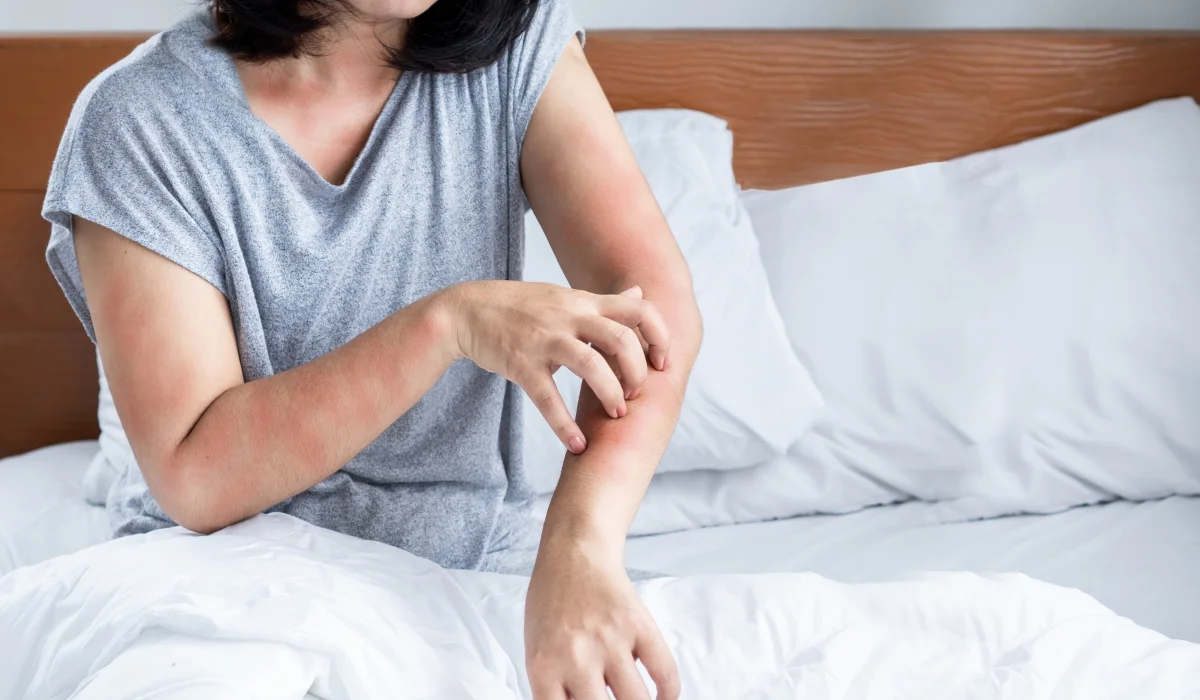
Bed bug bites do not always appear right away. Many people wake up with itchy spots but are unsure when the bite actually happened. In Louisiana homes, bed bugs often bite during the night while people sleep.
The tricky part is that bite marks may not show up immediately. Some people see bed bug bites within hours, while others notice marks a day or two later. This delay makes it harder to link the bites to the pests.
Knowing how long bed bug bites take to appear can help you spot a problem earlier. It can also help you tell the difference between mosquito bites, flea bites, and the signs of bed bugs.
Key Takeaways
- Bed bug bites may appear within hours or up to several days after the bite.
- Bite marks often appear as red bumps, itchy welts, or clusters in a line or zigzag pattern.
- Signs of bed bugs include shed skins, dark stains, and bugs hiding near mattress seams.
- Cleaning and vacuuming may reduce pests but rarely eliminate an infestation on their own.
- Professional pest control can safely inspect, treat, and remove a bed bug infestation.
How Long Bed Bug Bite Marks Can Take to Show
Bed bug bites appear at different times for different people. Several timing patterns are common.
Bite Marks That Show Within A Few Hours
Some people notice bed bug bites the same day. In these cases, bite marks may appear within a few hours after the bite.
These early symptoms of bed bug bites often look like small red bumps or itchy welts on exposed skin. Arms, legs, and shoulders are common places.
Bite Marks That Appear After One Day
Many people notice bed bug bites the next day. The bite marks may appear after 12 to 24 hours.
These bed bug bites may form clusters or a straight line. In some cases, the bites follow a zigzag pattern across the skin.
Bite Marks That Show After Two Or Three Days
Some bite marks take longer to appear. Bed bug bites may appear 2 or 3 days after the bite.
This delayed reaction can confuse homeowners because the insect bites may appear long after the person has left the sleeping area.
Why Bite Timing Varies From Person To Person
Bed bug bites do not affect everyone the same way. Several factors change how quickly bite marks appear.
Skin Reactions And Allergies
Some people have stronger skin reactions to insect bites. When this happens, bed bug bites may form itchy welts, blisters, or even hives.
A mild allergic reaction can also cause swelling or redness. Severe reactions are rare, but symptoms like anaphylaxis require medical attention.
Body Sensitivity To Bites
Each person reacts differently to bed bug bites. Some people develop severe itching and red bumps quickly.
Others show almost no reaction. In these cases, a person may have bed bug bites but see very few bite marks.
Repeated Exposure To Bed Bugs
People who have been bitten many times may react faster. Repeated exposure can make the body respond more quickly to new bites.
This is why some people notice bite marks right away once a bed bug infestation begins.
Signs It’s Bed Bugs (Not Mosquitoes Or Fleas)
Bite marks alone do not always confirm the presence of bed bugs. However, certain clues help identify the source.
Bite Patterns On Skin
Bed bug bites often appear in clusters, a straight line, or a zigzag pattern. These patterns form because bed bugs feed several times in the same area.
Mosquito bites usually appear as single bumps. Flea bites often appear around the ankles.
Signs Around The Bed
Bed bugs hide close to sleeping areas. Look around bed frames, headboards, and box springs for signs.
Adult bed bugs are small and reddish-brown. They are about the size of an apple seed. You may also find bed bug eggs, shed skins, or small dark stains along mattress seams.
Hidden Areas Around Furniture
Bed bugs hide in tight crevices and other hiding spots. Common areas include mattress seams, bed frames, wallpaper edges, and upholstered furniture.
Heavy activity may also produce a musty odor in the room.
What To Do Next If You Suspect Bed Bugs
If you think you have bed bug bites, take a few steps quickly. Early action helps stop a bed bug infestation from spreading.
Check Sleeping Areas Carefully
Start by inspecting sleeping areas closely. Look around mattress seams, box springs, bed frames, and headboards.
Also check cracks, crevices, and nearby furniture for signs of bed bugs.
Reduce Hiding Spots
Cleaning and vacuuming can help remove some pests and eggs. Wash bedding and vacuum floors, mattress edges, and nearby furniture.
These steps can help reduce bed bug hiding places while you plan treatment.
Avoid DIY Treatments That Miss Hidden Bugs
DIY bed bug treatments only treat visible pests. They rarely reach bed bug hiding places deep in furniture and walls.
Professional pest control experts use targeted treatments that reach hidden areas and help stop a bed bug infestation.
Book A Bed Bug Inspection In Louisiana
Bed bug bites are often the first sign of a problem. Once bite marks appear, bed bugs may already be living in your home.
A professional inspection can confirm the signs of bed bugs and identify where they are hiding. At LaJaunie’s Pest Control, trained technicians inspect mattress seams, box springs, furniture, and other hiding spots before starting treatment.
Our bed bug service uses a detailed treatment process to eliminate bed bugs in sleeping areas and nearby rooms. Follow-up visits help ensure the infestation is completely removed.
If you notice bed bug bites or suspect bed bugs in your home, schedule an inspection with our pest control team in Louisiana.
FAQs
How long does it take for bed bug bites to appear?
Bed bug bites may appear within a few hours, but many people notice bite marks 12 to 24 hours later. Some bites take two or three days to appear.
What do bed bug bites look like?
Bed bug bites often appear as small red bumps or itchy welts on exposed skin. They may appear in clusters, a straight line, or a zigzag pattern.
When should I seek medical help for bed bug bites?
Most bed bug bites heal on their own. However, you should seek medical attention if severe swelling, hives, or signs of a skin infection appear. A healthcare provider can recommend treatment options.