



If you notice a narrow line of dried mud running up your foundation, brick, or interior wall, it deserves a closer look. Termite mud tubes Baton Rouge homeowners find around their properties are one of the most recognizable signs of subterranean termite activity.
Baton Rouge’s warm, humid conditions give subterranean termites the moisture and soil contact they need. Their mud tubes create protected routes between the ground and wood inside a home.
Knowing what termite mud tubes look like, where they tend to appear, and how they differ from ordinary mud can help you decide what to do next. You do not need to diagnose the problem yourself, but spotting the right signs can make a termite inspection more useful.
Key Takeaways
- Termite mud tubes are narrow, soil-based tunnels that subterranean termites use to travel between the ground and a food source.
- In Baton Rouge homes, you may find mud tubes along slab edges, foundations, crawl-space supports, baseboards, and other areas close to soil or moisture.
- A dry or damaged tube does not prove the termite activity is gone. It still shows that termites used that area at some point.
- A professional termite inspection can confirm whether activity is current and whether other signs are hidden nearby.
What Termite Mud Tubes Look Like
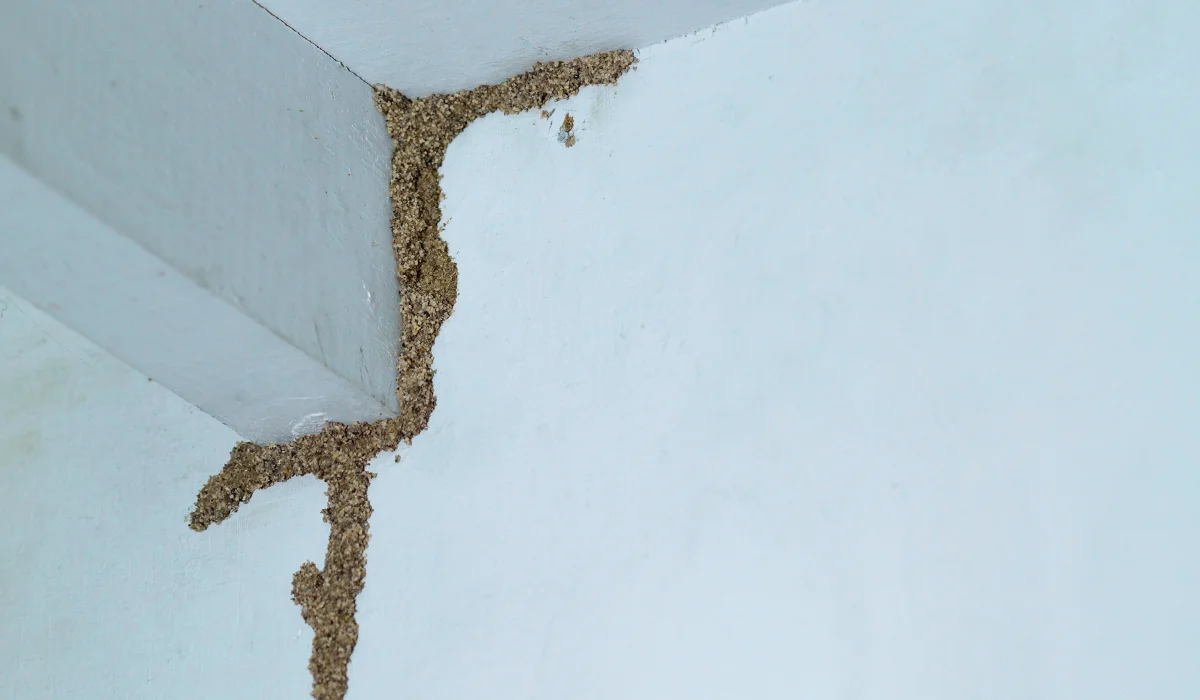
The termite mud tubes Baton Rouge homeowners notice usually look like thin, raised lines of dried soil attached to concrete, brick, block, wood, or drywall. Many are close to pencil width, although their size and shape can vary.
Subterranean termites build these protected pathways between the soil and the wood they are feeding on. The tubes help maintain the moisture and shelter termites need while moving across exposed surfaces.

Pencil-Sized Dirt Lines
Most termite mud tubes are thin and round. They resemble narrow veins of mud running vertically or horizontally along a surface. You can see them climbing brick piers, concrete slabs, or exterior walls.
If you break one open and see worker termites inside, it often indicates an active termite infestation. Even if the tube looks dry, it still needs to be checked during a termite inspection.
Irregular, Cracked Surface Texture
Termite mud tubes often have a rough, crusted surface. Unlike smooth caulk, these mud tunnels look uneven and fragile. They may crack but stay attached to the surface.
After periods of rain or high humidity, a mud tube may appear darker because it has absorbed moisture. Color alone does not tell you whether the tube is active, so avoid using appearance as the only test.
Different Types of Mud Tubes
There are several types of mud tubes, including working, drop, exploratory, and swarm tubes. Working tubes connect termite nests in the soil to a food source inside your home.
Drop tubes hang from ceilings or joists when termites move down from wood. Exploratory tubes are thinner and may not connect to wood structures. Swarm tubes help swarmers exit when new colonies form nearby.
Where Termite Mud Tubes Commonly Show Up
When checking for termite mud tubes in Baton Rouge properties, start where the structure comes closest to the soil. Foundation edges, crawl spaces, piers, plumbing areas, and other protected transition points are common places to look.
The type of home also changes what needs attention. LaJaunie’s Baton Rouge termite inspection process treats slab homes differently from raised homes because each construction style gives termites different routes into the structure.
Along the Home’s Foundation
On slab-on-grade homes, check visible slab edges, brick veneer, expansion joints, utility penetrations, and places where soil or landscaping sits close to the exterior wall. Mud tubes may rise directly from the soil or disappear behind brick, siding, or another finished surface.
During termite evaluations, LaJaunie’s team also accounts for concrete, pavers, and other conditions around the foundation because those features can affect where termite activity is visible and how the property is inspected.
Inside Crawl Spaces and Basements
Raised and pier-supported homes require a closer look beneath the structure. Check piers, sill areas, floor joists, plumbing penetrations, and other wood or structural components near soil and moisture.
For raised homes, LaJaunie’s inspection process includes an on-site evaluation because conditions beneath the home cannot be judged accurately from exterior measurements alone. Moisture, exposed wood, and the distance between soil and framing can all affect where termite signs appear.
Behind Baseboards and Interior Walls
Termite mud tubes can also appear indoors. You might see them near baseboards, cabinets, plumbing areas, or interior walls. You may see a narrow mud line extending from a crack or disappearing behind trim.
Bubbling finishes, softened wood, damaged trim, or discarded wings near the same area can give an inspector more information. Because termites can feed inside wood, the visible tube may be only one part of the activity.
When Termite Activity Becomes More Noticeable in Baton Rouge
Termite activity can stay hidden throughout the year, but South Louisiana homeowners tend to notice more obvious signs during spring and summer. Different termite species swarm at different times, with much of the visible swarming activity occurring from spring into the warmer months.
That seasonal pattern does not mean a mud tube found outside termite swarm season can be ignored. Subterranean termites remain protected in soil, wood, and enclosed travel routes, so a mud tube found at any point in the year is worth checking.
For LaJaunie’s technicians, the time of year is only one part of the inspection. The location of the tube, construction style, moisture conditions, and other termite signs provide more useful information than the calendar alone.
Mud Tubes vs Similar Lookalikes
Termites do not cause every dirt line on your home. Understanding the difference helps you avoid confusion and take the right action.
In Baton Rouge, mud daubers and other insects can leave behind marks that resemble termite tunnels.
Mud Dauber Nests
Mud daubers build larger, clumped mud nests rather than narrow mud tunnels. Their structures look like small tubes stacked together or lumps of dried clay.
Unlike termite mud tubes, mud dauber nests do not connect the soil to wood structures. They also do not cause termite damage.
Dirt Splashing from Rain
Heavy Louisiana rainstorms can splash mud onto exterior walls. This mud often looks random and does not form continuous tunnels.
Termite mud tubes, on the other hand, follow a deliberate path. They usually run vertically and connect to a clear entry point.
Carpenter Ant Trails
Carpenter ants are another pest control concern in Baton Rouge. However, they do not build mud tunnels. Instead, they leave behind sawdust-like debris as they tunnel through wood.
If you see wood particles but no mud tunnels, you may be dealing with a different type of termite lookalike issue or another pest entirely.
What Mud Tubes Usually Mean Next
Finding termite mud tubes usually means subterranean termites have used that area at some point. The tube alone cannot tell you how large the colony is, how long activity has been present, or whether termite damage is hidden behind the surface.
Breaking the tube apart does not address activity in the soil or structure. If you find one, take a clear photo, note the location, and leave enough of the tube intact for an inspector to evaluate.
Active Infestation and Structural Damage
If worker termites are visible inside an intact tube, that is a strong sign of current activity. An inspector can check the surrounding area for related tubes, entry points, and damaged wood.
Subterranean termites feed within wood, which can make damage difficult to see from the surface. Joists, baseboards, beams, and other wooden parts of the structure may need closer inspection.
Expanding Termite Colonies
Termite colonies in Louisiana grow quickly. Once established, they may produce swarmers that create new colonies around your property.
Swarm tubes and drop tubes are signs that termites are spreading. Without proper termite treatment or termite bait systems, the problem can spread to multiple areas of your home or building.
Increased Risk to Commercial Properties
Commercial pest control clients in Baton Rouge face similar risks. Restaurants, offices, and warehouses often have hidden wood structures that termites target.
Ignoring termite mud tubes in commercial spaces can lead to costly repairs and downtime. Routine pest management and regular inspections are key to prevention.
Schedule a Termite Inspection in Baton Rouge
If you have found termite mud tubes in your Baton Rouge property, the next step is confirming whether the activity is current. Removing the visible tube does not show what may be happening in the soil, wall, or nearby wood.
LaJaunie’s Pest Control provides termite inspections, termite pretreatment for new construction, residential pest control, and commercial pest control throughout Baton Rouge and southeast Louisiana. During an inspection, the technician checks the structure for termite activity, related damage, and conditions that may affect the recommended approach.
If you have found a suspicious mud tube, swarmers, discarded wings, or damaged wood, schedule a termite inspection with LaJaunie’s Pest Control so the area can be properly evaluated.
Termite Mud Tubes: FAQs
What are the first signs of a termite infestation?
Mud tubes along the foundation are one of the most recognizable signs of subterranean termites. You may also notice discarded wings, swarmers, softened wood, or damage near baseboards and structural wood. Different termite species leave different signs, so an inspection can help confirm what you are seeing.
Are termite mud tubes always active?
No. Termites may stop using one tube and move to another route. A dry or empty tube still shows that termite activity occurred in that location, so the surrounding structure should be checked for other signs before assuming the problem is gone.
How often should Baton Rouge homeowners schedule termite inspections?
Annual termite inspections can help Baton Rouge homeowners monitor for activity and conditions that make termite problems easier to miss. Homes with previous activity, expired protection, moisture concerns, or structural changes may need closer attention based on the property and its termite history.