


 Request your free quote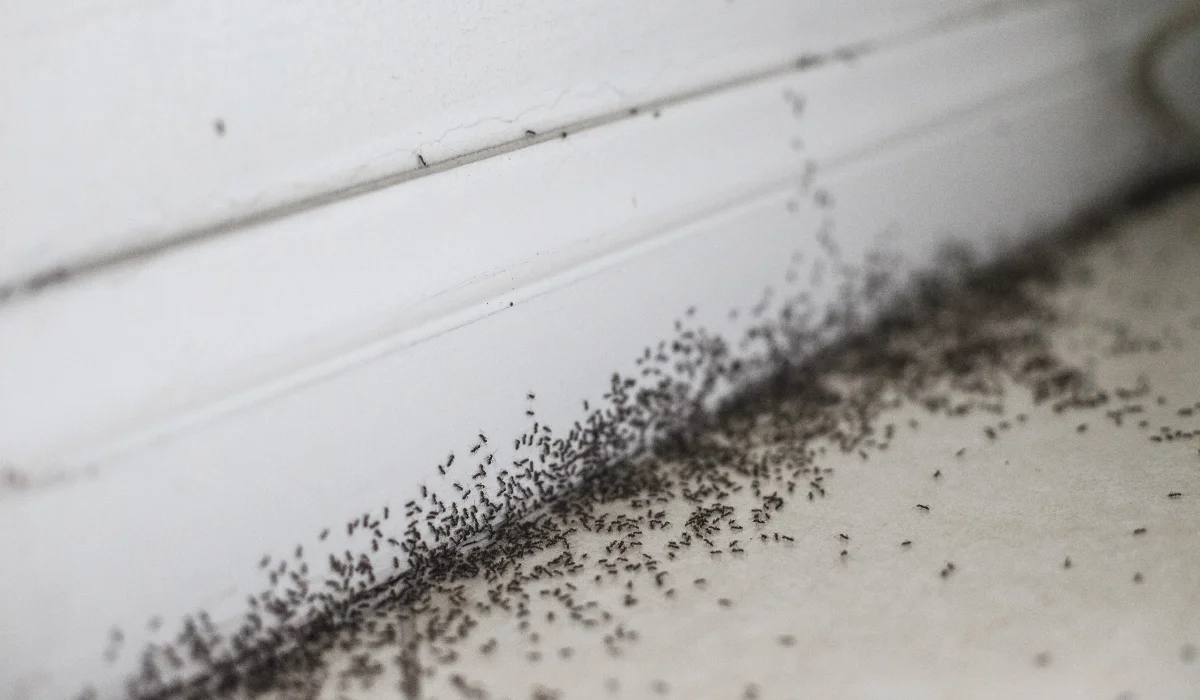
If you notice ant trails moving across your countertops or along your baseboards, those tiny insects are not wandering. When you see a steady line of ants inside your home, it usually means a colony has already discovered something worth returning for.
For many Louisiana homeowners, these ant trails appear overnight. One evening, the kitchen looks spotless, and the next morning, foraging ants are marching toward crumbs, pet food, or trash bins. Warm temperatures and high humidity create ideal conditions for ants, making indoor activity common across South Louisiana.
Understanding what ant trails mean helps you recognize the early signs of an infestation. When trails keep returning, it often signals a larger ant colony nearby and a problem that cleaning alone will not solve. Knowing how these trails work can also help you determine when you need professional pest control to stop the infestation at its source.
What Ant Trails Are Telling You
When you see ant trails, you are watching a communication system in action. Ants leave behind pheromone trails, invisible scent markers that guide others to valuable resources.
These scent trails allow an ant colony to move efficiently between its nest and the food source it discovered. Understanding the message behind those trails helps you respond before a minor issue turns into a larger infestation.
They’ve Found a Food Source
The most common reason for ant trails inside a home is the discovery of a food source. A few worker ants locate crumbs, sugary drinks, or grease and then return to the nest while laying a chemical trail behind them.
Soon, dozens of foragers follow the trail using their antennae to detect the scent. The result is the familiar line of ants moving steadily across floors or countertops.
In Louisiana homes, common attractants include uncovered snacks, crumbs under appliances, and pet food left out overnight. Once ants confirm a reliable food source, the trail often remains active for days.
The Colony Is Expanding
Some ant trails indicate that the colony is growing and sending out more scouts. As an infestation expands, more ants leave the nest to search for resources.
Species such as Argentine ants and pharaoh ants are known for forming long trails when populations increase. These house ants rely heavily on chemical signals to coordinate large groups of foraging ants.
If you begin seeing several ant trails in different areas of the home, it may signal multiple nests or a growing ant problem.
Ants Are Searching for Water
Not every trail leads to food. In Louisiana’s humid climate, ants often search for moisture inside homes.
You may see ant trails leading toward sinks, bathrooms, or leaking pipes. In this case, ants are following a water source rather than crumbs.
Even small amounts of moisture under cabinets or near appliances can attract foragers. Once ants locate a reliable indoor water source, the colony may continue returning to that location.
Trail Clues That Point to the Source
Following ant trails carefully can reveal where ants are entering your home. The direction and behavior of the ants often point to hidden nests or access points.
These clues help homeowners identify the root cause of ant infestations rather than just addressing visible activity.
The Trail Disappears Into a Crack
If ant trails suddenly vanish into a wall seam or floor gap, that spot may be an entry location. In some cases, it can also be a sign that you have hidden ant nests in your walls.
Ants commonly enter through small openings around baseboards, foundation cracks, or window frames. Sealing these entry points with caulking can reduce activity, but it may not eliminate the entire ant colony if nests remain nearby.
Trails Lead Outdoors
Sometimes ant trails begin inside but lead outside. You may see ants traveling under doors, along weather stripping, or through siding gaps.
This often means the ant colony is located outdoors, with worker ants entering for food. Fire ants frequently build mounds in nearby yards and send foraging ants indoors.
Tracing the trail outside may reveal nests in soil, landscaping, or around foundations.
Trails Appear in Multiple Rooms
If several ant trails appear throughout the house, the colony may have multiple nests.
Species like pharaoh ants and argentine ants often create satellite nests. This behavior makes DIY ant control difficult because eliminating one nest does not remove the entire population.
When trails appear in kitchens, bathrooms, and laundry rooms at once, a larger infestation may already be forming.
Where Trails Start in Louisiana Homes
In South Louisiana homes, certain areas frequently become starting points for ant trails. These locations provide food, moisture, or easy access from outside.
Understanding these hotspots can help homeowners respond before ant infestations spread further.
Kitchens and Countertops
The kitchen is the most common location for ant trails. Crumbs on countertops, spills near appliances, and uncovered food quickly attract foraging ants.
House ants often travel along walls or baseboards before reaching a food source. Keeping food sealed in airtight containers and cleaning surfaces regularly helps reduce attractants.
Pet Feeding Areas
Pet feeding areas often become a source of ant trails. Bowls of pet food left on the floor provide easy access to proteins and fats that ants seek.
Once worker ants locate the food source, they mark a strong scent trail so others can follow. Within hours, a steady line of ants may form across the room.
Cleaning feeding areas and storing food in sealed containers can help reduce this activity.
Garbage and Trash Bins
Kitchen trash bins also attract ants. Food residue inside garbage bags creates strong odors that ants detect quickly. Ants may climb inside trash containers and create a regular trail between the bin and their nest. Keeping lids closed and emptying trash regularly reduces the chances of attracting ants.
Safe Next Steps When You See Trails
Seeing ant trails does not always mean a severe infestation, but it does signal that ants have established a route through your home. You can try some natural remedies to keep ants away.
Clean the Trail Area
The first step to getting rid of ants in your home is to clean the surfaces where ant trails appear. Removing crumbs and spills eliminates the immediate food source.
Wiping the area also disrupts pheromone trails ants rely on for navigation. Without those scent trails, many ants lose the path and disperse.
However, cleaning alone does not eliminate the ant colony,ny so that activity may return.
Remove Attractants
Reducing attractants is another important step. Store snacks in airtight containers, wipe down countertops, and avoid leaving pet food out overnight.
Removing food and moisture makes your home less appealing to foraging ants.
These steps can reduce activity while you address the larger ant problem.
Call Pest Control Experts
When ant trails recur or spread through multiple rooms, it’s often a sign that a nearby colony has established a steady route into your home. At that point, professional pest control becomes the most reliable way to stop the problem.
At LaJaunie’s Pest Control, trained technicians identify the ant species, locate hidden nests, and apply targeted ant control strategies designed for homes in south Louisiana. Their treatments focus on eliminating the colony and addressing the conditions that attract ants in the first place.
During the inspection, technicians also check for other pest risks common in Louisiana homes, including termites, which often appear in the same structural areas where ants enter. This thorough approach helps prevent future infestations while protecting your home from multiple pests.
Schedule an Ant Inspection in Louisiana
If you keep seeing ant trails inside your home, ants have likely found food, water, or entry points that allow them inside. Wiping away a line of ants may stop activity briefly, but the ant colony responsible for the trail usually remains nearby. In Louisiana homes, species such as Argentine ants, pharaoh ants, and fire ants can quickly turn recurring ant trails into larger infestations.
At LaJaunie’s Pest Control, our technicians provide thorough inspections and targeted pest control services designed for homes across southeast Louisiana. Our general pest control service covers ants and other common pests that invade homes in the region.
Contact us today to schedule an inspection and restore comfort and peace of mind in your Louisiana home.
FAQs
Why do ants form trails in my house?
Ant trails form when ants create pheromone trails that guide other ants to a food source or water source. Once worker ants locate food, they leave chemical signals that allow the rest of the colony to follow the same route.
Do ant trails mean there is an infestation?
Not always, but repeated ant trails often indicate an infestation nearby. A steady line of ants usually means an ant colony has found food or moisture in your home and continues sending foraging ants to collect it.
Can cleaning remove ant trails completely?
Cleaning can disrupt scent trails and remove attractants, but it rarely eliminates the entire ant colony. If ant trails return frequently, you may need professional pest control experts to locate their nests and prevent future infestations.