

If you’re battling an infestation of Argentine ants in South Louisiana, you’re not alone. These invasive ant species have become a significant pest in our area. But do Argentine ants bite humans?
Here’s everything you need to know about this ant species, how they behave, and how to manage an infestation effectively.
Key Takeaways
- Argentine ants bite, but their bites are mild and do not cause pain or medical problems.
- They live in large colonies, displace native ants, and invade homes looking for food and water.
- Removing them involves finding nests, using ant baits, and sealing cracks to stop them from entering.
- Pest control experts use safe methods to eliminate colonies and provide long-term solutions for keeping ants out.
CAN ARGENTINE ANTS BITE YOU?
Argentine ants bite, but their bites are mild and not painful. Unlike red imported fire ants, they lack a stinger and venom, so they are not a medical concern for humans or pets. These ants are more of a nuisance than a physical threat.
When large colonies are disrupted, worker ants may pinch in defense, but their bites rarely cause discomfort.
HOW ARGENTINE ANTS CAUSE PROBLEMS BEYOND THEIR BITES
While Argentine ants are not known for aggressive biting, their behaviors and biology make them a significant nuisance. These ants originated in South America, specifically Argentina and Brazil, before spreading to other parts of the world, including the Southern United States.
Their ability to thrive in warm, humid climates like Southern Louisiana means you’re likely to encounter them in large numbers.
Here’s why their presence can still lead to concerns:
- Large Numbers: These invasive species live in large colonies with multiple Argentine ant queens, so their populations can grow exponentially.
- Aggression Toward Native Ants: Argentine ants often displace native ants, upsetting the local ecosystem.
- Food and Water Dependence: They are attracted to sweet foods, honeydew from aphids, and other readily available food sources.
- Indoor Infestations: Their need for water often drives them indoors, where they are found near water pipes, kitchens, and bathrooms.
- Pheromone Trails: Argentine ants use a strong pheromone trail system, making them highly organized in their search for food.
HOW TO GET RID OF ARGENTINE ANTS
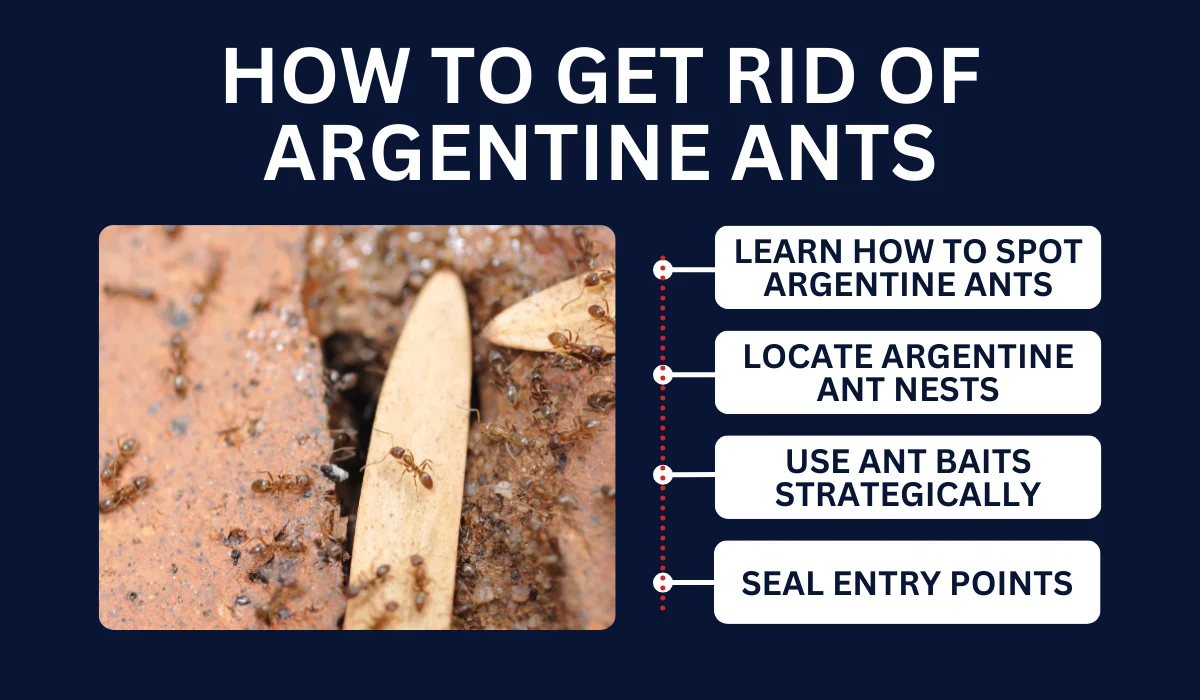
Eliminating an Argentine ant infestation requires persistence and a multi-step approach. Here’s how to tackle this ant problem effectively:
Learn How to Spot Argentine Ants
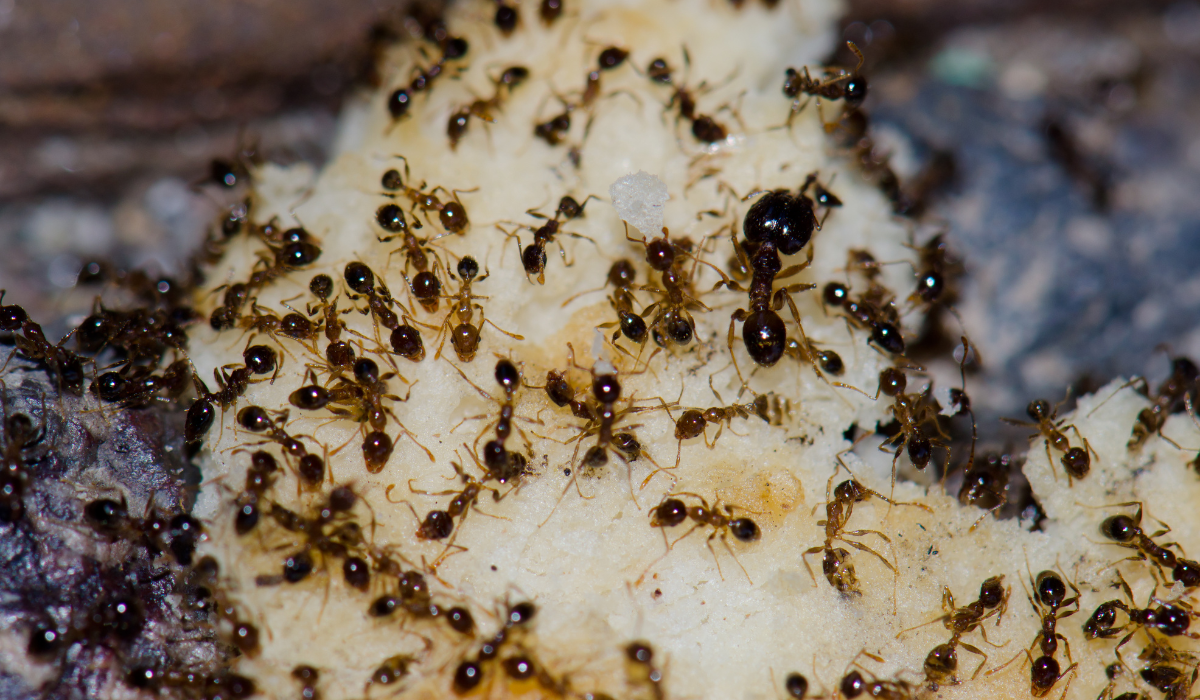
Argentine ants are small and dark brown, with visible antennae.
When crushed, they emit a musty odor, a unique trait among species of ants. They are often confused with odorous house ants, but their sheer numbers and organized trails usually give them away.
Locate Argentine Ant Nests
Argentine ants like damp spots to set up their nests, so you’ll often find them in soil, under mulch, or even tucked away inside wall voids.
Spotting the Argentine ant nest is key to controlling these pests. Follow their pheromone trails to figure out where they’re hiding-sometimes it’s as simple as checking near rocks or along water pipes.
Once you know where they’re nesting, you can focus your efforts on clearing them out for good.
Use Ant Baits Strategically
One of the most effective methods for ant control is the use of ant baits.
Worker ants collect the bait and carry it back to the Argentine ant colonies, spreading it to other ants and the queens. This method targets the entire colony rather than just individual ants.
Seal Entry Points
Argentine ants often enter homes through cracks and crevices.
Inspect your home for entry points, such as gaps around windows or doors, and seal them with caulk or weatherstripping.
WHY CHOOSE A PEST MANAGEMENT PROFESSIONAL
At LaJaunie’s Pest Control, we specialize in handling difficult infestations like argentine ants infestations in New Orleans and the surrounding areas.
Our tailored services include:
- Locating and treating Argentine ant supercolonies.
- Using safe and effective methods, such as professional-grade baits and sprays.
- Providing long-term prevention strategies to ensure your home stays ant-free.
If you’re dealing with a persistent ant problem, don’t wait until it gets worse. Call us today to schedule a consultation and regain control of your home.