

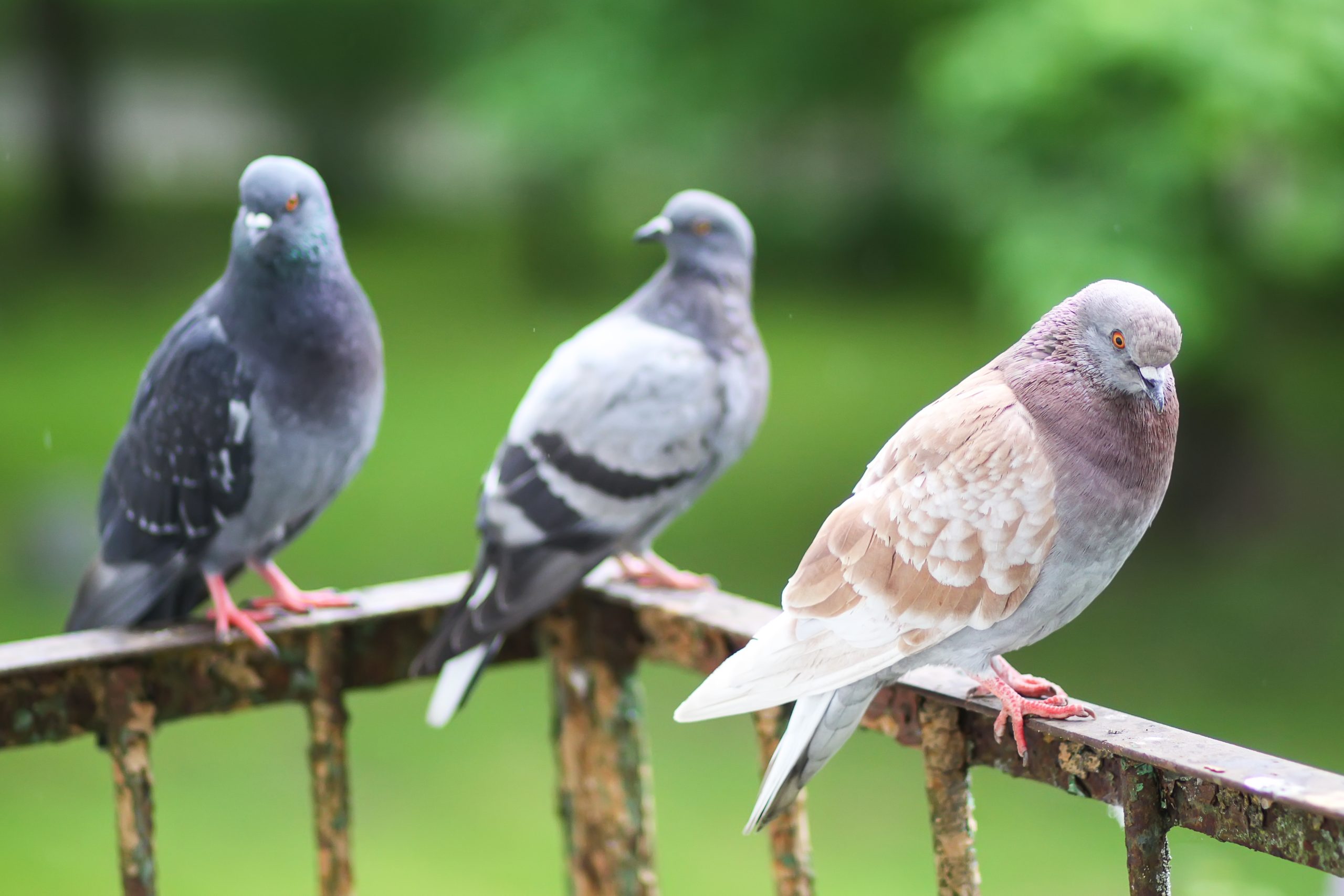
You step onto your balcony and find droppings along the railing cap, a smear across the ironwork, maybe a handful of feathers wedged into the corner bracket. By the time you look up, the pigeons are already gone, perched on the roofline or circling the block. That’s not random. New Orleans balconies, with their cast-iron railings, covered galleries, and sheltered overhangs, give pigeons exactly what they need: a stable ledge, shade from the afternoon heat, and easy access to food below. This guide covers the pigeon control strategies New Orleans property owners can actually use, from the right physical deterrents for historic ironwork to knowing when a professional inspection makes more sense than another trip to the hardware store.
Key Takeaways
- Pigeons treat your balcony as a fixed territory once they’ve settled, so acting early makes them easier to redirect.
- Droppings, nesting debris, and food scraps left on or near your balcony keep drawing the flock back even after you clean the surface.
- Netting and spikes are the most reliable long-term methods; gels and sprays alone tend to need frequent reapplication in New Orleans’ rainy climate.
- Once droppings have built up over several weeks, professional cleanup and deterrent installation together are safer and more effective than a DIY fix.
Why New Orleans Balconies Attract Pigeons
Pigeons are cliff-nesters by instinct, which makes urban ledges and railings a natural substitute for the rock faces they prefer in the wild. New Orleans adds a few local conditions that make the problem especially common here.
The city’s warm, humid climate means pigeon populations tend to stay active year-round, with less of the seasonal slowdown seen in colder parts of the country. Covered galleries, the wide, roofed platforms that extend over the sidewalk in the French Quarter and surrounding neighborhoods, provide shelter from the frequent afternoon rain. Narrow streets concentrate foot traffic and food scraps below, cutting down how far pigeons have to travel to feed.
The ornate wrought- and cast-iron balconies that define so much of New Orleans architecture also happen to be ideal perching structures. The horizontal rails give birds a flat, stable surface. The decorative scrollwork and brackets create sheltered corners where nesting material can be tucked out of sight. Once a pair settles, others follow, and a single balcony can become a regular roosting spot for a small flock within a season.
What Pigeon Droppings Actually Do to Your Balcony
Pigeon droppings aren’t just unsightly. The uric acid in bird waste is corrosive, and on a New Orleans balcony, the materials at risk are exactly the ones that are hardest to replace: iron railings, painted finishes, and the mortar or stucco of older brick facades. Bird droppings carry uric acid at a pH between 3 and 4.5, comparable to vinegar, and moisture accelerates the damage on iron surfaces. The InterNACHI resource on pest birds outlines how this kind of buildup develops on common building materials.
Dried droppings also become a slip hazard on balcony floors, and when they break up during cleaning or on a windy day, the particles become airborne. The Louisiana Department of Health advises treating accumulated bird guano in pigeon habitats as potentially contaminated with environmental fungi. The CDC recommends that large accumulations be removed by professional companies equipped for hazardous waste cleanup rather than disturbed with ordinary household methods.
Pigeon Control Strategies That Work on Balconies
Deterrent options range from simple and inexpensive to installation-based and permanent. Which ones work depends on your balcony’s layout: a narrow second-floor gallery on Royal Street is a different problem from a wide rooftop deck in the Warehouse District. The key is matching the method to the surface, not just buying whatever’s available at the hardware store.
Bird Netting
Netting is the most complete solution when pigeons are actively roosting or nesting on a balcony. A properly installed system closes off the entire open face of the space, blocking access behind the railing or under a covered gallery. Today’s netting is low-profile enough to work in historic neighborhoods where the appearance of the ironwork matters.
Anti-Roosting Spikes
Spikes work on defined landing surfaces: the top of a railing cap, a window ledge, or a flat beam pigeons use before dropping to a lower roost. They don’t injure the birds; they make the surface too uncomfortable to stand on. On a narrow balcony railing, spikes alone are often enough. On wider ledges or covered galleries where birds have more room to work around them, spikes are most effective paired with netting.
Tension Wire Systems
Thin wires stretched along railings and ledges give pigeons an unstable surface to land on, which most avoid. They’re harder to see than spikes, which makes them a reasonable choice for wrought-iron railings where the visual detail matters. Installation has to be precise: wires at the wrong height or tension lose most of their effect.
Bird Repellent Applications
Repellent gels and sprays make ledge surfaces uncomfortable to stand on. They’re useful on surfaces where spikes or netting can’t be easily anchored, but they’re a supplement, not a replacement. In a climate with regular rain, expect to reapply them more often than the packaging suggests.
Removing What’s Attracting Them
Any deterrent works better when the food and water drawing pigeons to your building are gone first. On the balcony, that means:
- No pet food left outside
- Planters kept free of seeds or grain-based fertilizers
- Standing water removed
- Trash covered and food scraps cleared after use
Pigeons that find nothing to eat or drink nearby are less likely to keep working their way back.
When DIY Approaches Stop Working
A few hardware-store spikes can discourage pigeons from one railing, but once a flock has been roosting somewhere for more than a few weeks, they’ve already made it their territory. At that point, they’ll work around minor obstacles, shift to an untreated surface nearby, or return as soon as something is moved.
There’s also the problem of what you can’t see. Nesting material often ends up in gaps, under overhangs, or inside brackets that aren’t obvious from standing level. Removing visible droppings while those spots stay intact is a temporary fix. Pigeons tend to return to the same locations repeatedly, so without a complete assessment of where they’re getting in and where they’re roosting, the problem restarts.
A professional inspection covers the whole space: entry points, active roosting areas, droppings buildup, and the right combination of deterrents for your specific balcony. It also means accumulated droppings get handled correctly, without the health risks that come from disturbing dried guano without protective equipment.
Pigeon Control Strategies: Bottom Line
A pigeon problem on a New Orleans balcony doesn’t fix itself. Once a flock claims a spot, they return to it, and the longer that continues, the more the droppings damage the materials underneath. Removing food and water sources, installing the right deterrents for your balcony’s layout, and closing off entry points to sheltered areas are what actually stop the cycle.
LaJaunie’s Pest Control has operated in New Orleans since 2008. Our bird control service begins with a free inspection to identify roosting areas and recommend the most effective exclusion strategy for your property. If you’re seeing visible damage to your railing or a buildup of droppings that’s been there more than a few weeks, a free inspection with LaJaunie’s is the practical next step.
Frequently Asked Questions
Will bird spikes damage my wrought-iron railing?
Spikes attach with adhesive or mounting brackets, so no drilling into the iron is required. A professional will choose the attachment method that suits your railing’s material and finish. If you have historic ironwork and want to be careful about what gets applied to it, say so when you book the inspection.
How do I safely clean up pigeon droppings already on my balcony?
For small, isolated spots, mist the area lightly with water before you touch anything. Wet droppings don’t release airborne particles the way dry ones do. Wear gloves and a dust mask and bag the material before disposal. For larger accumulations that have been sitting for weeks or months, call a professional. Disturbing heavy droppings without proper protective equipment carries real respiratory health risks.
Can pigeons get under the netting if it isn’t installed correctly?
Yes. Even small gaps at the edges or anchor points can allow pigeons to get through. Proper installation and regular inspections help keep the system effective over time.
Do pigeons really stay active year-round in New Orleans?
In most of the country, pigeon activity drops in winter. In New Orleans’ mild climate, that slowdown is less pronounced, which means populations here can build up faster over the course of a year. Catching a small roosting group early is easier and less expensive than dealing with an established flock.
Does LaJaunie’s work on balconies in condos and multi-unit buildings?
Yes. LaJaunie’s handles both residential and commercial pest control in New Orleans, including condos, apartments, and mixed-use properties. If your building needs coordination with a property manager or HOA, let the team know when you call so they can factor that into the inspection plan.