



You may have heard of an old story about an earwig bug crawling into someone’s ear, and it has left you wondering whether it’s real or not.
The truth is: earwigs do not hunt for sleeping people, burrow toward the brain, or lay eggs inside human ears. They look for moisture, food, and tight hiding spots. This guide explains what earwigs are, what attracts them, why they enter Louisiana homes, and how to respond when they keep showing up.
Do Earwigs Crawl Into Your Ear?
An earwig can enter an ear by accident, just as another small insect can. That does not mean earwigs seek human ears or use them as nesting sites. Their normal hiding places are under damp leaves, mulch, bark, stones, boards, and flowerpots.
A published medical case report described a 24-year-old man who woke with pain and ringing in one ear. A doctor removed an earwig from the external ear canal. The examination found no injury to the canal or eardrum, and his hearing test was normal. The case documents a rare accident. It does not support the stories about earwigs laying eggs, eating brain tissue, or tunneling through the skull.
| The Earwig Myth | What Happens in Real Life |
| Earwigs search for sleeping people | They search for moisture, food, and shelter |
| They burrow toward the brain | They do not burrow through human tissue |
| They lay eggs inside ear canals | Females lay eggs in protected outdoor nests |
| Their pincers inject venom | Earwig pincers contain no venom |
| An indoor earwig is trying to reach a person | It likely entered through a nearby crack or gap |
Tip: Do not place cotton swabs, tweezers, hairpins, or other objects into an ear when an insect may be inside. Those items can push it farther into the canal or cause an injury. Pain, bleeding, drainage, or a change in hearing calls for medical attention.
Why the Earwig Bug Myth Refuses to Die
The insect’s name keeps the superstition alive. Its flat body fits into narrow spaces, and the pincers at the end of its abdomen look threatening. Those details made the story easy to repeat long before people understood how earwigs live.
Some versions of the myth claimed earwigs caused insanity after reaching the brain. Others said they laid eggs inside the skull. Earwig bug feeding, nesting, and reproduction do not match either claim.
What Is an Earwig Bug and What Does It Look Like?
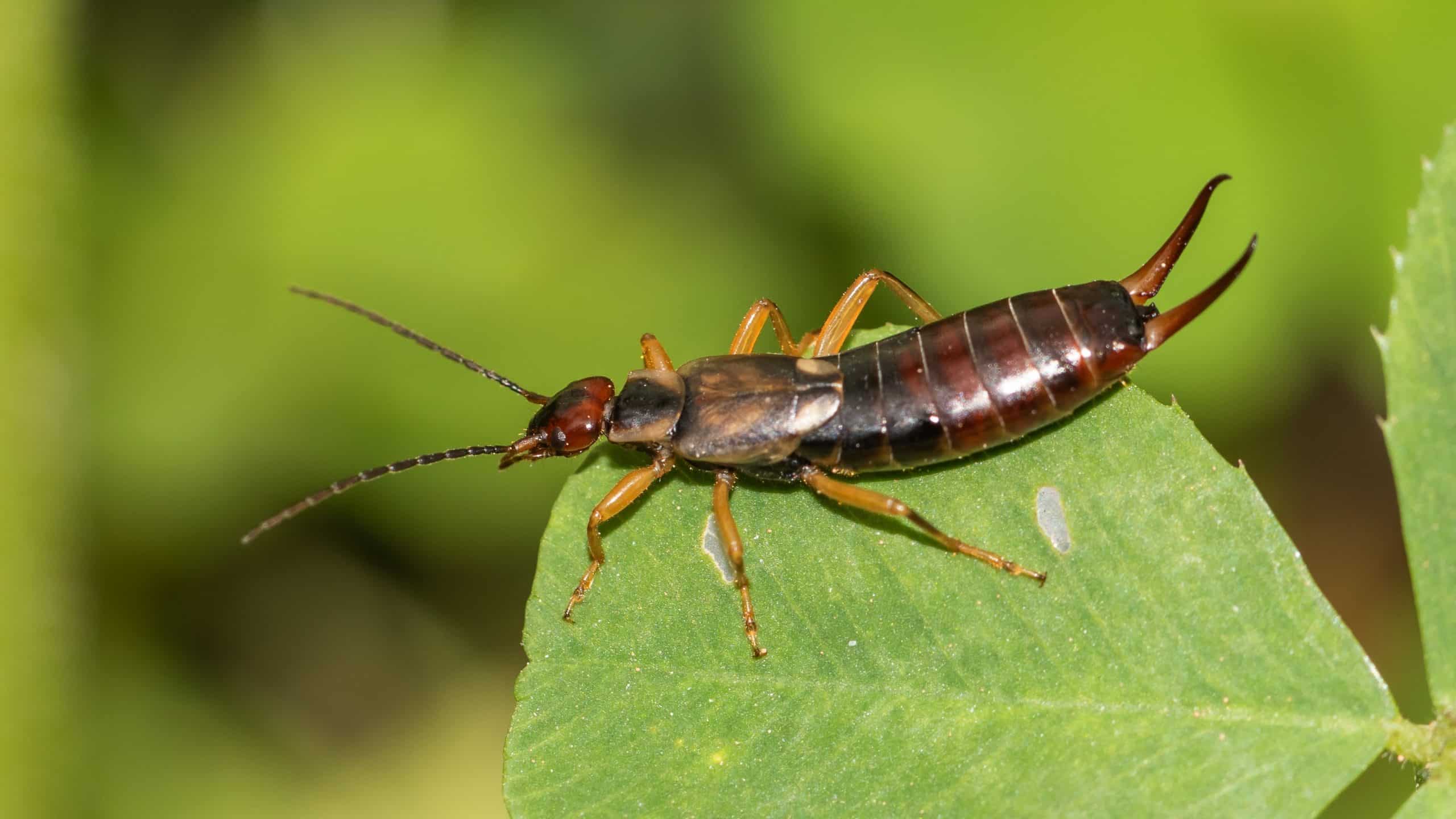
An earwig is a narrow, six-legged insect with long antennae and a pair of visible pincers at the rear of its body. Many homeowners call it a pincher bug because those pincers are its most recognizable feature.
Earwigs use the pincers for defense, mating, and handling food. Most will run for cover when disturbed rather than stand and fight. Their flat bodies help them hide beneath bark, stones, pots, mulch, and other objects that rest close to the soil.
The University of Minnesota Extension describes the common earwig bug as about 5/8 inch long. Female earwigs also guard their eggs and newly hatched young, which is unusual among many insects found around homes.
| Identification Point | What to Look For |
| Typical length | About 5/8 inch for a common adult |
| Color | Brown, reddish-brown, or dark brown |
| Shape | Narrow, elongated, and slightly flattened |
| Antennae | Long and segmented |
| Rear of body | Two visible pincers |
| Active period | Mostly after dark |
| Daytime shelter | Mulch, leaves, boards, bark, pots, and cracks |
Male pincers often curve more than female pincers. Young earwigs look like smaller, paler adults and become darker as they develop.
What Do Earwigs Eat?
Generally, earwig bugs feed on dead insects, decaying plant matter, insect eggs, and small living insects. They may also chew tender leaves, flowers, seedlings, soft fruit, and corn silk.
This mixed diet explains why gardeners have different opinions about them. A few earwigs may eat aphids and insect eggs. A larger group can damage young plants during a single night of feeding.
What Attracts Earwigs to Louisiana Homes?
Earwigs need moisture and protected cover. Warm, wet areas around a home can give them both, especially where mulch, leaves, pots, and dense plants block sunlight from reaching the soil.
Heavy rain may drive earwigs from saturated ground. A hot, dry period can also send them toward cooler spaces. Once they reach the exterior wall, a worn door sweep or utility gap can provide an easy route indoors.
Why Are Earwigs in My House?
An earwig bug found in a bathroom may not have entered through the drain. It may have crossed the house after coming through an exterior gap and then stopped where humidity was higher.
The location of the sighting gives you a place to begin. Check the outside wall nearest the room, then inspect doors, pipes, vents, mulch, drainage, and damp materials near the foundation.
| Condition Near the House | Why Earwigs Use It | What to Do |
| Thick mulch against siding | It stays damp and blocks sunlight | Pull it away and reduce its depth |
| Wet leaves beneath shrubs | They provide food and daytime cover | Rake and remove the buildup |
| Leaking faucet or irrigation line | It keeps the surrounding soil moist | Repair the leak |
| Pots resting on bare soil | The space underneath stays dark and cool | Raise or move the pots |
| Poor drainage | Water remains beside the foundation | Redirect runoff |
| Damaged door sweep | Earwigs can crawl beneath the door | Replace the sweep |
| Openings around pipes or cables | They create a route indoors | Seal the gaps |
| Wood or cardboard on the ground | Both provide protected hiding sites | Store them off the soil |
Start the inspection outside the room where you found the insect. Treating the bathroom will not solve a problem that begins in wet mulch on the other side of the wall.
Are Earwigs Dangerous to People, Pets, or Homes?
Earwigs are not venomous, and they cannot sting. They may use their rear pincers when trapped against the skin or picked up, but most try to escape when exposed.
Do Earwigs Bite?
Earwig bugs have chewing mouthparts, though biting people is not their usual defense. The sensation people describe as an earwig bite is often a pinch from the rear of the insect. This may feel sharp and can leave temporary redness. Serious injuries are uncommon, and earwigs do not inject venom or spread poison through the skin.
Earwigs also do not eat wood, drywall, insulation, or household wiring. They cannot cause the type of structural damage associated with termites or wood-boring insects.
Pets face little risk during a normal encounter. A dog or cat may paw at an earwig, and the insect may try to defend itself. Earwigs do not live on pets or use animals as hosts.
Does One Earwig Bug Mean an Infestation?
One earwig indoors may be a stray. It could have slipped beneath a door, entered through a foundation crack, or arrived on a flowerpot, cardboard box, or bundle of outdoor material.
An earwig bug infestation is more likely when you find several insects in the same area day after day. Repeated activity in a bathroom, laundry room, garage, or doorway often points to damp shelter and an exterior opening nearby.
Are Earwigs Bad for the Garden?
Earwigs can help in a garden by feeding on aphids, insect eggs, and decaying material. They can also harm seedlings, flowers, fruit, and other tender plant growth when their numbers rise.
The University of California Integrated Pest Management identifies earwigs as both plant pests and predators of aphids. Their presence alone does not call for treatment. Look for repeated feeding and visible plant damage first.
How to Recognize Earwig Bug Damage
Earwig feeding often leaves irregular holes in leaves or petals. Young seedlings may lose entire sections, while soft fruit may show shallow chewing around damaged or overripe areas.
Take a flashlight into the garden an hour or two after sunset. Look under damaged leaves, inside flowers, near ripening fruit, and around the base of the plant. Earwigs are easier to identify while feeding than while hiding during the day.
Compare the damage with signs left by other pests. Slugs and snails often leave slime. Caterpillars may leave droppings or webbing. Earwigs leave uneven chewing without a slime trail.
Rolled newspaper, short cardboard tubes, or pieces of hose can serve as simple monitoring traps. Place them near damaged plants before dark, then check them the next morning.
How to Get Rid of Earwigs and Keep Them Out
Good earwig control begins outside. Remove the moisture and shelter that allow them to stay close to the home, then close the gaps they use to get inside.
Clear wet leaves, boards, cardboard, and plant debris from the foundation. Thin deep mulch and leave a drier strip beside the exterior wall where the property allows it. Check gutters, downspouts, hose bibs, air-conditioning drainage, and irrigation lines for water that collects near the house.
How to Prevent Earwig Bugs Indoors
Replace worn door sweeps and damaged weatherstripping. Seal openings around utility lines, vents, siding edges, and the foundation. Repair torn screens and check doors that do not close tightly.
Vacuum or sweep up earwigs found indoors. Spraying one insect may kill what you see without affecting the outdoor source that keeps sending more inside.
Garden traps can reduce small groups near vulnerable plants. Rolled newspaper, corrugated cardboard, bamboo tubes, and shallow oil traps can catch earwigs as they search for daytime shelter. Check each trap daily so it does not become another hiding place.
When Professional Earwig Bug Control Helps
Professional service makes sense when earwigs appear indoors each day, gather in large numbers near the foundation, or continue damaging plants after you reduce moisture and hiding places.
A technician can inspect the areas where earwigs rest, feed, and enter. That includes foundation edges, mulch beds, doors, windows, utility openings, landscaping, and damp areas around the structure.
The old ear-crawling story is not a reason to panic. Repeated sightings are a reason to inspect the home and correct the conditions that keep bringing the pest back. Contact us to schedule service. LaJaunie’s Pest Control can locate the source, treat active areas, and help reduce the moisture and shelter that support continuing earwig bug activity.