

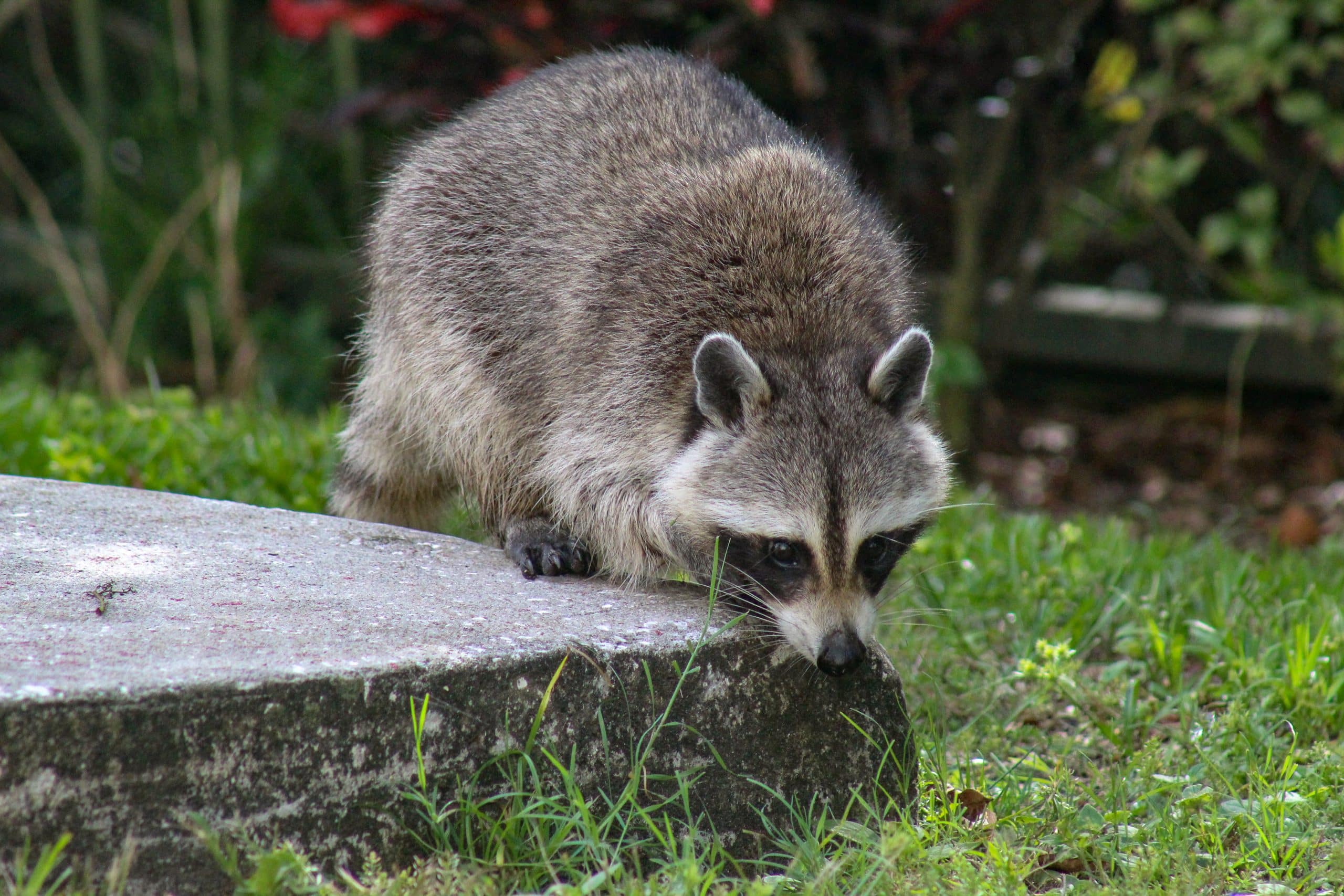
Finding raccoon poop in your yard is more than a sanitation problem. One dropping may come from an animal passing through, but fresh waste that keeps appearing in the same area often points to a raccoon latrine. Raccoons return to these bathroom sites, which allows feces and contaminated soil to collect over time.
Raccoon droppings may contain microscopic roundworm eggs. You cannot see the eggs or tell whether a pile carries them. Children and pets should stay away from the area until you know how much of the yard is affected and whether the animal is still active.
Louisiana properties give raccoons plenty of places to feed and shelter. Trash cans, pet bowls, decks, raised homes, crawl spaces, sheds, and damaged roof edges can all support repeat visits. Picking up one pile does not solve the problem when the raccoon has a reason to return.
How to Tell If It Is Raccoon Poop
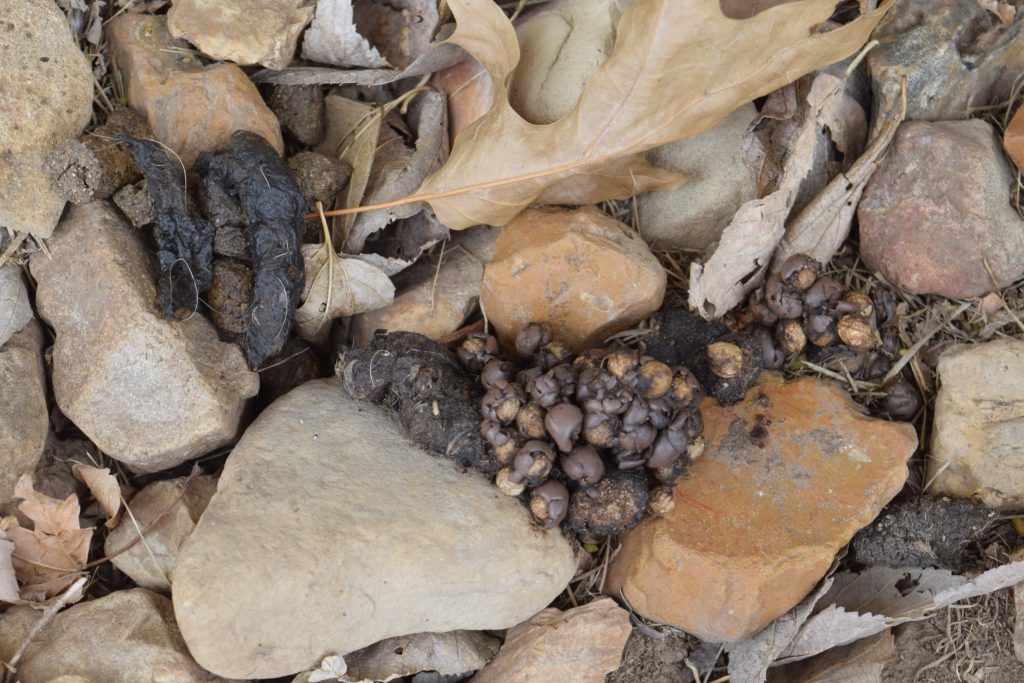
Fresh raccoon poop is usually dark brown or black. It tends to have a tubular shape with blunt or slightly tapered ends. Many droppings measure about two to three inches, although size and shape change with the raccoon’s diet and age.
Seeds, berry skins, insect parts, and other food remains may be visible. Older feces becomes lighter, drier, and easier to break apart. Do not crush the waste to inspect it. Dry material can spread into nearby soil, mulch, or cracks.
Appearance gives you clues, but it does not confirm the animal. Dog, coyote, and opossum feces may look similar. The pattern and location often tell us more than the shape.
| What You Notice | What It May Mean | Best Next Step |
| One dropping with no other signs | An animal may have crossed the yard | Watch the area for several nights |
| Several piles in one small location | A raccoon latrine may be active | Keep people and pets away |
| Fresh and dry droppings together | Raccoons have used the site over time | Treat the surrounding surface with caution |
| Waste near a damaged soffit or vent | A raccoon may be entering the home | Arrange a wildlife inspection |
| Droppings inside an attic or crawl space | The animal may be sheltering indoors | Avoid disturbing insulation or stored items |
Where Raccoon Latrines Are Usually Found
Raccoons often choose flat or raised surfaces. Common latrine sites include decks, patios, large rocks, fallen logs, tree bases, woodpiles, roofs, sheds, garages, and attics. They may also use sandboxes, garden beds, and dry areas beneath raised homes.
A latrine and a den are not always in the same place. A raccoon may sleep inside an attic and leave droppings on a deck or near a tree. That is why finding raccoon poop in the yard should lead to a wider look at the property.
Why Raccoons Keep Returning to Your Yard
Raccoons stay where food, water, and shelter are easy to find. Loose garbage lids, outdoor pet food, bird seed, compost, fallen fruit, and grease on grills can support nightly visits. Water bowls, clogged drainage areas, and containers that collect rainwater give them another reason to stay close.
Shelter may be under a deck, inside a shed, beneath a raised home, or along the roofline. Loose soffits, open vents, damaged fascia, weak crawl-space doors, and gaps around utility lines can become entry points.
Remove Food and Water Sources
Use garbage cans with tight lids and wipe food residue from the outside. Bring pet food and water indoors before dark. Pick up fallen fruit, store animal feed in closed containers, clean grills after use, and secure compost.
Cover sandboxes when they are not in use. Remove clutter beneath decks and sheds where raccoons can hide. These changes may reduce yard activity, but they will not remove an animal already living inside the structure.
Inspect Before Closing Openings
Do not seal a suspected entry hole until you know no raccoon or young remain inside. A trapped adult may tear through another part of the building. Young animals left behind can die inside, causing odor, flies, and more contamination.
Wildlife work must happen in the correct order. Locate the active areas first. Remove or exclude the animals next. Close every likely opening after the structure is clear, then address the contaminated spaces.
Why Raccoon Poop Can Be Dangerous
The main health concern linked to raccoon feces is raccoon roundworm. Infected animals pass microscopic eggs in their droppings. People become infected after swallowing developed eggs from contaminated hands, soil, water, food, or objects.
Seeing or smelling raccoon poop does not cause an infection. Exposure becomes more likely when someone handles contaminated dirt or outdoor items and later touches their mouth. Gardening, eating outdoors, handling toys, and tracking soil into the home can create that route.
The Centers for Disease Control and Prevention (CDC) explains that newly passed eggs need about two to four weeks to become infectious. Once developed, they can remain in the environment for years under suitable conditions. Prompt removal of new waste may reduce the amount of long-term contamination left behind.
| Verified Fact | Why It Matters |
| Eggs need about two to four weeks to become infectious | Recent waste should be removed before the site grows |
| Developed eggs can remain outdoors for years | Older latrines may leave contaminated soil behind |
| Infection occurs when eggs are swallowed | Handwashing and restricted access matter |
| Human infection is uncommon | Homeowners should respond with care, not fear |
| Severe cases can affect the eyes or nervous system | Suspected ingestion requires medical guidance |
Why Established Latrines Need More Care
An old raccoon latrine can contain feces at several stages of decay. Some waste may sit on top of the soil, while older material has already mixed into dirt, mulch, cracks, or damaged wood. Rain, pets, shoes, and yard equipment can move that material beyond the visible pile.
The Texas Department of State Health Services reports that one adult raccoon roundworm can produce more than 100,000 eggs per day. This does not mean every pile contains roundworm eggs. It does explain why a long-used site should not be treated like ordinary pet waste.
Who Has a Higher Chance of Exposure?
Young children spend more time close to the ground and place their hands near their mouths more often. Sandboxes, play areas, and low garden beds deserve extra attention when raccoon droppings appear nearby.
Gardeners and outdoor workers can carry contaminated dirt on gloves, tools, shoes, or clothing. Anyone who may have swallowed soil or material from a raccoon latrine should contact a medical professional and explain the possible exposure.
Is Raccoon Poop Dangerous to Dogs?
Raccoon poop can be dangerous to dogs because dogs investigate smells with their noses and mouths. A dog may lick contaminated soil, eat feces, dig through a latrine, or catch a small animal carrying roundworm larvae.
The Companion Animal Parasite Council states that dogs may become infected after swallowing developed eggs or eating infected prey. Keep pets away from suspected latrines, and call your veterinarian if a dog may have eaten raccoon poop or contaminated dirt.
Tell the veterinarian exactly what the dog encountered. Do not give leftover deworming medication. Parasite coverage and dosage differ among products, and the wrong treatment may not address the exposure.
How the Surface Changes the Risk
Raccoon feces on concrete is different from feces mixed into grass, sand, mulch, or attic insulation. Hard surfaces are easier to inspect and clean. Loose and porous materials can hold contamination below the visible surface.
| Location | Main Concern | When to Seek Help |
| Grass or loose soil | Material may remain after the visible waste is removed | The latrine is old or covers a wide area |
| Concrete or pavers | Waste can settle into seams and cracks | Several piles cover the surface |
| Wood deck | Feces can fall between boards | The underside cannot be reached safely |
| Sandbox | Children have direct contact with the material | Any repeated latrine is found inside |
| Vegetable garden | Soil and low produce may contact feces | Droppings return near food plants |
| Attic insulation | Feces and urine soak into porous material | Waste has accumulated indoors |
| Crawl space | Tight access spreads dirt onto clothing and tools | Entry requires crawling through the site |
Discard produce that has touched visible animal waste. Do not move contaminated soil to another part of the yard. A shovel, mower, rake, or shoe can carry material farther than you expect.
How to Clean Up Raccoon Poop Safely
Start by blocking access to the area. Bring children indoors, keep dogs on a leash, and mark the site so nobody walks through it. Check the surrounding ground before touching the droppings because older waste may be mixed into the surface.
Do not mow, rake, sweep, or use a leaf blower around raccoon poop. These tools can break apart dry feces and scatter contaminated material. A strong hose can push dirt toward walkways, drains, gardens, or play areas.
Cleaning a Small Outdoor Site
Some homeowners may be able to handle a small amount of recent waste on an accessible hard surface. Wear disposable gloves and clothing that covers your skin. Remove the feces without crushing it, place it in a secure bag, and follow local disposal rules.
Keep used tools outside until they have been cleaned through an appropriate method. Check your shoes before walking indoors. Remove gloves without touching the outside, then wash your hands with soap and water.
Ordinary household disinfectants should not be treated as a reliable way to destroy raccoon roundworm eggs. Public health guidance relies on careful physical removal and controlled heat for suitable surfaces. Boiling water, steam, or flame can cause burns, fires, and property damage, so the method must fit the surface and setting.
When DIY Cleanup Is Not a Good Choice
Do not clean the site yourself when waste has accumulated over time, spread through loose soil, or contaminated insulation and stored belongings. Attics, wall voids, and crawl spaces are difficult to enter without carrying material onto clothing, ladders, flooring, or tools.
Fresh feces that returns after cleanup is another warning. It means the raccoon is still using the property. Picking up each new pile will not stop the pattern if the animal has access to food, shelter, or an opening into the home.
When to Call LaJaunie’s for Raccoon Activity
Repeat droppings usually mean the problem extends beyond one section of the yard. A raccoon may be feeding outside, denning beneath the home, or entering through a damaged roof edge. The latrine and the den may be on opposite sides of the property.
LaJaunie’s Pest Control offers wildlife inspections that can cover the yard, foundation, crawl space, eaves, roofline, vents, soffits, fascia, cabinets, and attic. We look for tracks, droppings, nesting material, damaged insulation, and openings that show how the animal moves through the property. The work may include trapping, exclusion, vent screening, void closure, sanitation, attic remediation, or repairs.
Raccoon poop in your yard does not call for panic, but repeated piles need a proper response. Keep people and pets away, avoid spreading the waste, and watch for fresh activity. When the latrine returns or a raccoon has entered the structure, contact us and schedule an inspection.