



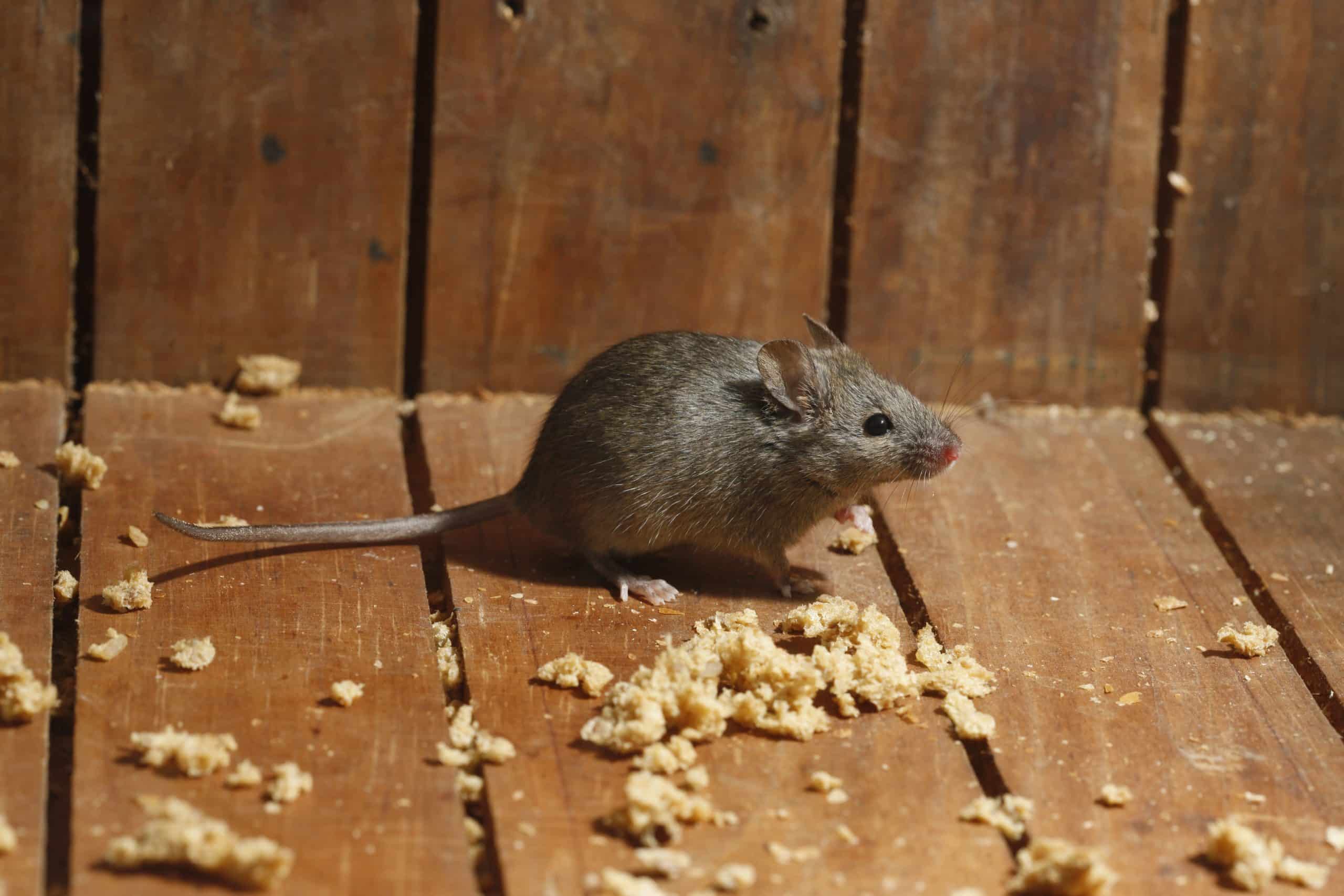
A house mouse does not need much to settle into your home for winter. A small opening can get it inside, while a wall void, attic, cabinet, or garage can provide shelter close to food. Once mice start using those areas, the problem can continue without many sightings. Knowing where they enter, what evidence they leave, and what keeps them inside helps you respond before the activity spreads.
Why House Mice Move Indoors in Winter
House mice do not hibernate. They remain active through winter and continue searching for food and shelter as outdoor conditions change.
Your home can give them both without requiring much travel. Kitchens have stored food and crumbs. Garages may contain pet food, birdseed, cardboard, or bags of grass seed. Attics and wall voids provide protected areas where a mouse can move without crossing an open room.
The National Pest Management Association estimates that rodents enter about 21 million U.S. homes each winter. That number includes different rodent species, but it shows how common the move toward structures becomes during colder weather.
Mice in Louisiana do not need freezing temperatures to start using a house. Cooler nights, fewer outdoor food sources, and steady indoor shelter can be enough to make garages, attics, crawl spaces, and wall cavities useful places to stay.
Where Do Mice Go in Winter?
Once a house mouse finds good conditions indoors, it may stay close to one section of the property. It does not have to travel from one end of the building to the other every night.
The University of Kentucky Department of Entomology reports that house mice commonly forage about 10 to 25 feet from a nest. That limited range explains some confusing mouse problems. You may hear movement in a wall near the kitchen and find droppings in a pantry several feet away. Both signs can belong to the same activity area.
How Do Mice Get in the House?
You do not need a wide-open door to end up with mice in the house. Some mouse entry points look almost too small to matter.
The Centers for Disease Control and Prevention (CDC) states that mice can fit through a hole about 1/4 inch wide, or roughly the width of a pencil. That puts small gaps around doors, pipes, siding, vents, and utility lines on the inspection list.
Pay close attention to AC penetrations, raised foundations, crawl-space openings, soffits, fascia, and roof connections. A gap may be difficult to see from the yard but still connect directly to an attic or wall cavity.
Common House Mouse Entry Points
| Area of the Home | What to Look For |
| Exterior doors | Worn sweeps, damaged weather stripping, gaps at lower corners |
| Garage doors | Space along the bottom and sides |
| Foundation | Cracks and small gaps where materials meet |
| Plumbing and utilities | Open space around pipes, cables, wiring, and HVAC lines |
| Siding | Loose sections, damaged edges, construction gaps |
| Crawl space | Torn screening, gaps around pipes, loose access doors |
| Roofline | Openings around soffits, fascia, eaves, and vents |
| Attic | Damaged screening, roof connections, visible daylight through gaps |
Signs of Mice in the House
Seeing a house mouse makes identification simple. Many homeowners never get that clear a look.
Mouse droppings may appear first. You can find them beneath sinks, inside cabinets, near food storage, along garage walls, or in an attic. Chewed packaging, mouse gnaw marks, and shredded paper or fabric can also point toward regular activity nearby.
Mice in walls may sound like scratching, light running, or movement that starts after the house becomes quiet. Mice in an attic can produce similar sounds above bedrooms or hallways. The noise may stop as soon as you walk into the room.
What House Mouse Infestation Signs Can Tell You
| Sign | What It May Mean |
| Small dark droppings | A feeding or travel area is nearby |
| Chewed food packaging | Mice have found an accessible food source |
| Scratching after dark | Activity may be inside a wall, ceiling, cabinet, or attic |
| Shredded paper, fabric, or insulation | Material may be getting used around a mouse nest |
| Gnaw marks | Rodents have returned to the same area |
| Dark travel marks | Mice may be following a regular route along an edge |
| Strong urine-like odor | Activity may be concentrated in a hidden area |
The location will give you a clue, but it does not always reveal the nest. Droppings below a sink may come from a mouse traveling through the opening around a pipe. Damage in a pantry might trace back to a wall void several feet away.
Look for droppings, travel trails, chewing, odor, nesting material, and attic activity. Those details will help follow the problem area.
Why a House Mouse Infestation Can Grow
A few droppings may not look serious, but indoor mouse activity can continue when food and shelter remain available. House mice can breed throughout the year under favorable conditions, so a protected indoor space gives them time to establish a population.
Food contamination is another concern. Mice move between nesting areas, garbage, stored belongings, and food sources. Droppings and urine can end up around pantry goods, drawers, counters, or other areas where people store or prepare food.
Property damage can develop out of sight. Mice gnaw cardboard, insulation, stored materials, and wiring. A chewed food bag is easy to notice. Damage behind drywall or above the ceiling may not become obvious until the activity has continued for some time.
Clean House Mouse Droppings With Care
Do not dry sweep or vacuum fresh mouse droppings. Wetting the material first reduces the chance of stirring contaminated dust into the air.
Wear rubber or plastic gloves and wet the droppings with an appropriate disinfectant. Follow the product label for contact time, wipe the material up with paper towels, and place the waste in a covered trash container. Clean the surface again when you are finished.
A few droppings on a hard cabinet floor are different from heavy contamination in attic insulation or an HVAC area. Larger contaminated spaces may need professional cleaning along with rodent work.
How to Keep Mice Out of Your House
Mouse-proofing your home starts with the exterior. Cleaning the kitchen helps remove food, but it does nothing about a worn garage-door seal or an open gap beside an AC line.
Walk around the structure and look low first. Check door corners, foundation gaps, utility penetrations, crawl-space vents, and the lower edge of siding. Then inspect higher areas such as soffits, fascia, roof vents, and attic connections when they can be viewed safely.
Reduce Food and Nesting Conditions
Move pantry foods from thin bags or cardboard into sturdy containers with fitted lids. Store pet food and birdseed the same way. Crumbs behind appliances and food residue under cabinets can support mouse activity where you rarely look.
Cardboard piles deserve attention too. Garages, closets, and storage areas often give mice both cover and nesting material.
| Condition | Better Step |
| Pet food stays out overnight | Put it away after feeding |
| Pantry goods remain in thin bags | Transfer them to sturdy sealed containers |
| Crumbs collect behind appliances | Clean the hidden area |
| Trash is easy to access | Use a container with a fitted lid |
| Cardboard piles sit undisturbed | Remove boxes you no longer need |
| Door sweep has a visible opening | Repair or replace it |
| Utility line has a surrounding gap | Close it with a suitable rodent-resistant material |
| Vent screen is damaged | Replace or repair the screening |
The material used for exclusion matters. Mice can chew through weak repairs. Small openings and larger structural gaps may require different materials depending on the location and construction.
Why House Mouse Control Goes Beyond One Trap
A trap can catch an active house mouse, and in some homes that may be part of the solution. Problems return when the opening stays available or other mice remain active in hidden areas.
Placement also matters. House mice tend to travel along walls, edges, and protected routes. A trap sitting in the middle of an open room may never intersect with the path the mouse uses.
When Rodent Exclusion Becomes Part of the Job
It starts with evidence. Droppings, gnawing, nesting material, travel marks, attic activity, and structural gaps tell us whether the problem looks limited or whether the home has several conditions supporting house mouse entry.
Some homes need routine mouse control. Others have entry points around the foundation, attic, roofline, crawl space, or utilities that call for rodent exclusion work.
That difference matters for the homeowner. Replacing traps every winter does not solve a gap that mice continue to use. Finding and correcting the route can change what happens the next time temperatures drop.
Stop Winter House Mouse Activity at the Source
Scratching in the wall, mouse droppings in a cabinet, or new gnaw marks tell you that a mouse has found something useful inside your home. The next step is finding where it travels, what is supporting the activity, and which opening gave it access.
You can handle some basic prevention on your own. Store food securely, remove nesting materials, check door sweeps, and seal obvious exterior gaps with suitable materials. Professional mouse control becomes more valuable when activity continues, the entry point is hidden, or mice are moving through walls, attics, crawl spaces, and roof areas that are difficult to inspect.
LaJaunie’s Pest Control serves residential and commercial properties in Louisiana. We can inspect the activity, explain what we find, and help close the conditions that allow mice to keep coming back. You get a plan based on what is happening in your house. If you suspect house mouse activity in your Louisiana home, contact LaJaunie’s Pest Control to schedule service.