



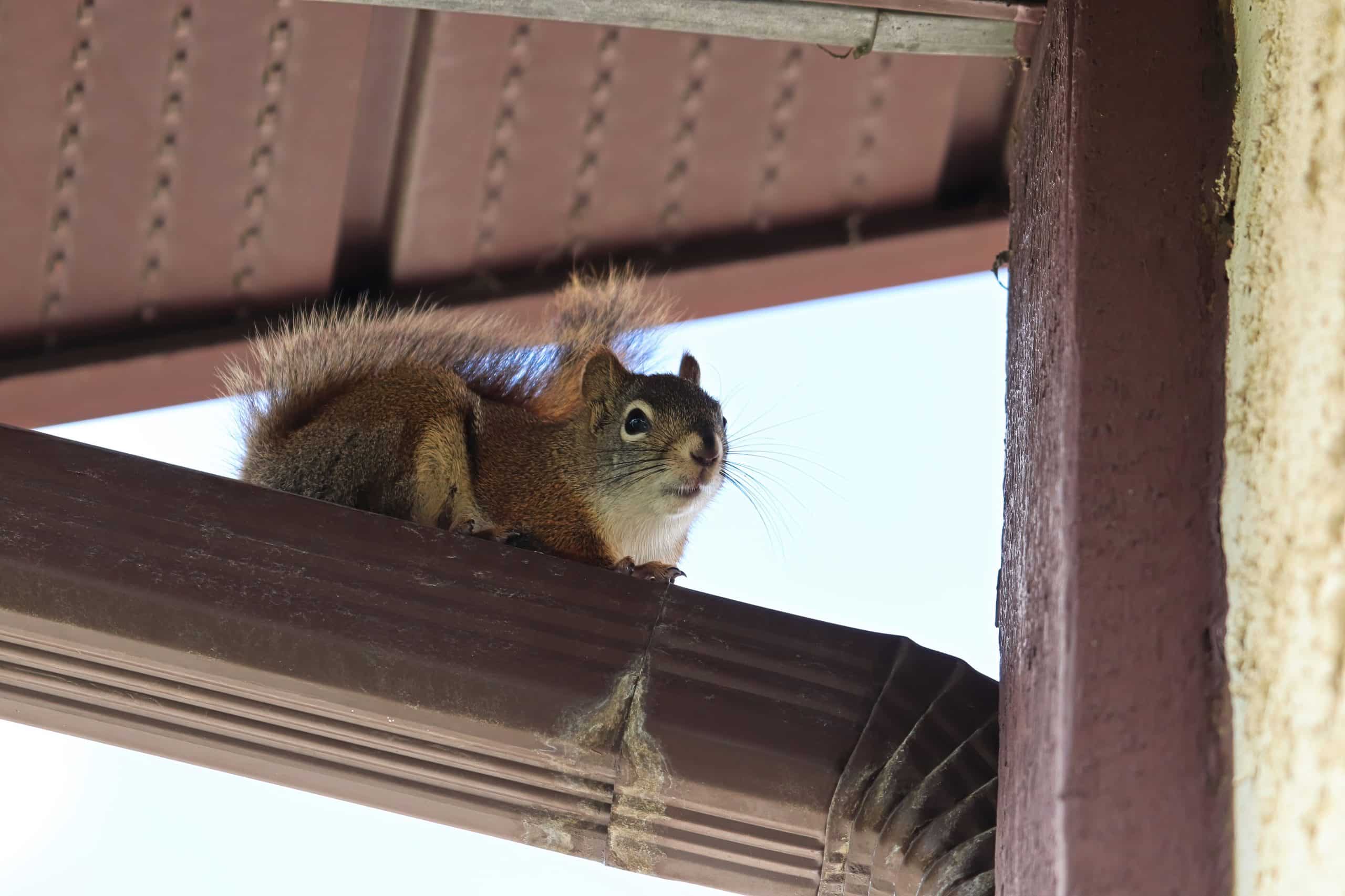
You see a squirrel cross the roof, stop near a vent, and disappear behind the soffit. Later, you hear movement above the ceiling. That squirrel may have found an opening into your attic.
If you want to know how to get rid of squirrels, start with the route they are using. Find the entry point, check whether squirrels are already inside, remove or exclude them, then repair the opening. This guide covers the steps to get rid of squirrels, early signs of activity, common squirrel entry points, attic damage, prevention, and the point where professional squirrel removal becomes the safer choice.
How to Get Squirrels Out of the Attic Before They Nest
Early activity gives you the best chance to solve the problem before young squirrels are involved. The process needs to happen in the right order.
1. Watch the Route From the Ground
Pay attention to how the squirrel reaches the roof and where it disappears. A repeat pattern can point you toward the access area without requiring you to climb onto the roof.
Look for the same branch, utility line, roof edge, vent, or soffit corner being used more than once. That information can save time during the inspection.
2. Find the Active Entry Point
Squirrel entry points often blend into the roofline. The opening may sit behind a loose soffit panel, beside a vent, under damaged fascia, or around a utility penetration.
The Kansas State University lists rotten soffits, unscreened attic vents, uncapped chimneys, broken openings, and gaps around utility lines as common ways squirrels enter buildings. It also recommends 1/2-inch hardware cloth for attic vents and advises trimming branches that give squirrels access to the structure.
3. Check for a Squirrel Nest Before Sealing
Do not close an active opening just because the attic has gone quiet. An adult squirrel may leave to feed while young remain inside. If you seal the only exit at that point, the adult may start chewing at another part of the house while trying to get back in. Young squirrels may be left inside the attic. Before permanent squirrel exclusion work begins, determine whether the attic is occupied and whether a nest is present.
4. Remove or Exclude the Squirrels
The removal plan depends on what the inspection shows. One adult using a damaged vent is a different job from a nest with young or a house with several active openings.
Professional squirrel removal can involve trapping, exclusion, or both. Wildlife work may also include closing voids, protecting roof vents, repairing soffit or fascia, sanitation, and attic remediation when those services are needed.
Louisiana regulates commercial nuisance wildlife work. The Louisiana Department of Wildlife and Fisheries Nuisance Wildlife Control Operator states that operators performing nuisance wildlife control activities must carry a valid state permit.
5. Seal the Entry Area After the Attic Is Clear
Once the squirrels are out, repair the opening and any weak materials around it. A thin patch over rotten wood does not create a squirrel-proof attic. If the vent frame, soffit, or fascia is already failing, the surrounding area needs attention too.
Check nearby sections before finishing the job. Squirrels that lose access at one point may test another weak spot along the same roofline.
Why Squirrels Get Into Attics
Your attic gives squirrels a sheltered place away from rain, wind, and everyday activity around the house. Reaching it can be easier than you think. A tree limb may put a squirrel close to the roof, while utility lines, fences, or nearby structures can provide another route.
Once the squirrel reaches the roofline, it only needs a usable opening. Loose soffits, deteriorated fascia, uncovered roof vents, chimney gaps, and spaces around pipes or wires are all worth checking.
The LSU AgCenter identifies two tree squirrel species in Louisiana, gray squirrels and fox squirrels. That makes squirrel activity around Louisiana homes common, but attic access usually comes down to the condition of the structure.
Common Squirrel Entry Points
| Part of the Home | What Squirrels May Use | What to Check |
| Soffits | Loose or deteriorated sections | Gaps, chewing, rot, or displaced panels |
| Fascia | Weak wood along the roof edge | Separation, decay, or previous damage |
| Roof vents | Existing openings into attic space | Missing screens or damaged covers |
| Chimneys | Open access at the top | Missing or damaged caps |
| Utility penetrations | Space around cables, pipes, or wires | Gaps where utilities enter the home |
| Roof intersections | Small construction gaps | Open seams or past repair areas |
| Eaves | Protected roof edges | Loose materials or animal damage |
These areas matter because how squirrels get in the attic is usually more important than where you first hear them.
Signs of Squirrels in the Attic
A single squirrel on the roof does not prove you have an attic problem. A pattern does.
You may hear running or scratching above one room during the day. You may also notice a squirrel returning to the same vent or roof corner. Physical evidence inside the attic can include disturbed insulation, nesting material, droppings, or daylight showing through an exterior opening.
| What You Notice | What It May Mean | What to Check Next |
| Daytime scratching or running | A squirrel may already be inside | Note where the sound is strongest |
| Repeated roof activity | An entry route may be nearby | Inspect the surrounding roofline from the ground |
| Fresh chewing | An opening may be getting larger | Check wood, vent edges, and trim |
| Disturbed insulation | Wildlife has traveled through the attic | Look for tracks, nesting debris, or droppings |
| Daylight inside the attic | An exterior gap exists | Trace it to the roof, soffit, fascia, pipe, or wire |
| Leaves or nesting material | A squirrel nest may be forming | Do not seal the area until occupancy is checked |
When we inspect squirrels in an attic, we look beyond the first place you heard noise. Depending on the property, wildlife inspection can include the yard, crawlspace, eaves, AC entry areas, roofline, soffits, fascia, chimney areas, insulation, wire openings, pipe openings, and other structural voids.
Finding several weak points is common. Repairing one hole will not help much if another remains open nearby.
Squirrel Damage in the Attic
Squirrels can do more than leave droppings or make noise. Their movement and chewing can affect several parts of an attic.
The type of damage also gives clues about how established the problem has become. A fresh opening with little attic disturbance looks different from a space with multiple travel paths, nesting debris, and damaged insulation.
| Area | Possible Squirrel Damage | What May Need Attention |
| Electrical wiring | Chewed outer covering | Inspection by a qualified electrician |
| Insulation | Flattening, tearing, nesting, urine, or droppings | Cleaning or replacement of affected areas |
| Soffit and fascia | Chewed edges or enlarged gaps | Structural repair |
| Roof vents | Torn screens or loose covers | New or reinforced vent protection |
| Stored belongings | Chewing and nesting damage | Removal of affected material |
| Roof openings | Larger gaps around existing defects | Repair after exclusion |
Squirrels Chewing Wires
Chewed wiring deserves separate attention because you cannot judge electrical safety from a quick glance. If squirrels have reached visible wires or conduits, have damaged areas evaluated by an electrician. The wildlife work should focus on removing access and preventing the squirrel from reaching the same attic again.
Why Squirrel Repellents Are Not Enough
Peppermint products, lights, sounds, and other squirrel repellents do not repair an entry hole. A squirrel can move to another part of the attic or return when the disturbance ends. Another animal can use the same opening later.
Professional squirrel exclusion changes the structure itself. Find the route, get the animal out, and close the route. Repellents may have a supporting role in some situations, but they should not replace physical exclusion.
How to Keep Squirrels Out of the Attic
Once the squirrels are gone, prevention becomes a home-maintenance issue. Louisiana weather, falling limbs, aging materials, roof repairs, and storms can create new openings later.
Check the exterior after strong weather and whenever work has been done around the roof. You do not need to inspect every inch from a ladder. A ground-level look can reveal a shifted vent cover, loose soffit panel, or damaged roof edge that needs closer attention.
| Area to Check | What to Look For | What to Do |
| Tree limbs | Branches that give squirrels easy roof access | Trim problem limbs when appropriate |
| Soffits | Rot, gaps, chewing, or loose panels | Repair damaged sections |
| Fascia | Separation or deteriorated wood | Replace or close weak areas |
| Roof vents | Missing or loose protection | Install durable screening or vent protection |
| Chimney | Open access | Add a properly fitted cap when needed |
| Utility openings | Gaps around pipes or wires | Seal appropriate openings |
| Attic interior | New light gaps or disturbed insulation | Trace the area to the exterior |
| Roofline after storms | Shifted or missing material | Repair damage before wildlife uses it |
How to Squirrel-Proof an Attic
A squirrel-proof attic starts on the outside of the house. Strong vent protection, sound soffits and fascia, closed utility gaps, and a maintained roofline remove the openings squirrels use.
Tree trimming can reduce one roof-access route, but it is not enough by itself. Squirrels can reach roofs in several ways. The structure still needs to resist entry.
Inspect repaired areas again after severe weather. A squirrel problem that was solved last year can return if the roof develops a new opening this year.
When Professional Squirrel Removal Makes Sense
You do not need wildlife control because a squirrel crossed the yard. Once you hear movement above the ceiling, find a squirrel nest in the attic, or see damage around the roofline, the situation deserves a closer inspection. Professional squirrel attic removal is especially useful when the opening sits high on the roof, you cannot tell whether young are present, several entry points exist, or insulation and building materials have been damaged.
When you call LaJaunie’s Pest Control, we start with the structure. We document evidence, identify entry points, and determine what work fits the house. Depending on what we find, that may include trapping, exclusion, soffit or fascia repair, vent protection, sanitation, or attic remediation.
If you keep seeing squirrels return to the same part of your roof or hear movement overhead during the day, get the attic checked before nesting makes the job more involved. Contact LaJaunie’s Pest Control to schedule a wildlife inspection. We can find the access route, check whether squirrels are already inside, and close the openings that are giving them a way back in.