



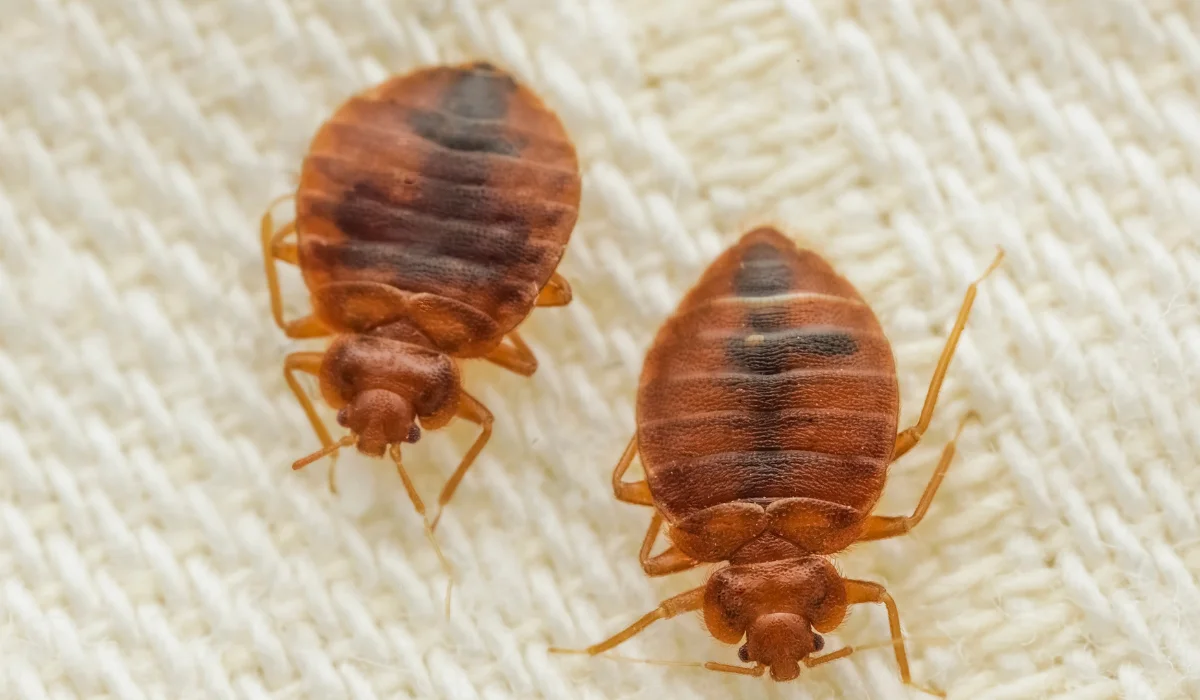
Dealing with a bed bug infestation is stressful, and washing everything in hot water may seem like the fastest place to start. So, does hot water kill bed bugs? Yes, when bed bugs and their eggs are exposed to a high enough temperature for long enough. The problem is that a washer can only treat items that can safely go inside it.
That matters because bed bugs do not stay only in your sheets. They can hide in bed frames, box springs, furniture, cracks, and other tight spaces near where you sleep. In Louisiana homes, bed bugs can remain active indoors throughout the year, so washing bedding alone does not address bugs hiding elsewhere in the room.
This guide explains when hot water works, the temperatures needed to kill bed bugs, how to use laundry correctly, and why a more complete treatment may be needed when the infestation extends beyond washable items.
Key Takeaways
- Hot water can kill bed bugs on washable items when the bugs are exposed to a high enough temperature for long enough. It cannot reach bugs hiding in furniture, bed frames, or wall gaps.
- Bed bugs exposed to about 113°F require prolonged exposure, while higher temperatures kill them faster. Eggs generally require longer heat exposure than adults and nymphs.
- Washing and high-heat drying can help treat clothing, sheets, and bedding, but they work best as one part of a larger bed bug control plan.
- Moving infested items through your home without sealing them first can spread bed bugs into other rooms.
Why Hot Water Is Not Effective for Killing Bed Bugs
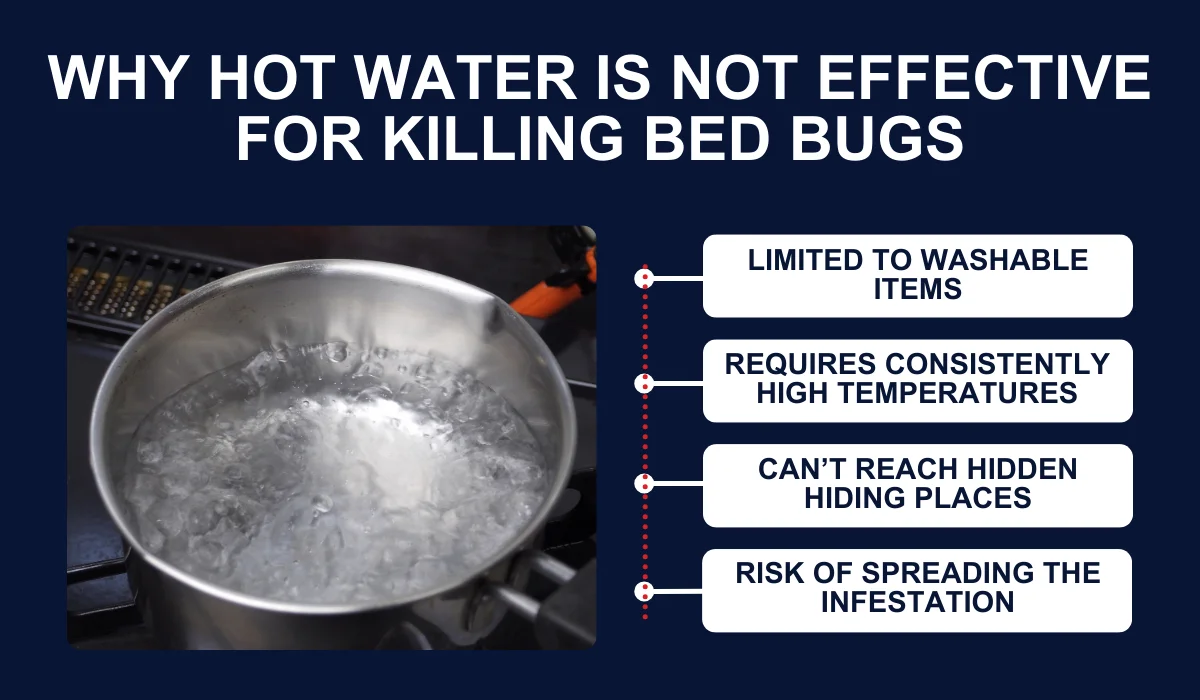
Using hot water as a bed bug treatment might seem like a quick fix for your problem, but it’s not always the best solution. Here are a few reasons why relying on it alone might leave you dealing with these blood-sucking pests longer than you’d like:
1. Limited to Washable Items
Using hot water only works on items you can wash, such as linens, clothes, and bedding. However, bed bugs often hide in areas like crevices of bed frames, box springs, and furniture.
Since hot water can’t reach these hiding places, it won’t eliminate the entire infestation.
2. Requires Consistently High Temperatures
To effectively kill bed bugs, you need high temperatures above 120°F. While most washing machines can reach these levels, some older models may not get hot enough.
Plus, if the load is too large, the washer might not maintain the necessary heat throughout the cycle. Without consistent high heat, they can survive at all life stages-from nymphs to adults.
3. Can’t Reach Hidden Hiding Places
Bed bugs are experts at squeezing into tight crevices and cracks, such as behind the headboard, along baseboards, and inside box springs. Since hot water can’t reach these areas, it won’t be effective for thorough bed bug control.
4. Risk of Spreading the Infestation
Transporting infested items to the laundry room can cause bed bugs to fall off and spread to other areas of your home. To prevent this, always place items in a sealed plastic bag before moving them to the washer.
In Louisiana service calls, LaJaunie’s technicians often find that the problem extends beyond the bedding a homeowner has already washed. Bed bugs commonly remain around mattress seams, box springs, bed frames, headboards, furniture, molding, and nearby cracks and crevices. That is why laundry may reduce the number of bugs on washable items without stopping the infestation itself.
What Temperature Kills Bed Bugs?
Whether hot water kills bed bugs depends on both temperature and exposure time. A temperature that can kill a bed bug after an hour is not the same as a temperature that works after only a few minutes. The heat also has to reach the bug itself, including insects or eggs protected inside folds, seams, or other insulated spaces.
The U.S. Environmental Protection Agency (EPA) notes that bed bugs exposed to 113°F can be killed by heat. As temperatures increase, the time needed decreases. Guidance commonly used for bed bug control also notes that eggs tend to withstand heat longer than adults and nymphs, which is one reason consistent heating matters.
| Temperature | Approximate Exposure Needed | What It Means |
| 113°F | About 90 minutes or longer | Lower heat requires sustained exposure |
| 118°F | About 20 minutes for adults and nymphs | Eggs require longer exposure |
| 118°F | About 90 minutes for eggs | Heat must reach the eggs themselves |
| 122°F | Death occurs much more rapidly | Hidden areas still have to reach the target temperature |
For household laundry, the EPA’s bed bug control guidance recommends using a clothes dryer on high heat for items that can safely be dried. This is often more dependable than relying on wash-water temperature alone because the dryer provides sustained heat throughout the load.
How to Use Hot Water to Kill Bed Bugs
Although hot water is not a complete solution for a bed bug infestation, it can help treat washable clothing, sheets, pillowcases, and bedding. The goal is to contain infested items while moving them and then expose them to enough heat.
Follow these steps:
- Remove all linens, pillowcases, and any washable fabrics from your bed.
- Place infested items in a sealed plastic bag to prevent spreading.
- Wash items in a washing machine using the hottest setting (at least 120°F).
- Use the dryer on high heat for at least 30 minutes.
- Keep washed clothes and bedding in sealed plastic bags until the bed bug problem is fully resolved.
More Effective Alternatives to Kill Bed Bugs
Since hot water has limitations, consider these more reliable methods for getting rid of bed bugs:
Vacuum Cleaner
A vacuum cleaner with strong suction can help remove adult bed bugs, nymphs, and eggs from baseboards, furniture, and mattresses. Be sure to dispose of the vacuum bag in a sealed plastic bag immediately.
Diatomaceous Earth
Diatomaceous earth is a natural powder that damages the outer layer of bed bugs, causing them to dehydrate and die. Apply it around bed frames, baseboards, and other hiding places.
Mattress and Box Spring Covers
Encase your mattress and box spring in specially designed covers to trap bed bugs inside, preventing them from feeding and reproducing.
DIY vs. Professional Bed Bug Treatment
Hot-water washing can be useful for specific belongings, but it cannot treat every place bed bugs hide. Professional bed bug control is designed to address a much wider portion of the infestation, including cracks, crevices, furniture, bed components, and other harborages identified during an inspection.
| Method | What It Treats | Main Limitation |
| Hot-water washing | Washable clothing, sheets, and bedding | Cannot treat furniture or structural hiding places |
| High-heat drying | Dryer-safe fabrics and belongings | Limited to items that can safely go in a dryer |
| Vacuuming | Visible bugs on accessible surfaces | May miss eggs and hidden bugs |
| Mattress encasements | Mattresses and box springs | Does not address bugs elsewhere in the room |
| Professional treatment | Identified hiding areas throughout the affected space | Requires inspection, preparation, and follow-up |
LaJaunie’s bed bug process includes treatment around areas such as bed frames, headboards, box springs, mattress seams, furniture, molding, and nearby cracks and crevices, followed by a two-week follow-up when needed as part of the service process.
Why DIY Bed Bug Control Can Be Difficult in Louisiana Homes
Louisiana’s warm climate means you cannot count on cold outdoor weather to solve an indoor bed bug problem. Inside an air-conditioned home, bed bugs can remain protected in furniture, mattresses, box springs, and narrow cracks throughout the year.
Humidity itself is not what moves bed bugs from room to room. They spread mainly by hitchhiking on luggage, clothing, bedding, furniture, and other belongings. That makes careful handling especially important when you are carrying infested laundry through the house or moving furniture before treatment.
Get Expert Bed Bug Control
If you are dealing with a bed bug infestation, washing your bedding in hot water can help with bugs on washable items. It will not reach bed bugs hiding in bed frames, box springs, furniture, cracks, and other protected spaces.
LaJaunie’s Pest Control technicians inspect the areas where bed bugs commonly hide and treat the affected spaces based on what they find. The current service process can include mattresses, box springs, headboards, bed frames, furniture, molding, and nearby cracks and crevices, with a follow-up visit as part of the treatment process.
If you have washed and dried your bedding but continue seeing bed bugs or other signs of activity, contact LaJaunie’s Pest Control to schedule an inspection and determine the next step for your Louisiana home.
Frequently Asked Questions
Does boiling water kill bed bugs?
Boiling water can kill bed bugs on direct contact, but it is not a practical treatment for an infestation. Pouring boiling water on mattresses, furniture, floors, or walls can cause burns or property damage while still missing bed bugs and eggs hidden inside cracks, seams, and other protected areas.
What temperature kills bed bugs instantly?
There is no useful household “instant kill” temperature because the bed bug itself has to reach the target temperature. Bed bugs die more quickly as temperatures rise, while lower temperatures require longer exposure. The EPA notes that exposure to 113°F can kill bed bugs.
Does washing clothes in hot water kill bed bugs?
Hot water can kill bed bugs when the insects reach a lethal temperature for enough time. Washing alone may not provide consistent heat throughout a load, so dryer-safe items should also be dried on high heat. The EPA recommends high dryer heat as part of bed bug control.
Can bed bugs survive a washing machine?
Yes, some bed bugs may survive if the wash water does not stay hot enough for long enough. That is why laundering should include high-heat drying for appropriate items rather than relying on the washing machine alone.
Does a dryer kill bed bugs and their eggs?
A high-heat dryer can kill bed bugs and eggs when items receive enough heat for enough time. Avoid overloading the dryer because tightly packed fabrics can heat unevenly. Keep treated items separated from anything that has not yet been washed or inspected.