



Louisiana’s long stretches of warm weather can keep pantry pests active indoors for much of the year. If you open a bag of flour, cereal, or cake mix and find tiny reddish-brown beetles crawling inside, you’re not alone.
The best red flour beetle pest control Louisiana homeowners can use starts with finding the infested food and confirming which beetle you have. These beetles are stored-product pests that get into various pantry staples. They do not bite or damage your home, but they can contaminate food and spread from one package to another.
In South Louisiana homes, the tricky part is often identification. Red flour beetles look almost identical to confused flour beetles, so checking their antennae and where you are seeing activity can help you narrow down the problem before deciding what to do next. Here’s everything you need to know about identifying a red flour beetle infestation and keeping it from getting out of hand.
Key Takeaways
- Red flour beetles are small, reddish-brown pantry pests that commonly infest flour, cereal, grain products, cake mix, pet food, and dried fruit.
- Red flour beetles and confused flour beetles look very similar, but the shape of their antennae can help you tell them apart.
- Warm indoor conditions can speed up their life cycle, which makes pantry infestations easier to overlook until adult beetles begin appearing in larger numbers.
- Getting rid of them starts with discarding infested food, cleaning pantry shelves and crevices, and storing dry goods in sealed containers.
All About the Red Flour Beetle
To deal with a red flour beetle problem, you first need to know what you are looking at. These pantry beetles are small enough to hide in packaging seams, shelf cracks, and food debris, and they are easy to confuse with another stored-product beetle found in the same types of foods.
What Red Flour Beetles Look Like
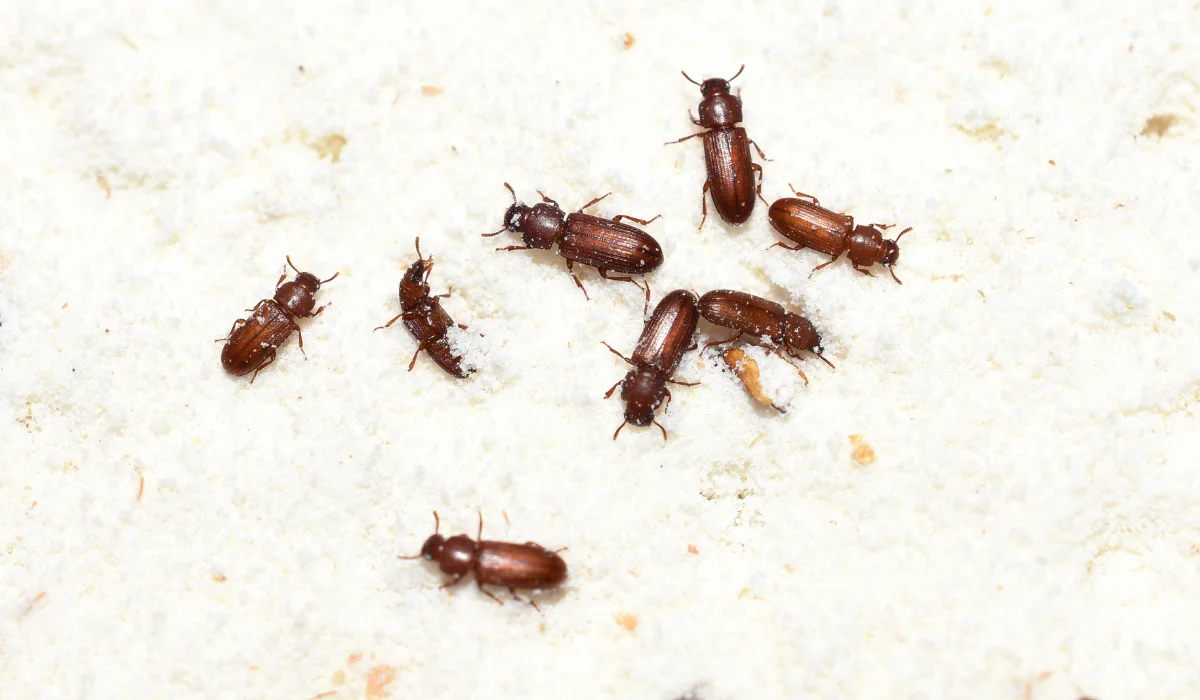
Red flour beetles are small, flat beetles that measure about 3 to 4 millimeters long. Adults have a shiny reddish-brown body and antennae that end in a noticeable three-part club.
That antenna shape is one of the easiest ways to separate them from confused flour beetles. The University of Florida’s identification guide shows the physical differences between the two pantry pests.
For Louisiana homeowners, that distinction can be useful because both species may turn up around flour, cereal, meal products, and other dry foods. If you cannot clearly identify the beetle, save a specimen in a sealed container or take a close-up photo before cleaning out the pantry.
Confused Flour Beetle vs. Red Flour Beetle
Red flour beetles and confused flour beetles are so similar that homeowners often mistake one for the other. Both are small, reddish-brown, and commonly associated with flour, grain products, cereal, and other stored foods.
The clearest difference is the antennae. Red flour beetles have antennae that end in a distinct three-segmented club, while confused flour beetle antennae become gradually wider toward the tip.
There is also a behavioral difference that can help with identification. Red flour beetles can fly under suitable warm conditions, while confused flour beetles generally do not. In Louisiana homes, spotting small reddish-brown beetles away from the immediate pantry source may be worth noting when you are trying to determine which flour beetle you have.
Red Flour Beetle Life Cycle
From the egg to the adult stage, the red flour beetle goes through four main life stages: egg, larva, pupa, and adult.
Female beetles can lay hundreds of eggs during their lifetime, often in or near stored food. The larvae feed on broken grains, flour, meal products, and other processed foods before moving into the pupal stage and becoming adults.
Warm indoor conditions can speed up this cycle. That matters in South Louisiana, where extended warm seasons can keep indoor storage areas favorable for pantry pest activity even when the food itself appears dry.
Where Do They Live in Your Home
Red flour beetles are known for invading stored grain and flour-based products in your pantry. They may also turn up in cake mix, whole grains, cereal products, dried fruit, pet food, bird seed, and other dry goods.
These pantry pests can squeeze into tight crevices along shelves, food containers, and packaging seams. Their flattened bodies make it easy for them to stay hidden, which is why an infestation may go unnoticed until adult beetles begin appearing in larger numbers.
How to Prevent Red Flour Beetle Infestations

Keep the following existing subsections with only copyediting for grammar and house style:
1. Store Dry Foods in Sealed Containers
Use airtight glass or hard plastic containers to store cereal products, whole grains, flour, and pet food. Sealed containers can limit the spread of pantry beetles if one product becomes infested.
2. Inspect Food Items From Grocery Stores
Check packaging before putting dry goods into your pantry. Look around seams and folds for small beetles, damaged packaging, or loose food material.
3. Clean Your Pantry Regularly
Crumbs, spilled flour, and broken grains can collect in shelf corners and crevices. Vacuum these areas, wipe down shelves, and remove expired or forgotten dry goods.
4. Set Pheromone Traps
Pheromone traps can help you monitor adult beetle activity. They can show whether beetles are still present after cleanup, but they do not replace finding and removing the infested food source.
What to Do if You Already Have a Red Flour Beetle Infestation
Once you confirm red flour beetle activity, focus on finding the food source first. Removing visible beetles without checking stored foods can leave eggs, larvae, or another infested package behind.
Confirm Signs of a Flour Beetle Infestation
You may notice small beetles crawling in or around dry food items, along pantry shelves, or near cabinet seams. Larvae may also be present inside flour, meal products, cereal, or similar foods. Inspect all nearby dry goods instead of checking only the package where you first noticed activity.
Identify and Discard Infested Food
Remove stored food from the affected area and inspect each package. Throw away anything containing beetles, larvae, or clear signs of infestation. Seal discarded food before carrying it through the house so beetles do not escape into another storage area.
Consult a Pest Control Professional
If beetles continue appearing after you remove suspect foods and clean the pantry, another source may be hidden nearby. A beetle control technician can inspect the affected area, confirm the pest, and look for food sources or crevices that may be keeping the problem active.
If pantry beetles keep returning after you have removed infested food and cleaned the area, LaJaunie’s can help inspect the source and determine what treatment fits the problem.
Monitor Over the Next Few Weeks
Continue checking pantry shelves and monitoring traps after cleanup. If new beetles keep appearing, inspect nearby cabinets and dry foods again or follow up with your pest control provider.
Making the Right Red Flour Beetle Control Choice in Louisiana
Red flour beetles can spread through dry pantry goods when an infested package goes unnoticed. Correct identification, removing contaminated food, cleaning shelf cracks and corners, and transferring dry foods into sealed containers are the main steps for stopping the problem.
The confused flour beetle looks nearly identical, so check the antennae and where you are seeing activity before assuming which beetle is present. If the problem continues after cleanup, LaJaunie’s Pest Control can inspect the area and help you decide on the next step for red flour beetle pest control Louisiana homeowners need.
Red Flour Beetle Pest Control: FAQs
How can I tell if I have red flour beetles in my pantry?
Look for small reddish-brown beetles in flour, cereal, grain products, cake mix, pet food, or nearby pantry shelves. You may also find larvae inside dry foods. Check surrounding packages because more than one product can be involved.
What is the difference between a red flour beetle and a confused flour beetle?
Red flour beetles have antennae that end in a distinct three-segmented club. Confused flour beetle antennae widen gradually toward the tip. Red flour beetles can also fly under suitable warm conditions, while confused flour beetles generally do not.
How do I get rid of red flour beetles?
Find and discard infested food, inspect nearby dry goods, vacuum pantry shelves and crevices, and transfer unaffected foods into sealed containers. If beetles continue appearing after cleanup, a professional inspection can help locate another hidden source.