



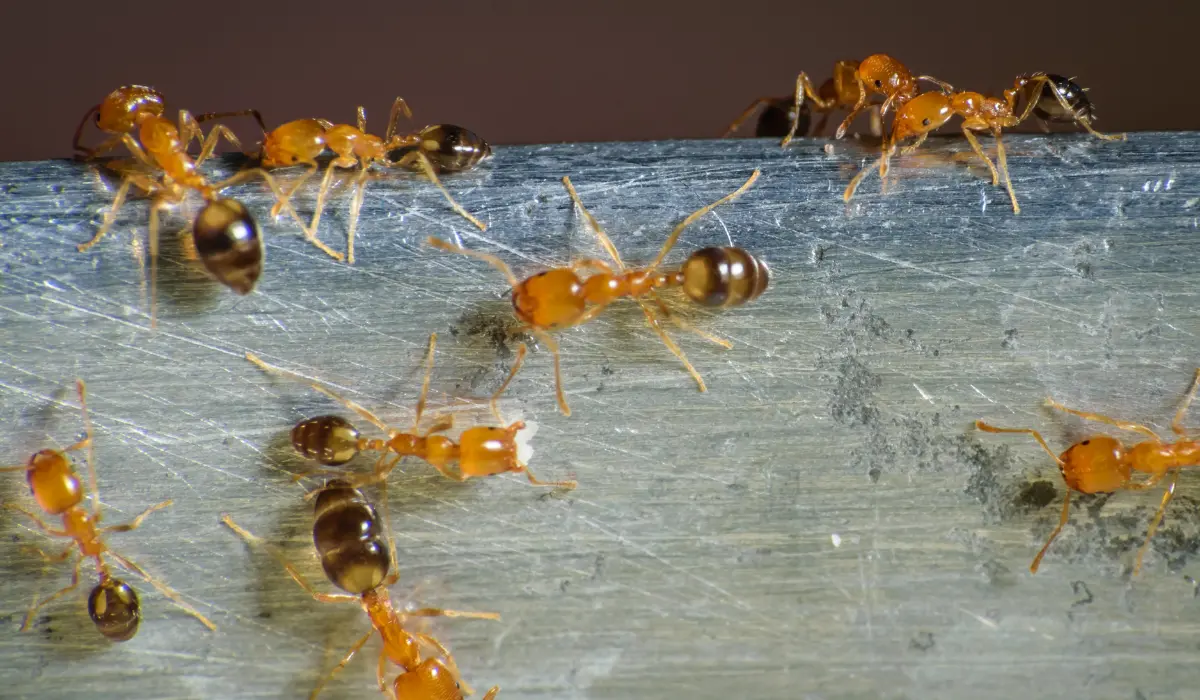
If you want to get rid of Pharaoh ants naturally, skip the essential-oil sprays, vinegar mixtures, and homemade ant-killing recipes. Pharaoh ants are different from many household ants because disturbing a colony can cause it to split into additional colonies, making the problem harder to control.
Natural steps can still help. Cleaning up food, reducing moisture, limiting access to resources, and monitoring where the ants travel can make your home less favorable to them. However, an established Pharaoh ant infestation usually requires a carefully placed, slow-acting bait that workers can carry back to the colony.
Here are five practical steps that can help without relying on broad indoor sprays.
Key Takeaways
- Pharaoh ants can form multiple connected colonies inside a building.
- Repellent treatments can make a Pharaoh ant problem harder to control.
- Vinegar, baking soda, essential oils, and homemade bait recipes are not reliable ways to eliminate an established colony.
- Reducing food and water helps make your home less favorable to ants and supports an effective baiting program.
- Slow-acting, non-repellent bait is generally the preferred treatment for Pharaoh ants.
- Professional pest control can help when trails keep returning or colonies are spread through wall voids and other hidden spaces.
Why Pharaoh Ants Are Hard to Get Rid Of
Pharaoh ants are tiny indoor ants that can establish nests in warm, protected areas such as wall voids, cabinets, around plumbing, and near appliances.
What makes them particularly difficult to control is their ability to form new colonies through a process called budding. A queen and a group of workers can separate from the original colony and establish another nest elsewhere in the structure.
That means killing the workers you can see does not necessarily eliminate the infestation.
5 Natural Steps That Can Help With Pharaoh Ants
1. Remove Easy Food Sources
Pharaoh ants feed on a variety of foods and can quickly establish trails to accessible sweets, fats, proteins, and other kitchen debris.
Start by limiting what they can reach:
- Wipe up crumbs and spills promptly.
- Store pantry foods in closed containers.
- Keep pet food sealed when it is not being served.
- Rinse food residue from cans and containers before putting them in recycling.
- Empty indoor trash regularly.
- Clean underneath appliances and along cabinet edges where crumbs accumulate.
Sanitation alone will not eliminate a hidden colony, but it reduces competing food sources and can make properly placed bait more attractive to foraging ants.
2. Reduce Water and Moisture Sources
Pharaoh ants need access to moisture as well as food.
Check kitchens, bathrooms, laundry rooms, and utility areas for dripping faucets, leaking pipes, condensation, or standing water. Repair leaks when possible and dry wet surfaces instead of allowing moisture to remain overnight.
Pay particular attention to plumbing penetrations and areas beneath sinks, since these can provide both moisture and concealed travel routes.
3. Track the Ant Trails Before Cleaning Them Away
When you see a line of Pharaoh ants, resist the urge to immediately spray them.
Watch where the ants are coming from and where they are going. Trails along baseboards, countertops, plumbing lines, cabinets, or electrical penetrations can provide clues about where the colony is traveling.
This information is useful because effective bait needs to be placed where foraging ants can find it and carry it back toward the nest.
Once you have identified the route, clean food spills and other attractants nearby. Avoid applying strongly scented repellents or household sprays directly to the trail.
4. Seal Gaps and Reduce Harborage
Exclusion is more useful for prevention than for eliminating a colony that is already living inside the building, but it can still reduce pest movement.
Inspect for openings around:
- Plumbing and utility lines
- Baseboards
- Door and window frames
- Cabinet penetrations
- Wall gaps
- Exterior entry points
Seal appropriate cracks and gaps after you have addressed the active infestation.
Keep in mind that Pharaoh ants frequently nest inside structures, so simply sealing an exterior opening may not solve an existing problem.
5. Avoid Repellent DIY Treatments
This may be the most important step.
Peppermint oil, tea tree oil, vinegar sprays, household insect sprays, and other strongly repellent products may appear to work because visible ants disappear from the treated area. With Pharaoh ants, that does not necessarily mean the colony is gone. Repellent treatment can cause the ants to shift their activity or contribute to colony splitting.
If you plan to use an ant bait yourself, choose a commercially prepared product that is specifically labeled for the ants and location you are treating. Follow the label exactly, and keep bait inaccessible to children and pets as directed.
Do not mix your own pesticide bait from boric acid, peanut butter, sugar, or other ingredients.
What About Common Natural Pharaoh Ant Remedies?
A number of DIY treatments are widely recommended online, but that does not mean they are good choices for Pharaoh ants.
Vinegar
Vinegar may temporarily disrupt an ant trail when used as a cleaner, but it does not eliminate the hidden colony.
Use it for routine cleaning if appropriate for the surface, not as a Pharaoh-ant treatment.
Baking Soda and Sugar
There is not good evidence that a homemade baking-soda-and-sugar mixture is a reliable way to eliminate Pharaoh-ant colonies.
Replacing a tested ant bait with this mixture can delay effective treatment while the colony continues to spread.
Diatomaceous Earth
Diatomaceous earth can damage and dehydrate insects that contact it, but killing exposed worker ants is different from eliminating a Pharaoh-ant colony hidden inside a wall or another protected area.
Because Pharaoh-ant control depends on workers carrying treatment back to queens and other colony members, a properly selected bait is generally a better colony-level strategy.
Boric Acid
Boric acid is used as an active ingredient in some professionally formulated and commercially registered ant baits.
That does not make a homemade boric-acid recipe a good idea. Bait concentration, food attractant, placement, and exposure all affect whether ants will accept and distribute it.
Use a labeled product according to its directions instead of mixing your own pesticide bait.
Essential Oils
Essential oils such as peppermint and tea tree may repel some ants temporarily, but repellency is not the goal when treating Pharaoh ants.
You want foraging workers to continue visiting an appropriate bait and carry it back to the colony. Driving them away from one area can make treatment more difficult.
How to Prevent Future Pharaoh Ant Problems
Once the active infestation is under control, focus on making food, water, and shelter harder for ants to find.
Store food in sealed containers, wipe up spills promptly, remove trash regularly, repair plumbing leaks, and clean beneath appliances.
Check gaps around pipes, windows, doors, and other penetrations and seal appropriate openings.
Pay attention to recurring trails. Pharaoh ants are very small and can establish colonies in hidden areas, so repeated activity in the same part of a home is worth investigating rather than repeatedly spraying.
Can Pharaoh Ants Contaminate Food?
Yes. Like other ants that travel through kitchens, waste areas, plumbing spaces, and other surfaces, Pharaoh ants can contaminate food they reach.
They have also been associated with the transmission of bacteria in healthcare environments, where maintaining sanitary conditions is especially important.
For most homeowners, the practical response is straightforward: discard food that has been infested, clean contaminated surfaces, store food securely, and address the ant colony rather than allowing trails to continue through kitchens and pantries.
When Should You Call a Professional?
Professional help makes sense when Pharaoh ants repeatedly return after sanitation and prevention efforts, when trails appear in several rooms, or when the ants seem to be coming from walls, cabinets, plumbing areas, or other inaccessible spaces.
Because different ant species require different treatment strategies, correct identification matters. Pharaoh ants can resemble other very small indoor ants, and treating the wrong species the wrong way can waste time or make control more difficult.
LaJaunie’s provides professional ant control in Louisiana for homeowners dealing with recurring ant activity.
A professional can inspect the activity, identify the ant, trace foraging areas, and determine where an appropriate treatment should be placed rather than simply killing the workers that happen to be visible.
Get Help With Pharaoh Ants in Your Louisiana Home
If tiny ants keep returning to your kitchen, bathroom, or other areas of your home, avoid repeatedly spraying the trails and hoping the colony disappears.
Pharaoh ants require a different approach from many common household ants, and controlling the colony may take patience.
Contact LaJaunie’s Pest Control to discuss the ant activity in your home and determine the appropriate next step.
FAQs
Can You Get Rid of Pharaoh Ants Naturally?
Natural prevention measures such as sanitation, moisture reduction, food storage, and exclusion can reduce the conditions that support Pharaoh ants. They usually are not enough to eliminate a well-established colony by themselves. Slow-acting bait is generally the preferred treatment.
Does Vinegar Kill Pharaoh Ants?
Vinegar may remove or disrupt a visible ant trail during cleaning, but it does not eliminate the hidden colony. Avoid relying on vinegar as the primary treatment for Pharaoh ants.
Does Baking Soda Kill Pharaoh Ants?
There is not reliable evidence that baking soda and sugar will eliminate a Pharaoh-ant colony. A properly formulated slow-acting ant bait is a better-supported control method.
Do Essential Oils Repel Pharaoh Ants?
Some strong scents may temporarily repel ants, but that can work against a Pharaoh-ant baiting program. Effective treatment depends on workers finding bait and carrying it back to the colony.
Why Do Pharaoh Ants Keep Coming Back?
The visible ants are only a small part of the colony. Pharaoh ants can nest in hidden spaces and form multiple connected colonies within a building. If only the visible workers are killed, the colony may remain active elsewhere and new trails can appear.