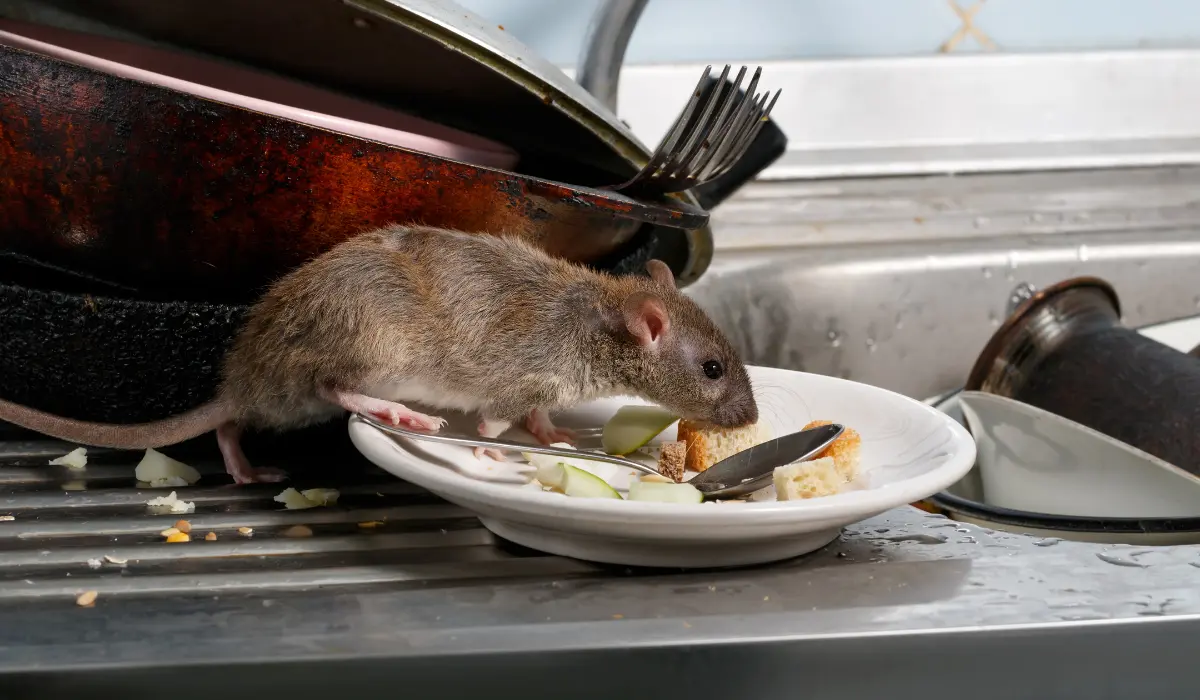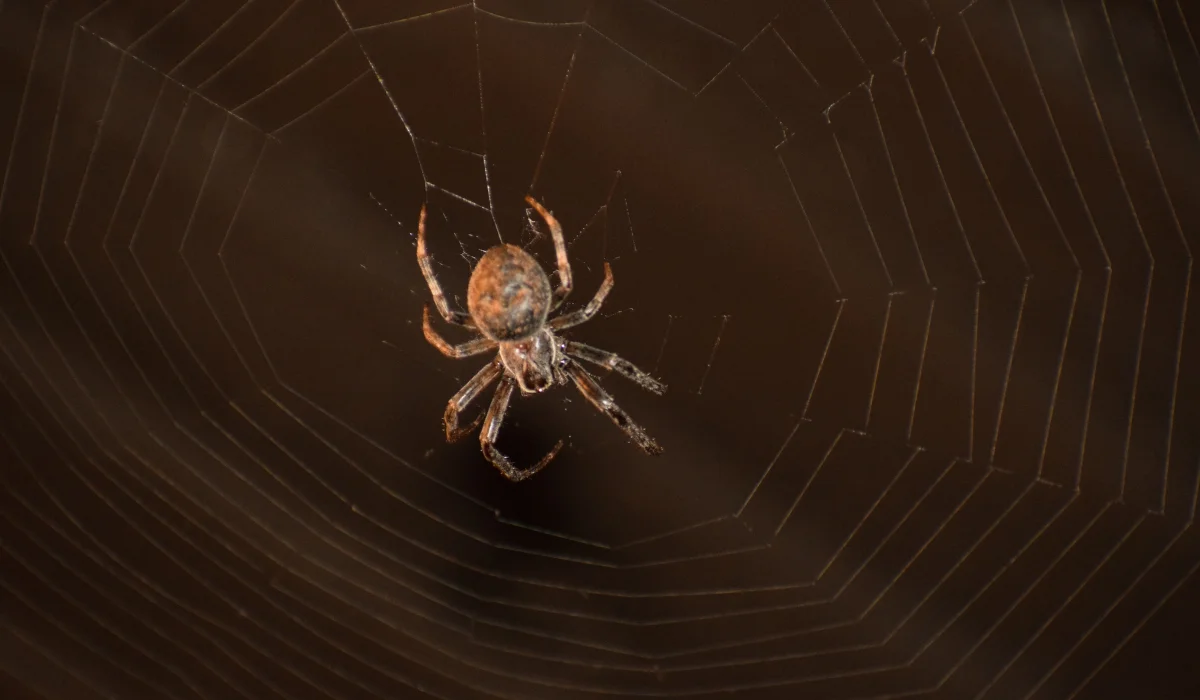


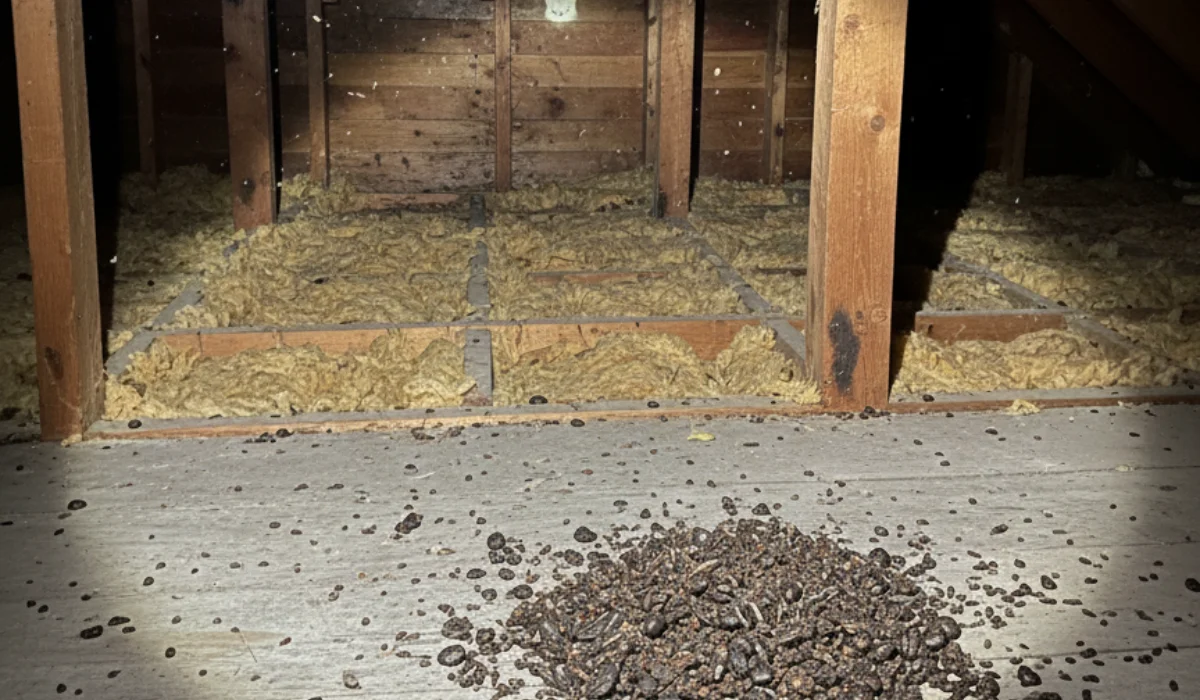
Bat droppings in a New Orleans attic can look similar to mouse or cockroach waste at first, which makes identification difficult without considering the surrounding evidence. LaJaunie’s wildlife inspectors look beyond the droppings themselves by checking soffits, fascia, roof voids, chimneys, vents, attic openings, and other areas bats may use to enter a home. If you find dark droppings beneath a suspected roost, hear activity overhead, or notice staining near the roofline, avoid disturbing the waste until you know what you are dealing with. Identifying the source first can help determine whether the next step involves bat exclusion, attic cleanup, or both.
Key Takeaways
- Bat guano is usually dark and crumbly and may contain small insect fragments, but homeowners should not break apart or handle dried droppings to identify them.
- Bat, mouse, and cockroach droppings can look similar, so location, accumulation patterns, noises, staining, and entry points provide useful identification clues.
- If bats are actively using the attic, exclusion should happen before permanent sealing or major cleanup so bats are not trapped inside the structure.
How to Identify Bat Droppings in a New Orleans Attic
Bat droppings, commonly called guano, are typically small, dark pellets. Because many bats eat insects, broken guano may contain tiny reflective pieces from insect wings or exoskeletons. LaJaunie’s article on what bats eat and why they belong in your yard but not your attic explains why insect remains may be present in bat waste.
Homeowners should not crush dried droppings by hand to check for those fragments. Where the waste appears can provide a safer clue. Guano may accumulate below an area bats repeatedly use for roosting or entering the structure, creating a concentrated pile rather than a few isolated pellets.
Look above and around the droppings for other evidence. Openings around soffits, fascia, rooflines, vents, chimneys, or other upper areas of the house can point toward bat access. If attic noises are also part of the problem, LaJaunie’s guide to bats vs. birds in Louisiana attics can help distinguish between two common sources of overhead activity.
Bat Guano vs. Mouse Droppings vs. Cockroach Droppings
Bat guano can be confused with other pest waste, especially when only a small amount is present. Comparing the appearance, texture, pattern, and nearby evidence can help narrow down the source.
| Feature | Bat Guano | Mouse Droppings | Cockroach Droppings |
|---|---|---|---|
| Typical Appearance | Dark, narrow pellets | Dark, rice-like pellets | Dark specks or small pellets depending on species |
| Texture | Often dry and crumbly | Usually firmer and smoother | May resemble pepper, coffee grounds, or small dark pellets |
| Interior Contents | May contain visible insect fragments | More uniform inside | Varies with cockroach species and diet |
| Common Pattern | May collect beneath roosting areas | Often scattered along travel routes | Often concentrated near hiding, feeding, or moisture areas |
| Nearby Clues | Activity near rooflines, soffits, vents, fascia, or chimneys | Gnawing, nesting material, run trails, urine odor | Activity around cracks, stored items, food, or moisture |
| Identification Caution | Do not break apart or handle dried guano | Droppings alone may not identify the rodent species | Size varies by cockroach species |
This comparison can point you in the right direction, but droppings alone may not provide a definite identification. An inspection should also consider where the waste is collecting, whether noises or staining are present, and whether the structure has openings that match the suspected animal.
Where LaJaunie’s Inspectors Check for Bat Activity
When LaJaunie’s investigates possible bat activity, technicians inspect more than the visible attic floor. The goal is to determine where the bats may be entering, what parts of the structure they are using, and whether exclusion work is needed.
Common inspection areas include:
- Soffits and fascia
- Roof voids
- Chimneys
- Vents
- Wire and pipe openings
- Areas where daylight is visible from inside the attic
- Insulation for signs of animal activity
- Exterior eaves and upper portions of the home
This broader inspection matters because the place where guano collects may not be directly below the entry point. Bats can move through upper structural areas before reaching a roost, so the source may be several feet away from the most obvious pile of droppings.
Why Bat Guano in an Attic Can Be a Health Concern
Bat guano deserves careful handling because accumulated droppings can support the fungus associated with histoplasmosis. Louisiana Department of Health guidance on bat guano in attics and crawl spaces warns about exposure when contaminated material is disturbed and fungal spores become airborne.
This is why sweeping, dry brushing, or vacuuming a significant accumulation of guano is not a good cleanup method. Disturbing dried material can put particles into the air, which may increase exposure during cleanup.
Bat guano and rabies are separate concerns. Rabies risk is associated with contact with an infected bat rather than simply finding guano. LaJaunie’s article on whether bats are dangerous to humans covers the situations that deserve more caution.
Bat bites can also be small and difficult to notice. LaJaunie’s guide to bat bites in Louisiana explains why known contact with a bat, or waking up with a bat in a room, should be treated differently from finding droppings in an unused attic.
Other Signs You May Have Bats in the Attic
Bat droppings are one clue, but several signs appearing together provide a clearer picture of active bat use. Pay attention to activity around both the attic and the exterior roofline.
Signs can include:
- Squeaking or rustling from the attic
- Repeated bat activity near the roofline around dusk
- Dark staining around an opening
- Guano collecting beneath the same area
- Visible bats entering or leaving a structural gap
- Openings around soffits, fascia, vents, chimneys, or roof voids
A large amount of guano suggests repeated use of the area, but it does not tell you exactly how many bats are present. The entry points and current activity still need to be evaluated before deciding how to handle the problem.
What to Do if You Find Bat Droppings in Your Attic
If you find suspected bat guano, avoid sweeping, vacuuming, or handling it before you know how much material is present and whether bats are still using the attic. Cleaning the droppings first can leave the main source of the problem unresolved.
Keep people and pets away from the affected area, then note where the droppings are accumulating and whether you have seen bats entering or leaving the structure. These observations can help an inspector focus on likely roosting and entry areas.
Do not immediately seal a suspected opening. Closing an active bat entry point while animals remain inside can trap them in the attic or cause them to move into another part of the structure.
If you suspect an active roost, LaJaunie’s bat control and exclusion service can inspect the structure and determine how the bats are entering and what exclusion work is appropriate.
How Professional Bat Exclusion Works
Professional bat exclusion focuses on getting bats out of the structure without trapping them inside. The process also addresses the openings they used so the same access points are not left available.
Inspect the Structure and Find Active Entry Points
LaJaunie’s technicians begin by looking for areas bats may be using to enter and leave the home. Common inspection points can include soffits, fascia, vents, roof gaps, chimneys, and other openings along the upper portion of the structure.
The location of guano, staining, noises, and visible bat activity can help narrow down which openings are active. This step matters because sealing random gaps without finding the active route can trap bats or push them toward another opening.
Install One-Way Bat Doors
Once an active opening is identified, LaJaunie’s may use a one-way bat door. The device allows bats to leave the structure while preventing them from returning through the same opening.
This approach gives the bats a route out without sealing them inside the attic. It also allows time for the roost to clear before permanent sealing begins.
Confirm the Bats Have Left
Bat exclusion is not always immediate. The amount of time needed can vary based on the structure, time of year, and how quickly the bats leave through the exclusion device.
Technicians allow the exclusion process to work before closing the opening permanently. This reduces the risk of trapping bats inside walls, attics, or other parts of the home.
Seal the Entry Points
After the bats have vacated, technicians can seal the primary opening and address other gaps that could provide access. Exclusion work may involve soffits, fascia, vents, rooflines, or other structural openings found during inspection.
The goal is to address the access problem as well as the current roost. Leaving nearby openings unaddressed can give bats another route back into the structure.
Account for Louisiana Bat Exclusion Timing
Timing matters when planning bat exclusion in Louisiana. LaJaunie’s documented bat-control protocol provides one-way bat-door solutions from August 15 through April, so homeowners should not assume the same exclusion approach applies throughout the entire year.
Current Louisiana guidance should also be considered before disturbing an active roost. If bats are still present, avoid sealing openings on your own before the situation and timing have been evaluated.
Bat Guano Cleanup and Attic Restoration
Once bats have left and entry points have been addressed, the attic can be evaluated for cleanup. A small amount of waste may require a different response from heavy accumulation that has affected insulation or other attic materials.
Bat activity can damage insulation through droppings, urine, and repeated use of the attic. LaJaunie’s article on bat-related insulation damage in Louisiana explains what homeowners may find when bats have been using an attic for an extended period.
LaJaunie’s attic restoration services can include removing old or soiled insulation, cleaning affected areas, and installing replacement insulation when the condition of the attic calls for it. Restoration should follow wildlife control so new insulation is not installed while animals still have access to the structure.
Not every bat problem requires full insulation replacement. The amount and location of guano, condition of the insulation, and other damage found during inspection should determine how much cleanup or restoration is appropriate.
Making the Right Choice for Bat Droppings in Your New Orleans Attic
Bat droppings can resemble mouse or cockroach waste, so identification should consider more than the pellets themselves. Where the droppings collect, whether bats are active around the roofline, and what an inspection finds near soffits, fascia, vents, chimneys, and attic openings can provide a clearer answer.
LaJaunie’s Pest Control provides wildlife inspection, bat exclusion, and attic services throughout Southeast Louisiana, including New Orleans. If you find suspected guano or see bats entering your attic, contact LaJaunie’s so the activity can be inspected before cleanup or sealing begins.
Frequently Asked Questions About Bat Droppings in New Orleans
How Do I Identify Bat Droppings?
Bat droppings are usually small, dark pellets that may crumble more easily than mouse droppings. Broken guano can contain shiny insect fragments because many bats eat insects. Do not crush dried droppings to test them. Location beneath a suspected roost and other signs of bat activity provide safer identification clues.
How Should Bat Guano Be Cleaned From a New Orleans Attic?
Avoid sweeping or vacuuming dry guano because disturbing contaminated material can send particles into the air. If bats are still present, exclusion should be addressed before cleanup. Heavy accumulation or affected insulation may require professional cleanup and attic restoration based on the conditions found.
What Should I Do if Bats Are Still in My Attic?
Do not seal the opening while bats are still inside. LaJaunie’s uses one-way exclusion doors during its documented bat-control season so bats can leave before entry points are permanently sealed. A wildlife inspection can identify active openings and determine what exclusion work the home needs.