

If you are trying to learn how to get rid of carpet beetles, start by looking beyond the tiny adult beetles you may notice near a window. Carpet beetle larvae cause most of the damage inside homes, and they can stay hidden around carpet edges, closets, stored clothing, rugs, and upholstered furniture. Getting rid of carpet beetles comes down to finding the source, cleaning affected areas carefully, protecting vulnerable fabrics, and knowing when an infestation needs professional attention.
South Louisiana homes can give these pests plenty of quiet places to develop. Warm conditions, long humid seasons, pet hair, lint, stored clothing, and natural-fiber furnishings can create areas where larvae find food and shelter. Homeowners in New Orleans, Kenner, Metairie, Thibodaux, Houma, Mandeville, Covington, Baton Rouge, and nearby communities may run into carpet beetle activity.
Key Takeaways
- Carpet beetle larvae cause most of the damage by feeding on natural fibers, pet hair, lint, and other organic materials.
- Getting rid of carpet beetles starts with finding the source, deep cleaning affected areas, cleaning infested fabrics, and reducing entry points.
- Professional carpet beetle control can help when activity keeps returning, the source is hard to find, or valuable fabrics are affected.
How to Get Rid of Carpet Beetles in Your Louisiana Home
Getting rid of carpet beetles starts with finding where the larvae are feeding. Adult beetles are easier to notice because they may gather around windows and other light sources, but removing those adults alone does not address an infestation hidden in carpet, closets, or stored fabrics.
Use a step-by-step approach so you do not overlook areas where larvae can remain out of sight. Carpet edges, baseboards, upholstered furniture, closets, vents, storage rooms, and spaces beneath heavy furniture all deserve close attention.
1. Identify Signs of Carpet Beetles
Carpet beetle larvae are small, bristly, and usually brown or tan. As they grow, they shed their skins, leaving dry casings around baseboards, beneath furniture, inside closets, or near stored fabrics.
You may also notice irregular damage on wool rugs, blankets, clothing, or upholstered items made with animal-based fibers. Repeated adult sightings combined with larvae, shed skins, or fabric damage are stronger signs of an active problem. If you are unsure what pest you are seeing, knowing the difference between carpet beetles and bed bugs can help you narrow down the problem.
A single adult beetle does not always mean you have a large infestation. Check the surrounding area for larvae and damage before deciding how extensive the problem may be.
2. Vacuum and Deep Clean Affected Areas
Vacuum carpet edges, rugs, upholstered furniture, closets, vents, baseboards, and areas underneath furniture. Focus on spots that do not receive routine cleaning because larvae often remain in protected spaces.
Vacuuming helps remove larvae, shed skins, pet hair, lint, dead insects, and other material that may support the infestation. Empty the vacuum outdoors afterward so collected debris does not remain inside your home.
Steam cleaning may also help with some carpets and upholstered materials. Always check the manufacturer’s care instructions first, especially when you are working with wool rugs or delicate fabrics.
3. Clean and Isolate Infested Fabrics
Wash washable clothing, blankets, and linens according to their care labels. Use the appropriate drying method for the material, and consider professional cleaning for delicate fabrics that cannot handle normal washing.
Once items are clean and completely dry, place vulnerable fabrics in sealed containers or garment bags. This helps keep any remaining larvae from reaching the material again.
Check nearby belongings before returning cleaned items to the same closet or storage area. Carpet beetle larvae may be feeding on more than one item, so treating a single sweater or blanket may not solve the whole problem.
4. Remove Food Sources and Hidden Debris
Carpet beetle larvae can feed on much more than carpet. Pet hair, lint, dead insects, feathers, wool, fur, and other animal-based materials may support larvae in places you rarely inspect.
Clean beneath large furniture, around air vents, along baseboards, and inside storage areas. If you have pets, pay extra attention to places where hair tends to collect, including beneath sofas, beds, and furniture that stays in one place. Cleaning these areas removes more than visible debris. It also reduces the materials carpet beetle larvae can use as food while they remain hidden.
5. Seal Gaps and Reduce New Entry Points
Adult carpet beetles can enter homes from outside, so inspect window screens, door seals, and other small openings around the structure. Repair obvious gaps where practical to reduce opportunities for new beetles to get indoors.
This step works best alongside cleaning and fabric storage. Sealing an opening will not remove larvae that are already inside, but it can help reduce new activity after you address the existing infestation.
Pay attention to windows and doors where you regularly notice adult beetles. Those areas may offer clues about how they are making their way inside.
6. Monitor Activity and Get Professional Help if Needed
After cleaning, continue checking affected areas for new larvae, shed skins, adult beetles, or fabric damage. If the same signs keep returning, there may be a feeding source or hidden area you have not found.
A pest technician can inspect affected materials, closets, carpeted areas, and other likely hiding spots to determine where the problem is coming from. Professional help can be especially useful when activity continues despite thorough cleaning or when valuable fabrics are involved.
Carpet Beetle Species You May Find in Louisiana
Several carpet beetle species are associated with homes across the United States, including varied carpet beetles, black carpet beetles, and furniture carpet beetles. They differ in appearance, but their larvae can feed on many of the same natural materials found inside homes.
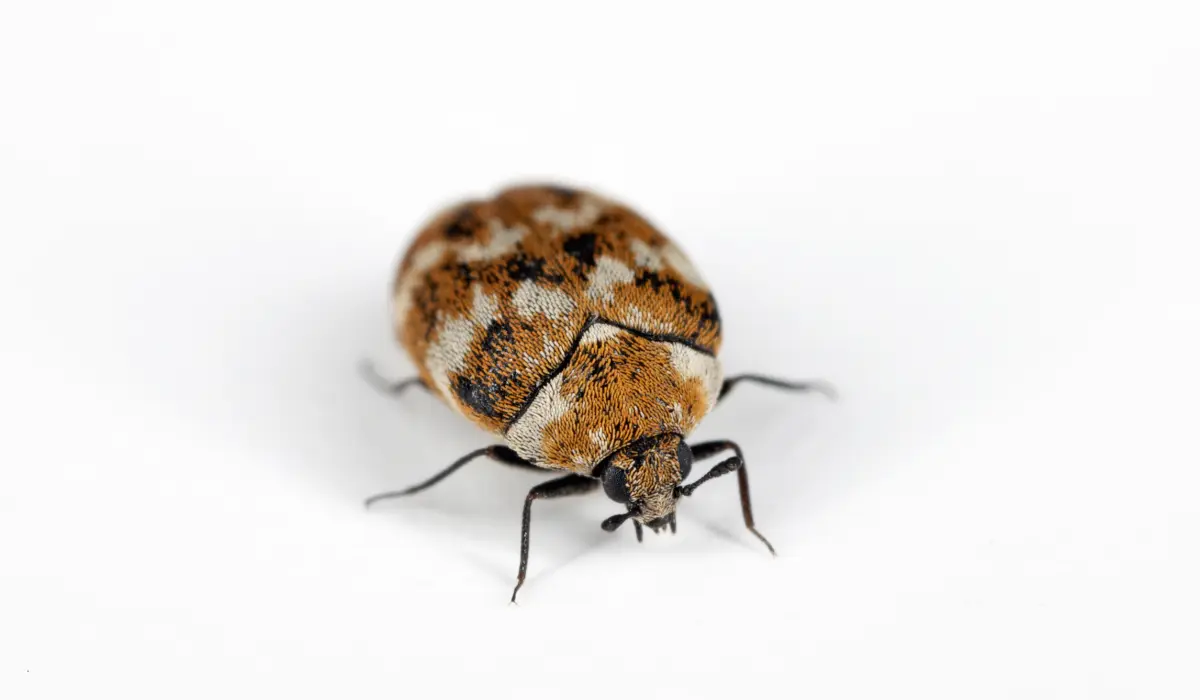
Varied carpet beetles are small and rounded, with mottled white, brown, and yellowish coloring as adults. Their larvae are hairy and may feed on wool, fur, feathers, and dead insects.
Black carpet beetles have darker, more elongated adult bodies. Their larvae can damage natural-fiber fabrics and other stored materials. Furniture carpet beetles have patterned adult bodies and may be associated with upholstered furnishings and other fabric-heavy areas. Carpet beetles are best known for damaging fabrics and stored materials, but you may also wonder whether they can affect your family or pets. LaJaunie’s guide on whether carpet beetles are harmful covers those concerns in more detail.
Correct identification matters because not every small beetle you find indoors is a carpet beetle. Some beetles simply wander inside and do not damage fabrics. If you are unsure what you found, save the insect in a sealed container or take a clear photo so a pest professional can help identify it.
Why Southeast Louisiana Homes Can Develop Carpet Beetle Problems
Carpet beetle problems in Louisiana often require extra attention to storage areas that remain warm and undisturbed for long periods. Attics, garages, spare closets, and storage rooms may hold rugs, blankets, clothing, and other fabrics for months before anyone checks them.
Humidity itself is not a food source for carpet beetles. South Louisiana’s climate can, however, influence how and where belongings are stored. A wool blanket packed into an attic, a rolled rug left in a garage, or boxes of clothing stored in a closet can give larvae a quiet place to feed.
Pet hair can create another food source in hard-to-reach areas. Hair may collect beneath furniture, along baseboards, and around vents. Carpet beetle larvae can also feed on dead insects, making overlooked corners and storage spaces worth inspecting.
LaJaunie’s technicians have found carpet beetles in carpet, clothing, and closets. Because the affected material can vary from one home to another, the service approach takes the type of fabric into account rather than treating every item the same way.
How to Prevent Carpet Beetles From Coming Back
Knowing how to get rid of carpet beetles is only part of the process. Once current activity is under control, focus on reducing the food sources and protected hiding places that allowed larvae to develop inside your home.
In Louisiana, that means paying close attention to closets, storage rooms, carpet edges, and areas where pet hair or lint can collect. Regular cleaning and careful storage can make these spaces less suitable for carpet beetles.
Clean Areas That Often Get Overlooked
Vacuum along baseboards, beneath furniture, inside closets, and around carpet edges regularly. These quiet spaces can collect pet hair, lint, dead insects, and other material larvae may feed on. Move heavier furniture from time to time so you can clean underneath it. Spare bedrooms, guest closets, and storage rooms deserve extra attention because they may go longer without being disturbed.
Store Natural-Fiber Items Carefully
Clean wool blankets, silk garments, fur, feathers, and other vulnerable materials before putting them into long-term storage. Once they are clean and dry, place them in sealed containers or suitable garment bags. This is especially useful for seasonal belongings that stay packed away for months. Stored items can remain unnoticed long enough for hidden larvae to cause damage before you pull them out again.
Inspect Items Before Bringing Them Indoors
Secondhand rugs, upholstered furniture, clothing, and decorative fabrics deserve a careful inspection before coming into your home. Check seams, folds, undersides, and fabric edges for larvae, shed skins, or damaged fibers.
You should also inspect stored belongings before moving them from an attic or garage back into living areas. Finding activity early can keep a small problem from reaching more closets, rugs, or furniture.
Limit New Entry Points
Check window screens, door seals, and other small openings around your home. Repairing visible gaps can reduce opportunities for adult carpet beetles and other insects to enter. If activity continues after you improve your cleaning and storage habits, a professional inspection can help locate a hidden source and determine whether treatment is needed.
Common Mistakes When Trying to Get Rid of Carpet Beetles
When you are trying to get rid of carpet beetles, it is easy to focus on the insects you can see. Adult beetles near a window may be the most obvious sign, while the larvae responsible for fabric damage remain hidden somewhere else.
Avoiding a few common mistakes can make your cleaning more effective and help you recognize when a professional inspection makes more sense.
Treating Only the Adult Beetles
Adult carpet beetles often gather near windows because they are attracted to light. Removing them may reduce what you see, but it does not address larvae feeding in carpet edges, closets, storage containers, or upholstered furniture.
Look for shed skins, larvae, and damaged natural fibers instead. Those signs are more useful when you are trying to locate the source of the infestation.
Cleaning Only Visible Carpet
Vacuuming the open center of a room may leave the most active areas untouched. Carpet beetle larvae often stay along baseboards, beneath furniture, or inside closets where there is less foot traffic.
Use a crevice attachment around carpet edges and wall lines. Move furniture when practical, and check nearby rugs, pet bedding, stored fabrics, and upholstered items instead of assuming the problem is limited to visible carpet.
Relying Too Heavily on Home Remedies
Online advice often recommends essential oils, powders, and other household products for carpet beetles. These approaches may not reach hidden larvae or remove the food source supporting the infestation.
Cleaning, careful inspection, and proper fabric storage are stronger first steps. If activity continues, a professional can help locate the source and determine what areas need attention.
Throwing Away Belongings Too Quickly
Finding carpet beetles does not mean every rug, blanket, or piece of clothing nearby needs to be discarded. Depending on the material and amount of damage, some items may be cleaned, isolated, or treated.
LaJaunie’s technicians account for the type of fabric involved when addressing carpet beetles. That can be useful when you are dealing with wool rugs, stored clothing, or other belongings you want to protect.
When Professional Carpet Beetle Control Makes Sense
Professional carpet beetle control is worth considering when you keep finding larvae or shed skins after a detailed cleaning, notice damage in several areas, or cannot locate the feeding source. Hidden activity may remain beneath carpet edges, inside closets, around furniture, or near debris that is difficult to reach.
A professional inspection can also help when the infestation involves valuable rugs, garments, or upholstered furniture. The treatment approach should account for the affected material rather than treating every fabric the same way.
LaJaunie’s provides beetle control services for carpet beetles and other beetle concerns. Regular beetle control is included in the company’s Healthy Home service, and covered services include a re-treat guarantee under applicable service terms.
According to LaJaunie’s service team, carpet beetle problems are not among the company’s most frequent pest calls, and many are resolved after one treatment. The amount of service needed still depends on the size and location of the infestation.
How LaJaunie’s Handles Carpet Beetles in Southeast Louisiana
Professional carpet beetle treatment starts with identifying where the activity is coming from. LaJaunie’s technicians may inspect carpet, clothing storage, closets, rugs, and other fabric-heavy areas where larvae could be feeding.
The type of material involved helps determine the treatment approach. Wall-to-wall carpet, a wool rug, and stored clothing do not all require identical handling. LaJaunie’s technicians choose a method based on the fabric and where the activity is found.
LaJaunie’s serves communities throughout Southeast Louisiana, including New Orleans, Kenner, Metairie, Thibodaux, Houma, Laplace, Mandeville, Covington, Baton Rouge, Slidell, Hammond, and surrounding areas.
Same-day service is available under applicable service terms. If carpet beetles continue showing up despite thorough cleaning, a professional inspection can help determine whether the source is in a closet, carpeted area, stored fabric, or another part of the home that has been overlooked.
Making the Right Carpet Beetle Control Choice for Your Louisiana Home
If you are learning how to get rid of carpet beetles, focus first on the areas where larvae hide and feed. Inspect natural-fiber belongings, vacuum overlooked spaces, clean affected fabrics according to their care instructions, and place clean items in sealed storage. When the problem keeps returning, professional help can identify the source and determine which areas need treatment.
Carpet beetles can remain hidden beneath furniture, inside closets, and around stored fabrics, so repeated sightings or new damage deserve attention. LaJaunie’s Pest Control provides local beetle control for homeowners throughout Southeast Louisiana.
If you continue finding larvae, shed skins, adult beetles, or damaged fabrics, contact LaJaunie’s to schedule service and get help protecting your home from carpet beetles.
Frequently Asked Questions
What Causes Carpet Beetles in Louisiana Homes?
Carpet beetles can enter from outdoors or arrive with infested belongings. Their larvae feed on materials such as wool, fur, feathers, pet hair, lint, and dead insects. Closets, carpet edges, storage areas, and spaces beneath furniture can give larvae quiet places to feed and develop.
Can Carpet Beetles Live in Clothes Instead of Carpet?
Yes. Carpet beetles are not limited to carpet. Their larvae can feed on clothing and other items containing wool, silk, fur, feathers, or similar animal-based materials. LaJaunie’s technicians also find carpet beetle activity around clothing and closets, so those areas should be part of your inspection.
When Should I Call Pest Control for Carpet Beetles?
Consider professional service when you repeatedly find larvae or shed skins, notice fabric damage in several areas, or cannot locate the source. An inspection can also help when valuable rugs, clothing, or upholstered furniture are involved and you want an approach suited to the material.