

Fall brings some welcome changes to Louisiana. The afternoon heat starts to ease, football season fills the weekends, and homeowners can finally spend more time outside without feeling like they stepped into an oven. That cooler weather also sends families back into yards, hunting leases, garden beds, and wooded trails where chiggers may be waiting.
Chiggers in Louisiana are easy to overlook because they are almost too small to see. Most people never notice them crawling onto their clothing or skin. The first sign often comes hours later, when itchy red bumps appear around the ankles, waist, knees, or other places where clothing fits tightly.
These tiny mites are not limited to neglected properties. They can show up in well-kept yards when shaded grass, leaf litter, thick ground cover, or nearby wildlife creates the right conditions. Understanding where chiggers live and how they reach people makes it much easier to lower the risk of bites.
What Chiggers Are and Why They Are So Hard to Spot
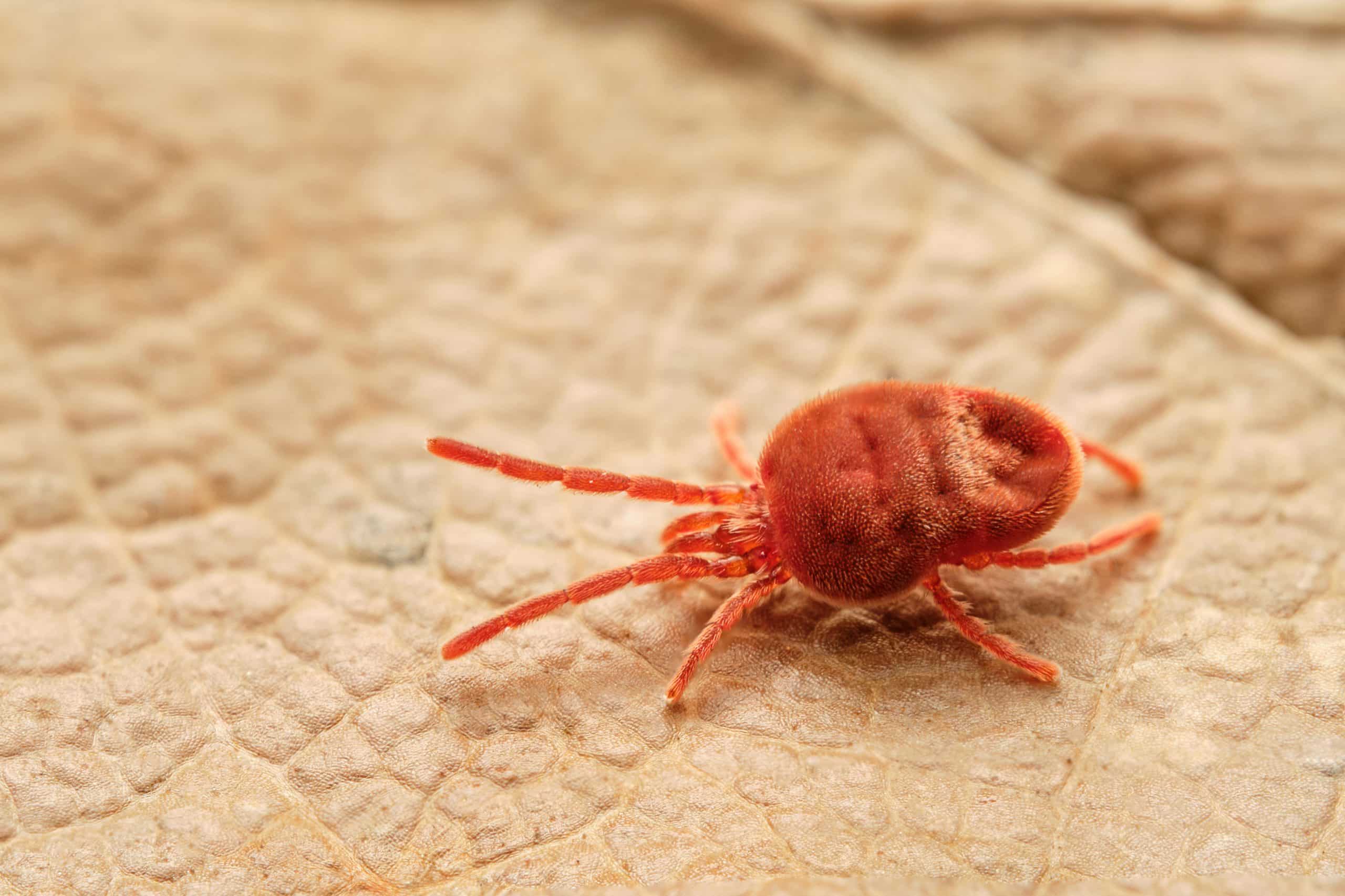
Chiggers are the larval stage of mites in the Trombiculidae family. Adult mites live in soil and vegetation, but the six-legged larvae are the stage that feeds on people and animals. After the larval stage, chiggers develop into eight-legged nymphs and adults that do not cause the same itchy skin reaction.
Their size explains why most people never see them. The Missouri Department of Conservation reports that chigger larvae are about 1/150 of an inch long. Under magnification, they may appear red, orange, yellow, or straw-colored, but they usually look like little more than moving specks to the naked eye.
Chiggers do not fly or jump. They wait on low vegetation and crawl onto a person or animal that brushes past. Once aboard, they move across the skin until they reach a protected area, such as the edge of a sock, waistband, bra line, or tight sleeve.
It is also worth clearing up a common myth. Chiggers do not burrow beneath the skin. A larva attaches to the surface and releases digestive enzymes that break down nearby skin cells. It then feeds through a small hardened tube that forms at the bite site. The itching comes from the body’s reaction, not from a mite living under the skin.
Why Chiggers Thrive in Louisiana Grass During Fall
Chiggers in Louisiana benefit from the same conditions that shape many local yards: warmth, high humidity, frequent rain, and dense plant growth. In northern states, cooler temperatures may reduce activity earlier in the year. South Louisiana often stays warm enough for chiggers to remain active well into fall.
They tend to gather in small habitat pockets rather than spreading evenly across a lawn. One sunny section may have little activity, while a damp strip beside a fence or drainage ditch supports far more. This uneven distribution explains why one family member may get bitten while another person crosses the same yard without a problem.
Shaded grass is especially attractive because it holds moisture longer after rain or morning dew. Thick weeds, ground cover, leaf litter, brush, and low shrubs create similar conditions. Yards that border woods, cane fields, vacant lots, or unmanaged ditches may also experience more chigger activity because animals regularly move through those areas.
Wildlife matters because chigger larvae feed on many hosts. Rodents, rabbits, birds, reptiles, and other small animals can carry them through the landscape. A yard with spilled birdseed, brush piles, or shelter around sheds may attract more of these hosts and increase the chance of chiggers appearing nearby.
| Yard Area | Expected Chigger Activity | Why It Matters |
| Tall grass near woods | High | Shade and moisture protect larvae |
| Leaf litter under shrubs | High | Organic debris holds humidity near the soil |
| Drainage ditch edges | High | Damp vegetation creates favorable habitat |
| Garden beds with thick ground cover | Moderate to high | People often kneel or brush against plants |
| Sunny, closely cut lawn | Lower | Heat and dryness make survival harder |
| Paved patio or dry gravel path | Low | Little vegetation is available for larvae |
What Chigger Bites Look and Feel Like
Chigger bites often appear as clusters of small, red, raised bumps. Some develop a blister-like center, while others look similar to flea bites or mosquito welts. The location of the bumps often provides the strongest clue.
Bites commonly form around the ankles after someone walks through grass. They may also appear behind the knees, around the waist, beneath underwear, or where elastic clothing presses against the skin. These areas give the larvae a protected place to attach while clothing prevents them from moving farther.
The itching may not begin right away. Many people notice irritation several hours after leaving the yard, which makes the source harder to identify. The Cleveland Clinic notes that symptoms can last for one to two weeks, even though the chigger is often removed much earlier through bathing, rubbing, or normal movement.
Chigger bites are not contagious. They cannot spread from one person to another, and the bumps do not mean mites are reproducing inside the home. The main concern is skin damage caused by repeated scratching. Broken skin can become infected, especially if the area is not kept clean.
| Bite Source | Common Location | Typical Clue |
| Chiggers | Ankles, waist, groin, behind knees | Strong itching after time in grass or brush |
| Fleas | Ankles and lower legs | Small grouped bites, often linked to pets |
| Mosquitoes | Exposed skin | Puffy welt that appears soon after a bite |
| Ticks | Anywhere on the body | Tick may remain attached to the skin |
| Contact dermatitis | Area that touched a plant or material | Rash may form in a broader patch |
Anyone who develops spreading redness, warmth, increasing pain, drainage, or fever should contact a medical provider. Trouble breathing, facial swelling, or another severe reaction requires immediate medical care.
When Chiggers Are Most Likely to Reach People
Chiggers are more active when vegetation stays warm and damp. Activity often increases after periods of rain because grass and ground cover hold moisture near the soil. A shaded area can remain suitable long after the rest of the lawn has dried.
Exposure usually happens when someone sits, kneels, or walks through vegetation. Gardening, clearing a fence line, hunting, fishing near overgrown banks, or watching children play near wooded edges can all create contact. Chiggers may also reach people during outdoor work around sheds, ditches, and low shrubs.
Mowed grass does not guarantee that a yard is free from chiggers. Short grass in full sun is less favorable, but larvae may remain in damp corners, beneath bushes, or along property boundaries. A homeowner may mow the center of the lawn every week and still encounter chiggers near an overgrown drainage area.
Pets can carry chiggers after spending time outdoors, though bites on people usually result from direct contact with vegetation. Dogs may show irritation around the feet, belly, ears, or other areas with less fur. A veterinarian should evaluate ongoing itching because fleas, allergies, mites, and skin infections can look similar.
How to Prevent Chigger Bites Outdoors
The most reliable protection starts with clothing. Long pants, socks, closed shoes, and a tucked-in shirt reduce the amount of exposed skin. Tucking pant legs into socks also blocks one of the easiest routes around the ankles.
Repellent provides another layer of protection. Use EPA-registered repellents with active ingredients such as DEET, picaridin, IR3535, oil of lemon eucalyptus, para-menthane-diol, or 2-undecanone. Always follow the label, especially when using a product on children.
Permethrin-treated clothing and outdoor gear may also help reduce exposure. Products made for fabric should be used only as directed and should not be applied directly to the skin. Some people choose pretreated pants, socks, and boots for hunting, hiking, or regular yard work.
Outdoor habits matter as much as clothing. Avoid sitting directly in tall grass or along wooded edges. Use a chair, bench, or barrier when possible. Stay toward the center of maintained trails and keep children away from thick vegetation around fences or ditches.
After outdoor activity, take a shower and wash exposed skin with soap and water. Change clothes before sitting on furniture or climbing into bed. Clothing worn in likely chigger habitat should go into the wash rather than remaining in a hamper for several days.
How to Make a Louisiana Yard Less Attractive to Chiggers
Reducing chiggers begins with changing the conditions they prefer. Regular mowing helps sunlight reach the soil and prevents grass from creating a cool, damp shelter. The goal is not simply to shorten the lawn, but to reduce the moisture and cover that allow larvae to remain active.
Trim low branches and shrubs so air can move through shaded sections of the property. Remove leaf piles, weeds, grass clippings, and thick plant debris from fence lines and play areas. A clean border between the lawn and wooded vegetation can reduce contact with the places where chiggers are most likely to gather.
Drainage deserves close attention in Louisiana yards. Water near downspouts, low spots, crawfish ponds, or roadside ditches can keep nearby vegetation damp. Correcting standing water and improving airflow may make those areas less favorable for chiggers while also helping with mosquitoes and other outdoor pests.
Consider how people use the yard. Playsets, fire pits, chairs, and pet areas should sit away from heavy brush when space allows. A sunny, maintained buffer around these areas creates a less inviting habitat and reduces how often family members brush against vegetation.
Wildlife pressure should also be addressed. Store birdseed and pet food in sealed containers, clean up spills, and remove clutter that shelters rodents. These changes do not eliminate every host, but they can reduce the number of animals moving through high-use parts of the property.
When a Chigger Problem Needs Professional Attention
An occasional bite after hiking does not always mean chiggers have settled into the yard. Repeated bites after ordinary backyard activities are a stronger sign that a problem area may be close to where the family spends time.
Professional attention may help when the source is hard to find. Chiggers are tiny, and their populations can be concentrated in one damp strip of vegetation. A careful inspection can focus on shade, drainage, plant growth, wildlife activity, and the exact places where bites occur.
Identification matters because several outdoor pests cause similar symptoms. Fleas, ticks, mosquitoes, and biting gnats can all produce itchy bumps. A skin reaction may also come from plants or another source unrelated to pests.
Before requesting service, write down where the bites seem to happen and what activity took place beforehand. Mention whether the exposure involved a fence line, garden bed, ditch, pet area, or wooded edge. Those details can help narrow the search and prevent attention from being wasted on the wrong part of the yard.
Keeping Chiggers Out of Your Louisiana Fall Plans
Chiggers in Louisiana grass can turn yard work, playtime, or a weekend outdoors into days of itching. Their small size makes them difficult to spot, but their habitat is much easier to recognize. Damp grass, shaded vegetation, leaf litter, and active wildlife all create conditions where larvae can wait for a passing host.
Homeowners can lower the risk by wearing protective clothing, using an appropriate repellent, showering after outdoor exposure, and keeping high-use parts of the yard sunny and well maintained. Persistent bites may call for a closer inspection, especially when the problem keeps returning in the same area.
LaJaunie’s Pest Control can help evaluate recurring outdoor pest activity and identify conditions that may be contributing to the problem. Finding the source is the first step toward making your yard more comfortable for the people and pets who use it.