

Garter snakes in Louisiana are generally harmless to people and usually try to escape when approached. Even so, they can be a common sight around homes because Louisiana’s warm, wet conditions give them plenty of places to hide and hunt. LaJaunie’s Pest Control technicians serve homeowners across Baton Rouge, Thibodaux, Houma, New Orleans, and other parts of southeast Louisiana, where drainage ditches, bayous, wooded areas, and damp yards can support frequent snake activity.
The challenge is knowing what you are looking at. A harmless garter snake moving through tall grass can be difficult to identify at a glance, especially in a state that is also home to venomous snakes such as cottonmouths, copperheads, and rattlesnakes.
This guide explains how to identify garter snakes in Louisiana, where and when you may see them, whether they are dangerous, how they compare with cottonmouths, and what you can do to reduce snake activity around your property.
Key Takeaways
- Garter snakes in Louisiana are generally harmless and usually avoid people.
- They often stay near water, cover, and areas with plenty of small prey.
- Reducing standing water, overgrown vegetation, and food sources can make your yard less attractive to snakes.
- Wildlife control professionals can offer fast, local help if you see a snake or want to prevent them from around your home.
How to Identify Garter Snakes in Louisiana
Garter snakes in Louisiana usually have slender bodies with light-colored stripes running lengthwise from the head toward the tail. Their background color may be brown, olive, or nearly black, while the stripes often appear yellow or another lighter shade.
You are more likely to find them around freshwater and damp areas such as ponds, slow-moving streams, drainage ditches, marsh edges, and wet lawns. Those conditions are common across the Atchafalaya Basin, the Florida Parishes, Lafourche Parish, Terrebonne Parish, East Baton Rouge Parish, and other parts of southeast Louisiana.
Color alone is not enough for a safe identification. Several snakes can look similar from a distance, so pay attention to the snake’s overall build, pattern, and location without approaching it.
Common Garter Snake
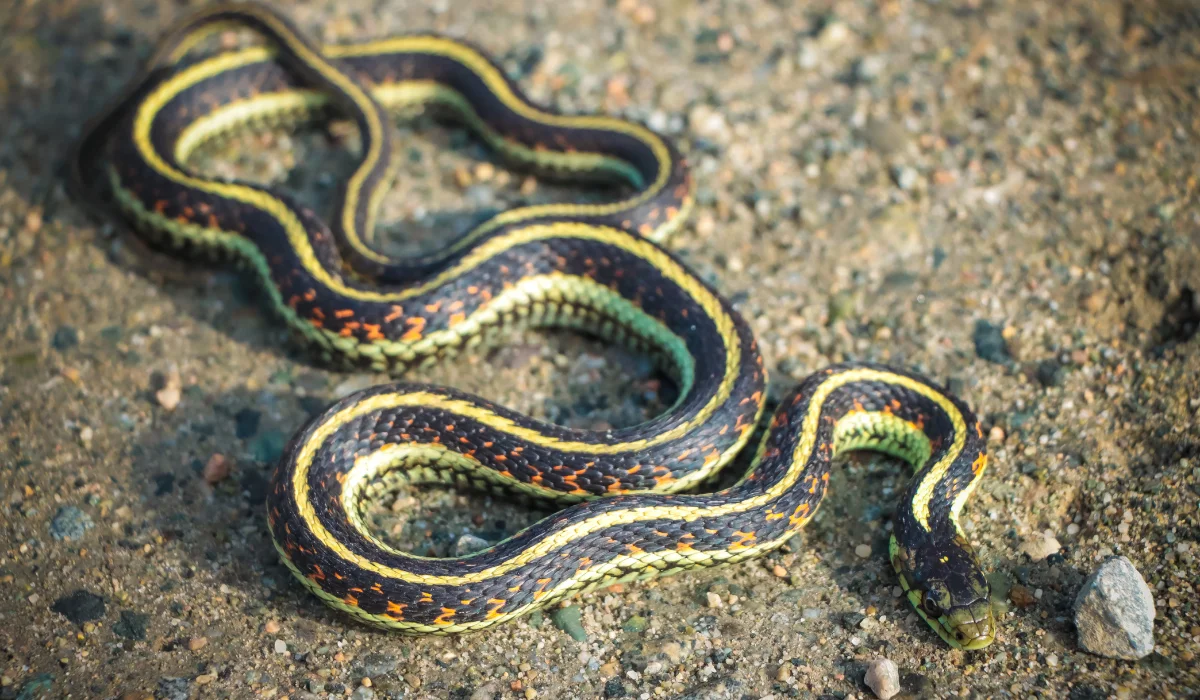
This North American snake is easily recognized by its dark body and three bright yellow stripes. It prefers freshwater habitats like ponds, slow-moving streams, and drainage ditches, which are common across the Atchafalaya Basin and the Florida Parishes. This snake preys on amphibians, insects, and small fish.
Despite its resemblance to other Louisiana snakes, the common garter snake is generally shy and poses little concern to people who leave it alone.
Eastern Garter Snake
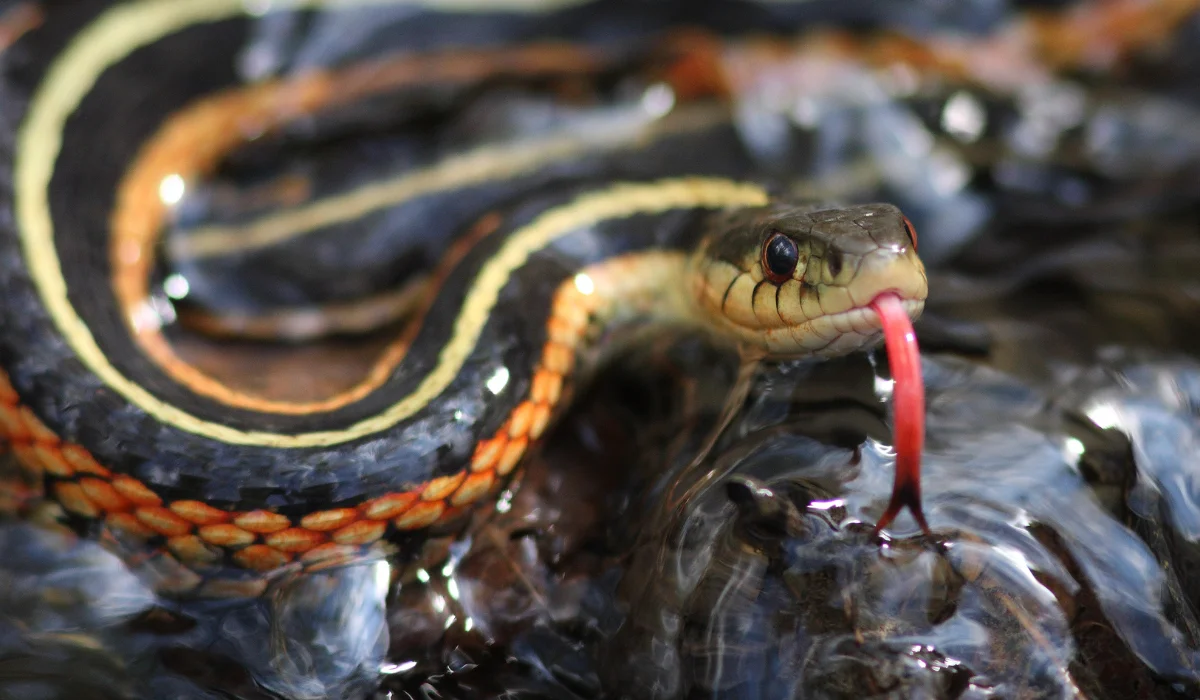
The eastern garter snake is a type of common garter snake. While the two share many traits, the eastern garter can show slight differences in color or pattern depending on its habitat.
Found in both urban and rural parts of Louisiana, including areas around Baton Rouge, this snake adapts well to varied conditions. You may spot one hunting frogs or other small prey near wetlands or hiding under piles of brush.
Western Ribbon Snake
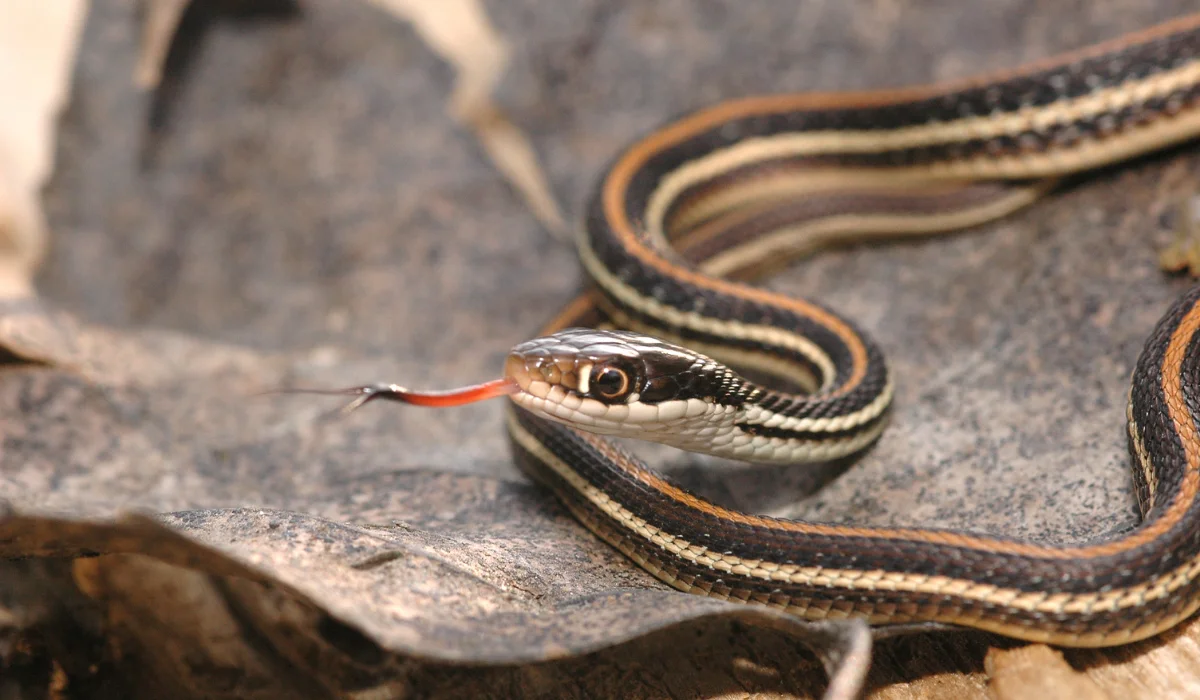
Found frequently along bayous and marshy areas of South Louisiana, the western ribbon snake is part of the garter snake family.
It has a slimmer build and more vibrant coloring, often with yellow stripes running along its black or brown body. It’s a quick mover and relies heavily on frogs and tadpoles for food.
In some parts of Texas and Louisiana, it’s mistaken for water snakes or racers due to their speed and love for water.
Eastern Ribbon Snake
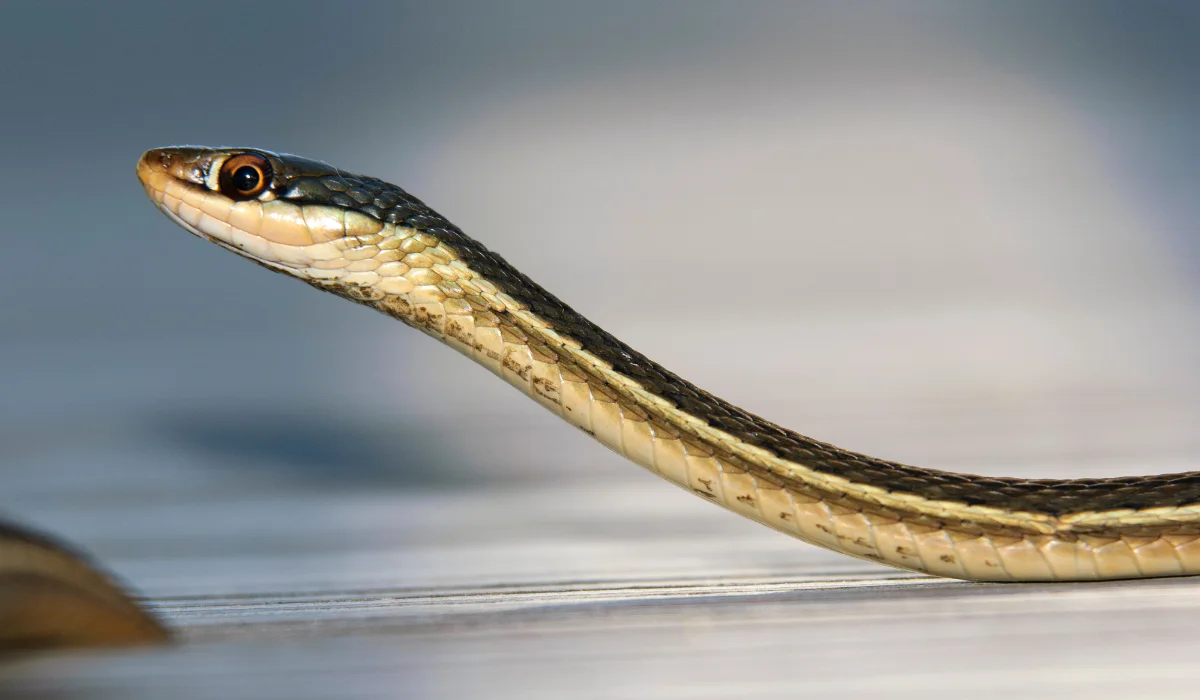
Another fast-moving garter snake, the eastern ribbon snake, is most often seen in wetlands, especially near freshwater sources where frogs are plentiful. Like the western ribbon snake, it’s nonvenomous and avoids humans when possible. You might spot one in the Gulf Coast region basking on a sunny log or darting through tall grass.
Where Garter Snakes in Louisiana Are Commonly Found
Garter snakes in Louisiana tend to stay near places that provide moisture, food, and cover. Drainage ditches, neighborhood ponds, bayous, marsh edges, wooded lots, and low areas that remain damp after rain can all provide suitable habitat.
Those conditions are common around Bayou Lafourche, the Atchafalaya Basin, communities in Terrebonne and Lafourche parishes, the Northshore, and parts of East Baton Rouge Parish. Even homes far from a major waterway can attract snakes if the yard has a leaking faucet, ornamental pond, overgrown fence line, or shaded area that stays wet.
You may also see snakes around sheds, garages, crawlspaces, brush piles, and landscaping materials. These areas provide cover while placing the snake close to frogs, insects, rodents, and other prey.
When Garter Snakes in Louisiana Are Most Active
Garter snakes in Louisiana can stay active for much of the year because southeast Louisiana has relatively mild winters and a long warm season. You may notice more movement during spring as temperatures rise and frogs, insects, and other small animals become active.
During the hottest parts of summer, snakes often seek shade and cooler hiding places. That can make morning and evening sightings more common around lawns, drainage areas, gardens, and bodies of water.
Fall also brings comfortable temperatures that support snake activity. Even winter does not completely rule out a sighting in South Louisiana because a stretch of warm weather can bring snakes out of protected areas.
How to Prevent Garter Snakes Around Your Louisiana Property
If you would rather not have garter snakes showing up around your home, focus on the conditions that make your property useful to them. Garter snakes in Louisiana look for food, water, and shelter, so reducing those resources can make the area around your home less inviting.
This matters in South Louisiana, where frequent rain, fast-growing vegetation, low-lying yards, drainage systems, and nearby waterways can provide good snake habitat.
Eliminate Standing Water
Garter snakes and other water-associated snakes are often found near standing water because frogs, insects, and other prey gather there. Ponds, fountains, clogged gutters, leaking faucets, and low areas that stay wet after rain can all contribute. Homeowners near the Atchafalaya Basin, Bayou Lafourche, and other low-lying areas of southeast Louisiana should pay particular attention to avoidable moisture near the home.
Cut Back Vegetation
Untrimmed grass, overgrown shrubs, and brush piles create perfect hiding spots not just for garter snakes but also for rat snakes, Dekay’s brownsnakes, and other common snakes. Keeping a clean yard helps discourage any type of snake from making a home nearby.
Secure Food Sources
Garter snakes feed on small prey such as amphibians, while other snakes may be attracted to rodents and similar food sources. If you have an ongoing pest problem, it can make your property more useful to snakes. LaJaunie’s pest control services can help reduce rodents and other pests that may contribute to wildlife activity around your home.
Seal Entry Points
Some snakes may find their way into sheds, garages, crawlspaces, or other sheltered areas through gaps around a structure. Check worn door sweeps, damaged screens, utility openings, and accessible cracks or gaps around the exterior. Sealing these entry points can also help keep rodents and other unwanted pests out.
What to Do if You Find a Garter Snake
If you believe you have found a garter snake, give it space and allow it to leave on its own. Do not corner the snake or try to grab it, especially if you are not completely sure what species you are looking at.
Keep children and pets away until the snake has moved on. If it disappears beneath a deck, shed, brush pile, or other covered area, avoid reaching into that space with your hands.
If you are dealing with repeated snake activity or want professional help, learn more about LaJaunie’s snake control services.
Garter Snake Safety Tips in Louisiana
If you spot a garter snake in your yard, there is usually no reason for alarm. The safest response is to give the snake room, especially if you have not confirmed its identity.
1. Don’t Panic
Unlike venomous snakes like copperheads or cottonmouths, garter snakes pose no real threat. Most are nonvenomous and will retreat if they see you first.
2. Do Not Handle the Snake
Even though garter snakes are generally harmless, homeowners can confuse one snake species with another during a quick encounter. Leave the snake alone rather than attempting to catch or relocate it yourself.
3. Wear Protective Clothing
If you are walking through tall grass or working near water, especially in areas with frequent snake sightings, wear boots and long pants. This is useful when working around brush piles, woodpiles, sheds, drainage ditches, and other places where snakes may shelter.
4. Call for Professional Help
Sometimes it is difficult to tell a harmless snake from a venomous species, especially when you only see it for a few seconds. If you are unsure what kind of snake is on your property or you are dealing with repeat sightings, LaJaunie’s Pest Control snake control services can help you determine the next step.
Making Your Louisiana Property Less Attractive to Snakes
Garter snakes in Louisiana are generally harmless, but repeated sightings can indicate that your property offers the food, water, and shelter snakes are looking for. Keeping vegetation maintained, reducing unnecessary standing water, controlling pest activity, and sealing accessible gaps can make the space around your home less attractive.
These steps are especially useful for homes near Louisiana bayous, wetlands, drainage corridors, and wooded areas, where snake encounters can be part of living close to productive wildlife habitat.
If snake activity continues around your home, contact LaJaunie’s Pest Control or learn more about snake control in Louisiana. A local professional can help you address the problem without putting you, your family, or your pets in the middle of an uncertain snake encounter.
Garter Snakes in Louisiana: FAQs
Are garter snakes dangerous in Louisiana?
Garter snakes in Louisiana are generally not dangerous to people. They usually try to hide or escape when approached. Avoid handling them, though, because a frightened snake may bite or release musk, and Louisiana is also home to venomous species that can be misidentified at a glance.
Garter snake vs. Cottonmouth in Louisiana: What’s the difference?
Garter snakes are generally slender with clear stripes running lengthwise along the body. Cottonmouths are heavier-bodied with broader heads and different markings. Because both can appear near water, never identify a snake based on habitat alone.
What should I do if I find a garter snake in my yard?
Keep children and pets away, give the snake room to leave, and do not try to pick it up. If you cannot identify the snake safely or continue seeing snakes around your property, contact a professional for help with identification and control.