



A large wasp circling a porch might be a hornet, but it could just as easily be a yellowjacket, paper wasp, cicada killer, or another species found around South Louisiana homes. Searches for hornets Louisiana homeowners see often lead to several different insects.
The nest often gives you a better clue than the insect itself. A gray paper nest hanging from a tree points toward one species, while several large wasps disappearing into a hollow tree or structural opening suggest something different.
Knowing what you’re looking at matters most when the activity is close to your house. This field guide covers the hornets Louisiana homeowners may encounter, their nests and seasonal behavior, common look-alikes, sting risks, and what to do when a colony turns up near a doorway, porch, yard, or roofline.
Which Hornets Louisiana Homeowners Commonly See
Two names come up most often when homeowners talk about Louisiana hornets: bald-faced hornets and European hornets. They are frequently grouped together, yet their coloring and nesting habits make them fairly easy to separate once you know what to look for.
Among the hornets Louisiana homeowners may encounter, the bald-faced hornet is especially recognizable because of its nest. European hornets are more likely to make you notice the insect first and wonder where it keeps disappearing.
Bald-Faced Hornets

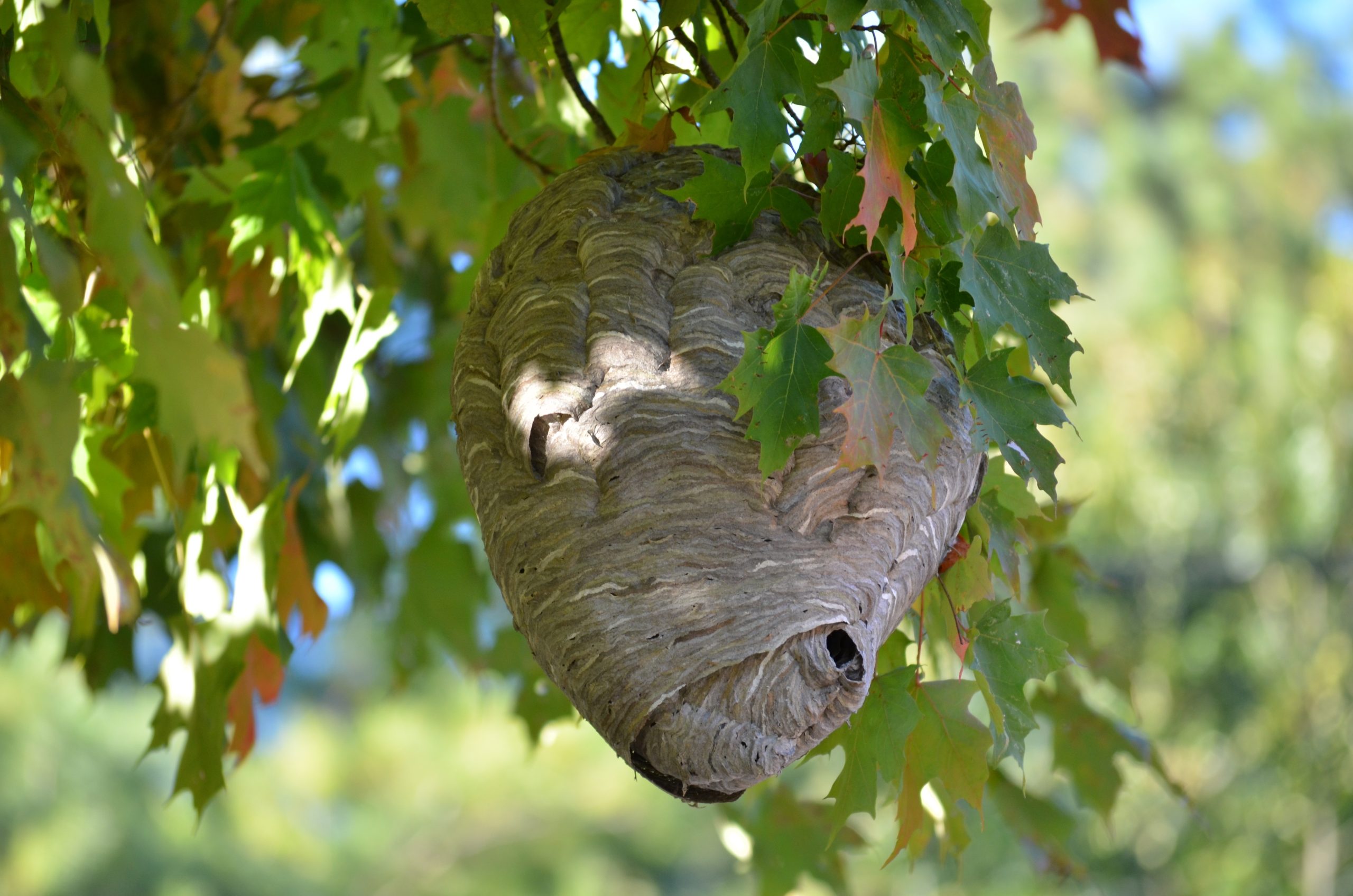
Bald-faced hornets have mostly dark bodies with obvious white or ivory markings, including a pale face. They construct enclosed gray paper nests that may hang from tree branches, shrubs, eaves, or other elevated surfaces.
The name is slightly misleading because bald-faced hornets are actually aerial yellowjackets rather than true hornets. Penn State Extension reports that a mature colony may contain 100 to 400 workers, which helps explain why activity around a nest becomes much easier to notice as the colony grows.
European Hornets
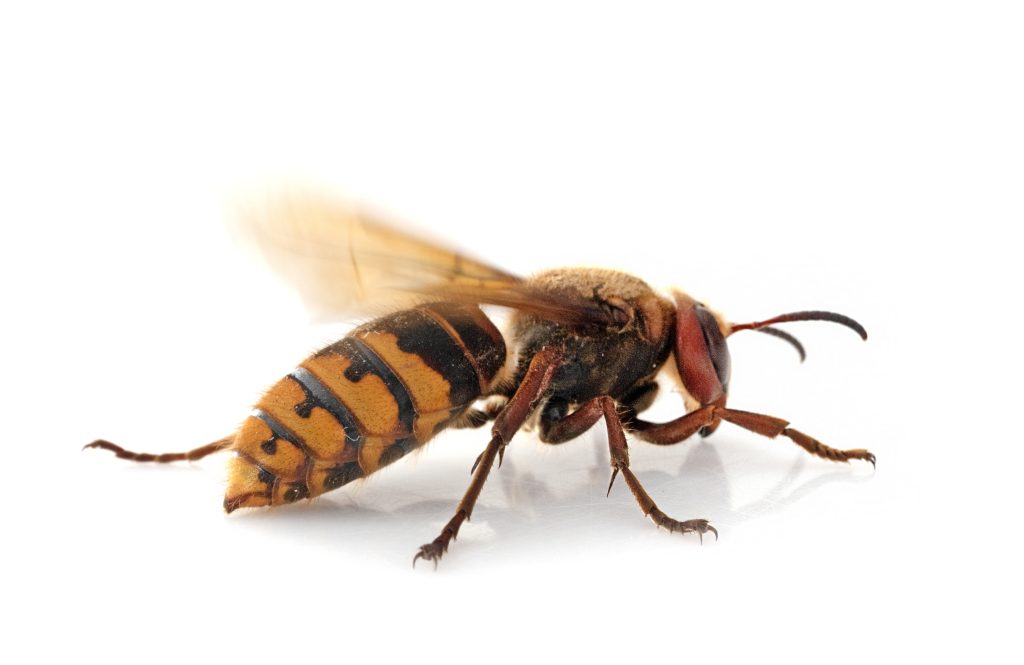
European hornets look heavier than most wasps around a Louisiana yard. They have yellow markings across the abdomen along with reddish-brown coloring around the head and upper body.
Their nests are usually less obvious. NC State Extension notes that European hornets commonly use hollow trees and other enclosed cavities, so repeated traffic into one opening may be the main sign that a colony is nearby.
| Feature | Bald-Faced Hornet | European Hornet |
| Main colors | Black with white or ivory markings | Yellow with reddish-brown areas |
| True hornet? | No | Yes |
| Typical nest | Enclosed gray paper nest | Nest hidden inside a cavity |
| Common nest settings | Trees, shrubs, elevated structures | Hollow trees and protected cavities |
| Best field clue | Black-and-white workers around an aerial nest | Large workers repeatedly entering a cavity |
How to Tell Hornets From Other Louisiana Wasps
Large wasps are difficult to identify while they are flying. Instead of relying on size or color alone, look at body shape, nest construction, and whether several insects repeatedly travel to the same location.
This is especially useful with wasps in Louisiana because several species use the same yards. Paper wasps may work under the eaves while cicada killers fly over the lawn and yellowjackets forage around outdoor food.
Start With the Nest
A bald-faced hornet nest has an outer paper covering, giving it a rounded or football-like appearance. Paper wasp nests remain open, so you can see the individual cells of the comb underneath an eave, railing, porch ceiling, or other sheltered surface.
Yellowjacket nests can be much harder to see. Some species use holes in the ground or concealed cavities, leaving little more than a busy entrance where workers repeatedly come and go.
Then Look at the Insect
Paper wasps usually have slender bodies and long legs that trail underneath them during flight. Yellowjackets have a shorter, stockier appearance and are often marked with contrasting yellow and dark bands.
European hornets are bulky by comparison. Bald-faced hornets have a similarly compact build, but their black-and-white markings separate them from the bright yellow-and-black pattern people often associate with social wasps.
| What You See | Likely Insect | Best Identification Clue |
| Black-and-white wasps around a gray hanging nest | Bald-faced hornet | Enclosed aerial paper nest |
| Large reddish-yellow wasps entering a cavity | European hornet | Heavy body and concealed nest |
| Compact yellow-and-black wasps entering the soil | Yellowjacket | Ground or cavity entrance |
| Long-legged wasps beneath an eave | Paper wasp | Open comb with visible cells |
| Very large wasp flying low across a lawn | Cicada killer | Solitary activity around ground burrows |
| Slender wasp working around mud cells | Mud dauber | Mud nest attached to a sheltered surface |
Where Hornets Build Nests Around South Louisiana Homes
A hornet nest doesn’t have to touch your house to interfere with how you use the property. Mature trees, thick landscaping, sheds, rooflines, and structural openings can put stinging insects surprisingly close to places where you walk, mow, grill, or work outside.
Nest location also changes how easily you can find the colony. An exposed bald-faced hornet nest may be visible from across the yard, while a European hornet colony can remain hidden inside a tree cavity or structural void.
Trees, Shrubs, and Landscaping
Tree limbs and dense shrubs provide protected places for aerial nests. Leaves can hide a gray paper nest well enough that you don’t notice it until you start pruning, clearing branches, or reaching into the plant.
Take a moment to watch thick vegetation before cutting into it during the warmer part of the year. Several wasps following the same route into one section of foliage can reveal a nest that is difficult to see from outside.
Eaves, Sheds, and Structural Voids
Rooflines and outbuildings create another set of nesting opportunities. Paper wasps commonly use exposed sheltered surfaces, while cavity-nesting species may disappear through small openings near siding, soffits, sheds, or other protected areas.
Avoid sealing a hole while insects are actively using it. The visible opening may be some distance from the colony, and blocking their normal route can cause workers to search for another exit.
Why Hornet Activity Changes Through the Season
Social wasp colonies don’t begin the year with hundreds of workers. A queen starts the nest and raises the first group, so early activity may consist of only a few insects moving around the property.
As those workers mature, they begin gathering food and supporting further colony growth. The hornets Louisiana homeowners notice later in the warm season may therefore seem to appear suddenly, even though the nest has been developing for some time.
| Colony Stage | What You May Notice |
| Early stage | A small nest with limited visible activity |
| Growing colony | More workers traveling between the nest and surrounding property |
| Later warm season | Heavier traffic and a larger, easier-to-find colony |
| Cold weather | The old colony declines while new queens seek protected overwintering sites |
Food also changes where you notice activity. Fallen fruit, sugary drinks, meat scraps, and open trash can draw foraging social wasps toward patios and gathering areas, even if their colony is somewhere else.
Finding several wasps around a trash can doesn’t mean the nest is underneath it. Watch where the insects fly after feeding. Their travel direction may give you a better clue about the location of the colony.
How Dangerous Are Hornets in Louisiana?
A hornet passing through the yard doesn’t carry the same risk as an active nest beside your back door. Most unwanted encounters happen when someone gets too close to a colony, disturbs a hidden nest during yard work, or accidentally presses a wasp against the skin.
Social wasps defend their nesting area and can sting repeatedly. Cutting into a shrub that contains a nest, mowing next to a concealed entrance, shaking a supporting branch, or trying to knock down an active nest can quickly change their behavior.
What Happens After a Hornet Sting?
A hornet sting commonly causes pain, redness, and swelling around the affected area. Some people experience a larger local reaction that spreads farther from the sting site.
A serious allergic reaction requires a different response. Trouble breathing, tongue or throat swelling, dizziness, widespread hives, or other symptoms involving the whole body require emergency medical attention.
A review of U.S. mortality data by the Centers for Disease Control and Prevention (CDC) recorded 788 deaths from hornet, wasp, and bee stings between 2011 and 2021, averaging about 72 per year. 84.6% of those deaths occurred among males. Fatal reactions are uncommon, but anyone with a known history of severe reactions should give an active nest plenty of space.
Reduce Unwanted Wasp Activity Around the Yard
Outdoor sanitation can reduce some of the reasons foragers visit the areas where your family spends time. Keep garbage containers closed, clean sugary spills, remove fallen fruit, and clear food and drink containers after eating outdoors.
It also helps to check shrubs, eaves, sheds, and protected roof areas periodically. Repair openings around the structure when they aren’t being used by active wasps, and look for repeated flight patterns before trimming dense landscaping.
Getting Help With a Hornet Nest in Louisiana
When the hornets Louisiana homeowners find are nesting far from regular activity, simply avoiding the area may be practical. A nest next to a porch, garage entrance, play area, walkway, or landscaping you maintain regularly creates a different problem because normal routines keep bringing people close to the colony.
Hidden and elevated hornet nests are also difficult to handle safely. LaJaunie’s Pest Control identifies the stinging insect and evaluates the nesting site before choosing the appropriate approach. Technicians can service eaves and similar exterior areas up to 25 feet high, so you don’t have to work from a ladder beside an active colony.
If hornets or other stinging insects are repeatedly using an area near your South Louisiana home, contact LaJaunie’s Pest Control. Professional hornet control is most useful when the nest is difficult to reach, concealed inside the structure, or close enough to everyday activity that avoiding it is no longer realistic.