



You turn on the bathroom light and catch something with dozens of legs disappearing behind the vanity. Encounters with Louisiana centipedes often happen that fast, which can make them seem more threatening than they are.
Centipedes are hunters. They feed on spiders, silverfish, flies, cockroaches, and other small arthropods rather than wood, fabric, stored food, or parts of your home. Most centipedes in the house are nuisance pests, but frequent sightings can still give you useful information about what is happening nearby.
Moisture, shelter, and available prey all influence where centipedes spend their time. If they keep turning up in bathrooms, garages, crawl spaces, or utility areas, it makes sense to look beyond the animal you can see.
How to Identify Louisiana Centipedes in Your Home
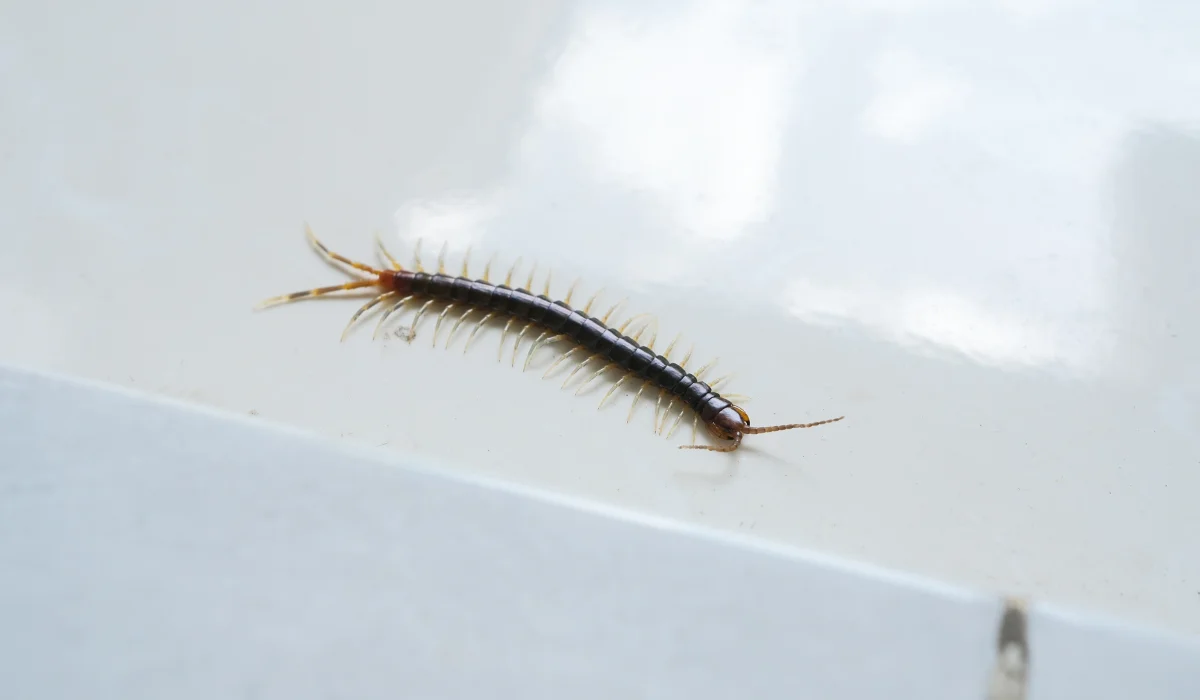
Louisiana centipedes are arthropods, not insects. Their bodies are divided into segments, with one pair of legs attached to each leg-bearing segment. Insects have only six legs, so even a quick look usually tells you that you are dealing with something different.
The house centipede is especially noticeable indoors because its legs are much longer than its body is wide. It also has long antennae and moves quickly when exposed. According to Penn State Extension, an adult house centipede has 15 pairs of legs, for a total of 30.
| Feature | What You May Notice | Why It Helps |
| Legs | 15 pairs on an adult house centipede | Separates it from six-legged insects |
| Body | Flattened and segmented | Differs from the rounder shape of millipedes |
| Antennae | Long and thin | Often almost as noticeable as the legs |
| Movement | Quick when disturbed | House centipedes tend to run for cover |
| Feeding habit | Hunts small arthropods | Explains why it may appear where other pests are active |
You may spot one after moving a box in the garage, opening a closet, or switching on a light in a damp room. Because house centipedes move quickly, many homeowners notice the legs before they get a clear look at the body.
Centipedes vs. Millipedes
Both can turn up around damp outdoor areas, but they move, feed, and behave differently. Centipedes are predators and usually move quickly. Millipedes tend to move slowly and feed mostly on decaying plant material.
| Feature | Centipede | Millipede |
| Leg arrangement | One pair per leg-bearing segment | Usually two pairs on many body segments |
| Body shape | Flattened | Rounded or cylindrical |
| Movement | Fast | Slow |
| Main food | Small arthropods | Decaying plant material |
| Response to disturbance | Usually runs for cover | Many curl into a tight shape |
The distinction can help you understand why the animal is indoors. A house centipede may be following prey, while several millipedes near a doorway after wet weather may have wandered in from damp material outside.
Are Louisiana Centipedes Dangerous?
The appearance of Louisiana centipedes can be unsettling, but house centipedes are not considered a major household threat. They use venom to subdue prey, which makes them venomous rather than poisonous.
House centipedes can bite people, but bites are uncommon. They usually try to escape when disturbed. Handling one or pressing it against the skin creates more opportunity for a centipede bite than simply finding one on the floor.
What Happens After a Centipede Bite?
A centipede bite can cause localized pain, redness, or swelling. If you develop severe pain, widespread swelling, trouble breathing, or symptoms that continue to worsen, seek medical care.
For most homeowners, the larger concern is not the bite risk. It is figuring out why house centipedes are finding enough shelter and food to remain active indoors.
Do Centipedes Damage Homes?
Centipedes do not eat lumber, drywall, clothing, furniture, or stored food. They are not wood-destroying pests and do not damage a house in the way termites or wood-boring pests can.
Their presence can still tell you something. If you see house centipedes often, especially in the same area, other small arthropods may also be active nearby. That is worth checking, but it is not proof of a larger infestation.
Why Louisiana Centipedes Come Inside
Louisiana centipedes tend to favor sheltered places where moisture and prey are available. Bathrooms, garages, crawl spaces, utility rooms, and areas around plumbing often provide those conditions.
Outdoor areas can contribute too. Leaf litter, mulch, stored materials, and poor drainage can hold moisture close to the foundation. From there, centipedes may enter through gaps beneath doors, cracks and crevices, utility openings, or other small access points.
The University of Minnesota Extension explains that centipedes prey on insects and other small arthropods and are commonly associated with damp environments. That relationship helps explain why centipede activity, moisture, and other pests can sometimes overlap.
Common Places to Find House Centipedes
Bathrooms are a common place to find house centipedes because plumbing and humidity can create damp conditions. Garages can offer shelter along with easy access from outdoors, while crawl spaces may remain humid for long periods.
South Louisiana homes can have their own trouble spots. Raised homes, shaded areas beneath structures, and spaces near plumbing deserve a closer look when centipedes appear repeatedly.
| Where You Find Them | What May Be Contributing | What to Check |
| Bathroom | Moisture and prey | Plumbing, vanity, ventilation |
| Crawl space | Humidity and shelter | Drainage, leaks, standing water |
| Garage | Easy exterior access | Door sweep, wall gaps, stored materials |
| Utility area | Plumbing and openings | Pipes, conduits, baseboards |
| Near exterior doors | Accidental entry | Thresholds, seals, weather stripping |
| Near silverfish or cockroaches | Available prey | Damp storage areas, kitchen, garage |
A single centipede near an exterior door may simply have wandered inside. Several sightings over a short period give you more reason to investigate what the area is providing.
When Centipede Sightings Mean More
Repeated centipede activity is more useful than a single sighting when you are trying to understand what is happening inside the home. Patterns can point you toward the areas that need attention first.
If centipedes keep appearing beneath the same bathroom vanity, check the plumbing and nearby wall openings. When most sightings happen in a garage, the threshold, door sweep, and stored materials are better places to start.
Look at Other Pest Activity
House centipedes feed on small arthropods, including spiders, silverfish, flies, and cockroaches. A steady supply of prey can give them a reason to remain in an area.
Finding one centipede does not mean you automatically have a cockroach, silverfish, or spider infestation. Frequent sightings of both the predator and its prey, however, are worth investigating together rather than as unrelated problems.
This approach keeps you focused on the conditions behind the activity. Removing one centipede solves the immediate sighting, but it does not reduce the food available to the next one.
Check for Persistent Moisture
Damp areas can support several kinds of household pests at once. Check beneath sinks, around washing machines, near water heaters, and around plumbing connections for leaks or condensation.
Crawl spaces and areas beneath raised homes can be harder to evaluate. Poor drainage, leaking plumbing, or ground that stays damp after rain can create sheltered conditions that continue supporting arthropod activity.
How to Prevent Centipedes in Louisiana Homes
If you want to know how to prevent centipedes, start with the conditions they rely on rather than the individual centipede. Moisture control, fewer entry points, and lower prey activity can make your home much less useful to them.
Repair plumbing leaks and eliminate standing water where practical. Check drainage around the foundation after heavy rain, and investigate utility rooms or crawl spaces that stay damp for long periods.
Reduce Shelter Near the House
Leaf litter, decaying plant material, stacked objects, and damp debris can create hiding places beside the foundation. Keep those materials from building up directly against exterior walls.
Thick vegetation can hold moisture against the structure too. You do not need to strip landscaping away from your home, but the area closest to the exterior should have enough space and airflow to dry out.
Close Easy Entry Points
Inspect door sweeps, thresholds, windows, foundation gaps, and openings around plumbing or utility lines. Cracks and crevices that seem minor can still provide a route indoors for centipedes and the pests they hunt.
Garage doors are worth checking closely. Worn weather stripping and small corner gaps can connect sheltered outdoor areas directly to the garage.
Reduce the Prey They Depend On
Cockroaches, spiders, silverfish, flies, and other small pests can provide food for house centipedes. Reducing those pests removes one of the reasons centipedes remain active indoors.
That is why effective centipede control often involves more than removing the centipede in front of you. A drier home with fewer prey pests and fewer openings gives centipedes less reason to stay.
Keeping Louisiana Centipedes Under Control
An occasional centipede in your home is usually a nuisance rather than a sign of damage. Recurring sightings deserve more attention because they can point to moisture, entry gaps, or other pest activity that is easy to miss. Addressing those conditions gives you a better chance of keeping the problem from returning.
When basic moisture control and sealing do not stop the activity, professional centipede control can help identify where the pests are coming from and what may be supporting them. A technician can inspect crawl spaces, garages, exterior openings, and other areas that are difficult to evaluate from the room where the centipede appeared. That broader view is useful when the visible pest is only part of the problem.
LaJaunie’s Pest Control includes centipedes in its residential pest-control coverage and serves homeowners throughout Southeast Louisiana. If Louisiana centipedes keep showing up in your home, contact LaJaunie’s Pest Control to schedule service and find out what conditions may be keeping them around.