

Finding mice droppings in home areas can be unsettling, especially when they appear in your kitchen, pantry, attic, or along baseboards. These small, dark pellets are one of the clearest signs that mice have been active nearby.
Homeowners in Thibodaux, Houma, and across southern Louisiana often find mouse droppings in places where rodents can reach food, water, or shelter. Knowing what the droppings look like, how to clean them safely, and what other signs to watch for can help you respond before the problem spreads.
This guide explains how to identify mice droppings in home areas, where to check, how to clean them safely, and when ongoing activity may call for professional help.
Key Takeaways
- Mouse droppings are small, dark pellets that show mice have been active in your home.
- Do not sweep or vacuum rodent droppings. Wet them thoroughly with disinfectant before wiping them up.
- Check pantries, cabinets, attics, crawl spaces, and areas behind appliances for droppings and other signs of activity.
- Sealing entry points and reducing access to food and nesting material can help prevent mice from returning.
What Mouse Droppings Look Like
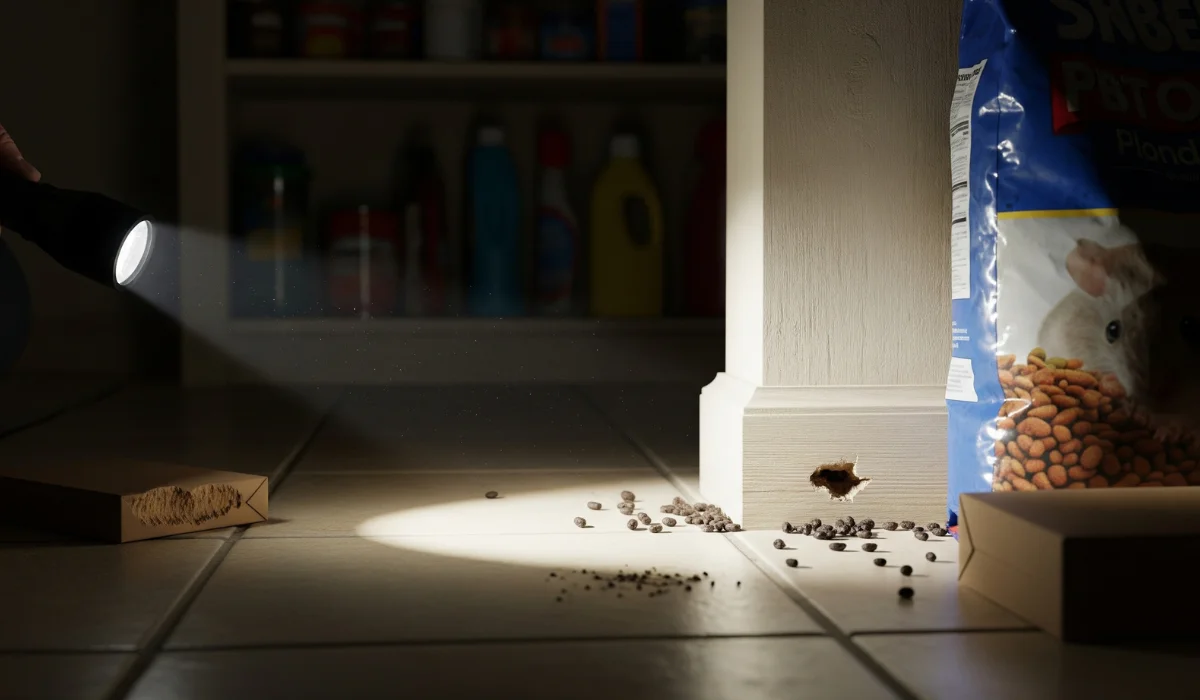
Mouse droppings are dark brown or black and are often compared to grains of rice. Fresher droppings may look darker and smoother, while older droppings can become duller and more brittle.
It is also helpful to know the difference between mouse and rat droppings. Rat droppings are generally much larger, while mouse droppings stay relatively small and may appear pointed at the ends.
Where to Find Mouse Droppings in the Home
The best place to look for mice droppings in home areas is anywhere rodents can easily reach food, water, or shelter. Pantries, cabinets, pet food storage areas, and spaces behind appliances are common places to check.
You may also find droppings in crawl spaces, attics, garages, or near water heaters. Mice often travel along walls and baseboards, so inspect those areas for droppings, gnaw marks, or shredded paper, cardboard, fabric, or insulation.
Health Risks Linked to Rodent Droppings
Rodent droppings and urine can contaminate food and surfaces, so cleanup should be handled carefully. The Centers for Disease Control and Prevention (CDC) explains that rodents can spread disease through their urine, droppings, and saliva.
Hantaviruses are one reason proper cleanup matters. The CDC also notes that some rodents can carry hantaviruses and spread them.
Do not sweep or vacuum dry droppings. That can stir contaminated material into the air.
How to Safely Clean Up Mouse Poop
Wear rubber or plastic gloves before cleaning mouse droppings. The CDC recommends wetting rodent urine and droppings thoroughly with an appropriate disinfectant before wiping them up.
Let the disinfectant remain on the surface for the amount of time listed on the product label. Wipe up the droppings with paper towels, place the waste in a covered trash container, and disinfect the surrounding surface again.
Wash your gloved hands before removing the gloves, then wash your bare hands with soap and warm water. If you are dealing with a large amount of rodent contamination in an attic, crawl space, or enclosed area, follow the CDC’s additional precautions for heavy infestations rather than disturbing the material yourself.
Signs of a Mouse Infestation Beyond Droppings
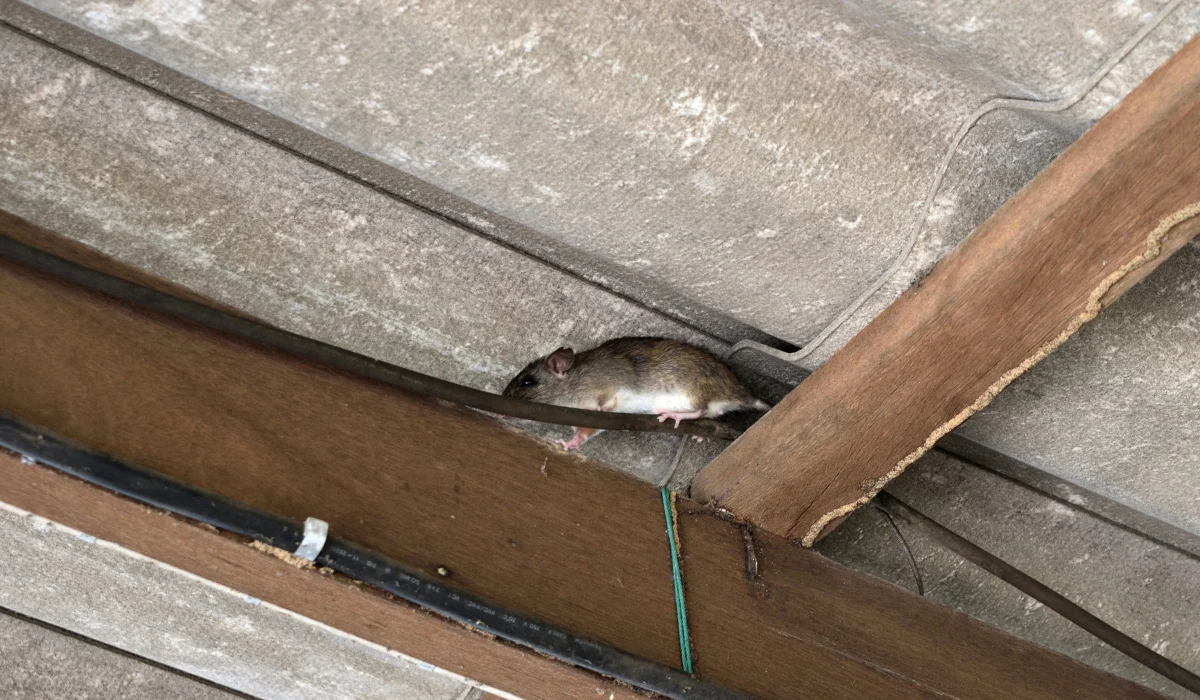
Droppings are one of the easiest signs to spot, but they are not the only clue. You may hear scratching or scurrying in walls or ceilings, especially when your home is quiet, or notice gnaw marks on food packaging, wires, or stored belongings.
Mice also use paper, cardboard, fabric, and insulation for nesting material. A musty urine odor, damaged storage items, or repeated droppings in the same area can point to ongoing rodent activity.
LaJaunie’s technicians also look for droppings, chewing damage, travel paths, nesting material, odors, and entry points when inspecting homes for rodents. That type of evidence helps show where mice are moving and how they may be getting inside.
How to Prevent Future Droppings in Your Living Space
After cleaning mice droppings in home areas, focus on how mice are getting inside and what is attracting them. Check around doors, windows, siding, utility lines, the garage, and the foundation for gaps or openings.
Mice look for warmth and shelter, so inspect crawl spaces, attics, and garages for gaps. Avoid storing blankets or clothing in flimsy plastic bags, as mice can chew through them. Heavy-duty storage bins are safer. Keeping your home clean and limiting access to food sources makes it harder for rodents to thrive.
The Environmental Protection Agency (EPA) recommends sealing holes inside and outside the home as part of rodent prevention. Store pantry goods and pet food in sturdy, sealed containers, clean up crumbs and spills, and avoid leaving pet food out overnight.
Professional Pest Control for Mouse Infestations
If droppings continue appearing after cleanup, the issue may involve more than one mouse or an entry point that has not been sealed. Traps can catch individual mice, but they do not address the gaps that allow new rodents to enter.
LaJaunie’s Pest Control offers professional rodent control to homeowners and businesses in southeastern Louisiana, including Baton Rouge, New Orleans, Houma, Thibodaux, and surrounding communities. During a rodent inspection, technicians look for droppings, chewing damage, travel paths, nesting material, odors, and exterior openings that may need to be sealed.
Making the Right Pest Control Choice for Louisiana Homes
Finding mice droppings in home areas gives you a useful starting point. Clean the affected area safely, then check for food sources, nesting material, and openings that may be allowing mice indoors.
If fresh droppings keep returning or you continue hearing activity in the walls or attic, a professional inspection can help locate the source. LaJaunie’s Pest Control can inspect the property, identify areas of rodent activity, and recommend the next steps based on what is found.
We also offer customized solutions that remove mice and keep them from coming back. Call us today to schedule your inspection.
Mice Droppings in Home: FAQs
How do I know if I’ve found mouse droppings or rat droppings?
Mouse droppings are small, dark pellets that are often compared to grains of rice. Rat droppings are generally much larger. Other signs nearby, such as tracks, gnaw marks, nesting material, and the location of the droppings, can also help identify which rodent is present.
Is it safe to vacuum mouse droppings?
No. The CDC advises against sweeping or vacuuming rodent droppings because doing so can stir contaminated material into the air. Wet the droppings thoroughly with disinfectant, follow the label directions, and wipe them up while wearing gloves.
When should I call a pest control company for mice?
Consider professional help if fresh droppings keep appearing, you hear scratching in walls or the attic, or you find nests and chewing damage. Ongoing signs can mean mice still have access to the home, so locating and sealing entry points is an important part of control.