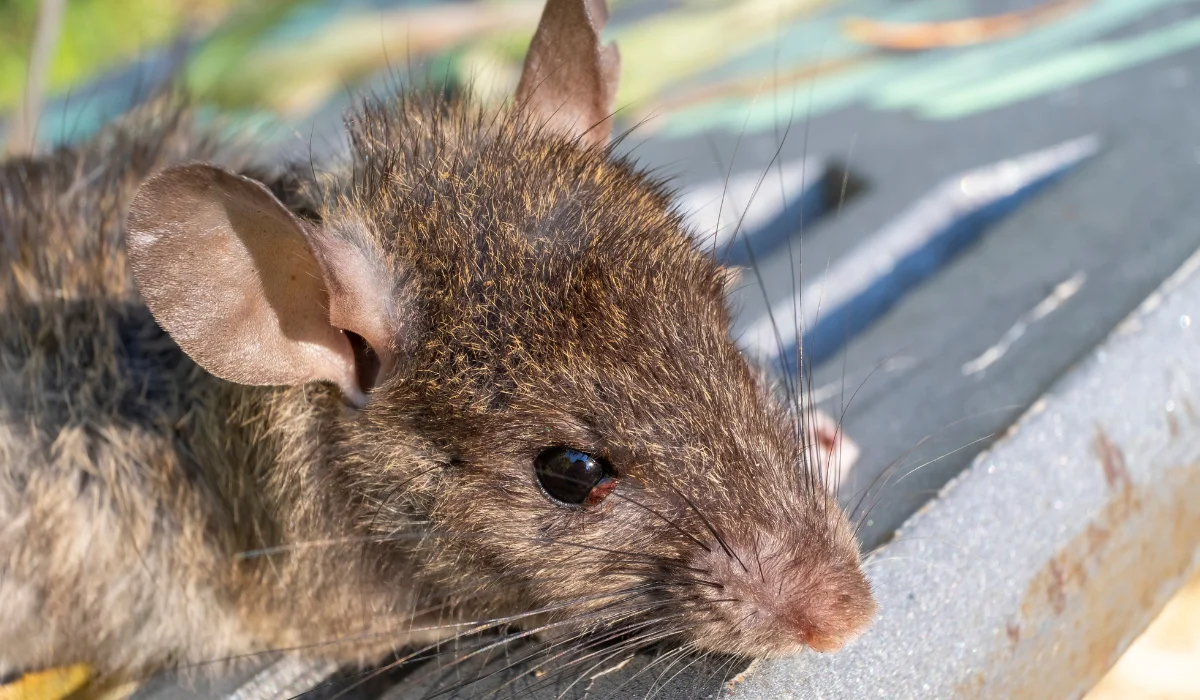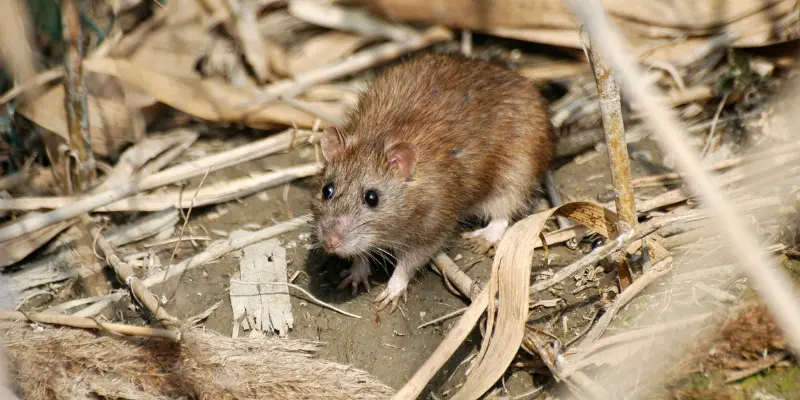




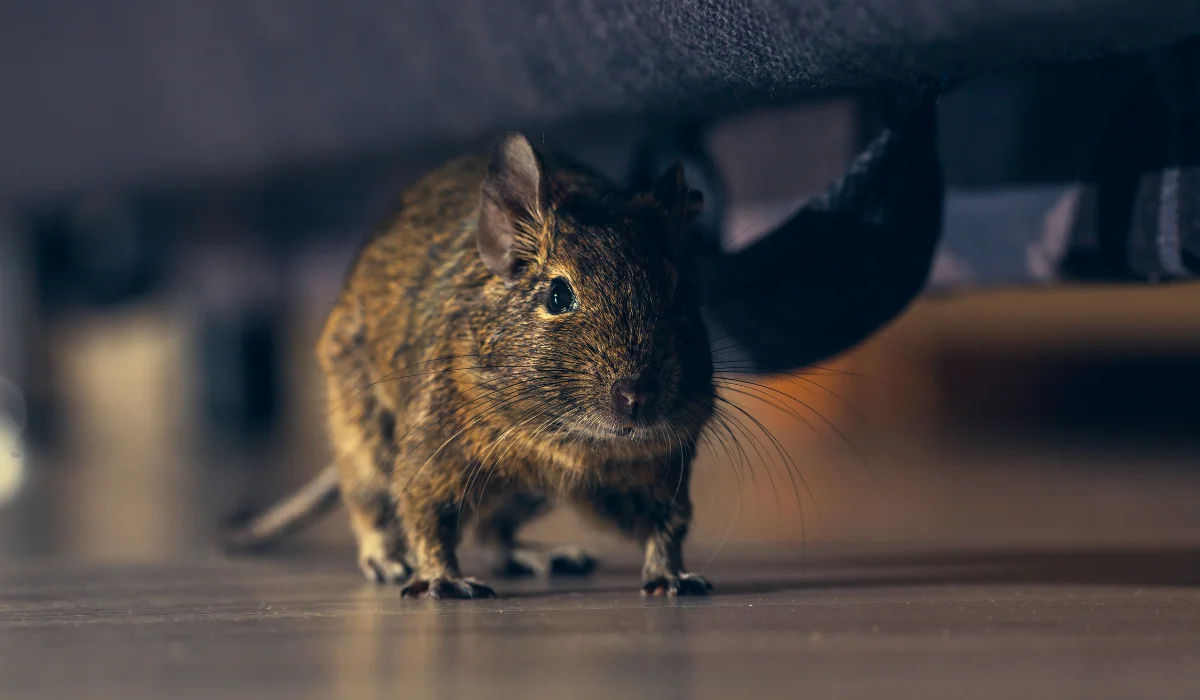
Rats and mice can use crawl spaces as sheltered routes and nesting areas, particularly when they can reach the space through foundation gaps, vents, utility penetrations, damaged doors, or other openings.
For Louisiana homeowners, the useful question is not simply why rodents “love” crawl spaces. It is how they got in, whether they are still active, and what they have contaminated or damaged.
Moisture may be one part of the environment, but reducing humidity alone will not keep rodents out. Effective rodent control combines identification, population control, sanitation, and physical exclusion. The LSU AgCenter guidance for controlling rodents around Louisiana homes emphasizes inspecting for holes, reducing food and water sources, trapping where activity is present, and rodent-proofing the structure.
Why Rodents Get Into Crawl Spaces
A crawl space can give a rodent something much more useful than humidity: concealed access to the structure.
The area beneath a house may contain plumbing penetrations, ducts, vents, foundation openings, utility lines, damaged screening, and connections to wall cavities.
CDC recommends checking crawl spaces specifically when looking for rodent entry points. Mice can squeeze through openings about 1/4 inch wide, roughly the width of a pencil.
Food and shelter outside the crawl space can also support rodent activity around the home. Pet food, bird seed, garbage, dense vegetation, woodpiles, stored materials, and other cover can make the surrounding property more favorable.
Moisture deserves attention too, particularly if plumbing leaks or drainage issues are present. But it should be addressed as one condition among several rather than assumed to be the reason rodents entered.
Signs Of Rodents In A Crawl Space
You may never see the rat or mouse itself.
Droppings, gnaw marks, nesting material, odors, and recurring sounds often reveal activity first. EPA recommends looking for droppings, shredded nesting material, chewed packaging or building materials, holes, and stale odors when assessing a possible rodent infestation.
What Crawl-Space Rodent Signs Can Tell You
| Sign | What It May Indicate | What To Check Next |
| Fresh droppings | Recent rodent activity | Look along walls, joists, pipes, and travel routes for additional signs |
| Shredded insulation or plant material | Possible nesting activity | Check sheltered corners and nearby openings |
| Gnawed wiring or plastic | Active or previous rodent chewing | Have damaged electrical or plumbing components assessed |
| Damaged duct material | Rodents have accessed HVAC components or coverings | Inspect the full duct run for openings and contamination |
| Tracks or greasy rub marks | Repeated travel along the same route | Follow the route toward possible entry points |
| Urine or musky odor | Repeated activity or contamination in a confined space | Locate nests, droppings, or carcasses before cleanup |
| Scratching beneath the floor | Animal activity is possible | Confirm the species before assuming rats or mice |
| New droppings after an area was safely cleaned | Active rodents are likely still present | Continue control and locate remaining access points |
CDC notes that old droppings alone do not always tell you whether an infestation is currently active. If an area is safely cleaned and new droppings appear afterward, ongoing rodent activity becomes much more likely.
What Kind Of Damage Can Rats And Mice Cause?
Rodent damage should be evaluated by what is actually present rather than assumed from one sighting.
LSU AgCenter documents rats damaging buildings through gnawing and burrowing and identifies wiring, plumbing, and insulation as materials that may be affected. House mice can also nest in insulation and electrical appliances and chew wiring.
That creates several different crawl-space concerns.
Wiring
Rodent gnawing can damage electrical insulation around wires.
Visible wire damage should be evaluated rather than simply covered or ignored. If conductors or electrical components may be affected, an electrician is the appropriate professional to determine whether repair is needed.
Plumbing
Rats and mice may gnaw some plastic or flexible materials and can damage vulnerable plumbing-related components.
A leak also creates a separate moisture problem that should be repaired regardless of whether rodents caused it.
Ductwork
Flexible duct coverings and insulation can be damaged by nesting or gnawing.
If rodents have entered the HVAC system itself, CDC recommends using professional rodent and duct-cleaning services rather than treating it as an ordinary surface-cleaning job.
Insulation
Rodents may nest in, tear, displace, or contaminate insulation.
That does not mean every rodent nest has automatically reduced the entire floor assembly’s R-value. The important questions are how much insulation has been displaced or removed and how much material is contaminated.
Rodent Damage: What Requires Which Response?
| Problem Found | Primary Concern | Appropriate Next Step |
| Scattered droppings on a hard surface | Contamination | Follow safe rodent-waste cleanup guidance |
| Droppings or urine throughout insulation | Porous material contamination | Assess affected insulation for removal |
| Torn or displaced insulation | Coverage and thermal performance | Restore damaged insulation after rodents are controlled |
| Gnawed electrical wiring | Electrical safety | Have the damaged area evaluated by a qualified electrician |
| Damaged plumbing | Leakage and moisture | Repair plumbing and address the rodent access route |
| Damaged HVAC ductwork | Air leakage or contamination | Inspect and repair affected duct components |
| Entry hole around a pipe or vent | Continued rodent access | Close it with appropriate rodent-resistant material |
| Multiple active nests or widespread waste | Heavy infestation | Consider professional rodent control and cleanup |
This distinction keeps rodent control from turning into unnecessary whole-crawl-space reconstruction while still addressing real damage when it exists.
Are Rodent Droppings In A Crawl Space A Health Risk?
Rodent waste should be handled carefully.
CDC notes that rodents can spread diseases through contact with urine, droppings, saliva, contaminated food or air, bites, and parasites such as ticks, mites, or fleas. You cannot determine whether a rodent carries a pathogen simply by looking at it.
The cleanup method is therefore important.
Do not sweep or vacuum dry rodent droppings, urine, or nesting material. CDC warns that doing so can put contaminated particles into the air. Instead, droppings and urine should be thoroughly wetted with an appropriate disinfectant before they are wiped up.
A heavily contaminated crawl space deserves more caution than one or two droppings on an accessible hard surface.
What If Rodents Contaminated The Insulation?
CDC specifically addresses contaminated insulation.
If exposed insulation contains rodent urine or droppings, the agency recommends placing the contaminated material into plastic bags for removal.
How much insulation needs to come out depends on the extent of contamination.
A small affected section and widespread nesting through loose-fill or batt insulation are different projects.
The better sequence is:
- control the active rodents
- prevent re-entry
- identify contaminated areas
- remove material that requires disposal
- clean appropriate surfaces safely
- repair or restore insulation after the source is controlled
Replacing insulation before stopping rodent entry creates a strong chance that new material will be contaminated again.
How Rodents Get Into Louisiana Crawl Spaces
Potential access points include:
- damaged crawl-space vents
- gaps around plumbing
- electrical and cable penetrations
- openings where the foundation meets other building materials
- damaged crawl-space doors
- gaps beneath exterior doors
- holes around HVAC lines
- broken screening
- openings rodents have enlarged by gnawing
The CDC rodent-exclusion guide recommends inspecting crawl spaces, foundations, vents, utility penetrations, doors, soffits, and other structural openings.
The material used to close an opening matters too.
Metal, hardware cloth, cement, or other rodent-resistant material may be needed depending on the size and construction of the opening. CDC notes that caulk or expanding foam alone is generally not sufficient as the primary barrier against rodent intrusion.
Does Crawl-Space Encapsulation Keep Rodents Out?
Not by itself.
Encapsulation is primarily a moisture-management and building-envelope strategy. A vapor barrier can reduce ground moisture entering the crawl space, and other crawl-space improvements may help control humidity.
Those benefits do not automatically make a crawl space rodent-proof.
A mouse can still use an unsealed utility penetration. A rat can still use a damaged vent or foundation opening. If access points remain, installing a vapor barrier does not solve the rodent-entry problem.
For rodent prevention, exclusion remains the direct step.
If a home also has crawl-space moisture problems, those should be evaluated on their own merits rather than presented as the cause of every infestation.
What Should Be Fixed First?
The order of work matters when rodents, contamination, and crawl-space problems exist at the same time.
Crawl-Space Rodent Control Priorities
| Priority | Why It Comes At This Stage | Examples |
| 1. Confirm rodent activity | You need to know whether the signs are current and what animal is present | Fresh droppings, tracks, nests, camera evidence |
| 2. Locate entry points | New rodents can replace the ones already removed | Vents, plumbing gaps, damaged doors, foundation openings |
| 3. Control rodents already inside | Sealing without accounting for animals inside can create another problem | Appropriately placed traps or professional control |
| 4. Complete exclusion | Blocks the routes that allowed the infestation | Hardware cloth, metal, cement, properly reinforced small openings |
| 5. Clean contamination safely | Waste should not remain after control | Disinfected droppings, nests, carcasses, contaminated insulation |
| 6. Repair actual damage | Electrical, plumbing, ducts, and insulation may need different trades | Wire repair, duct repair, insulation restoration |
| 7. Address moisture separately | Moisture problems affect the building even when rodents are gone | Plumbing leaks, drainage, vapor control, humidity management |
| 8. Monitor | New signs can reveal a missed opening | Traps, inspections, checks for fresh droppings |
This sequence prevents a moisture project or insulation replacement from being mistaken for rodent exclusion.
Should You Set Traps In A Crawl Space?
Trapping is an established rodent-control method.
CDC recommends setting appropriate traps in areas where rodents or signs of rodents have been observed and continuing until there is no further evidence of activity.
LSU AgCenter similarly recommends placing traps along rodent travel routes and near areas where droppings or other activity is concentrated.
The limitation is that trapping alone does not close the hole the rodent used to enter.
An effective plan combines population control with exclusion and sanitation.
Any traps or pesticide products should be used according to their instructions and positioned so children and pets cannot access them.
What About Rodent Baits?
Rodenticides require more caution than simply placing poison somewhere in a crawl space.
LSU AgCenter warns that rodenticides are toxic to people and animals to varying degrees and recommends following the label explicitly. Its Louisiana pest-management guidance recommends tamper-resistant bait stations to reduce exposure risks.
The appropriate placement depends on the infestation, structure, label, and risk of access by pets or children.
Homeowners should also remember that killing rodents without closing access points does not prevent another animal from using the same route.
How To Make A Crawl Space Less Accessible To Rodents
The highest-value prevention steps are physical and practical:
Seal Structural Openings
Inspect the crawl-space perimeter, foundation, doors, vents, and utility penetrations.
CDC recommends sealing holes and gaps inside and outside a home and notes that mice can enter openings only about 1/4 inch wide.
Remove Food Sources
Keep pet food, bird seed, animal feed, and garbage in secure containers.
Clean spills and avoid leaving accessible food close to the house.
Reduce Outdoor Harborage
Move unnecessary debris away from the foundation.
LSU AgCenter recommends reducing potential shelter such as woodpiles, waste piles, boxes, and other materials that provide rodents with cover.
Repair Water Leaks
A leaking pipe should be repaired even if it did not cause the infestation.
Reducing unnecessary water sources is one part of making the property less favorable to rodents and also protects the crawl space from separate moisture damage.
Check The Crawl Space Again
Exclusion is only as effective as the openings you find.
Follow-up inspection can reveal new droppings, disturbed material, failed repairs, or another access point that was missed.
When Professional Rodent Control Makes Sense
Professional help becomes more useful when:
- droppings return after safe cleanup
- rats or mice are active in several parts of the crawl space
- you cannot locate the entry point
- contaminated insulation is widespread
- rodents have reached HVAC ducts
- wiring or plumbing has been damaged
- the crawl space is difficult or unsafe to access
- traps have not resolved continuing activity
- you need exclusion work around multiple structural openings
LaJaunie’s currently offers rodent control in South Louisiana that includes inspection, traps or baiting where appropriate, ongoing monitoring, and exclusion work to address rodent entry points.
The useful goal is to address both sides of the infestation: the rodents already present and the route that allowed them into the structure.
Finding Rodents Under Your Louisiana Home?
Rodent activity in a crawl space calls for more than treating the animal you happen to see.
The useful first questions are where the rodents entered, whether the population is still active, and what materials have actually been damaged or contaminated. Once those questions are answered, exclusion, population control, safe cleanup, and any necessary repairs can be matched to the conditions under the home.
If you continue finding rats, mice, droppings, nests, or gnawing beneath your home, contact LaJaunie’s Pest Control to discuss rodent-control and exclusion options for your property.
Frequently Asked Questions
Why Are Rodents In My Crawl Space?
A crawl space offers shelter and access to hidden portions of a home. Food and water sources around the property may support rodents, but the immediate reason they can occupy the crawl space is that they have found a usable entry route.
What Are The Most Reliable Signs Of An Active Rodent Infestation?
Fresh droppings, new gnaw marks, nests, tracks, recurring noises, and new evidence appearing after an area was safely cleaned are stronger indicators than old droppings alone.
Can I Vacuum Rat Or Mouse Droppings From My Crawl Space?
No. CDC advises against sweeping or vacuuming dry rodent droppings, urine, or nesting material because this can put contaminated material into the air. Wet the material thoroughly with an appropriate disinfectant and follow CDC cleanup procedures.
Does Crawl-Space Encapsulation Stop Rats And Mice?
Encapsulation can address moisture conditions, but it is not a substitute for rodent exclusion. Rats and mice can continue entering if vents, utility gaps, doors, or other openings remain accessible.
What Should I Do If Rodents Have Contaminated My Crawl-Space Insulation?
Control the rodents and close their entry routes first. CDC recommends bagging exposed insulation contaminated with rodent urine or droppings for removal. The amount that needs replacement depends on the extent of contamination and damage.