



Start Of A Wasp Nest can cause costly problems when early signs are missed. Learn the signs, risks, and when to call LaJaunie’s Pest Control.
Key Takeaways About Early-Stage Wasp Nests
- A new wasp nest begins small and can be easy to overlook, so knowing what the early stages look like helps you respond before the colony grows through the season.
- Paper wasps, yellowjackets, and hornets each build nests in different spots around your property, and early identification guides the right approach.
- When a nest is located near your home or areas of regular activity, professional removal with proper protective gear is the safer path compared to store-bought sprays.
- LaJaunie’s Pest Control offers a free phone consultation to identify the wasp type and schedule a technician who can address the nest with appropriate equipment.
How to Identify a Wasp Nest in Its Early Stages
Early-season wasp nests, identified
Different wasp species start their nests in different ways. Here is how to tell them apart while a nest is still small, sorted by concern.
Spotting a wasp nest early starts with knowing what to look for. Different species build nests that vary in material, shape, and location. Understanding these differences helps you recognize the start of a wasp nest before the colony grows larger and harder to manage.
How to Tell Different Wasp Types Apart
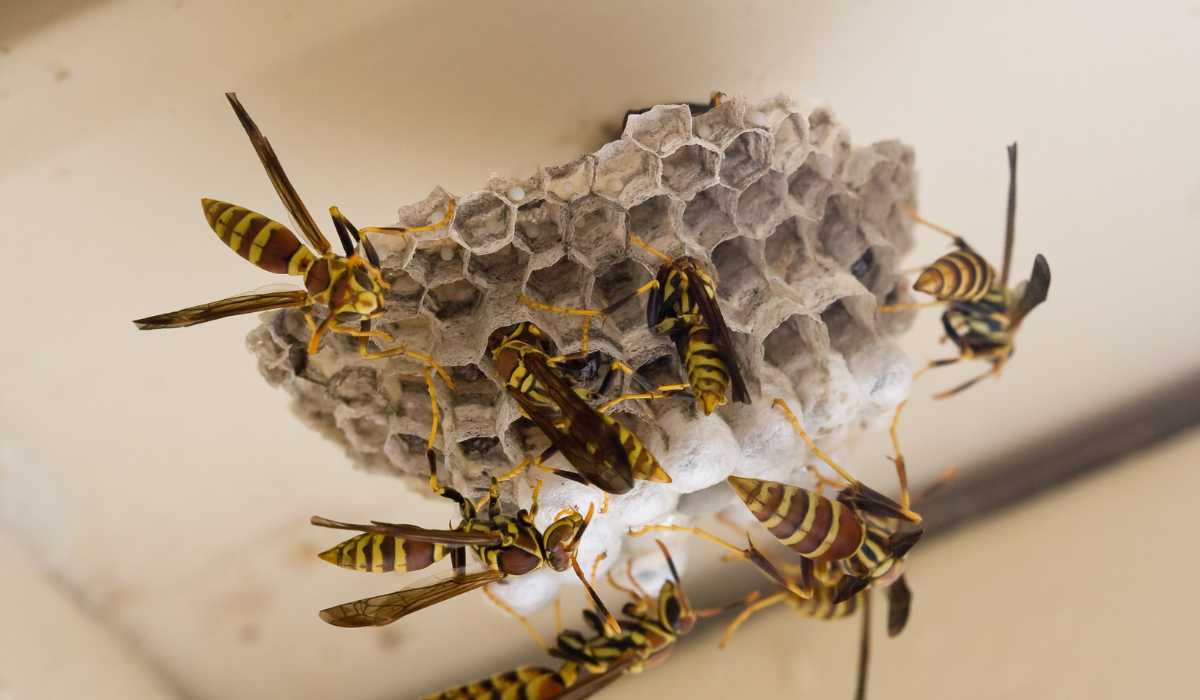
Paper wasps build open, uncovered combs from chewed plant fiber. Regardless of species, paper wasp nests last only one season, according to Mississippi State University Extension. A new nest in spring typically appears as a small, inverted-umbrella-shaped cluster of gray cells suspended under eaves or other protected spots.
Bald-faced hornets, a species related to yellowjackets, construct grayish, pear-shaped paper nests. These nests are often suspended in trees or on the sides of buildings and feature a thick paper envelope enclosing horizontally arranged combs. The hornets themselves have distinctive white and black coloring with white markings on the face.
Mud daubers are solitary wasp species that build small nests of mud rather than paper. These long, slender wasps with a thread-like waist attach mud tubes to the sides of buildings, rafters of open structures, and bridges. Unlike social species, each mud dauber female constructs her own individual nest.
How to Spot Early Wasp Activity Inside Your Home
Social wasps and bees sting to defend their colony, so repeated wasp traffic through a gap in your wall or ceiling may signal a nest forming indoors. Watch for wasps entering and exiting a single point, especially around attic vents or wall openings. Mud dauber nests may also appear on interior rafters of open structures such as garages or carports.
Where Early Wasp Activity Shows Up Around Homes
Several species of yellowjackets build subterranean nests in areas such as creek banks, lawns, and garden and flower beds, as Purdue Extension notes. These ground-level nests can be easy to miss until you notice wasps flying low to a specific patch of soil. Some yellowjacket species can become aggressive during late summer and fall and may sting unprovoked.
Bald-faced hornet nests often appear in trees around your yard. Some wasp species are more aggressive than others and may fly several feet to sting someone who happens to be near the nest site. Keeping your distance while observing flight patterns is the safest way to locate a nest.
Exterior Entry Points Wasps Use to Start Nesting
Wasps start nests on eaves, overhangs, and the sides of buildings. Solitary species like Pachodynerus erynnis lay eggs in individual nests that are not tended by other individuals, so you may find lone mud or paper cells tucked into sheltered corners. Paper wasps and bald-faced hornets favor protected spots along rooflines, porch ceilings, and tree branches close to your home. Checking these areas each week helps you catch a nest while it is still small.
Why Early Wasp Nest Problems Develop
Understanding why wasps choose your property helps you spot a new nest before the colony grows. A single queen begins with just a few cells in spring, but female workers join to expand the papery structure and gather food throughout the season. Knowing where wasps nest, what draws them in, and how they move around your home gives you a head start on prevention.
Outdoor Nesting Areas Wasps Prefer
Social wasps build paper nests in sheltered outdoor spots. According to Kansas State University Extension, a queen selects a location in spring and constructs a small nest of only a few cells, then raises the first round of workers. Eaves, soffits, and overhangs are common attachment points, sometimes at heights that are difficult to reach safely. Some species nest in the ground, making them harder to notice until the colony is well established.
Food and Shelter That Attract Nesting Wasps
Wasps look for two things when choosing a site: reliable food access and a protected structure. Social wasp colonies are annual, existing for one season only, and a nest is used only during the season it is built. A queen needs a spot that shields the developing cells from rain and wind while keeping foraging routes short. Yards that offer both cover and nearby food sources give queens more reason to settle in.
How Wasps Move Around Homes
A colony does not relocate once established, but the presence of a colony one season does not mean a colony will appear in the same site the following year. Each new queen independently selects a fresh nest site and starts a new colony. This means different areas of your home or yard may host a nest from one year to the next, making routine inspections worthwhile.
Trails and Entry Points Wasps Use
Wasps follow direct flight paths between the nest and food. Workers come and go through gaps in eaves, open vents, or ground-level openings depending on the species. Ground-nesting species like bumble bees can become aggressive when their nest entrance is disturbed. Observing steady wasp traffic along a consistent path near your home often points to a nearby nest that is still in early development.
Risks From an Early-Stage Wasp Nest
Even a small, newly started wasp nest can create problems that grow quickly as the colony expands through the season. Understanding the risks early helps you decide how to respond before the nest matures and the number of stinging pests around your home increases.
Health Risks Linked to Wasp Nests
The primary health concern with any wasp nest is the potential for stings, especially as the colony grows. A baldface hornet nest starts small each spring but grows throughout the season, according to Kansas State University Extension. What begins as a few wasps can become a large, active colony within weeks.
Colonies can become large and are often located far from the entrance hole, deep into a structure, as Purdue Extension notes. This hidden growth means you may not realize how many stinging pests are nearby until activity is already well established.
Property Damage From Wasp Nests
Certain wasp species build nests that attach directly to your home. Each spring, new mud dauber adults emerge from mud cells where they overwintered. The females then begin constructing new mud nests. These nests can accumulate on eaves, walls, and other surfaces over time.
Baldface hornets produce large, gray, papery nests that may resemble a football. The papery material is made from the salivary secretions of female wasps. While these nests are usually located in trees and shrubs, they can also appear on structures.
Food Areas and Early Wasp Activity
A nest near your outdoor living or dining space raises the chance of unwanted encounters. Female worker wasps hunt caterpillars and other insects, biting them into smaller pieces to carry back to the nest and feed to larvae. They are also attracted to sweet liquids in watermelon or any open, cut, or decaying fruit, and carbonated beverages. A nearby nest means more frequent visits to food areas.
When to Look Closer at Early Wasp Activity
Spring is a key time to watch for new nest construction. Bumble bees typically nest in the ground in old rodent burrows, while mud daubers and social wasps begin building fresh nests as temperatures warm. Identifying the start of a nest early gives you more options for managing these pests before the colony reaches its peak size later in the season.
Because colonies can grow large and settle deep within a structure, control is best left to a professional pest control operator.
Professional Pest Control for Early Wasp Nests
Spotting the start of a wasp nest on your property does not always mean you need to take action right away. According to UC IPM, paper wasp nests should not require treatment unless they are near people. Understanding when to leave a nest alone and when to bring in a professional can save you time and help you avoid unnecessary stings.
How to Reduce Attractants for Nesting Wasps
Not every early-stage nest poses a concern. Paper wasps do not defend their nests the way yellowjackets do, though they can sting if provoked. When they nest away from where you live or work, they can actually be considered beneficial, and controls are not needed in those cases.
Reducing the appeal of high-traffic areas around your home is the simplest step you can take. Keep eaves, overhangs, and porch ceilings clear of debris where a queen may begin building. Seal cracks along your foundation line and repair screen tears to limit sheltered spots that attract nest-building activity.
Why Wasp Control Starts With Inspection
Not all wasps look alike, and misidentification can lead to the wrong approach. According to Mississippi State University Extension, guinea wasps are often mistaken for yellowjackets, but yellowjackets are yellow and black and build their nests in the ground. Knowing which species you are dealing with helps determine whether the nest needs attention at all.
LaJaunie’s Pest Control begins with a free phone consultation to identify the pest before scheduling any service. A technician then visits your property to confirm the species, locate the nest, and assess whether it is close enough to living or working areas to warrant treatment.
What to Expect During Professional Wasp Nest Treatment
When treatment is warranted, protective gear and quick, efficient application are imperative. As Purdue Extension notes, late summer colonies may include nearly a thousand workers. Addressing a nest while it is still small reduces the complexity of the job.
Our technicians wear bee suits for protection during every service call. Depending on the situation, they may use Waspfreeze or Bifen to treat the nest. We can treat eaves up to 25 feet if needed. We do not treat honey bees because they are protected. If you are unsure whether you have wasps or honey bees, we can help identify the pest and recommend a beekeeper for relocation if needed.
What to Expect From a Wasp Nest Control Plan
Most nests should be left alone when they are away from areas people use. However, if a nest is positioned near doorways, walkways, or outdoor gathering spots, professional control is the safer route. Attempting removal on your own can provoke stings, especially as a colony grows.
LaJaunie’s sends a pest technician to take full control of the situation during the initial service visit. Because the team identifies the pest before arriving, you will know what to expect and why a particular approach is being used. Early attention to the start of a wasp nest keeps the scope of the job manageable before a colony matures through the season.
Bottom Line on Dealing With Early Wasp Nests
Catching a wasp nest early gives you the best chance to address it before the colony grows. A small nest with just a few cells is far easier to manage than one that has expanded over weeks. Watch for early activity around eaves, ground-level openings, and sheltered spots near your home. Because handling nests carries real risk, professional help is the safest route for most homeowners. Reach out to request your consultation.
Frequently Asked Questions
Can I Remove a Small Wasp Nest Myself?
While a very small, early-season nest may seem manageable, attempting removal without proper knowledge and protective gear can be dangerous. Mistakes during nest treatment can lead to many stings. Professional pest control operators have the training and equipment to handle nests safely.
Will Wasps Reuse the Same Nest Next Year?
No. Wasps do not return to reuse an old nest the following year. However, the same sheltered spot on your home may attract new nest-building activity in a future season, so ongoing monitoring is worthwhile.
Are All Wasps Aggressive?
Not all wasps behave the same way. Social wasps such as yellowjackets and paper wasps may defend their nest when they feel threatened. Some solitary wasp species are far less likely to sting. Identifying the species helps determine the level of concern.
Does LaJaunie’s Treat Honey Bee Nests?
No. LaJaunie’s does not treat honey bees because they are vital pollinators. If you are unsure about the species on your property, the team can help identify the pest during a free phone consultation and recommend next steps, such as contacting a local beekeeper.