



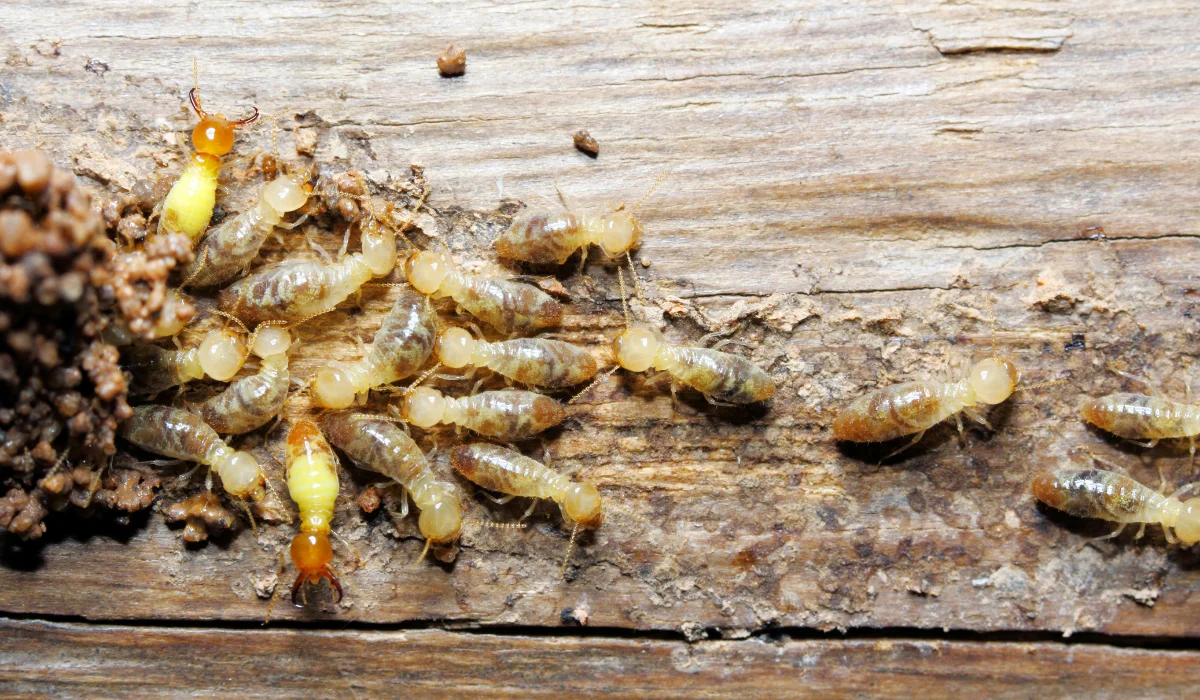
Termites are one of the worst pests for homeowners because they can cause significant damage before you even notice them. The two most common types that invade homes in Louisiana are subterranean termites and drywood termites. While both eat wood, their nesting habits, behaviors, and treatment needs are different.
If you’re comparing subterranean vs drywood termites, the biggest difference is where they live. Subterranean termites usually maintain colonies in the soil and travel to wood for food, while drywood termites can live entirely inside the wood they infest without soil contact. That distinction matters in Louisiana, where warm, humid conditions, frequent rainfall, crawl spaces, slab foundations, and damp areas around a home can all affect where termite activity develops.
LaJaunie’s technicians treat subterranean termites and drywood termites across Southeast Louisiana. During an inspection, technicians look at where activity appears, how the home is built, and whether the signs point to termites connected to soil or termites living directly inside wood.
Key Takeaways
Subterranean or drywood termite?
Both eat wood, but where they nest and the traces they leave tell them apart.
- Subterranean termites usually live in soil and travel into structures through the ground or mud tubes, while drywood termites live inside dry wood without soil contact.
- Mud tubes are a common sign of subterranean termites, while drywood termites often leave hard pellets called frass near infested wood.
- Formosan termites are a type of subterranean termite and are a common concern in Louisiana.
- Because subterranean and drywood termites live differently, the treatment approach also differs.
- Professional pest control helps stop termite damage with inspections, treatments, and long-term protection to keep homes safe.
Subterranean vs. Drywood Termites: Key Differences
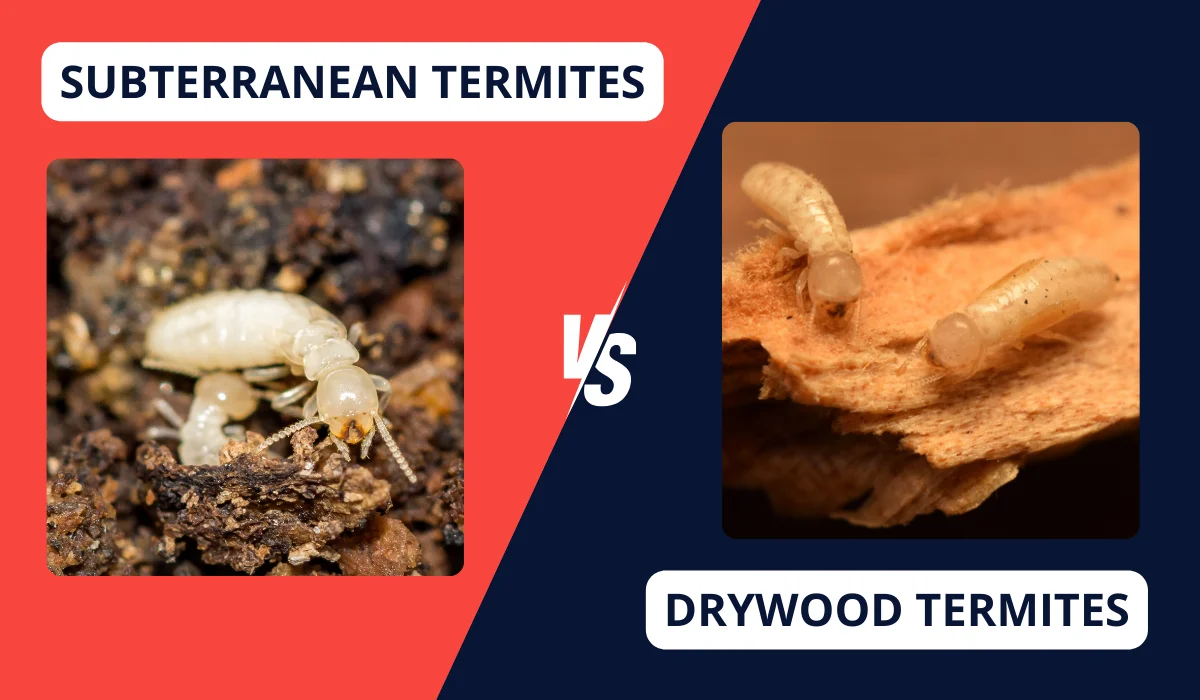
Both types of termites survive by eating cellulose found in wood. The biggest differences are where they live, how they reach the structure, and the signs they leave behind.
Subterranean termites live primarily in soil and travel into structures through mud tubes or other protected routes. Drywood termites live directly inside wood, including structural lumber, trim, attic framing, and furniture.
Here’s a quick breakdown of their key differences:
| Feature | Subterranean Termites | Drywood Termites |
| Appearance | Dark brown or cream-colored | Light brown to dark brown |
| Where They Live | Primarily in soil, with workers traveling into structures | Inside dry wood |
| Soil Contact | Usually required | Not required |
| Common Signs | Mud tubes, swarmers, discarded wings, hollow wood | Frass, kickout holes, swarmers, damaged wood |
| Colony Size | Can form very large colonies | Usually smaller colonies |
| Common Louisiana Types | Eastern subterranean and Formosan subterranean termites | Drywood termites |
| Louisiana Conditions | Moist soil, crawl spaces, slab penetrations, and damp areas can support activity | Warm conditions and accessible wood allow colonies to remain concealed |
| Typical Treatment Approach | Bait stations or a professionally applied foundation treatment | Targeted treatment of infested wood |
Subterranean termites often form larger colonies and can spread through a structure more quickly. Drywood colonies are usually smaller, but because they remain hidden inside wood, an infestation can still go unnoticed for a long time.
Why Formosan Subterranean Termites Matter in Louisiana
When comparing subterranean vs drywood termites in Louisiana, Formosan subterranean termites deserve extra attention because they are common in the state.
Formosan termites are part of the subterranean termite group, which means they rely on outside moisture and typically begin colonies in the ground. According to the LSU AgCenter, these termites have larger colonies and consume wood faster than native subterranean termites. Once established in a structure, they are also more likely to find a moisture source and survive without direct ground contact. In southern Louisiana, their winged reproductives commonly swarm from mid-April through early July on warm, moist evenings.
For homeowners, the practical point is not to assume every subterranean termite is Formosan. It is to recognize that identification matters because termite groups differ in their behavior, damage potential, and control methods. LaJaunie’s technicians treat Formosan, Eastern subterranean, and drywood termites, so a termite inspection focuses on the evidence around the home before a treatment plan is recommended.
Signs of Subterranean Termite Infestations
Subterranean termites are a major concern for Louisiana homes. Keep an eye out for these signs:
- Mud tubes along walls, foundations, piers, or wooden posts.
- Hollow or soft wood that sounds empty when tapped.
- Blistering or damaged wood.
- Swarmers around lights, doors, or windows.
- Discarded wings near entry points or windowsills.
Mud tubes are especially useful for identification because subterranean termites use them to travel between the soil and wood in a structure.
Signs of Drywood Termite Infestations
Unlike subterranean termites, drywood termites do not need contact with soil. Common signs include:
- Frass near baseboards, furniture, windowsills, or trim.
- Small kickout holes in infested wood.
- Drywood termite pellets below affected areas.
- Flying termites indoors.
- Discarded wings near windows or doors.
Drywood colonies are generally smaller than subterranean colonies, so damage often develops more slowly. However, because the colony stays inside the wood, recurring piles of pellets may be one of the first signs that activity is continuing.
Louisiana Conditions That Affect Termite Activity
Louisiana’s moisture and construction styles can affect where termite activity appears. Subterranean termites depend heavily on moisture, so standing water, plumbing leaks, clogged gutters, damp crawl spaces, and wood close to soil can all create conditions worth correcting.
In Southeast Louisiana, LaJaunie’s technicians also look at how the home is built. Raised homes may require an on-site inspection because of possible activity around crawl spaces or piers. Slab homes can require closer inspection around foundation edges, concrete, plumbing penetrations, and places where the slab opens to soil. Those conditions also help narrow down whether the activity is subterranean.
Drywood termites are different because they do not depend on soil. They can remain hidden inside structural wood, trim, furniture, or attic materials, which makes frass, kickout holes, and recurring indoor swarmers useful clues.
How to Treat a Termite Infestation
Treatment for subterranean vs drywood termites differs because the colonies live in different places. Subterranean treatment focuses on the connection between the soil and structure, while drywood treatment focuses directly on the infested wood.
Subterranean Termite Treatment Options
The best way to stop subterranean termite damage is to act fast. Here are the termite treatment options that can help protect your home:
- Liquid Termite Killers - A barrier treatment that kills termites as they try to enter your home.
- Termite Bait Stations - It lures worker termites, which take poison back to their entire colony.
- Regular Termite Inspection - A pest control company can check for new colonies before they get worse.
Drywood Termite Treatment Options
Getting rid of drywood termites takes the right approach. Depending on the size of the infestation, here are a few treatment options that can get the job done:
- Fumigation - Also known as tenting, it’s the best way to eliminate a drywood termite infestation in an entire home.
- No-Tent Termite Treatment - A targeted method that allows you to stay in your home.
- Spot Treatments - Direct application of a termite killer into infested wood.
Protect Your Louisiana Home From Termites Before Damage Spreads
If you’re seeing signs of termite activity, the first step is figuring out which type is present. Mud tubes and soil-related activity point toward subterranean termites, while recurring frass and kickout holes are more consistent with drywood termites.
Understanding the differences between subterranean and drywood termites can help you recognize the warning signs, but an inspection can confirm where the colony is living and which treatment fits the problem. If you find swarmers, mud tubes, recurring pellets, or unexplained wood damage, LaJaunie’s Pest Control can inspect your home and recommend the right termite control approach for the type of activity found.
Early identification also helps you avoid treating the wrong problem or overlooking hidden activity. If something around your home looks suspicious, schedule a termite inspection with LaJaunie’s so a local technician can identify the termite type, check the affected areas, and explain the next steps based on what they find.