



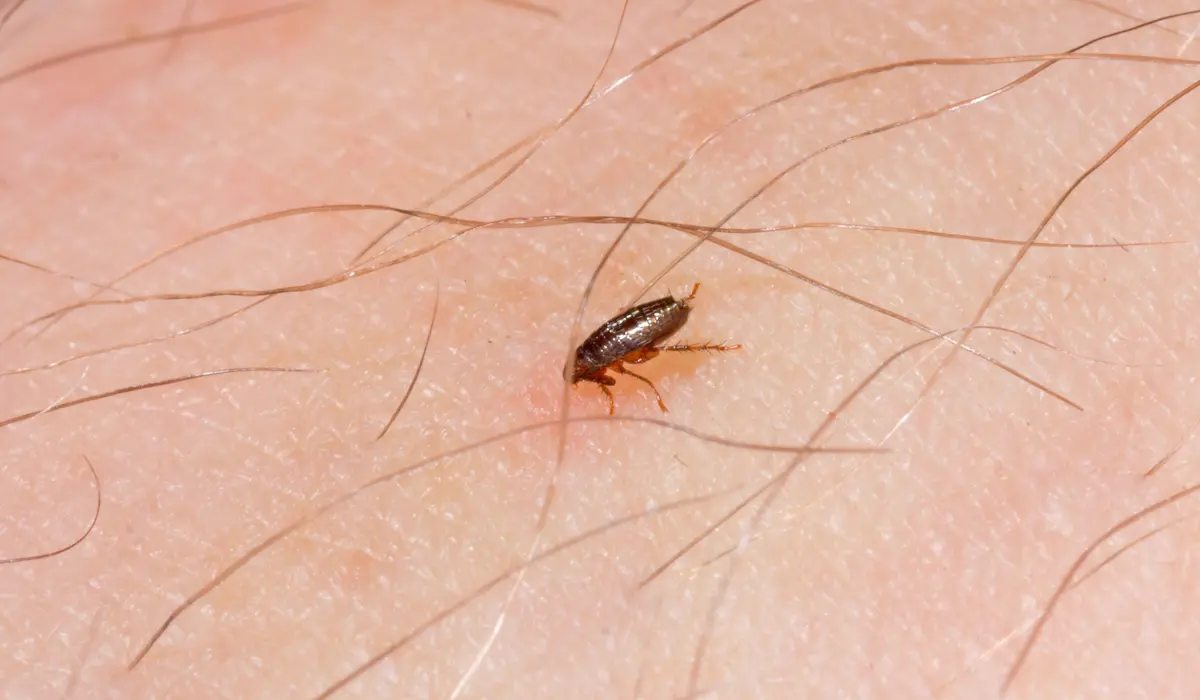
Fleas can turn a cozy bed into a nightmare of bites and itching. These tiny pests, often brought in by pets, can quickly infest bedding and furniture. Their bites disrupt sleep and cause health issues for humans and pets like typhus.
Fighting fleas requires thorough cleaning, regular washing of bed linens, and flea repellents for pets. With the proper steps, you can prevent and control flea infestations.
Read on to discover effective strategies for a peaceful, itch-free slumber.
Key Takeaways
- Getting rid of fleas in your bed may involve regular cleaning, vacuuming, and using flea-repellent products.
- Treating flea bites effectively may require addressing itchiness and preventing infection with home remedies and over-the-counter treatments.
- Signs of flea infestations may include seeing fleas, flea dirt, and eggs and noticing behavioral changes in pets.
- For persistent infestations call for professional flea removal in Slidell, which guarantees comprehensive care and long-lasting results from trusted local pest control experts.
HOW TO GET RID OF FLEAS IN YOUR BED
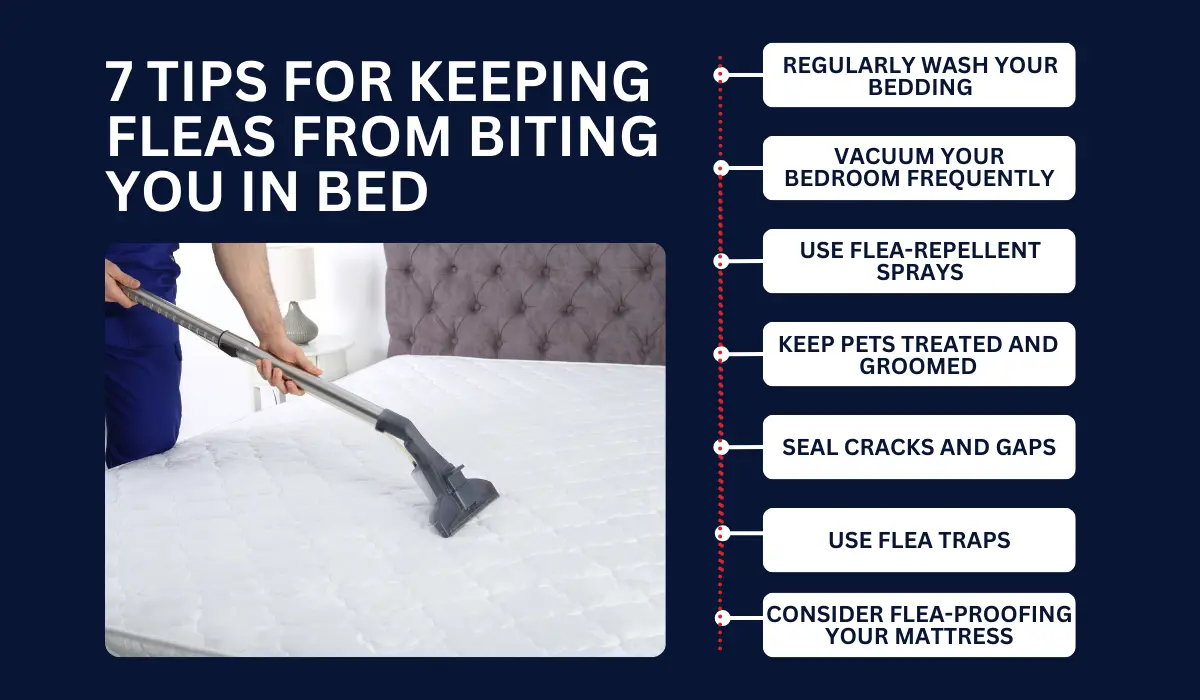
Getting rid of fleas in your bed involves a combination of cleanliness and targeted treatments. Here’s how to create a less hospitable environment for fleas to lay eggs and thrive.
1. Regularly Wash Your Bedding
Regular washing of bedding is crucial in removing flea eggs and adult fleas. Bedding should be laundered in hot water and dried on high heat.
Consider these steps to clean and sanitize bedding properly:
- Strip the bed of all bedding, including sheets, pillowcases, and blankets.
- Use hot water to ensure all stages of fleas, including eggs, are killed.
- Add a detergent with a strong cleaning effect, optionally enhanced with natural flea-repellent like eucalyptus or peppermint essential oils.
- Dry the bedding on the highest heat setting possible.
2. Vacuum Your Bedroom Frequently
Vacuuming is essential in controlling flea infestations by removing fleas, their eggs, and larvae from your environment. Remember to properly seal and throw away the vacuum bag inside the canister.
Don’t miss out on these critical areas when vacuuming your bedroom to address flea problems:
| Hotspot Areas | Details |
| Bed and Bed Frame | Focus on seams, crevices, and under the bed. |
| Carpet and Rugs | Use strong suction and a beater brush. |
| Furniture and Curtains | Vacuum both sides and underneath the furniture. |
| Skirting Boards | Pay close attention to crevices. |
3. Use Flea-Repellent Sprays
Flea-repellent sprays can be a powerful part of your defense strategy against fleas in the bedroom upholstery.
When considering flea spray bottles with DEET or other active ingredients, remember the following:
- Always test in a small area first to prevent staining or damage.
- Focus on the bed frame, skirting boards, and any cracks in the walls.
4. Keep Pets Treated and Groomed
Maintaining your pet’s health can significantly reduce fleas’ chance of residence in your bed. Here’s a two-pronged approach if your pet has fleas:
Regular Flea Treatments
Flea treatments come in various forms, each with its advantages. Here’s a closer look at some common types:
| Flea Control Products | Considerations |
| Topical Treatments | June require a prescription from your vet. |
| Oral Medications | Requires a prescription from your vet. |
| Flea Collars | Not recommended for all pets (e.g., kittens, sick pets). |
Regular Grooming and Bathing
Regular grooming keeps your pet clean and helps physically remove fleas and flea eggs. Here’s a recommended routine:
- Brushing: Brush your pet thoroughly with flea combs at least once a week to remove loose fur, dirt, and fleas.
- Bathing: Bathe your pet with a veterinarian-recommended flea shampoo according to the product instructions.
5. Seal Cracks and Gaps
Sealing off entry points for fleas helps in mitigating an infestation. Use a sealant appropriate for the material to block these potential entryways effectively in these critical areas:
Windows and window frames
Door frames
Baseboards
Any visible cracks in walls or flooring
6. Use Flea Traps
Flea traps can be an effective way to monitor and reduce flea populations. Different types of flea traps you can check out include:
| Types of Trap | Placement Tips |
| Electric Flea Traps | Place near the bed and pet areas. |
| Sticky Flea Traps | Under furniture and along baseboards. |
| Homemade Traps (soapy water) | On the floor near the bed overnight. |
| Gel Traps | Near pet bedding, furniture, and baseboards. |
7. Consider Flea-Proofing Your Mattress
Investing in materials that protect your mattress from fleas can have long-lasting benefits. Here are some products or materials that can be used to protect your mattress from fleas:
- Protective mattress covers, especially those designed for allergy sufferers, are effective against fleas.
- Occasionally, sprinkle diatomaceous earth between the mattress and the cover, a natural flea control agent.
HOW TO TREAT FLEA BITES
When treating flea bites, addressing the itchiness and preventing infection is essential. Consider these home remedies and over-the-counter products that may provide relief.
Home and Natural Remedies
Many people find that natural remedies are sufficient to relieve the discomfort of flea bites. Some treatments that may provide relief and comfort to red spots from flea saliva are:
| Natural Treatments | Benefits |
| Aloe Vera | Soothes and cools skin, anti-inflammatory properties |
| Baking Soda Paste | Neutralizes acidic bite, reduces redness and itching |
| Tea Tree Oil | Antiseptic properties help prevent infection |
| Witch Hazel | A natural astringent that soothes itchy bites |
Over-the-Counter Treatments
Over-the-counter products can also be quite effective at treating flea bites and hives.
To alleviate the symptoms of bites, like red bumps, itchiness, and swelling, OTC meds you can try while waiting for your appointment are:
- Antihistamine Creams: These creams relieve itching and reduce redness caused by bites. Apply directly to the bites as instructed on the packaging.
- Hydrocortisone Creams: They can reduce inflammation and itchiness. Follow the directions for usage and frequency as provided.
- Calamine Lotion: Classic remedy for itch relief. Dab it on the bites for a soothing effect.
- Antiseptic Creams: Prevent bacterial infections by applying a small amount of cream to the affected area.
WHEN TO SEEK PROFESSIONAL HELP?
If you’ve tried every at-home method but fleas keep coming back, it’s time to get professional help. Flea infestations can spread quickly and become difficult to control once they’ve settled into carpets, bedding, and furniture.
LaJaunie’s Pest Control offers expert flea control in New Orleans designed to fully eliminate fleas from your home and prevent them from returning. Our trained pest control technicians use safe, effective treatments tailored to your home’s environment, protecting both your family and pets.
Whether you’re battling an active infestation or need long-term prevention, LaJaunie’s Pest Control can help. For immediate intervention, contact our flea control specialists today and let us create a treatment plan that works best for your home.