



Finding a wasp nest in your soffit can be stressful. In Louisiana, warm weather allows stinging insects to stay active for much of the year, which is why many homeowners search for wasp control in Louisiana when nests appear near their homes.
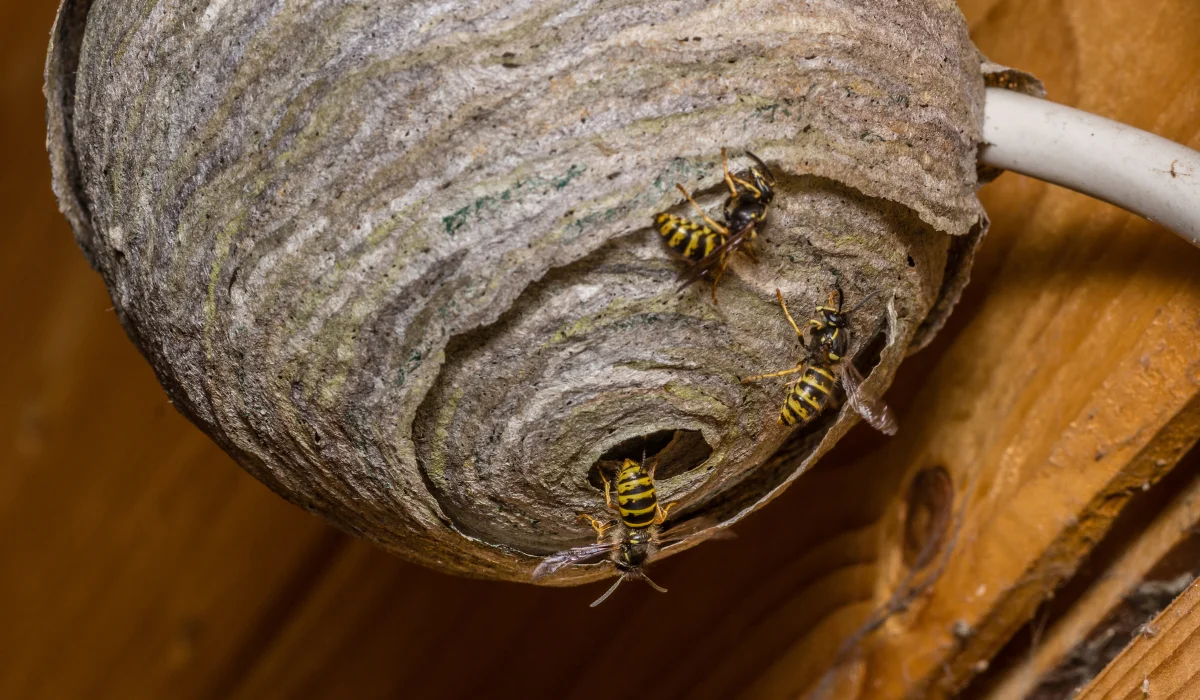
Many homeowners notice a nest when they see insects flying in and out of a small opening near a soffit vent or along the fascia board. At first, the nest may seem small. However, a yellow jacket nest or hornet nest can grow quickly during the season.
Knowing what to do can reduce the risk of stings and prevent the problem from becoming a larger infestation.
Key Takeaways
- Wasp nests often form in soffits and roofline areas of Louisiana homes.
- Paper wasps, hornets, and yellowjacket wasps often build nests near eaves and soffits.
- DIY removal can lead to painful stings.
- Sealing entry points and repairing soffit vents can help prevent future nests.
- Professional pest control is a safe way to remove a wasp nest.
What to Do Right Away (Stay Safe)
If you discover a wasp nest in the soffit area, focus on safety first. Wasps and hornets protect their nest when they feel threatened.
Keep Your Distance
Stay several feet away from the soffit area where the nest sits. Paper wasps and the yellowjacket wasp can become aggressive if someone gets too close.
Watch the nest from a distance. If you see many insects flying in and out, the nest may already be large. Heavy wasp activity often means the colony is growing.
Keep Doors and Windows Closed
If the nest is close to a doorway or window, keep it closed as much as possible. Wasps searching for food may fly indoors, so keep openings near the roofline and soffit closed.
Observe the Nest Location
Look at where the nest sits on the structure. Some nests hang openly under the eaves. Others form inside the soffit or behind the fascia.
If insects enter a small hole, the nest may be hidden deeper inside the soffit vent or roofline. Hidden nests are harder to remove and often require a professional.
What Not to Do With a Soffit Nest
Many online guides suggest quick fixes. Some of these methods can make the problem worse.
Avoid Risky DIY Removal
Attempting to remove a wasp nest without proper protection can result in painful stings. DIY attempts often disturb the nest before anyone treats the insects.
Attempting DIY removal is especially dangerous when a hornet or yellow jacket nest is inside the soffit. These insects may attack if they think someone is disturbing the nest.
Do Not Spray Random Products
Some homeowners may recommend homemade mixtures or random sprays. Dish soap or other household solutions may affect a few insects, but rarely destroy the full nest.
Spraying into a soffit vent without knowing the nest location may push insects deeper into the wall or attic.
Do Not Seal the Hole Too Soon
Some people try to seal entry points right away. Blocking the hole before treatment can trap insects inside the structure.
When this happens, wasps may search for another way out and enter living areas. Always inspect the nest site before sealing gaps with caulk.
Prevent Repeat Nests Around the Soffit
After removing a nest, take steps to stop new nests from forming near the soffit.
Seal Small Entry Points
Inspect the roofline, soffit, and fascia for cracks or openings that act as entry points.
Use caulk to seal small gaps around the soffit area. This simple step can reduce the number of future nesting spots.
Maintain Soffit Vents and Eaves
Broken or loose soffit vent covers create easy access for insects. Repairing these areas helps protect the attic from nesting activity.
Check eaves regularly for early signs of nests forming along the roofline.
Check the Area in Early Summer
Most nests begin forming in early spring when a single queen starts building. Small nests are easier to remove than large colonies.
Checking the soffit area early in the season can stop a larger infestation later in the year.
Schedule Wasp Nest Removal in Louisiana
If you find a wasp nest in the soffit of your home, professional pest control is often a safer option for handling an active wasp nest. Nests hidden inside soffit spaces can be difficult to reach. They may contain aggressive insects such as hornets or the yellowjacket wasp.
At LaJaunie’s Pest Control, we provide wasp control services for homes and businesses across southeast Louisiana. Our trained technicians can inspect the soffit area, identify the nest’s location, and safely treat the problem.
Contact us today to schedule pest control and protect your home from future nests.
FAQs
Is a wasp nest in the soffit dangerous?
Yes. A nest in the soffit can harbor many insects that defend it. Hornet and yellowjacket wasp colonies may sting multiple times if disturbed.
Can I remove a wasp nest myself?
Small nests may look easy to remove, but DIY attempts often cause stings. Professional wasp nest removal is safer.
When should I call an exterminator?
If the nest is active, growing, or hidden inside the soffit or roofline, contact an exterminator or pest control professional for safe removal.