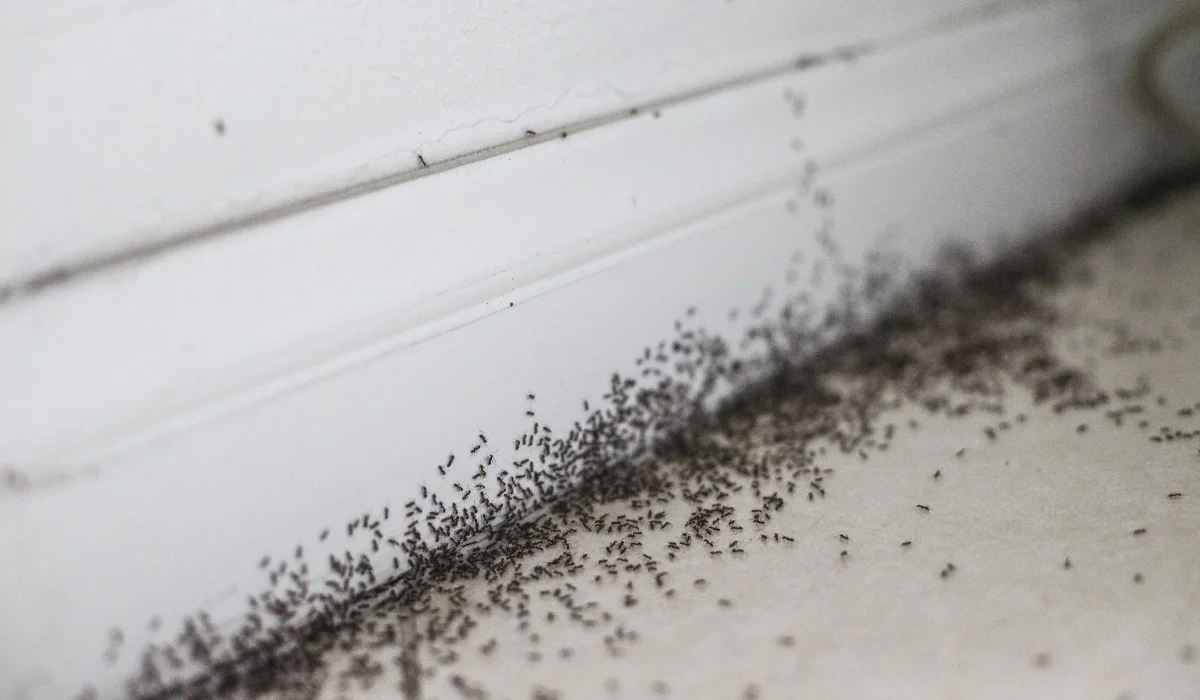


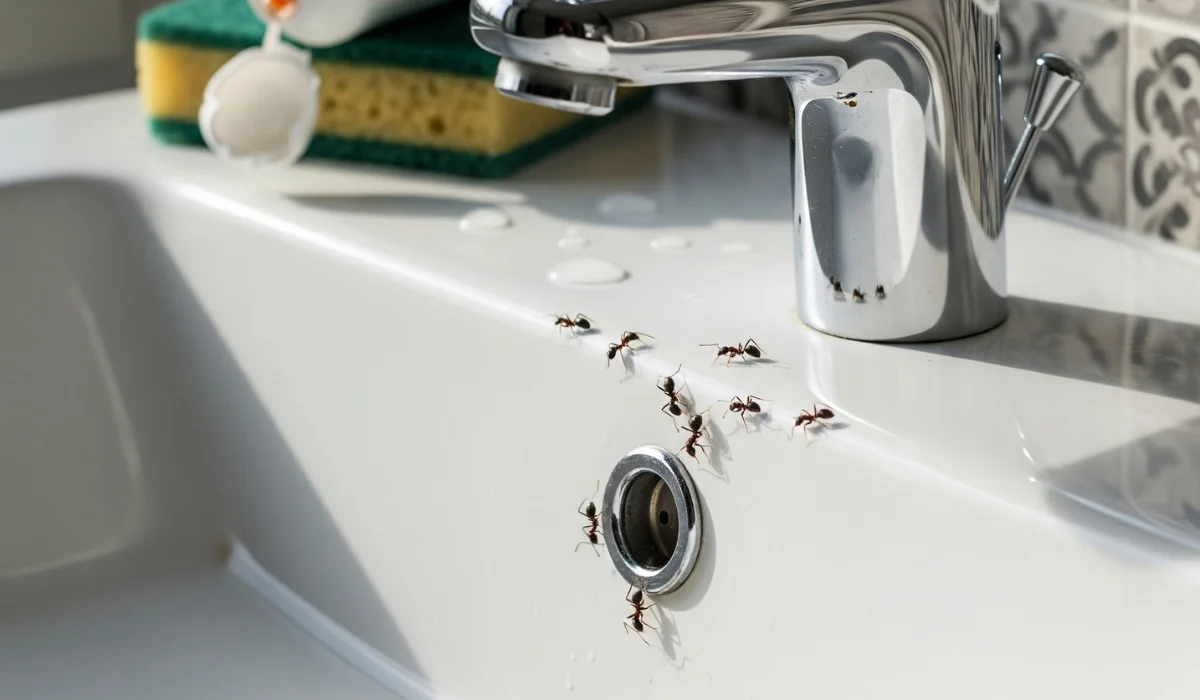
If you’ve noticed ants in your bathroom sink, you’re not alone. Many Louisiana homeowners see these pests during warm and humid months.
Whether you see black ants near the faucet or sugar ants by the drain, the bathroom sink is a common hotspot for ant activity. Moisture, food residue, and hidden entry points make it the perfect pit stop for an ant infestation.
The first step to solving the problem is understanding why ants show up here. Once you know what attracts them, you can take action to get rid of ants and stop future infestations.
Let’s break down the causes, the types of ants you might see, and the steps you can take, from simple DIY methods to calling a professional pest control company in southeast Louisiana.
Key Takeaways
• Ants in the bathroom sink usually look for moisture and food residue.
• Common culprits in Louisiana include black ants, odorous house ants, and pharaoh ants.
• Sealing entry points and keeping sink areas clean helps prevent infestations.
• Professional pest control can eliminate the entire colony and stop future problems.
Why Bathroom Sinks Attract Ants
Ants in the bathroom sink are usually searching for two things: water sources and food. Even though bathrooms aren’t where you prepare meals, they can still offer plenty of food particles for ants to scavenge.
In Louisiana, high humidity keeps areas around faucets, drains, and countertops damp, which attracts ants. Ants can live for weeks without food but only a few days without water, so sinks are essential stops on their foraging routes.
Cracks in grout, gaps in caulk, and other small openings often serve as entry points. Once inside, ants leave chemical trails for the entire colony to follow, which is why you might suddenly see a steady stream marching across your vanity.
Common Types of Ants You Might See
Different species of ants prefer different foods and habitats, so identifying the kind of ants in your bathroom sink helps with proper ant control.
Black ants are common indoors, often searching for sweet residue from toothpaste or soap in sinks. Odorous house ants give off a distinct smell when crushed and usually nest near damp areas. Pharaoh ants spread quickly indoors and are challenging to eliminate without professional help.
Sometimes, carpenter ants may wander into bathrooms or bedrooms if there’s damp or rotting wood nearby. While not as aggressive as termites, they can still cause damage over time by hollowing out moist wood around sinks and tubs.
How Ants Find Their Way Inside
If you have ants in the bathroom sink, they’ve likely entered through tiny gaps. Common entry points include spaces around plumbing pipes, loose window seals, and small cracks in baseboards.
These tiny openings are easy to miss, but ants can detect moisture and food sources from a distance. Once one ant discovers your sink area, it leaves behind a trail of pheromones, creating clear ant trails for others to follow.
Sealing entry points with fresh caulk and repairing damaged grout can go a long way toward keeping future infestations at bay.
How to Get Rid of Ants in a Bathroom Sink
Getting rid of ants in the bathroom sink means more than wiping away the ones you see. You need to address the entire colony, or they’ll return.
For minor issues, ant baits or simple ant traps can help draw worker ants to carry poison back to the nest. Using a gentle repellent like peppermint oil around faucets can disrupt their trails. Some homeowners also use a spray bottle with a white vinegar and water solution to wipe down countertops and crevices.
For larger infestations, borax or boric acid baits can work, but use them carefully around children and pets. If ants are coming from deep inside walls or plumbing areas, professional pest control services are often the fastest and safest solution.
DIY Methods to Control Ants
If you prefer a DIY approach before calling an exterminator, there are several home remedies worth trying:
• Essential oils: Peppermint oil, tea tree oil, and citrus oils can act as natural repellents.
• Baking soda, when mixed with powdered sugar, can serve as a low-toxicity bait for ants.
• Diatomaceous earth: This fine powder can be sprinkled into crevices where ants travel, damaging their exoskeletons.
• Hot water flush: Pouring hot water down bathroom drains may help disrupt ants nesting nearby.
These methods help with minor problems, but if you see constant activity or multiple ant colonies, you’ll need a stronger plan.
Preventing Future Ant Infestations
After removing ants from your bathroom sink, focus on prevention. Seal cracks, keep sinks and counters clean, clear drains of debris, and store toiletries in closed cabinets.
A secure trash can also helps. Routine pest control services protect against seasonal surges, such as spring sugar ants in Louisiana.
When to Call a Pest Control Company
If ants keep returning to your bathroom, DIY fixes may not be enough. Ants often nest inside walls, floors, or insulation, where home treatments can’t reach. A local pest control company like LaJaunie’s can inspect your home, identify the species, and create a plan to eliminate the colony.
We also provide preventative treatments and same-day service in Thibodaux, Houma, and Baton Rouge.
Making the Right Ant Control Choice for Your Louisiana Home
Bathroom ants may look like a minor issue, but they often signal a bigger ant problem that can spread to other areas of your home.
If DIY efforts haven’t worked, LaJaunie’s Pest Control offers fast, effective solutions tailored to Louisiana homes.
Call us today to schedule service and get rid of ants for good.
FAQs
Why do I see ants in my bathroom sink at night?
Ants often forage at night when it’s cooler and quieter. Your bathroom sink provides easy access to water with minimal disturbance.
Are ants in the bathroom a sign of a bigger infestation?
Yes. If you see consistent ant trails or multiple species of ants indoors, there may be a larger colony nearby, requiring professional ant control.
Do ant baits alone solve an ant infestation?
Baits can help if they target the right species. For deep or multiple colonies, professional pest control is usually more effective.