

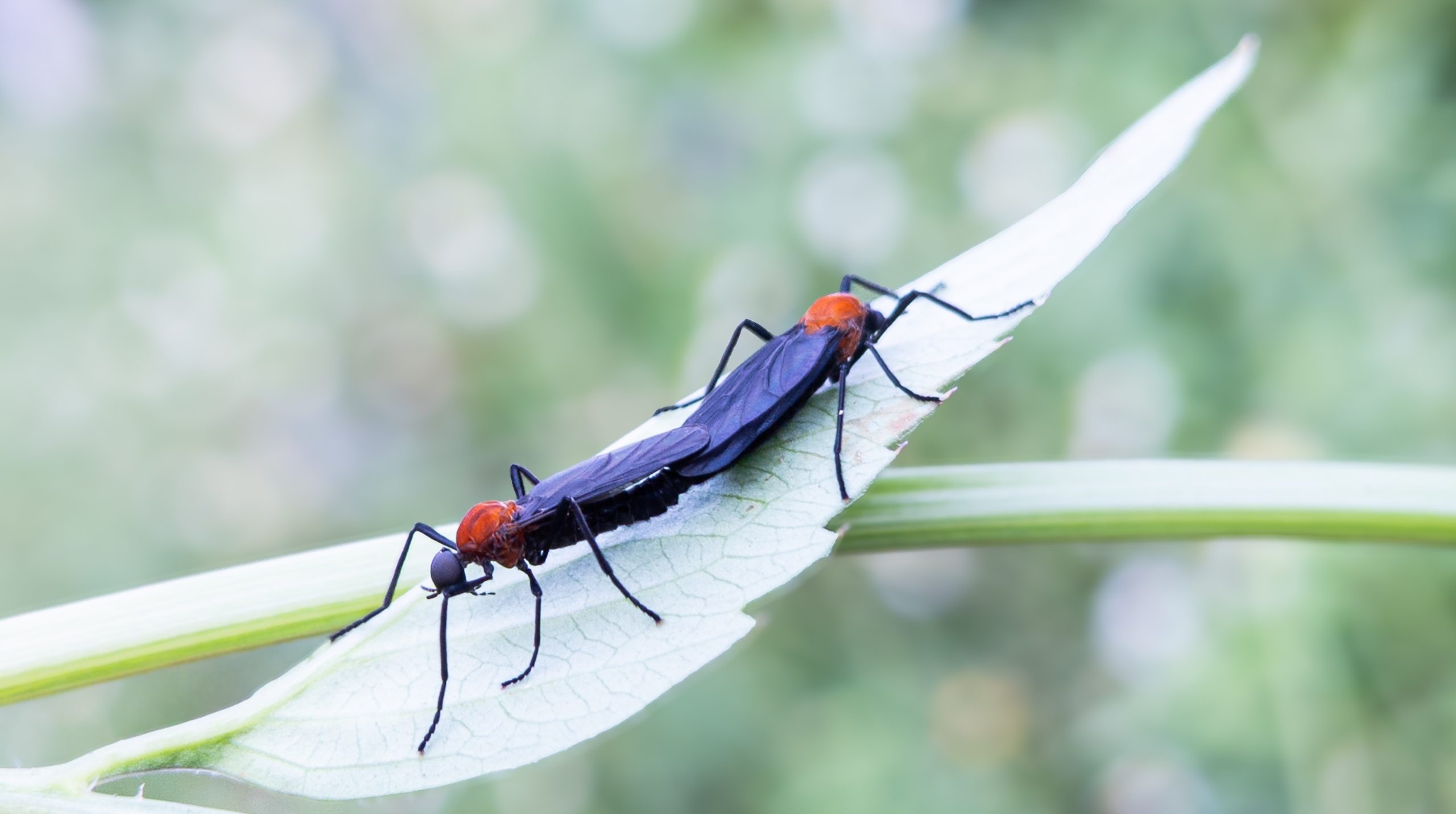
Lovebugs in Louisiana have a habit of appearing when the weather still feels like summer. One week, your windshield is clear. The next, black-and-red insects cover the bumper, gather near the front door, and drift across the highway in connected pairs.
September lovebugs can be especially frustrating for Louisiana drivers. A morning commute through Thibodaux, Houma, Baton Rouge, or the New Orleans area may leave a fresh layer of insects across the grille and windshield. Homeowners may also notice them resting on light-colored walls, patio furniture, and doors.
These swarms look worse than they are. Lovebugs do not bite, sting, eat wood, or establish colonies inside homes. Their sudden numbers come from a seasonal life cycle that produces two major adult flights each year. Understanding that cycle makes the season easier to handle. It also helps you protect your car, reduce activity near entrances, and recognize when the flying insects around your property are not lovebugs at all.
Why Lovebugs in Louisiana Appear Twice a Year
Lovebugs in Louisiana usually produce two noticeable adult flight periods. The first tends to occur in spring, often during April and May. The second generally arrives during late summer and early fall, with August and September bringing some of the heaviest activity.
Most of a lovebug’s life happens out of sight. The larvae develop near the soil in damp areas that contain decaying leaves, grass clippings, and other plant material. When temperatures and moisture levels support development, many adults can emerge across the same area within a short time.
The University of Florida Institute of Food and Agricultural Sciences reports that female lovebugs lay an average of 350 eggs. The same source identifies spring and late-summer flights as the two main periods of adult activity. Those numbers help explain why a swarm can feel sudden even when the insects were developing nearby for months.
| Life Stage | Where It Happens | What the Lovebug Is Doing |
| Egg | Near moist, decaying plant material | Beginning development after the female lays eggs |
| Larva | In or near the upper layer of soil | Feeding on decomposing organic matter |
| Pupa | In the soil or surrounding material | Changing into an adult |
| Adult | Above ground in open, sunny areas | Mating, flying, and laying eggs |
The adult stage is brief compared with the larval period. Adult lovebugs spend much of that time mating, which is why people often see a male and female flying while connected. Those pairs are not injured or stuck together. They are completing the reproductive stage of the life cycle.
Why September Lovebug Swarms Feel So Heavy
September lovebug swarms stand out because late summer in Louisiana remains warm, humid, and active. People are still mowing lawns, driving to work, attending outdoor events, and spending time on patios. Lovebugs appear in the same open areas where much of that activity takes place.
Roads create the most visible problem. Lovebugs often fly across sunny spaces near fields, drainage areas, pastures, and roadside vegetation. A person standing outside may see only a few insects, while a vehicle traveling 60 miles per hour can pass through hundreds within minutes.
Conditions also vary from one location to another. A driver may see almost no lovebugs near home, then enter a heavy flight several miles down the road. Swarms may be thicker near low areas with moist soil, cut vegetation, or decomposing plant matter.
Weather can change daily activity as well. Warm, bright periods tend to bring more visible movement, while cooler temperatures, heavy rain, or strong wind can reduce the number of adults in flight. This is why lovebugs may seem intense one afternoon and far less noticeable the next morning.
| Condition | Likely Effect on Activity | What You May Notice |
| Warm, sunny afternoon | More adult flight | Heavy activity over roads and open yards |
| Moist soil and decaying vegetation | Supports larval development | Greater activity near fields, ditches, and plant debris |
| Heavy rain | Temporarily reduces flight | Fewer adults moving through open areas |
| Strong wind | Makes controlled flight harder | Less gathering around calm, sheltered spaces |
| Bright lights near doors | Pulls flying insects toward entrances | More insects resting near walls and door frames |
Are Lovebugs Harmful to People, Pets, or Homes?
The University of Florida IFAS describes lovebugs as nuisance insects, not biting pests. They do not sting people, feed on pets, chew structural wood, damage clothing, or reproduce inside wall voids. Their mouthparts are suited to feeding on nectar and other liquids, not skin.
A few lovebugs may enter when someone opens a door. Others may slip through torn screens or gaps around windows. Once indoors, they usually move toward light and die without reproducing.
Their larvae also serve a function outdoors. By feeding on decomposing leaves and other plant material, they help break down organic debris near the soil. That role does not make a heavy swarm pleasant, but it separates lovebugs from pests that damage property or contaminate food.
The real concerns involve large numbers. Thick swarms can reduce visibility while driving, collect on outdoor surfaces, and create an unpleasant entrance for customers or guests. They may also lead homeowners to use unnecessary products or mistake another flying pest for a lovebug.
How Lovebugs Affect Cars During Louisiana Lovebug Season
Cars receive most of the damage and mess during the Louisiana lovebug season. Insects strike the bumper, grille, mirrors, hood, headlights, and windshield. When drivers use dry wipers, the bodies may smear across the glass and make visibility worse.
Lovebug residue does not immediately destroy automotive paint. Problems are more likely when crushed insects remain on a hot surface, dry in direct sunlight, and become difficult to remove. Rough scrubbing can then scratch the clear coat or leave dull marks.
The safest approach is to remove buildup before it hardens. Rinse the affected area with water, let dried residue soften, and wash it with products intended for automotive finishes. Avoid kitchen scrubbers, stiff brushes, or scraping tools.
A layer of automotive wax or paint sealant may make cleanup easier. It will not keep insects from striking the vehicle, but it can reduce how firmly the residue sticks. Drivers who travel long distances during September should inspect the front of the car after each trip.
| Vehicle Area | Common Problem | Best Response |
| Windshield | Smearing and reduced visibility | Use washer fluid and clean the glass after driving |
| Bumper and hood | Dried insect residue | Soak first, then wash with an automotive-safe cleaner |
| Grille | Heavy buildup that blocks openings | Rinse carefully and remove packed debris |
| Mirrors and headlights | Reduced clarity and visibility | Wipe with a soft cloth after softening the residue |
| Painted surfaces | Marks from dried remains or rough cleaning | Wash promptly and avoid abrasive pads |
Do not wait for several layers to build up. Fresh residue comes off more easily than insects that have baked onto the vehicle for several hot days.
How to Reduce Lovebugs Around Doors and Patios
You cannot stop a regional lovebug flight from reaching your neighborhood. You can, however, make doors and outdoor seating areas less attractive during peak activity.
Start with exterior lighting. Bright white lights near an entrance may draw flying insects toward the door. Use only the lighting you need, and consider moving fixtures away from the main entrance when the layout allows.
Warmer-colored bulbs may attract fewer flying insects than cool white or blue-toned lights. This change will not remove lovebugs from the yard, but it may reduce the number gathering on the wall beside the door.
Check screens, weatherstripping, and door sweeps before the second flight begins. Lovebugs do not seek indoor nesting sites, yet they can enter through the same gaps used by mosquitoes, flies, and other pests. Keeping those openings sealed also helps with year-round pest prevention.
Fans can make covered patios more comfortable. Lovebugs are not strong fliers, so steady airflow may keep them from settling around chairs and tables. Position the fan across the seating area instead of pointing it straight at one person.
Yard cleanup can help with conditions close to the house. Remove thick piles of wet leaves, old grass clippings, and decomposing vegetation near patios and entryways. This will not affect lovebugs developing in nearby fields or drainage areas, but it can reduce suitable material beside the structure.
What Not to Do During a Lovebug Swarm
Avoid treating the entire yard simply because adult lovebugs are passing through. A regional flight can move across roads, fields, and several neighborhoods. Reducing insects on one property will not stop the next group from arriving.
Do not spray household cleaners or unapproved products across vehicles, plants, siding, or outdoor furniture. Products made for one surface may stain another, harm landscaping, or leave a residue where children and pets spend time.
Do not scrape dried lovebugs from paint. Soaking and gentle washing take longer, but they are less likely to damage the finish. The same care applies to painted doors, signs, shutters, and outdoor fixtures.
It also makes little sense to chase each lovebug indoors with a spray. A vacuum or damp paper towel handles the occasional insect without leaving residue on walls or floors.
How to Tell Lovebugs From Other Flying Pests
Normal lovebug activity happens outdoors and follows a seasonal pattern. The insects have black bodies with a reddish area behind the head. Adults are about one-quarter to one-third of an inch long, and connected mating pairs are easy to recognize.
A flying insect problem may involve another species if activity continues inside the home, centers around drains, or gathers near food. Small flies near produce, trash cans, or sinks may be fruit flies, phorid flies, or drain flies.
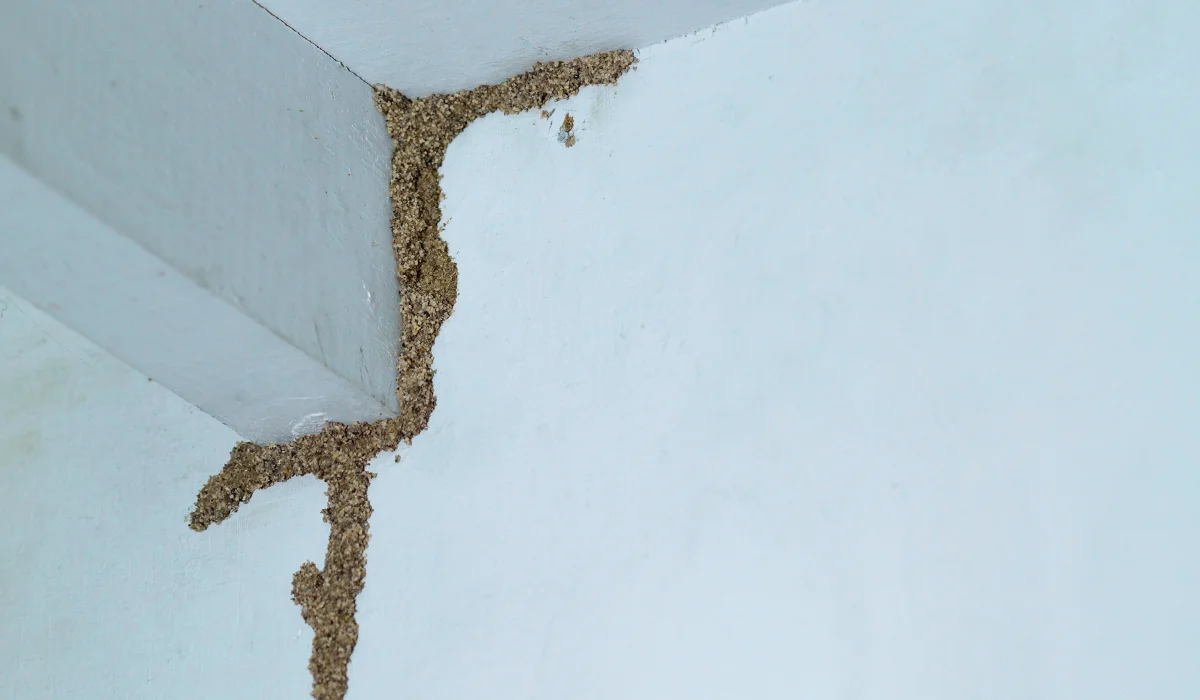
Winged ants and termite swarmers also require closer attention. These insects may appear around windows, doors, or indoor lights, but their body shape and wings differ from lovebugs. Termite swarmers can indicate a colony near or inside the structure.
| What You Notice | Possible Insect | Why It Matters |
| Black insects with red behind the head, often joined in pairs | Lovebugs | Seasonal outdoor nuisance |
| Tiny flies around drains or sinks | Drain or phorid flies | May point to moisture or organic buildup |
| Small flies around fruit or trash | Fruit flies | Often linked to food residue or fermentation |
| Insects with equal-length wings near windows | Termite swarmers | May indicate termite activity |
| Narrow-waisted insects with bent antennae | Winged ants | May signal an ant colony nearby |
Correct identification prevents wasted effort. Treating every flying insect as a lovebug can allow a drain, ant, or termite problem to continue. Treating ordinary lovebugs like a structural infestation can lead to unnecessary service.
When Professional Pest Control Can Help
Professional service cannot stop lovebugs from flying across Louisiana during a seasonal emergence. They develop across large outdoor areas, and new adults can move onto the property after a treatment.
A pest inspection can still be useful when insects remain active indoors, appear outside the normal spring or late-summer flight, or do not match the appearance of lovebugs. An experienced technician can identify the species and find the source of the activity.
This distinction matters for homes and businesses. Lovebugs near an exterior door may require changes to lighting and exclusion. Flies breeding around a drain, grease buildup, trash area, or hidden moisture source call for a different response.
LaJaunie’s Pest Control serves communities across southeastern Louisiana, including Thibodaux, Houma, Metairie, Kenner, LaPlace, Morgan City, and nearby areas. Our technicians identify the insect first, then explain whether the issue needs service or simple seasonal management.
Getting Through Lovebug Season in Louisiana
Lovebugs in Louisiana arrive twice a year because their life cycle produces two main adult flights. The September flight can feel more severe because it overlaps with warm weather, highway travel, outdoor events, and the daily routines of South Louisiana families.
The best response is practical. Clean your vehicle before residue hardens, adjust lights near doors, repair damaged screens, use fans around covered seating areas, and remove wet plant debris close to the house. These steps will not end the regional flight, but they can reduce the mess where it affects you most.
When the insects inside your home do not look or behave like lovebugs, contact LaJaunie’s Pest Control and get help identifying the real problem. A correct answer saves time and prevents unnecessary treatment, especially during a season when several types of flying insects may be active at once.