

You love your pets. You don’t love cockroaches. But getting rid of roaches while keeping dogs or cats safe takes some care.
Most pet owners want a reliable cockroach control solution in Slidell that works without creating unnecessary risks for their pets.
The right treatment depends on the cockroach, where it is hiding, and how much activity is inside the home. Here are the pet-safe cockroach treatments that can help and what Louisiana homeowners should know before treating a roach problem.
Key Takeaways
- German and American cockroaches need different treatment methods.
- Boric acid, diatomaceous earth, bait, and other products need careful placement around pets.
- German roaches need a more involved treatment because they reproduce inside the home.
- Louisiana heat and humidity give roaches moisture and shelter.
- Professional treatment starts with identifying the species and finding where the roaches are living.
Pet-Safe Cockroach Treatments That Work
There is no single treatment for every cockroach problem. The right option depends on the species, infestation, treatment area, and whether a pet can reach that area.
Diatomaceous Earth

Diatomaceous earth is a go-to for families with pets because it’s a food-grade, non-toxic powder that works by cutting through a roach’s exoskeleton and dehydrating it. While it doesn’t act instantly, it can kill cockroaches over time when applied in high-traffic areas like baseboards or dark corners. It damages their protective outer layer and causes them to lose moisture.
Don’t leave loose dust where a dog or cat can sniff, lick, or roll in it. Fine dust can irritate the eyes and airways.
When used according to its label in areas pets cannot reach, diatomaceous earth can be one part of a treatment plan. It should not be the only treatment for a heavy German roach infestation.
Boric Acid

Boric acid is a classic active ingredient in many roach bait formulas. It’s affordable and widely used, but be smart about where and how you apply it.
Focus on crevices and places your pets can’t access, like under refrigerators or dishwashers. Even though it’s low in toxicity, using too much can still be risky. The National Pesticide Information Center reports that pets can be exposed when boric acid products are left where they can reach them. Animals can also become sick after eating enough boric acid.
Follow the product label and keep boric acid in protected locations. Loose powder or homemade bait should not sit where a pet can lick or eat it.
Essential Oils

If you’re looking for a natural roach repellent that works, peppermint oil is one of the most effective essential oils for keeping German cockroaches away. It’s not just a nice-smelling home remedy, research shows it can seriously mess with a roach’s system when used the right way.
But peppermint oil is not a strong answer for an established infestation. German roaches spend much of their time behind appliances, cabinets, and plumbing. Repelling a few roaches from one surface does not address the population hiding nearby.
“Natural” also does not automatically mean pet-safe. It can still cause skin or breathing irritation in pets if it’s used too heavily or in the wrong spot. Always dilute it properly and never spray it near your pet’s food, water bowls, or bedding.
Pet-Safe Roach Bait Stations
Pre-packaged roach bait stations can be useful for cockroach control, especially for pet owners because they’re sealed up in a way that prevents curious critters from getting to the active ingredient inside. They attract roaches in and kill them over time, which is perfect for long-term roach control.
That said, bait belongs near roach travel paths and hiding areas, not in places where pets can reach it. The Environmental Protection Agency (EPA) advises pet owners to keep animals away from bait products and to avoid spraying or storing products near pet food and water dishes.
Strong sprays can also work against a German roach bait program. If another product has already been applied, tell the technician what was used and where.
Roach Traps
Traps like glue traps are a solid, low-risk tool for spotting roach problem areas. While they don’t kill them in large numbers, they help you track where the pests are hiding. These are also good to pair with bait stations to see if your treatment is working.
Glue traps can show where cockroaches are moving and where activity is strongest. They are useful near appliances, cabinets, and plumbing, but traps alone will not control a heavy German roach infestation. Place them somewhere pets cannot step on the adhesive or get it in their fur.
Aerosol Roach Spray Alternatives
Aerosol roach sprays often include ingredients that aren’t safe for pets. If you’re tempted to grab a can off the shelf, look closely at the label. The word “pet safe roach killer” doesn’t always mean what it should. Many over-the-counter sprays leave behind residue that can transfer to pet paws. Instead, stick with targeted options or hire a professional team that uses non-toxic materials.
More spray also does not always mean better cockroach control. One problem our technicians encounter is heavy residual spray in kitchens where German roach bait also needs to work. Those products can interfere with bait and make the treatment harder.
A better treatment starts with identifying the cockroach and locating its hiding areas. The product and placement can then match the problem instead of covering exposed surfaces with spray.
Sanitation and Sealing
Cockroach treatment has a harder job when food and water stay available. Clean spilled pet food, wash pet bowls, and store pet food in closed containers. Fix leaking faucets and pipes. Clean behind refrigerators and stoves where crumbs, grease, and moisture can collect.
Outside, clear clogged gutters and seal openings around plumbing, doors, windows, and vents. These changes remove some of the food, water, and entry points roaches use.
German vs. American Cockroaches in Louisiana
German cockroaches are small, light brown roaches with two dark stripes behind the head. They live indoors near food, warmth, and moisture. Kitchens, bathrooms, pantries, and storage areas can support an infestation.
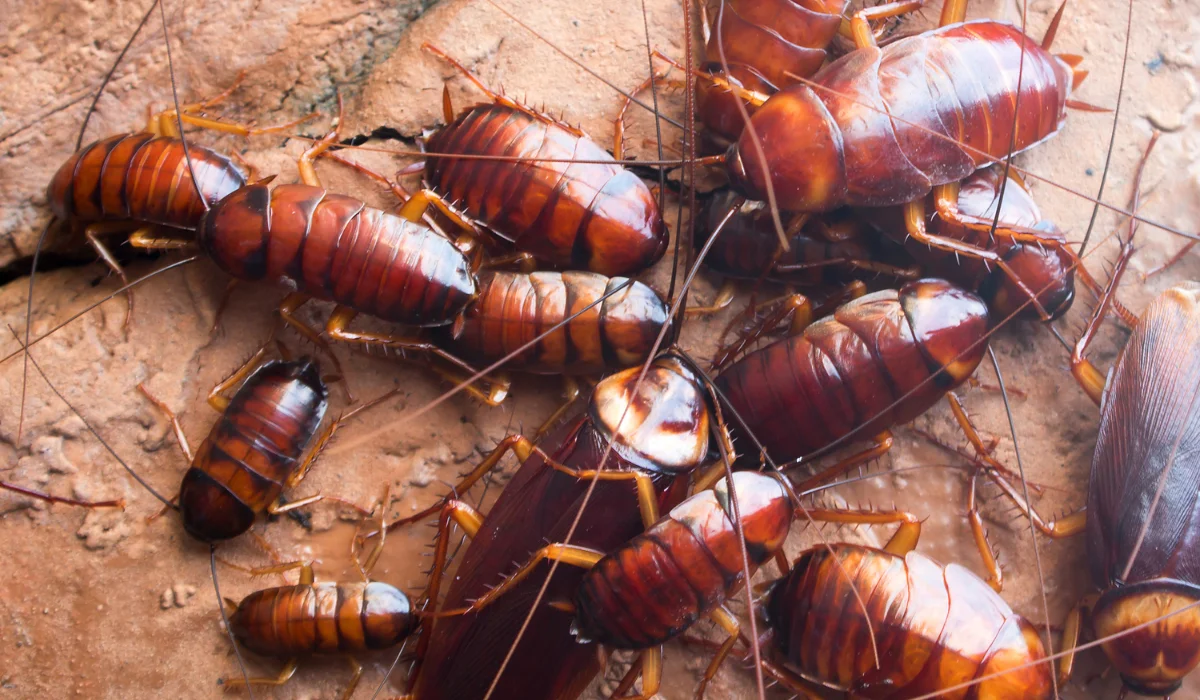
American cockroaches are much larger. South Louisiana homeowners often call these large roaches palmetto bugs. They may enter from outdoor areas, drains, garages, plumbing access points, and other damp spaces.
The treatment changes with the species. German roaches need an indoor treatment that addresses reproduction. LaJaunie’s German roach protocol includes an insect growth regulator, or IGR. Non-German roaches can respond to granular treatments used around the home.
That distinction matters. Treating a German roach infestation like an occasional large roach entering from outside can leave the source untouched.
Why Louisiana Humidity Matters
South Louisiana gives cockroaches heat and moisture for much of the year. The LSU AgCenter describes German cockroaches as pests that favor tight, dark, warm areas where humidity and food are available. Kitchens and bathrooms fit those conditions.
Leaking pipes, damp cabinets, drains, pet water bowls, and moisture near appliances can add to the problem indoors. Outside, gaps around doors, pipes, and vents can give larger roaches a route into the house.
That is why moisture control and sealing matter alongside treatment.
Professional Pest Management for Pet Owners
If cockroaches keep showing up or treating around your pets has become a concern, it may be time to call a professional. LaJaunie’s Pest Control technicians offer pet-safe cockroach management in Lafourche Parish around Thibodaux and Raceland, Terrebonne Parish around Houma and Gray, and the Slidell area in St. Tammany Parish. The setting changes, but some service situations repeat.
In a kitchen, that can mean checking behind the refrigerator or dishwasher while dog bowls sit near the cabinets. Under a sink, it may mean finding German roach activity close to plumbing and a pet water dish. Our service process calls for moving pet dishes before treatment, then inspecting cracks, crevices, access points, garbage areas, and other places pests use.
German roaches need more than treatment of the roaches you see. Our protocol uses an IGR to interrupt reproduction and includes a two-week follow-up. If the technician finds that another visit is needed around week four, that follow-up is included. For an established German roach problem, see our Healthy Home Plus German Roach Package for cockroach treatment details.
This is also why product choice is only part of pet-safe cockroach control. Where the product goes, what species is present, and what pets can reach all affect the treatment plan.
Pet-Safe Cockroach Treatments: FAQs
Is boric acid safe for dogs?
Dogs should not be allowed to eat or lick boric acid. The National Pesticide Information Center notes that animals can be affected after eating it. Follow the product label and keep boric acid where your dog cannot reach it.
What do pest control companies use that’s pet safe?
There is no single product for every home. Treatment may include bait, an insect growth regulator, traps, granular products, dusts, or targeted crack-and-crevice applications. The cockroach species, treatment area, product label, and places pets spend time all affect the treatment choice.
Are roach bait stations safe around pets?
Bait stations limit direct access to the material inside, but pets should still be kept away from them. The EPA recommends keeping animals away from bait products while they are in use. Follow the product label and place stations where pets cannot chew or move them.
Do pets need to leave during cockroach treatment?
It depends on the product and application. Follow the product label and the technician’s instructions for that service. Tell the technician about dogs, cats, birds, reptiles, or other pets before treatment begins.
Why are German cockroaches harder to get rid of?
German cockroaches live and reproduce indoors in tight spaces near food, warmth, and moisture. LaJaunie’s protocol uses an IGR to interrupt reproduction and includes follow-up service. Treating only the roaches that are visible can leave the population behind appliances and cabinets untouched.