




You pull on a work glove, move a box in the garage, or reach behind something stored in a closet. Later, a sore red bump appears on your skin. It might itch, swell, blister, or hurt when you press it.
Spider bite pictures can help you compare the mark with common symptoms, but the picture cannot confirm what bit you. Fleas, bed bugs, mosquitoes, skin infections, and allergic reactions can leave similar marks. This guide explains what different bites may look like, how symptoms change, and when you need medical care.
What Do Spider Bites Look Like?
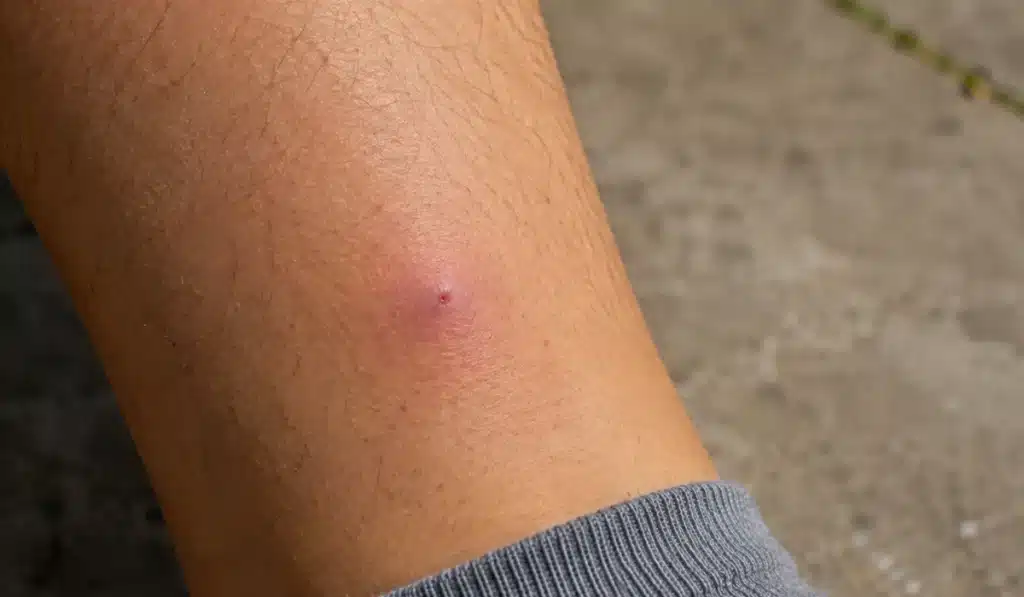
Most mild spider bites look like an ordinary bug bite. You might find a raised red bump with swelling around it. The skin can itch, sting, or feel tender. Some bites leave no clear mark during the first few hours.
According to the Mayo Clinic, a typical bite can look like a red, inflamed bump. It also notes that bacterial infections and other skin sores can produce the same appearance.
Widow bite symptoms can last one to three days, while a severe recluse wound can take weeks or months to heal.
| What You See | What It Could Mean | What to Watch |
|---|---|---|
| Small red bump | Mild bite, sting, irritated pore, or rash | Pain or swelling that grows |
| Two small dots | Punctured or scratched skin | Expanding redness or warmth |
| Clear blister | Local skin reaction | A larger blister or dark center |
| Red ring | Inflammation from several causes | Fever or a spreading rash |
| Purple or gray center | Bruising or tissue injury | Black skin or an open wound |
| Warm bump with pus | Possible bacterial infection | Red streaks, drainage, or fever |
| Several marks together | Fleas, bed bugs, ants, or another pest | New marks in the same setting |
Do Two Fang Marks Confirm a Spider Bite?
Two dots do not prove that a spider caused the mark. Spider fangs are small, and many bites do not leave two visible punctures. Scratches, irritated pores, and other insect bites can create the same pattern.
The size of the mark does not show how serious the reaction is. A black widow bite can leave a small spot while causing muscle cramps. A large red bump could come from a minor bite or an infection that needs treatment.
Take a clear picture when you first find the mark. Place a ruler beside it, then take another photo several hours later from the same distance. The comparison will show whether the area is growing, fading, or changing color.
What Different Spider Bite Pictures May Show
A close-up of the skin gives you limited information. Where the contact happened, how fast symptoms started, and whether you saw the spider can offer better clues.
Common House and Wolf Spider Bite Pictures and Symptoms
House spiders and wolf spiders tend to avoid people. A bite can happen when one becomes trapped in a glove, shoe, towel, bedsheet, or piece of clothing. Moving boxes and stored materials can also disturb a hidden spider.
The bite might feel like a quick pinch. Redness, soreness, itching, or mild swelling can follow. The reaction tends to stay near the original spot and begin settling within a few days.
Deep tissue damage is not expected from these spiders. A wound that grows hotter, darker, softer, or more painful should be checked for infection.
Brown Recluse Spider Bite Pictures and Symptoms
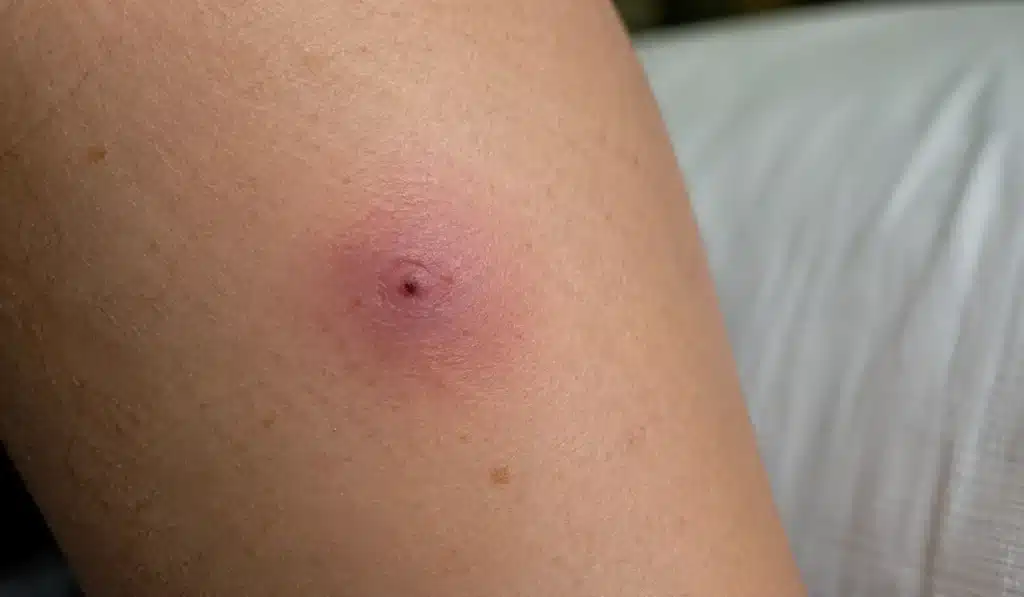
A brown recluse bite can go unnoticed at first. Pain or burning may develop during the next several hours. The skin can form a blister, show a pale center, or turn blue or purple inside a red ring.
Open sores and tissue damage can occur, but they do not follow every recluse bite. Boils, bacterial infections, burns, and tick bites are often mistaken for recluse bites.
Location matters in Louisiana. The LSU AgCenter reports that brown recluses are common in the northern half of the state but rare in southern Louisiana. It also describes a Kansas home where researchers counted more than 2,000 brown recluses without a recorded bite among the residents.
The example does not mean recluse bites are harmless. It shows why a brown spider near a skin sore does not prove that the spider caused it.
Black Widow Spider Bite Pictures and Symptoms
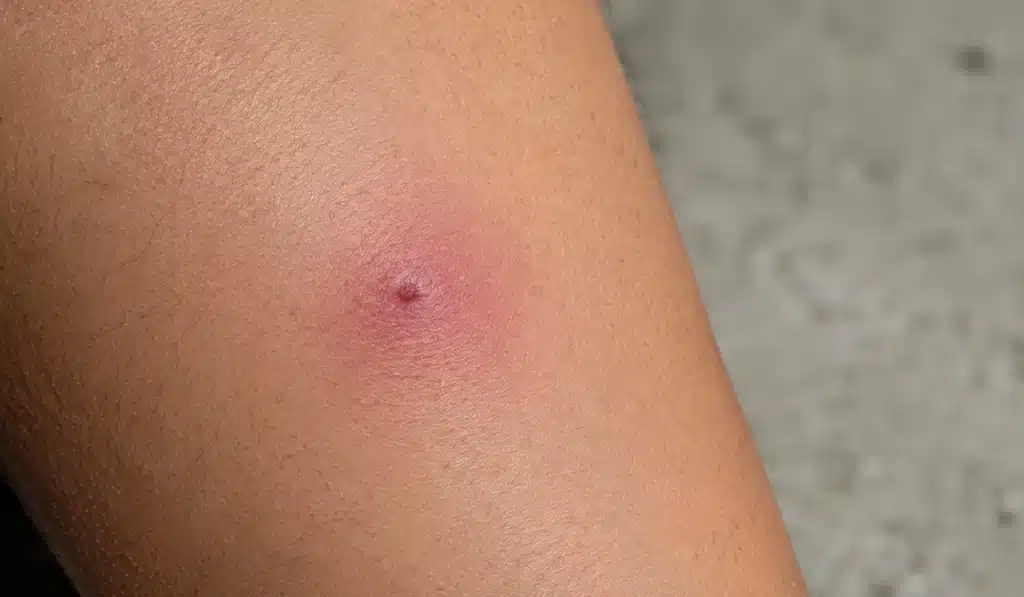
A black widow bite can leave a small red mark or two punctures. In some cases, the skin looks minor compared with the symptoms that follow.
Pain can spread into the chest, abdomen, or back. Tight muscles, cramps, sweating, nausea, tremors, and weakness are stronger warning signs than the size of the mark. Severe pain, breathing trouble, or strong muscle cramping calls for prompt medical care.
The Centers for Disease Control and Prevention (CDC) lists black widows and brown recluses as spiders of medical concern in the United States. It states that most bites happen when a spider is trapped or touched.
How to Read Spider Bites Over Time
There is no exact spider bite timeline. A mild reaction could start fading after one or two days. A widow bite can cause strong body symptoms while leaving a small mark. An infection might continue growing after the first irritation should have settled.
| Time Since the Mark Appeared | What You Might Notice | What Needs Attention |
|---|---|---|
| First few hours | Redness, itching, soreness, or no clear reaction | Fast swelling or severe pain |
| Within 24 hours | Mild warmth, tenderness, or a small blister | Spreading pain, cramps, nausea, or vomiting |
| Days 2 to 3 | A mild reaction starts fading | Growing redness, pus, or fever |
| Days 3 to 7 | Irritation fades or forms a small scab | Dark tissue, red streaks, or an open sore |
| After one week | The skin continues to heal | The wound grows or does not begin closing |
Take spider bite pictures and use them to record changes rather than diagnose the cause. Write down when the mark appeared and when new symptoms began. Note changes in pain, warmth, swelling, drainage, fever, nausea, cramping, or weakness.
A mild bump should stay limited or begin settling. A mark that keeps expanding, becomes more painful, or turns purple, gray, or black needs medical attention.
Is It a Spider Bite or Something Else?
You find a bump but never see what caused it. A spider becomes the first suspect, though another pest or skin problem might fit the pattern better.
| Possible Cause | Usual Pattern | Clue to Look For |
|---|---|---|
| Mosquito bite | Raised, itchy bump | Appears after outdoor activity |
| Flea bite | Small, itchy bumps in groups | Common around ankles and lower legs |
| Bed bug bite | Clusters or loose rows of itchy marks | New bites appear after sleep |
| Fire ant sting | Burning bump followed by a white pustule | Several stings after contact with a mound |
| Tick bite | Small red spot or expanding rash | A tick is attached or was removed |
| Contact dermatitis | Itchy patch with redness or blisters | Skin touched a plant or cleaner |
| Folliculitis | Pimple-like bumps around hairs | Develops on shaved or sweaty skin |
| Bacterial infection | Warm, painful lump with fluid or pus | Continues growing or occurs with fever |
Spider Bite or Skin Infection?
A boil or bacterial infection can begin as a sore red bump. The area might grow warm, soften in the center, collect fluid, or start draining. Fever, red streaks, and increasing pain also point toward infection.
Do not squeeze, puncture, or cut the bump. That can push bacteria deeper or spread it into nearby tissue. A medical professional can determine whether the area needs drainage, medication, or other wound care.
Spider Bite or Bed Bug Bite?
Bed bug bites tend to appear in groups on skin exposed during sleep. Arms, shoulders, legs, and the neck are common areas. One person in the home might react while another shows no visible marks.
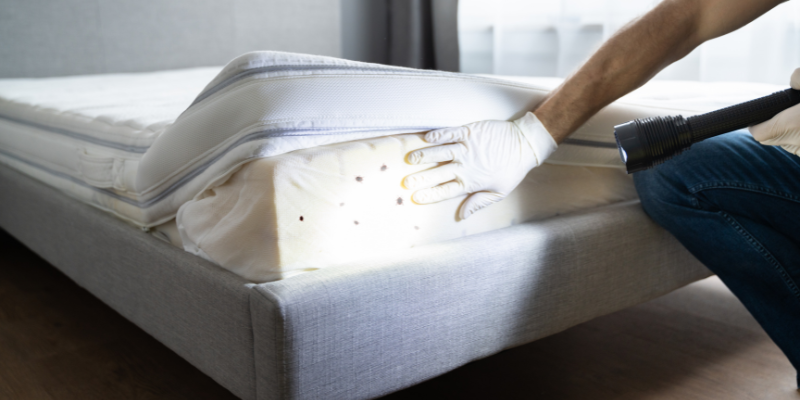
Inspect mattress seams, the box spring, headboard, and nearby furniture. Shed skins, dark fecal spots, eggs, blood marks, or live insects provide stronger evidence than the bites.
Spider Bite or Flea Bite?
Flea bites tend to form itchy clusters around the ankles and lower legs. Activity near pet bedding, carpets, rugs, or upholstered furniture is another clue.
Check pets for scratching and look for black specks in their coat or bedding. Several new marks in one area are less consistent with a single spider bite.
When Should You Worry About a Spider Bite?
Call 911 for breathing trouble, fainting, or swelling in the face, mouth, or throat. Serious symptoms can start while the skin still looks minor.
Get prompt medical care for severe or spreading pain, strong muscle cramps, repeated vomiting, heavy sweating, fever, or weakness. A wound with dark tissue, pus, red streaks, or foul-smelling drainage also needs an examination.
Young children, older adults, and people with serious health conditions can face a higher risk of complications. A confirmed or strongly suspected widow or recluse bite should be discussed with a clinician or Poison Control.
How to Treat a Suspected Spider Bite at Home
Wash the area with soap and water. Wrap a cold pack in a clean cloth and hold it against the skin for short periods. Raise the affected arm or leg when swelling is present.
Keep the area clean and avoid scratching it. Continue taking pictures so you can show a clinician how the mark changed.
Do not cut the skin, squeeze the bump, burn it, or apply bleach, gasoline, or other household products. These methods do not remove venom and can cause more damage.
Photograph the spider from a safe distance when you can do so without touching it. A clear photo of the spider is more useful for identification than a close-up of the wound alone.
How Can You Keep Spiders Out of Your Louisiana Home?
You remove a spider from the bathroom, then find another web near the garage door a few days later. The spider is gone, but the conditions that drew it inside remain. Insects provide food. Gaps provide entry. Boxes, eaves, and quiet corners provide shelter.
Replace open cardboard boxes with sealed plastic bins. Shake out work gloves, shoes, towels, and outdoor cushions before using them. Move firewood away from exterior walls and cut back plants that touch the house.
Check window screens, door sweeps, utility lines, siding gaps, and openings around pipes. Remove webs from porch lights, eaves, windows, garage corners, and patio furniture. Reducing insect activity around the home also gives spiders less reason to stay.
When to Call Professional Spider Control
Spider bite pictures can help you track a skin mark, but a medical professional should assess the bite. Professional spider control service providers can handle the spider activity around your home.
Treating one visible spider does not address the gaps, webs, and insect activity behind the problem. LaJaunie’s Pest Control focuses on those conditions during the visit, which helps reduce repeat activity. Our technicians inspect exterior walkways, windows, the base of the home, attics, and garages. We treat access points and other activity areas.
When spiders or webs keep returning, contact LaJaunie’s Pest Control to schedule service. We will inspect the hiding areas, entry points, and insect activity that allow spiders to return.