

A red spot shows up on your arm after you move boxes in the garage or reach into a dark storage area. At first, it looks like an ordinary patch of irritated skin. Later that day, the area feels sore, looks swollen, or starts to blister. That change can send you searching for photos of a brown recluse bite.
Brown recluse bites do not follow one fixed timeline. Some reactions stay small and irritated. Others develop stronger pain, discoloration, blistering, or tissue damage over several days. Knowing what these changes can look like helps you monitor the area without assuming every red or dark wound came from a brown recluse.
What Does a Brown Recluse Bite Look Like?
The first sign can be easy to miss. According to Poison Control, people may not feel a brown recluse bite when it happens. Redness, swelling, tenderness, or itching can appear as the skin begins to react.
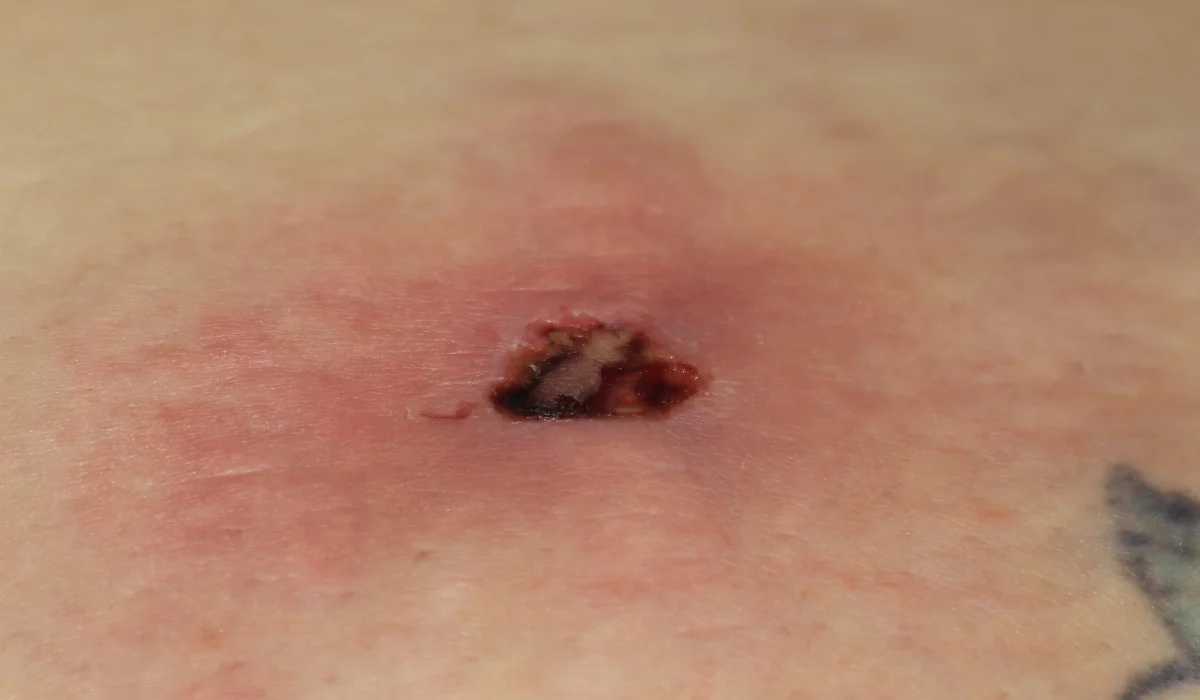
A stronger reaction can look different a day or two later. A blister can form, or the center of the affected area can become pale, blue, purple, or dark. In severe cases, damaged skin can form a scab or open into a sore.
Those changes still do not identify the spider. Skin infections, other bites, and several medical conditions can cause similar wounds, so color or shape alone cannot confirm the cause.
| What You See or Feel | What It Can Indicate |
|---|---|
| Small red or swollen area | An early skin reaction that resembles many insect bites |
| Increasing tenderness or pain | The local reaction is becoming more noticeable |
| Blistering | A stronger skin reaction has developed |
| Pale, blue, purple, or darkened skin | Tissue injury may be occurring |
| Scab or open sore | Damaged skin has begun to break down |
| Fever, weakness, nausea, or dark urine | Symptoms beyond the skin need medical attention |
Brown Recluse Bite Stages From the First Hours Through Healing
Search results for a brown recluse bite timeline can make the process look neat and predictable. But real wounds are less orderly. One person may have several days of redness and soreness, while another develops a blister or deeper skin damage.
The timing below shows changes that can occur rather than stages every bite must pass through.
What an Early Brown Recluse Bite Can Look Like
An early brown recluse bite may cause little sensation at first. As the first several hours pass, the spot can begin to sting, itch, swell, or feel tender. The surrounding skin can also become red.
At this stage, the mark can resemble a mosquito bite, irritated hair follicle, small skin infection, or bite from another insect. The size of that first red spot does not tell you whether deeper skin damage will follow.
Days One Through Seven
A mild reaction may remain red and sore before settling down. With a stronger reaction, pain can increase, a blister can form, and the center of the affected skin can change color.
More severe wounds can develop blue, purple, or dark areas as tissue becomes damaged. The skin can later scab or break open. Those dramatic wounds account for many of the brown recluse bite pictures people encounter online, but they do not represent every case.
| Approximate Time | Changes You Might Notice |
|---|---|
| First few hours | Little sensation at first, followed by redness, itching, swelling, or soreness |
| Within 24 hours | Tenderness and swelling can become easier to notice |
| Days 2-3 | Some reactions develop a blister or clearer discoloration |
| Days 3-7 | Severe local reactions can develop darker damaged skin or a more defined wound |
| Following weeks | Mild reactions can fade, while deeper wounds need more time to close and heal |
A wound does not have to turn purple or black on a specific day to fit a suspected bite. The progression varies too much for a calendar or photo sequence to confirm the cause.
Brown Recluse Bite Healing Stages
When the reaction stays mild, redness, soreness, and swelling can fade without an open wound forming. These cases look much less dramatic than the images that tend to appear in search results.
Deeper tissue injury takes a different course. Damaged skin can scab, develop an ulcer, and heal from the edges of the wound. An area that continues to enlarge, becomes more painful, or fails to improve needs medical evaluation rather than comparison with online photos.
Does Every Brown Recluse Bite Cause Tissue Damage?
Necrosis, or tissue death, is one possible complication, but many suspected bites do not develop a deep wound. MedlinePlus states that brown recluse venom can damage skin around the bite. The severity varies, which is why one person might develop a limited area of redness while another has blistering or damaged tissue.
Brown recluse bite pictures often shown on the Internet can also distort expectations because severe wounds draw more attention than small skin reactions that improve without major damage.
Local Symptoms Versus Whole-Body Symptoms
Common brown recluse bite symptoms around the wound can include pain, redness, swelling, blistering, color changes, and skin breakdown. These symptoms remain concentrated around the affected skin.
Symptoms elsewhere in your body deserve more attention. Fever, vomiting, unusual weakness, widespread illness, or dark urine can accompany a serious reaction. Contact a healthcare professional rather than continuing to watch those symptoms at home.
Suspected Brown Recluse Bite: When To Get Medical Help
Pay attention to where the wound is headed. A small irritated area that becomes less painful is different from one that keeps getting larger, darker, more swollen, or more painful.
Brown recluse bite treatment depends on the symptoms and extent of the injury. Poison Control states that there is no antidote for brown recluse venom, so medical care focuses on the wound and the problems it causes.
| What Is Happening | Recommended Response |
|---|---|
| Mild redness or swelling that is improving | Watch the area and follow appropriate wound-care advice |
| Pain or skin damage is getting worse | Contact a healthcare professional |
| Discoloration is spreading or the skin opens | Get medical advice |
| Fever, vomiting, weakness, or widespread symptoms develop | Seek prompt medical care |
| Dark urine or severe body-wide symptoms appear | Seek immediate medical attention |
| Breathing becomes difficult or a severe allergic reaction occurs | Call 911 |
Do not cut the skin, try to remove venom, or treat an online photo match as a diagnosis. A clinician can examine the wound and check for infections or other conditions that may need different care.
What the Wound Cannot Tell You
A dark center does not prove you have a brown recluse bite. Neither does a blister or an open sore. Several skin conditions can produce wounds with a similar appearance.
If the spider is still nearby and you can contain it without touching it, identification can provide useful information. Do not reach for a suspected recluse with bare hands for the sake of getting a closer look.
Are Brown Recluse Spiders Common in Louisiana?
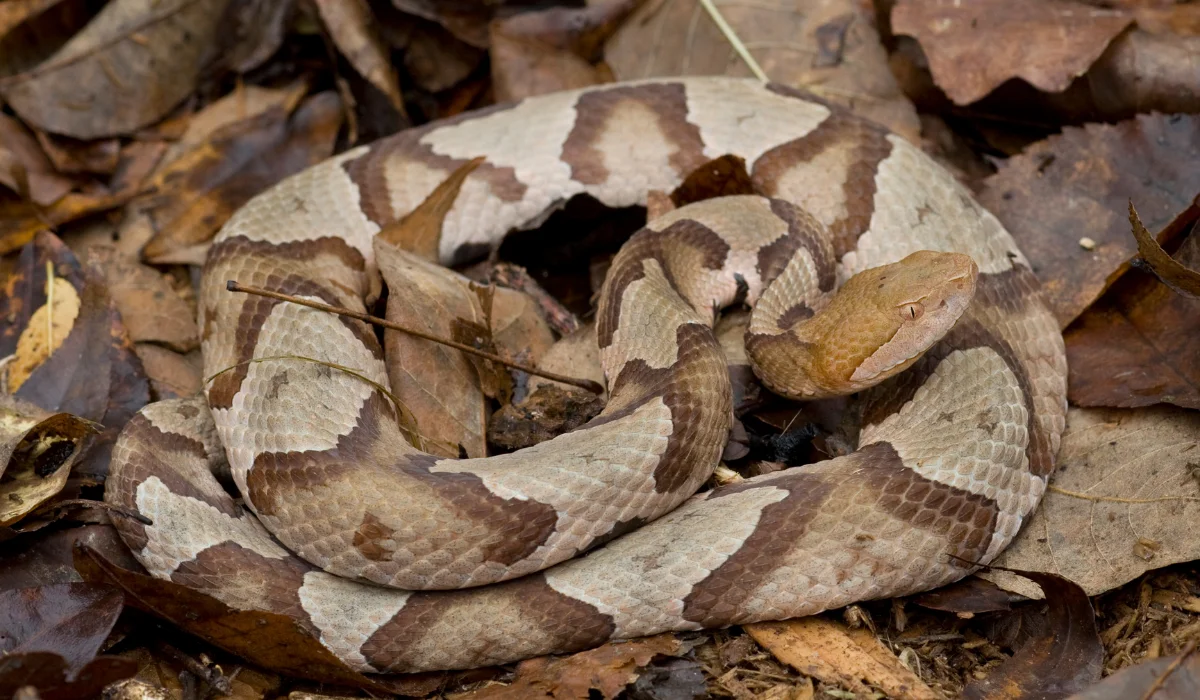
Louisiana homeowners need more context before blaming a brown recluse. A brown spider in your garage, attic, closet, or shed should not be labeled a recluse based on color alone.
The spider occurs in the state, but its distribution changes depending on where you live. The LSU AgCenter reports brown recluse spiders as common in northern Louisiana and extremely infrequent in southern Louisiana. For homeowners around Thibodaux, Houma, New Orleans, Metairie, and other communities we serve in South Louisiana, that makes correct spider identification worth more than matching a brown spider to a photo.
Brown Spiders That Get Mistaken for Recluses
The southern house spider is the Louisiana species most commonly confused with a brown recluse. Many spiders share a brown color, and you may see only a quick glimpse before one disappears behind a box, appliance, or baseboard.
When we inspect spider activity, we look at the spider, where you are finding it, possible hiding areas, access points, webs, and the insects available for food. That gives us more useful information than body color on its own.
How to Reduce Brown Recluse Encounters at Home
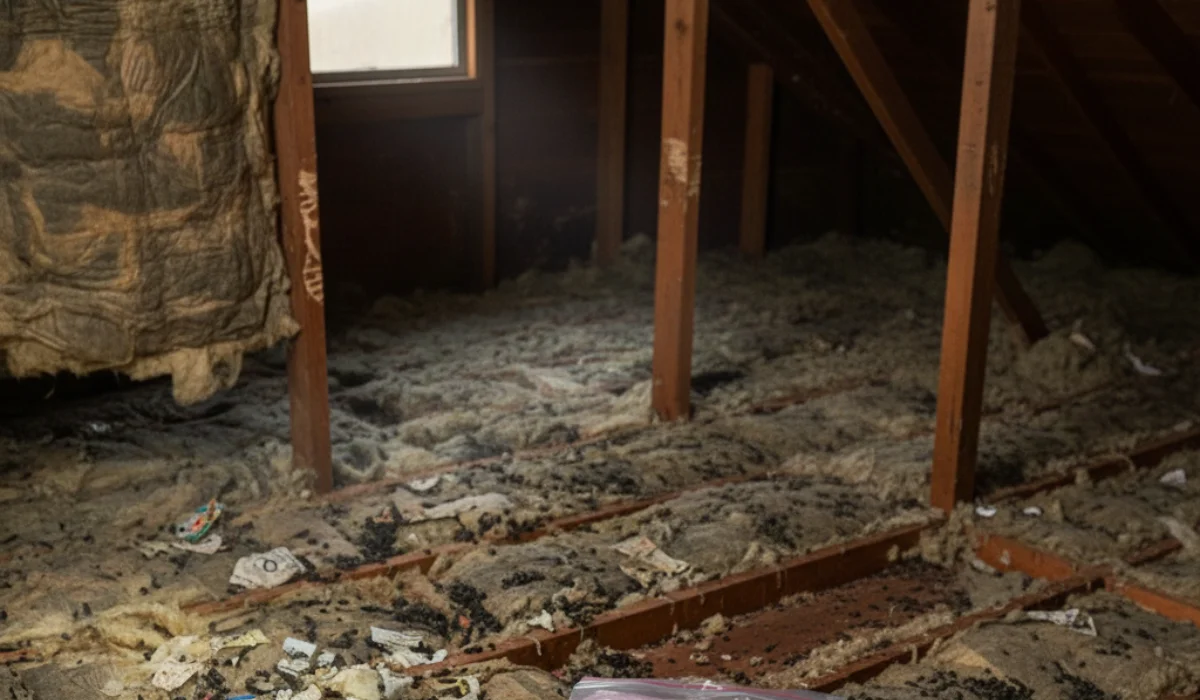
Start with places where your hands or feet can reach something before you see it. Stored shoes, work gloves, cardboard boxes, building materials, closets, garages, sheds, and attic storage can give spiders sheltered places to stay.
Wear gloves when moving stored materials. Shake out shoes and clothing that have sat unused, and remove clutter from storage areas where spiders can remain hidden.
Food also plays a role in spider activity. Insects around the house give spiders a reason to stay, while cracks, gaps around doors and windows, and sheltered exterior areas give them routes and hiding spots.
When Spider Sightings Keep Happening
A single spider does not tell you much about the rest of the property. Spiders appearing in several rooms, webs returning after removal, or repeated activity around your attic, garage, doors, and windows give us specific areas to inspect.
LaJaunies’ Pest Control offers professional spider control services to homeowners. We inspect for current and potential pest activity, treat cracks, crevices, and common access points, and remove exterior webbing where appropriate.
A worsening bite belongs with a medical professional. Repeated spider activity around your house is where our pest-control experience can help. Contact LaJaunie’s Pest Control to schedule service for your Louisiana home. We can inspect where spiders are showing up, identify the pest activity supporting them, and treat the problem areas we find.