



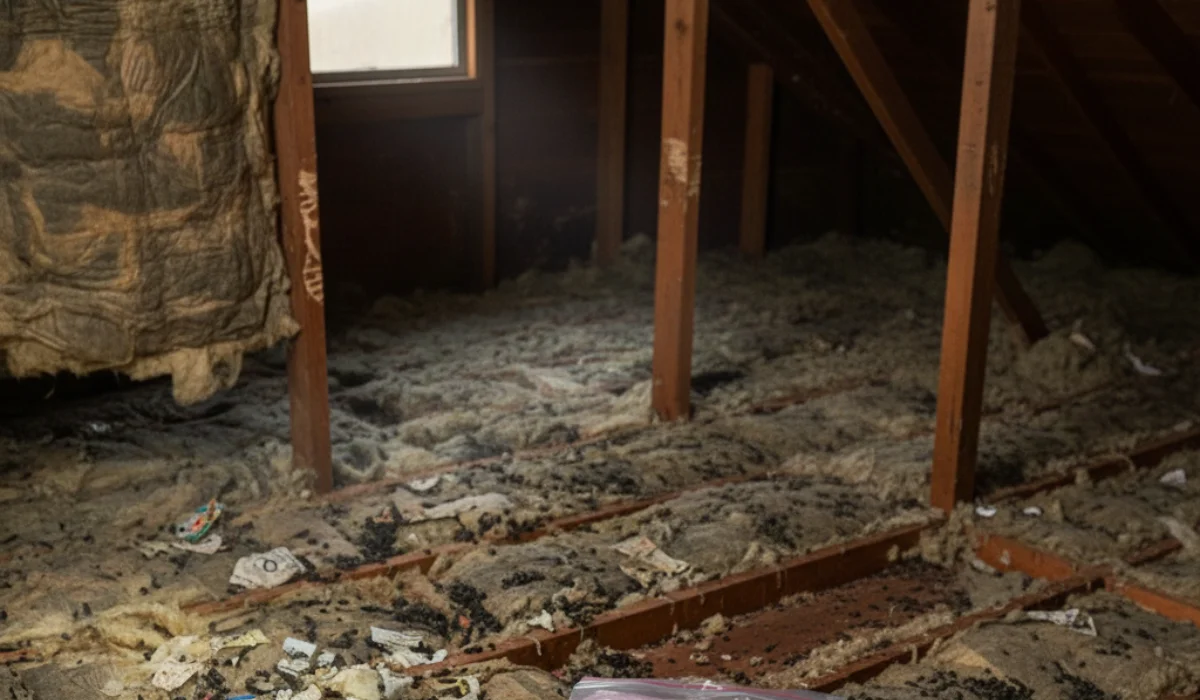
Pest droppings in attic insulation do not always mean every inch of insulation needs to come out. A few droppings in one accessible area may call for pest removal, cleanup, and monitoring, while widespread feces, urine, nesting material, odors, moisture, or damaged insulation can make partial or full replacement the better option. In Louisiana homes, LaJaunie’s technicians also look for animal entry points, rodent trails, chewed materials, insulation wear, and moisture before recommending the next step. The decision comes down to how much of the attic is affected, whether the pests are still present, and whether the insulation can still do its job.
Key Takeaways
- Pest droppings do not automatically mean the entire attic needs new insulation. The extent of contamination, urine, nesting, moisture, and physical damage determines the next step.
- Roof rats, raccoons, squirrels, mice, and other animals can contaminate or damage Louisiana attic insulation in different ways.
- Pest removal and exclusion should happen before contaminated insulation is replaced, or animals may return and damage the new material.
Do Pest Droppings in Attic Insulation Mean You Need Replacement?
Pest droppings in attic insulation should trigger an inspection, not an automatic full replacement. The first question is whether the contamination is isolated or spread throughout the attic. The second is whether urine, nesting, moisture, compression, or physical damage has affected the insulation beyond the small area where droppings are visible.
LaJaunie’s technicians evaluate the condition of the insulation along with evidence of current animal activity. They check for droppings, musty urine odors, nesting material, rodent travel paths, chewing damage, and openings around soffits, fascia, roof vents, pipes, and other areas animals may use to enter.
The table below gives homeowners a practical way to think about the decision. A hands-on attic inspection is still needed to determine how far contamination extends beneath or through the insulation.
| Contamination Level | What You May Find | Typical Next Step |
|---|---|---|
| Light and Localized | A small amount of droppings in one accessible area with no widespread odor, urine, or damaged insulation | Remove the pest source, clean or sanitize the affected area, and monitor |
| Moderate | Repeated droppings, localized urine staining, nesting material, compressed insulation, or several affected areas | Remove contaminated sections, sanitize, correct entry points, and replace insulation where needed |
| Heavy | Widespread droppings or urine, strong odors, extensive nesting, damp or heavily damaged insulation | Full or substantial insulation removal, sanitation, pest exclusion, and re-insulation may be appropriate |
| Ongoing Infestation | Fresh droppings, active noises, new nesting, chewing, or open entry points | Control and exclude the animals before installing new insulation |
What LaJaunie’s Technicians Look for in a Contaminated Attic
Finding pest droppings in attic insulation is only one part of an attic inspection. LaJaunie’s technicians look for evidence that shows what animal is present, where it is traveling, how it entered, and how much of the attic has been affected.
Rodent travel paths can leave discolored trails through insulation as oils from the animals collect along repeated routes. Technicians also inspect AC conduits and stored belongings for chewing, look for nests and droppings, and note musty urine odors that can point to animal activity.
Entry Points Around the Roofline
An attic problem will keep returning if the animals still have a way inside. LaJaunie’s inspectors check soffits, fascia, roof voids, vents, pipe openings, AC entry points, and other gaps around the structure.
These openings matter because replacing insulation before exclusion can put new material directly back into an active wildlife or rodent problem. In some cases, exclusion work may include mesh, steel, repairs around fascia or soffits, or protection around roof vents without blocking needed attic airflow.
Damage Beyond the Insulation
Rodents may chew more than insulation. LaJaunie’s technicians also check AC conduits, cardboard boxes, plastic bags, clothing, bedding, and other stored materials that can become damaged or used for nesting.
If chewing reaches wiring, ductwork, or other building components, those items may need evaluation by the appropriate repair professional. Attic restoration addresses the contaminated insulation, but it does not replace electrical, HVAC, or structural repairs when those are needed.
Which Louisiana Pests Leave Droppings in Attic Insulation?
Pest droppings in attic insulation can come from more than one animal, so identification matters before cleanup begins. Roof rats, mice, raccoons, squirrels, birds, and other wildlife can leave different patterns of droppings, nesting, odors, and physical damage.
South Louisiana’s mild winters mean attic wildlife problems are not limited to one short season. Homes in Baton Rouge, New Orleans, Houma, Thibodaux, Mandeville, and surrounding communities can provide sheltered attic space above the living area throughout much of the year.
Roof Rats and Mice
Roof rats are strong climbers and can reach attic spaces through rooflines, vents, utility openings, and gaps around the upper structure. Once inside, rodents may leave droppings along travel paths, disturb insulation, chew stored materials, and create nests.
LaJaunie’s rodent control service starts with identifying how rodents are using the property and where exclusion may be needed. That step should come before new insulation is installed in an attic with active rodent evidence.
Raccoons
Raccoons are much larger than rodents, so their attic damage can involve more than scattered droppings. They may disturb or compress large sections of insulation, create nesting areas, and leave concentrated waste behind.
This article covers the broader question of what to do when any pest contaminates attic insulation. Homeowners dealing specifically with raccoon activity can use LaJaunie’s guide to raccoons and attic insulation for the species-specific signs, damage patterns, and prevention steps.
Squirrels and Other Wildlife
Squirrels can also enter attic spaces and use insulation or stored material around nesting areas. Birds may build nests near openings and create noises that homeowners initially mistake for rodents.
Because sounds alone can be misleading, LaJaunie’s wildlife inspections look for physical evidence before determining what animal is involved. Correct identification helps the technician choose the right trapping, removal, exclusion, and cleanup approach.
How Louisiana Humidity Affects Contaminated Attic Insulation
Louisiana humidity does not create pest droppings, but moisture can make an already damaged attic harder to manage. Insulation can also deteriorate because of poor ventilation, excess moisture, leaks, mold growth, or repeated animal activity.
A hot, humid attic with damp insulation deserves closer attention than an isolated dry dropping on otherwise intact material. Moisture can contribute to odors, reduce the condition of insulation, and make it harder to separate a small wildlife problem from a broader attic issue.
LaJaunie’s attic restoration process considers both pest activity and the condition of the insulation. If moisture or ventilation problems contributed to the damage, those conditions should be addressed so replacement insulation is not installed into the same environment that damaged the old material.
Health Concerns From Pest Droppings in Attic Insulation
Pest droppings and urine should be handled carefully because animal waste can contain germs, parasites, and allergens. Raccoon feces, for example, can carry roundworm eggs, while rodent waste can present other sanitation concerns depending on the animal and conditions.
The risk is not a reason to panic when you find one dropping. It is a reason to avoid disturbing heavily contaminated insulation without understanding what animal left the waste and how far the contamination extends.
Dry sweeping or aggressively vacuuming contaminated material can stir dust and debris into the air. When droppings, urine, nesting material, dead animals, or widespread contamination are involved, professional removal and sanitation can reduce unnecessary exposure during cleanup.
When Can Insulation Be Cleaned Instead of Replaced?
Insulation may not need full replacement when the problem is truly limited to a small area and the surrounding material is dry, intact, and free of widespread urine or nesting. The pest must also be removed and the entry point corrected before cleanup is considered complete.
An inspector may recommend targeted removal when contamination is confined to one section. That approach preserves unaffected insulation while removing material that cannot be cleaned adequately.
The important distinction is between surface debris and material that has absorbed urine, moisture, odors, or other contamination. Once insulation is heavily soiled, compressed, damp, or mixed with nesting material throughout an area, replacement often becomes more practical than trying to restore the damaged material in place.
What Happens During Professional Attic Restoration?
Attic restoration should begin with the pest problem, not the insulation. LaJaunie’s process calls for mice, rats, or other animals to be removed or controlled before new insulation is installed.
Once the pest issue and entry points are addressed, damaged insulation can be removed and the attic sanitized. LaJaunie’s then installs replacement cellulose or fiberglass insulation at an R-30 value, or TAP insulation when that option fits the home.
Step 1: Inspect and Identify the Pest
The inspection looks for droppings, nests, travel paths, chewing, odors, insulation damage, and structural openings. For more involved wildlife situations, LaJaunie’s inspectors also photograph problem areas and develop a plan for exclusion and restoration.
This stage determines whether the attic has a localized cleanup issue or widespread contamination that calls for more extensive work.
Step 2: Remove Animals and Close Entry Points
Rodents and wildlife should be addressed before new insulation goes in. Depending on what the inspection finds, this can involve trapping, rodent control, exterior exclusion, fascia or soffit work, sealing voids, or protecting vents.
Skipping this step can result in animals returning to the same attic after restoration.
Step 3: Remove Damaged Insulation and Sanitize
Heavily soiled, damp, or damaged insulation is removed so the affected attic areas can be cleaned. Sanitation is then performed before replacement material is installed.
How much insulation comes out depends on how far the contamination has spread. Some homes need targeted removal, while others have enough urine, feces, nesting, or physical damage to make broad removal more appropriate.
Step 4: Install New Insulation
After the attic has been cleared and prepared, LaJaunie’s can install new cellulose or fiberglass insulation at an R-30 value or use TAP insulation.
Restoration gives the attic a fresh insulation layer after the original source of contamination has been addressed. It also provides an opportunity to correct thin, compressed, or deteriorated insulation that was already affecting the attic before the pest problem appeared.
What Is TAP Insulation?
TAP stands for Thermal, Acoustical, Pest Control insulation. LaJaunie’s offers it as an attic restoration option alongside cellulose and fiberglass insulation.
The material is designed to support thermal performance, sound reduction, and resistance to certain household pests. That can make it useful for homeowners who are already replacing contaminated or worn attic insulation and want the replacement material to provide more than temperature control alone.
TAP insulation is not a substitute for rodent or wildlife exclusion. Rats, raccoons, and squirrels still need to be removed and their entry points corrected before any new insulation is installed.
How Long Does Attic Restoration Take?
A complete LaJaunie’s attic restoration involving insulation removal, sanitation, and re-insulation usually takes about two full days. The actual schedule can change based on attic size, access, the amount of material being removed, and the extent of contamination.
A more involved wildlife case may also require inspection, trapping, exclusion, or repair work before restoration starts. LaJaunie’s full wildlife inspections can take around 1.5 to 2 hours when inspectors need to examine the yard, exterior, living areas, attic, roofline, and possible entry points.
This is why pest removal and attic restoration are sometimes separate stages of the same project rather than one single visit.
How Much Does Contaminated Attic Insulation Replacement Cost?
There is no single attic restoration price that fits every Louisiana home. LaJaunie’s quotes attic sanitation and more complex wildlife or exclusion work after inspecting the property.
Cost can change based on the attic size, how much insulation needs to be removed, the level of contamination, access conditions, exclusion work, and the replacement insulation selected. A small localized problem will not involve the same work as an attic with widespread droppings, urine, damaged insulation, and multiple wildlife entry points.
An inspection also helps separate pest-control costs from restoration or repair costs. That gives the homeowner a clearer picture of which work stops the infestation, which work cleans the attic, and which work restores the insulation.
Why DIY Attic Dropping Cleanup Can Be Risky
Cleaning a few droppings from a hard surface is different from working through contaminated attic insulation. Attics can include poor footing, limited headroom, wiring, ductwork, animal waste, and hidden areas where pests may still be present.
DIY removal also makes it easy to address the mess while missing the reason it happened. If a roof rat, squirrel, or raccoon can still enter through the roofline, replacing or cleaning insulation will not solve the underlying problem.
Professional inspection helps connect the droppings to the animal, the entry point, and the condition of the insulation. That makes the cleanup part of a larger plan rather than a one-time attempt to remove what is visible.
Making the Right Attic Restoration Choice for Your Louisiana Home
Pest droppings in attic insulation do not always mean you need a complete tear-out. Localized, dry contamination may call for targeted cleanup, while widespread feces, urine, nesting, moisture, odors, or damaged insulation can make partial or full replacement the better choice. The animals also need to be removed and excluded before the attic is restored.
LaJaunie’s Pest Control inspects attic pest activity, identifies entry points, handles rodent and wildlife problems, and provides insulation removal, sanitation, and replacement across South Louisiana. If you find droppings, damaged insulation, nests, or a persistent urine odor overhead, LaJaunie’s attic restoration service can help determine whether your attic needs cleanup, targeted replacement, or a more complete restoration. You can also contact LaJaunie’s to schedule an inspection.
FAQs About Pest Droppings in Attic Insulation
How Do I Know if Droppings in My Attic Are From Rodents or Raccoons?
Rodent droppings are generally smaller and pellet-shaped, while raccoon feces are much larger and may be concentrated in one area. Size alone is not always enough for a safe identification. An inspection can also use tracks, nests, chewing, odors, entry points, and other evidence to identify the animal.
Can I Clean Pest Droppings Myself Instead of Replacing Insulation?
A small amount of contamination on an accessible surface may not require full insulation replacement. Widespread droppings, urine, nesting material, dampness, or heavily soiled insulation are different. Avoid disturbing large contaminated areas until the pest source and extent of damage have been assessed.
Does LaJaunie’s Pest Control Handle Attic Restoration in Baton Rouge and New Orleans?
Yes. LaJaunie’s provides pest and wildlife inspection, attic sanitation, damaged insulation removal, and re-insulation for homes across its South Louisiana service area, including Baton Rouge and New Orleans. A property inspection determines how much restoration is needed and whether exclusion or rodent control should happen first.