Most huge spiders in Louisiana aren’t dangerous to people, even if their size makes you think otherwise. Wolf spiders, fishing spiders, and large orb-weavers may look intimidating, but they generally avoid human contact.
You might wonder whether that large brown spider you spot in your garage bites, what brought it inside, and if there are more hiding nearby. Knowing which big spiders in Louisiana deserve caution, what attracts them, and how to keep them outside can help you decide what to do next.
Key Takeaways
- Most large spiders in Louisiana aren’t dangerous. Wolf spiders and fishing spiders generally pose little risk, but black widows and brown recluses require caution.
- Spiders enter homes for food and shelter. Gaps around doors, insects near lights, and undisturbed storage areas can encourage activity.
- Prevention focuses on entry points and insect activity. Sealing openings and reducing hiding places can help keep spiders outside.
What Are the Huge Spiders in Louisiana?
Wolf spiders, fishing spiders, golden silk orb-weavers, and southern house spiders are among the large spiders found in Louisiana. Some have thick, hairy bodies, while others have long legs that make them appear much bigger than they are. Knowing what each spider looks like can help you decide whether to leave it alone, relocate it safely, or ask for professional identification.
What Types of Large Spiders Live in Louisiana?
| Spider | Identifying Features | Common Locations |
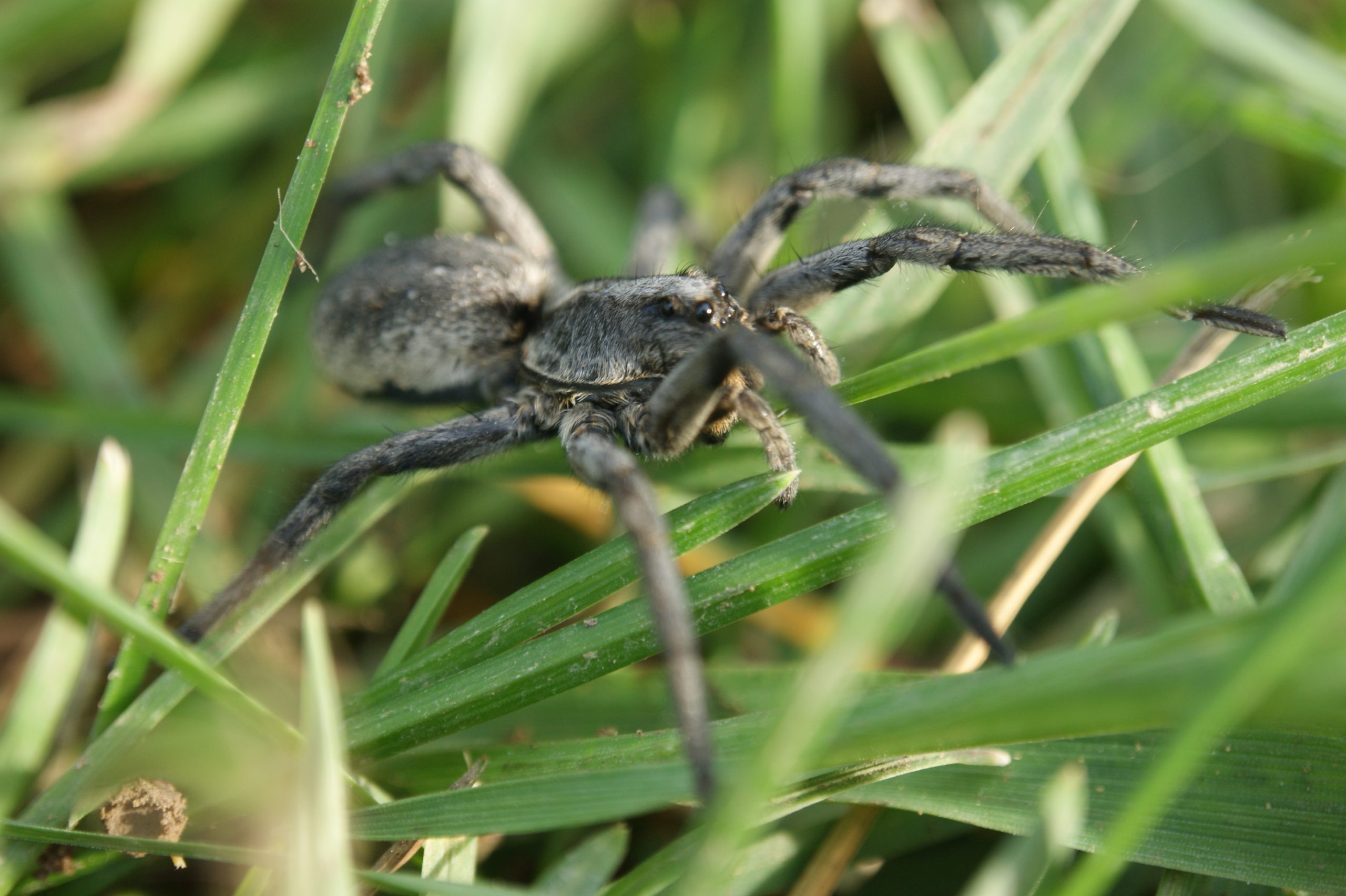
| Wolf spider | Brown or gray, with a hairy body and strong legs | Lawns, gardens, garages, and ground-level rooms |
| Fishing spider | Large, long-legged, often with contrasting brown or gray markings | Near ponds, drainage areas, trees, and damp outdoor spaces |
| Golden silk orb-weaver | Large females with long legs and golden-colored webs | Gardens, wooded yards, and between trees |
| Southern house spider | Brown, with relatively long legs; males can resemble brown recluses | Window frames, siding, garages, and wall openings |
Why Do Some Louisiana Spiders Look So Big?
A spider’s leg span can make it look much larger than its body actually is. Fishing spiders are particularly noticeable because their long legs spread out across walls, tree trunks, or other surfaces.
Wolf spiders often catch homeowners off guard for a different reason: speed. Rather than sitting in a large web, they run across the ground searching for prey. If one dashes behind your washing machine, it’s generally looking for cover rather than trying to approach you.
Are Huge Spiders in Louisiana Dangerous?
Most big spiders in Louisiana aren’t considered medically dangerous to humans. Wolf spiders, fishing spiders, and orb-weavers generally avoid contact with people, although they can bite when trapped or handled.
The spiders that deserve greater caution are black widows and brown recluses. They aren’t necessarily the biggest spiders in Louisiana, but their bites can cause more serious health problems.
Which Louisiana Spiders Should You Watch Out For?
Adult female black widows typically have glossy black bodies with a red hourglass marking underneath. Brown recluses are brown spiders with six eyes arranged in three pairs, but they can be difficult to distinguish from harmless look-alikes.
The Centers for Disease Control and Prevention (CDC) explains that black widow and brown recluse bites can cause significant symptoms, including severe pain or skin injury. If you suspect either species, keep children and pets away and avoid handling the spider.
Do Huge Spiders in Louisiana Bite?
Large spiders can bite, but most bites happen when a spider is accidentally pressed against someone’s skin. They don’t normally chase people to attack them.
For example, a spider hiding inside gardening gloves may bite when you put them on. Shaking out gloves, shoes, and clothing stored in garages or sheds helps reduce that risk.
A bite from a common hunting spider may cause temporary pain, redness, or swelling. However, unexplained skin irritation isn’t proof of a spider bite, since other insects and skin conditions can cause similar symptoms.
What to Do After a Spider Bite?
Wash the area with soap and water, apply a cool compress, and monitor your symptoms. If you suspect a black widow or brown recluse bite, seek medical advice promptly rather than waiting for symptoms to become severe.
| Symptoms | Recommended Action |
| Mild redness, itching, or discomfort | Clean the area, use a cool compress, and monitor symptoms |
| Increasing pain, swelling, or spreading redness | Contact a healthcare professional |
| Severe muscle cramps, significant abdominal pain, fever, or worsening skin damage | Seek prompt medical care |
| Trouble breathing, fainting, or swelling of the face or throat | Call 911 immediately |
These are general guidelines and don’t replace professional healthcare recommendations. Poison Control’s spider bite guidance offers further first-aid information. You can also call 1-800-222-1222 for advice.
If you can photograph the spider safely, the image may help with identification. Don’t risk another bite trying to catch it.
Why Are Huge Spiders Getting Into My Louisiana House?
Large spiders usually enter homes while searching for food, shelter, or a place to hide. Open garage doors, damaged screens, and gaps around pipes can give them access without you noticing.
In New Orleans, Houma, and Thibodaux, covered patios, garages, and outdoor storage areas provide sheltered spots for spiders. Insects gathering around exterior lights can also encourage hunting spiders to stay close to your home.
Where Do Large Spiders Hide Indoors?
Spiders often settle in places that don’t get disturbed regularly. Garages with stacked boxes, attics, storage closets, and spaces behind furniture can provide the cover they need.
Some spiders wander across bathroom floors or kitchen walls after entering through small openings. Seeing one doesn’t necessarily mean you have an infestation, especially if it disappears and you don’t notice further activity.
If spiders keep appearing in the same room, inspect the nearby windows, door seals, and utility openings. Clearing clutter also makes it easier to spot and remove hiding places.
What Do Huge Spiders in Louisiana Eat?
Most large spiders eat insects and other small arthropods, including crickets, beetles, moths, and flies. Their hunting methods depend on the species.
Wolf spiders chase insects along the ground, while orb-weavers catch flying insects in sticky webs. Fishing spiders hunt around water and can occasionally capture small fish or tadpoles.
Does Having More Insects Attract More Spiders?
Yes. An area with plenty of insects offers spiders a steady food supply, which can encourage them to stay nearby.
You might notice webs near porch lights because moths and other flying insects gather there after dark. Likewise, crickets or beetles around a garage can provide prey for wandering wolf spiders.
Spiders help control other arthropods outdoors, so there’s no need to eliminate every web in your yard. To discourage them near entrances, use warm-colored outdoor bulbs, turn off unnecessary lights, and address recurring insect problems.
How Can You Keep Huge Spiders Out of Your Home?
Spider prevention works best when you reduce entry points, remove sheltered hiding places, and limit the insects spiders feed on. Rather than relying on scented home remedies, focus on the areas where you’ve noticed activity.
For example, if you keep seeing wolf spiders near your garage, check the bottom door seal and the boxes stored along the walls. If webs keep appearing near your front door, look at the insects gathering around your porch light.
What Are the Best Ways to Prevent Spiders?
| Prevention Method | How It Helps |
| Seal cracks around doors and windows | Reduces openings that spiders can use to enter |
| Repair damaged screens | Keeps spiders and other insects outside |
| Reduce clutter in garages and closets | Removes hiding places |
| Store firewood away from the house | Keeps outdoor spider habitats farther from entrances |
| Trim vegetation touching siding | Reduces sheltered areas along exterior walls |
| Remove accessible webs | Clears unwanted webs and makes new activity easier to notice |
| Address recurring insect problems | Reduces available prey |
The University of Minnesota Extension recommends practical household management methods, including reducing clutter and sealing openings. These steps won’t keep every spider off your property. However, routine maintenance can make it harder for wandering spiders to move indoors and settle in undisturbed spaces.
When Should You Call Pest Control for Large Spiders?
Finding one harmless wolf spider doesn’t usually require professional treatment. Repeated indoor sightings, frequent webs around entrances, or difficulty identifying a suspected black widow or brown recluse are better reasons to request an inspection.
At LaJaunie’s Pest Control, technicians inspect likely problem areas, including foundations, windows, garages, and attics. They also remove accessible exterior webs and apply targeted treatments when appropriate.
Professional pest control can help reduce other insects that attract spiders to your property. This is especially useful when new spiders continue appearing after you’ve removed the ones you’ve already found.
Keep Huge Spiders Out of Your Louisiana Home
Most huge spiders in Louisiana aren’t dangerous, but finding them indoors can still be unpleasant. Recognizing common species, checking hiding places, and reducing insect activity can help you prevent unwanted encounters without treating every spider as a threat.
When large spiders keep returning, LaJaunie’s Pest Control can help identify what’s attracting them. Our trained technicians inspect problem areas, remove accessible webs, and provide targeted treatments through residential pest control services. Covered services also include a retreatment guarantee if the problem returns between scheduled visits. If you’re regularly finding large spiders around your garage, windows, or living spaces, contact LaJaunie’s Pest Control to schedule service and get a spider control plan suited to your Louisiana home.