




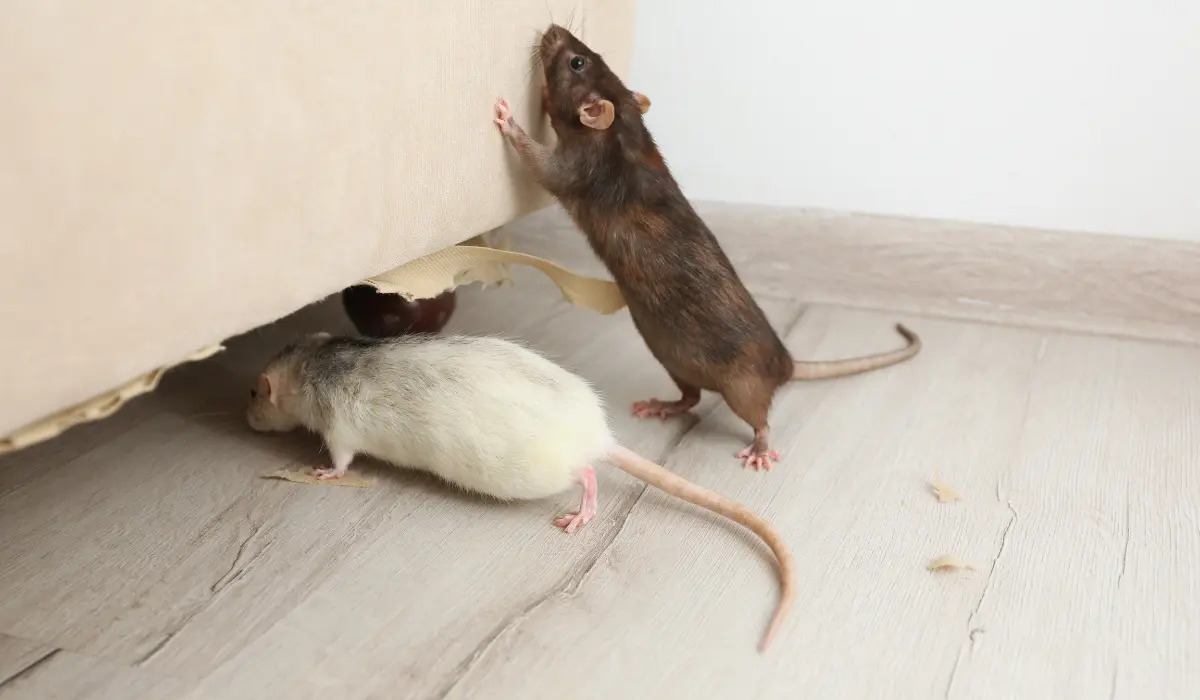
Rats are most active from dusk through the early morning, when lower light and fewer disturbances make it easier for them to search for food, water, and shelter. In Louisiana, that nighttime pattern can continue year-round because the state’s warm, humid climate and relatively mild winters do not create the same prolonged cold conditions found farther north. Roof rats are an important concern in the Gulf South because their climbing ability gives them access to rooflines, attics, trees, and elevated openings, while Norway rats tend to stay closer to the ground. If you hear scratching after dark, find fresh droppings in the morning, or see a rat during daylight hours, the timing can provide useful clues about where rats are active and how established the problem may be.
Key Takeaways
- Rats are usually most active from dusk through early morning, with much of their feeding and movement taking place while people are asleep.
- Rats remain active throughout the year in Louisiana, although weather, food, water, and shelter can change where and when you notice them.
- A daytime rat sighting does not automatically prove a large infestation, but repeated daytime activity should prompt a closer inspection for entry points, droppings, nesting evidence, and food sources.
When Are Rats Most Active?
Rats are primarily nocturnal, so the hours after sunset and before sunrise are when homeowners are most likely to hear or notice activity. They use darker, quieter periods to leave nesting areas, search for food and water, and travel along familiar routes.
The exact schedule is not fixed. Rats adjust their behavior around human activity, available food, competition, weather, and the location of their shelter. A rat living in an attic may follow a different routine from one nesting outdoors near garbage, dense vegetation, or ground-level structures.
Dusk to Early Night
Rats often begin moving as daylight fades. This is when they may leave nests and begin traveling toward food or water sources.
Inside a home, the first clue may be scratching or movement in an attic, wall void, crawl space, or garage after the household becomes quieter. Outdoors, rats may move along fences, landscaping, rooflines, or other protected routes.
Roof rats are especially adapted to climbing. They can use elevated routes to reach roof areas and attic openings, which is one reason LaJaunie’s rodent inspections pay close attention to roof vents, fascia, soffits, and other exterior access points.
Late Evening to Early Morning
Late evening through the early morning is typically the busiest period for rats. Human activity has dropped, rooms are darker, and rats can forage with fewer interruptions.
Accessible pet food, garbage, pantry items, stored bird seed, or food debris can draw rats toward kitchens, garages, storage areas, and other parts of the property. Water can also influence movement, especially when rats have access to leaking fixtures, condensation, outdoor containers, or other moisture sources.
This is also when rats may leave fresh evidence behind. Droppings, gnawing, disturbed food packaging, greasy rub marks, and attic noises found the next morning may all reflect overnight activity.
Early Morning
As daylight returns and activity around the home increases, rats usually move back toward sheltered nesting or resting areas. That may include attics, wall voids, crawl spaces, garages, storage areas, or outdoor burrows depending on the rat species and property.
Early morning can be a useful time to look for new evidence without disturbing potential hiding areas. Fresh droppings, newly damaged packaging, displaced insulation, or recent gnawing can help show where rats traveled overnight.
LaJaunie’s inspectors use this type of evidence to help trace rodent movement. In attics, technicians look for running trails, droppings, nests, chewing damage, and other signs that may lead back toward an entry point.
Daytime
Rats can come out during the day even though they are mainly nocturnal. A daytime sighting can happen when a rat is disturbed, when food is available during daylight hours, or when its normal schedule has shifted.
One rat seen during the day does not automatically tell you how many rats are present. However, frequent daytime sightings, rats appearing in occupied rooms, or daytime activity combined with droppings, nesting material, gnawing, or repeated noises deserves attention.
The location also matters. A rat crossing a yard is different from one repeatedly appearing inside a kitchen, attic, garage, or living area.
Roof Rats and Norway Rats Follow Different Routes
The time of day may be similar, but roof rats and Norway rats often use different parts of a property. Understanding those patterns can help Louisiana homeowners know where to look for evidence.
Roof rats are strong climbers and commonly use elevated travel routes. Trees, fences, roof edges, utility pathways, soffits, and attic openings can all provide access around a structure.
Norway rats are heavier-bodied and generally spend more time near ground level. They may use burrows, lower openings, foundations, storage areas, or places where food and shelter are readily available. Knowing the differences between roof rats and Norway rats can help homeowners understand why activity may be concentrated in an attic, along a roofline, or closer to the ground.
LaJaunie’s service information notes that rats often enter homes from the exterior and frequently gain access from roof areas. That is why identifying and closing exterior entry points is a central part of professional rodent control rather than relying only on traps indoors.
How Louisiana Seasons Affect Rat Activity
Rats do not disappear during one part of the year in Louisiana. Their basic nighttime behavior remains, but temperature, rain, food availability, and shelter can affect where homeowners notice them.
Louisiana’s hot, humid summers and mild winters also differ from colder parts of the country. Rather than becoming inactive for a long winter season, rats can continue searching for food and shelter throughout the year.
Spring
Spring can bring changes in food availability, vegetation, and outdoor conditions. Rats that have been sheltering around structures may continue moving between indoor and outdoor areas as temperatures remain comfortable.
This is a useful time to inspect the exterior for openings before activity becomes harder to track behind vegetation. Roof edges, vents, utility openings, gaps around the structure, and crawl-space access points deserve attention.
Summer
Louisiana summers are hot and humid. Rats still remain active, but heat and access to water can influence where they spend time.
Shade, attics, crawl spaces, garages, and other protected areas can provide shelter from daytime heat. Because rats are already most active after dark, homeowners may notice little during the hottest part of the day even when activity continues overnight.
Keep food and garbage secured and address accessible water sources. Outdoor pet bowls, leaking fixtures, and other water sources can become part of a rat’s regular route.
Fall
Fall is a good time to check a home for rodent access because changes in weather and available food can push rats to investigate sheltered areas.
Inspect rooflines, vents, garage doors, foundations, and other openings before cooler nights arrive. Rats can use surprisingly small structural gaps, and an opening that seems minor may lead into an attic, wall void, or crawl space.
Winter
Louisiana winters are milder than those in much of the country, so rats can remain active rather than disappearing for the season. Cooler weather can still make protected indoor spaces more attractive.
Attics, wall voids, garages, crawl spaces, and storage areas offer shelter while keeping rats close to food and water. Scratching noises during cooler nights may be one of the first signs that rodents have moved into the structure.
What Rat Activity Looks Like Inside a Louisiana Home
The time rats move is only one part of identifying a problem. The evidence they leave behind often tells you more about where they are traveling and nesting.
LaJaunie’s technicians look for several types of evidence during rodent inspections:
- Droppings in attics, cabinets, garages, storage spaces, or along travel routes
- Gnawing on cardboard, bags, stored belongings, building materials, or other accessible items
- Discolored running trails caused by repeated rodent movement
- Nesting material or damaged stored items
- Noises in attics, ceilings, walls, or crawl spaces
- Exterior openings around roof vents, fascia, soffits, foundations, and utility penetrations
Some of those signs can also overlap with mouse activity, so understanding the differences between rats and mice can help narrow down which rodent is responsible before a control plan is chosen.
Technicians also check attic areas for signs that may reveal entry and exit routes that were not obvious during the exterior inspection. This can help connect activity inside the home with the opening rats are using outside.
What to Do if You See a Rat During the Day
A daytime rat sighting deserves a closer look, but there is no need to assume automatically that the home is overrun. Focus first on whether the sighting is isolated or part of a larger pattern.
Take these steps:
- Note where the rat appeared and where it went. An attic, kitchen, garage, yard, or roofline can point toward different travel routes.
- Look for droppings, gnaw marks, damaged food packaging, nesting material, or rub marks in the surrounding area.
- Secure pet food, pantry goods, bird seed, and garbage so rats have fewer easy food sources.
- Check for exterior openings around doors, vents, rooflines, utility penetrations, foundations, and garages.
- Pay attention after dark for scratching, scurrying, or repeated movement in walls and ceilings.
- Arrange an inspection if daytime sightings continue or if you find additional evidence indoors.
Avoid relying on a single trap while leaving the entry route open. Rats entering from outdoors can continue replacing the animals removed indoors if the access point is never found and sealed.
How LaJaunie’s Technicians Inspect for Rat Activity
LaJaunie’s rodent process begins by determining whether the problem can be handled through regular rodent service or whether a more detailed inspection and exclusion plan is needed. For more complex situations, a state-certified inspector examines the property and documents the areas that need to be sealed, repaired, or addressed.
The exterior inspection looks for access points around the structure. In the attic, technicians check for running trails, chewing damage, droppings, nesting evidence, and signs that may reveal where rodents are entering and leaving.
Those findings guide the next step. Depending on the property, rodent control may include exclusion work, strategically placed bait stations, snap traps, interior monitoring, or other measures suited to the infestation. LaJaunie’s documents problem areas and uses the evidence found during the inspection to determine placement rather than treating every property the same way.
How to Reduce Rat Activity Around Your Home
Reducing food and shelter can make your property less attractive to rats, but prevention also requires attention to access points. Rats often enter from outside, including through roof-related openings.
Keep food in closed containers, secure garbage, avoid leaving pet food out overnight, and clean up spills or crumbs. Outdoors, remove unnecessary clutter and keep stored materials organized so you can spot droppings or gnawing more easily.
Inspect doors, vents, roof edges, utility openings, foundations, and other gaps periodically. If you are considering home remedies instead of fixing the source of the infestation, LaJaunie’s discussion of the risks and limitations of DIY pest control explains why identifying the pest and entry route should come first.
When Professional Rat Control Makes Sense
Professional rodent control makes sense when rats are repeatedly seen indoors, you hear ongoing attic or wall activity, find fresh droppings or gnawing, or cannot determine how they are entering the structure.
An inspection is especially useful when rats appear to be using the roof or attic. LaJaunie’s service information notes that technicians frequently need to identify roof vents and other exterior entry points before the structure can be effectively rodent-proofed.
Because every house has a different layout and set of access points, the best solution depends on what the inspection finds rather than the hour when the rat happened to appear. LaJaunie’s rat control services can address active rodent problems through inspection, exclusion, trapping, and other measures based on the conditions found at the property.
Managing Rat Activity in Your Louisiana Home
Rats are most active after dark, especially from dusk through the early morning, but they can appear at any hour when food, shelter, disturbance, or other conditions change their routine. In Louisiana, their activity can continue throughout the year, so fresh droppings, gnawing, attic noises, or repeated daytime sightings are more useful warning signs than the season alone.
LaJaunie’s Pest Control provides rodent inspection, exclusion, trapping, and prevention services throughout Southeast Louisiana. If you are hearing rats at night, seeing them during the day, or finding signs of activity around your home, contact LaJaunie’s to have the property inspected and identify how the rodents are getting inside.
Frequently Asked Questions
What Time of Day Are Rats Most Active?
Rats are generally most active from dusk through the early morning. They use the darker, quieter hours to search for food, water, and shelter. Their exact schedule can shift depending on human activity, available food, weather, competition, and where they are nesting.
Do Rats Come Out During the Day?
Yes. Rats can appear during daylight hours even though they are primarily nocturnal. A rat may be disturbed from its hiding place or adjust its schedule around food and human activity. Repeated daytime sightings, especially indoors, are a good reason to check for other signs of an infestation.
Does Seeing a Rat During the Day Mean You Have an Infestation?
Not necessarily. One daytime sighting does not tell you how many rats are present. Concern increases when you see rats repeatedly or also find droppings, gnaw marks, nesting material, rub marks, or ongoing noises in walls, ceilings, crawl spaces, or attics.
Are Rats Active in Louisiana During Winter?
Yes. Rats remain active throughout Louisiana winters. Cooler weather may change where they shelter, and protected spaces such as attics, garages, crawl spaces, and wall voids can become more attractive when outdoor temperatures drop.
Are Roof Rats Active at Night?
Yes. Roof rats are primarily nocturnal and commonly move after dark. Because they are strong climbers, homeowners may hear activity in attics or notice evidence around rooflines, trees, elevated openings, and other routes that allow them to reach the upper parts of a structure.