



A dark brown insect runs across the floor, disappears under an appliance, and leaves you wondering whether you saw a cockroach or a beetle.
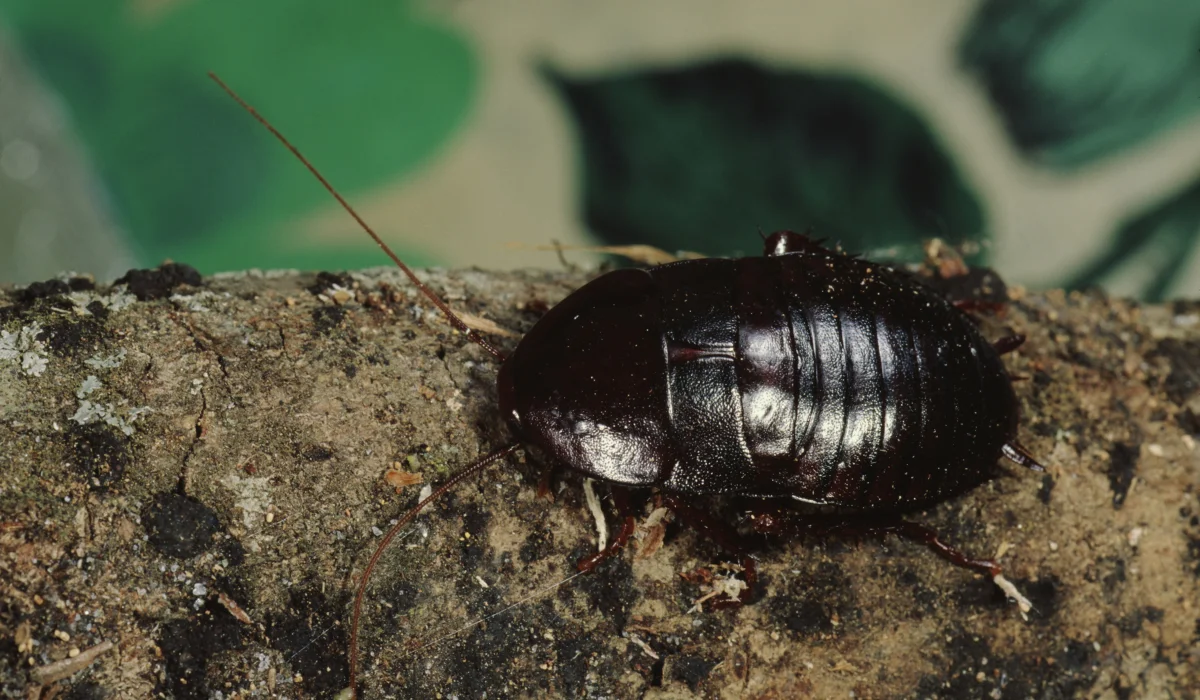
For a quick cockroach and beetle comparison, start with body structure. Cockroaches usually have flattened, oval bodies, long threadlike antennae, and spiny legs. Adult beetles have hardened front wings called elytra, which form protective covers over the flight wings underneath. Beetles vary much more in size, color, antenna shape, and behavior, so details such as “short antennae” or “slow movement” are not reliable by themselves.
For Louisiana homeowners, where you find the insect can be just as helpful as what it looks like.
Cockroach vs. Beetle: The Main Differences
Cockroaches and beetles belong to different insect groups. Cockroaches are members of the order Blattodea, while beetles belong to Coleoptera. Louisiana is home to numerous cockroach species as well as many different beetle groups.
Quick Cockroach vs. Beetle Comparison
| Feature | Cockroach | Beetle |
|---|---|---|
| Body shape | Usually broad, oval, and flattened | Highly variable; may be round, oval, elongated, or flattened |
| Antennae | Usually long, slender, and threadlike | Length and shape vary widely by species |
| Legs | Long running legs with noticeable spines | Vary by species and lifestyle |
| Front wings | May be leathery or reduced depending on species and life stage | Hardened front wings called elytra |
| Head | Often partly concealed beneath the pronotum when viewed from above | Usually more visibly separated from the thorax |
| Movement | Many household species run quickly | Varies widely; some run, crawl, or fly |
| Common indoor clues | Droppings, egg cases, nymphs, repeated kitchen or bathroom sightings | Food damage, fabric damage, wood holes, larvae, or occasional wandering adults |
| Best identification clue | Flattened body combined with long antennae and spiny legs | Hardened wing covers combined with species-specific location and damage |
The comparison gives you a starting point, but no single feature should be used by itself.
Look At The Shape Of The Body
Most household cockroaches have a broad, flattened body that lets them move into narrow cracks and crevices.
Viewed from above, the head of a cockroach may be partly hidden beneath the shield-like pronotum directly behind it. Their six legs are generally long and equipped with noticeable spines.
Beetles vary far more. Some are round, some elongated, some flattened, and some can look surprisingly similar to a cockroach at first glance.
That variability is why body shape alone should not be your only test.
Check The Wings
The wings often provide one of the better clues.
Adult beetles have hardened front wings called elytra. These wing covers protect the more delicate hind wings beneath them.
Cockroach wings are different. Depending on the species and life stage, a cockroach may have full-length wings, shortened wings, or no developed wings yet. Young cockroaches, called nymphs, are wingless.
If the insect has two rigid shell-like wing covers over its back, a beetle becomes more likely.
Look At The Antennae And Legs
Cockroaches usually have long, slender antennae that may be about as long as the body or longer. Their legs are also conspicuously spiny and built for running.
Antennae are less useful for identifying an unknown beetle because beetle antennae come in many forms. Depending on the family, they may be short, long, clubbed, threadlike, elbowed, or otherwise specialized.
So if you see long antennae, do not automatically assume the insect cannot be a beetle.
Watch How The Insect Moves
Cockroaches are known for rapid running and often retreat quickly into cracks or underneath objects when disturbed.
Movement can help support an identification, but it should not decide it. Some beetles can also run quickly, while others fly, crawl slowly, or remain relatively still.
Use behavior together with body structure and location.
Where Did You Find It?
The room or material where you found the insect can narrow the possibilities considerably.
Location Clues Inside A Louisiana Home
| Where You Found It | Possible Pest | What To Look For |
|---|---|---|
| Kitchen cabinets or behind appliances | Cockroach | Nymphs, droppings, egg cases, nighttime activity |
| Sink, bathroom, or plumbing area | Cockroach | Repeated activity near moisture and sheltered cracks |
| Flour, cereal, spices, or pet food | Pantry beetle | Small beetles or larvae inside packaged dry goods |
| Closet, rug, or stored fabric | Carpet beetle | Larvae, shed skins, or damage to susceptible materials |
| Wooden trim, flooring, or furniture | Wood-infesting beetle | Small exit holes or fine powder near wood |
| Window or door | Outdoor beetle or other occasional invader | One or a few adults with no other infestation evidence |
| Several rooms with repeated sightings | Cockroach or established beetle problem | Multiple insects, life stages, or signs of feeding and reproduction |
The location does not confirm the species, but it can help rule possibilities in or out.
Kitchens And Bathrooms
Cockroaches commonly seek food, water, warmth, and sheltered cracks. Depending on the species, homeowners may find them around:
- refrigerators
- stoves
- cabinets
- sinks
- plumbing penetrations
- bathrooms
- utility areas
- drains
- wall voids
German cockroaches are especially associated with indoor structures, while American cockroaches are commonly associated with sewer and drainage environments in Louisiana.
For a closer look at locally encountered species, LaJaunie’s has a separate guide to Louisiana cockroaches.
Pantries
If tiny insects are appearing in flour, cereal, spices, pet food, grains, or other dry goods, you may be dealing with a stored-product beetle rather than a cockroach.
Several beetles can become stored-product pests, including sawtoothed grain beetles, cigarette beetles, drugstore beetles, red flour beetles, and confused flour beetles.
In this situation, identifying and removing the infested food source matters more than simply treating whatever adult insect you happen to see.
Closets, Rugs, And Stored Fabrics
Carpet beetles and related dermestid beetles can infest materials derived from animals, including certain fabrics and stored items.
The damaging stage is commonly the larva rather than the adult beetle. Shed larval skins or irregular damage to susceptible material can therefore be more informative than finding one adult beetle near a window.
Wood
Small holes and fine powder associated with wood can point toward a wood-infesting beetle.
Southern lyctus beetles and other powderpost beetles can be structural concerns in Louisiana. That is a very different problem from a cockroach infestation and requires a different inspection.
Signs That Point Toward Cockroaches
Seeing the insect itself is only one clue.
An active cockroach problem may also involve:
- cockroach nymphs
- egg cases, called oothecae
- droppings in harborages
- repeated nighttime sightings
- activity behind or underneath appliances
- insects disappearing into cracks or cabinet voids
German cockroaches can become established indoors and move between food areas and less sanitary locations, which is one reason accurate identification and control matter.
Finding one unfamiliar outdoor cockroach that wandered inside is also different from finding multiple German cockroaches of different life stages in a kitchen.
Are Beetles Or Cockroaches More Serious?
There is no useful answer without identifying the species.
Cockroaches such as the German cockroach can become persistent indoor pests and may contaminate food or surfaces. Cockroach allergens can also be a concern for susceptible people.
Many beetles that wander indoors are nuisance insects and do not establish an infestation.
Other beetles can cause specific types of property damage:
- carpet beetle larvae may damage susceptible fabrics and stored materials
- pantry beetles may infest dry food products
- powderpost beetles may damage wood
So the question is less about whether “beetles” or “cockroaches” are worse and more about which insect is present and what it is doing inside the property.
What To Do If You Cannot Tell The Difference
Avoid choosing a treatment based only on color or size.
Integrated pest management starts with identifying and monitoring the pest so control decisions are based on the organism involved rather than targeting the wrong insect.
If possible:
- Take a clear photo from above and from the side.
- Note exactly where the insect was found.
- Check whether you are finding adults, larvae, nymphs, shed skins, droppings, damaged food, damaged fabric, or damaged wood.
- If safe to do so, keep a specimen in a sealed container for identification.
How To Reduce Cockroach And Beetle Problems
Because “beetle” can describe many different household pests, there is no single treatment plan that works equally well for every insect.
A few prevention steps are broadly useful.
Keep Food Properly Stored
Store dry goods in sealed containers and clean spilled food from pantry shelves.
This is particularly important for stored-product beetles.
For cockroaches, clean food residue from counters, appliances, cabinets, and other feeding areas.
Address Moisture
Repair leaking plumbing and reduce persistent moisture around kitchens, bathrooms, laundry areas, and utility spaces.
Moisture does not prove that an insect is a cockroach, but water availability can support several common cockroach species.
Reduce Hiding Places
Clutter can make inspection and monitoring difficult.
Pay particular attention to:
- cardboard
- paper bags
- crowded cabinets
- storage boxes
- spaces behind appliances
- materials stored directly against walls
Seal Exterior Openings
Check gaps around plumbing, doors, windows, utility penetrations, and other exterior openings.
Exclusion can help reduce occasional invaders and some cockroaches that enter structures from outdoors.
Identify The Source Before Treating
A pantry beetle developing inside a bag of dry food, carpet beetle larvae feeding on stored material, and cockroaches harboring behind kitchen cabinets require different responses.
Treating before identifying the source can waste time and leave the actual infestation untouched.
Which Signs Require Which Response?
| What You Notice | What It May Indicate | Practical Next Step |
|---|---|---|
| One beetle near a window | Outdoor beetle that wandered inside | Monitor for additional activity before assuming an infestation |
| Multiple cockroaches in a kitchen | Possible established cockroach population | Inspect food, moisture, and harborages; consider professional identification |
| Small beetles inside packaged food | Stored-product pest | Locate and remove the infested product and inspect nearby dry goods |
| Larvae or shed skins around fabrics | Possible carpet beetles | Inspect susceptible fabrics and identify the source |
| Small holes or powder around wood | Possible wood-infesting beetle | Arrange an inspection to determine the insect and extent of damage |
| Cockroach nymphs or egg cases | Evidence of reproduction indoors | Address the infestation rather than treating it as an occasional invader |
| Repeated insects you cannot identify | Uncertain pest problem | Photograph or collect a specimen and get an accurate identification |
The appropriate response depends on the evidence. Accurate identification keeps a pantry pest, fabric pest, wood-destroying beetle, and cockroach infestation from being treated as though they are the same problem.
When Professional Pest Control Makes Sense
Consider a professional inspection when you are repeatedly seeing cockroaches, finding multiple life stages, discovering unidentified larvae or beetles in several rooms, or noticing damage to stored food, fabrics, or wood.
LaJaunie’s offers dedicated cockroach control in Louisiana for established roach problems. Its cockroach service includes inspection and targeted interior and exterior treatment options based on the infestation.
The company also provides beetle control for several types of beetle problems. The appropriate approach depends on which type of beetle is present and where the activity is occurring.
The benefit of starting with identification is simple: the treatment can be matched to the pest instead of guessing based on appearance alone.
Need Help Identifying A Cockroach Or Beetle?
A single photo may give you a clue, but the insect’s body structure, life stage, location, and surrounding evidence usually tell the fuller story.
If cockroaches or beetles continue appearing inside your Louisiana home, contact LaJaunie’s Pest Control to request service or ask about an inspection.
Frequently Asked Questions
What Is The Easiest Way To Tell A Cockroach From A Beetle?
Look at several features together. Cockroaches are usually flattened, with long threadlike antennae and spiny running legs. Adult beetles generally have hardened front wing covers called elytra. Because beetles vary widely, do not rely on color, speed, or antenna length alone.
Can A Beetle Look Like A Cockroach?
Yes. Some dark, oval, or elongated beetles can resemble cockroaches at a quick glance. Ground beetles are one example that homeowners may mistake for cockroaches.
Do Cockroaches Have A Hard Shell?
Cockroaches are insects and have an exoskeleton, but they do not have beetle-style hardened wing covers. Adult beetles are distinguished by their modified front wings, or elytra.