



A week of rain can change a South Louisiana yard fast. Mulch stays wet, flowerpots hold moisture underneath, and shaded soil may still feel damp after the driveway has dried. Those conditions can also make crazy ants in Louisiana much easier to notice around your home.
Crazy ants are small, quick, and difficult to follow. Instead of moving in a narrow line, worker ants scatter across patios, foundations, tree trunks, landscaping, and utility areas. A few outdoor ants are normal. A large number moving through several parts of the property can point to a much bigger colony nearby.
Humidity does not create an infestation on its own. The bigger issue is what humid weather does to your property. Moist soil, dense landscaping, food sources, standing water, and sheltered spaces can give ants plenty of places to feed, nest, and move closer to the house.
Why Crazy Ants in Louisiana Thrive Around Humid Properties
Louisiana gives ants a long warm season and regular access to moisture. The NOAA Louisiana State Climate Summary describes the state as having a humid subtropical climate with hot summers, mild winters, and precipitation throughout the year. For homeowners, that means parts of the yard can stay damp even when the surface looks dry.
Think about the places rainwater lingers. Mulch under shrubs may remain wet for hours. Leaves pile up along fences and foundations. A leaking hose connection can soak one small patch of soil day after day, while a downspout may send water into the same flower bed every time it rains.
Where Moisture Builds Up Around the Home
Crazy ant activity often becomes more noticeable in areas that stay shaded or protected. Those places give ant colonies cover from direct sun and create easier access to water.
| Property Condition | Why It Can Support Ant Activity |
| Damp mulch | Holds moisture and creates protected space near the soil |
| Leaf litter | Covers the ground and slows drying |
| Thick shrubs | Create shade and protected travel areas |
| Leaking outdoor faucets | Keep nearby soil consistently damp |
| Poor drainage | Leaves sections of the yard wet after rainfall |
| Flowerpots | Provide covered soil and sheltered edges |
| Boards or stored materials | Create dark spaces underneath |
| Foundation gaps | Give ants a route toward indoor areas |
Heavy rain can also change where you see ants. When a shallow nest becomes saturated, workers may show up around garages, covered patios, wall gaps, or other drier areas. The colony may not be new. The weather may simply have shifted its activity toward parts of the property you use more often.
How to Identify Crazy Ants Around Your Louisiana Home
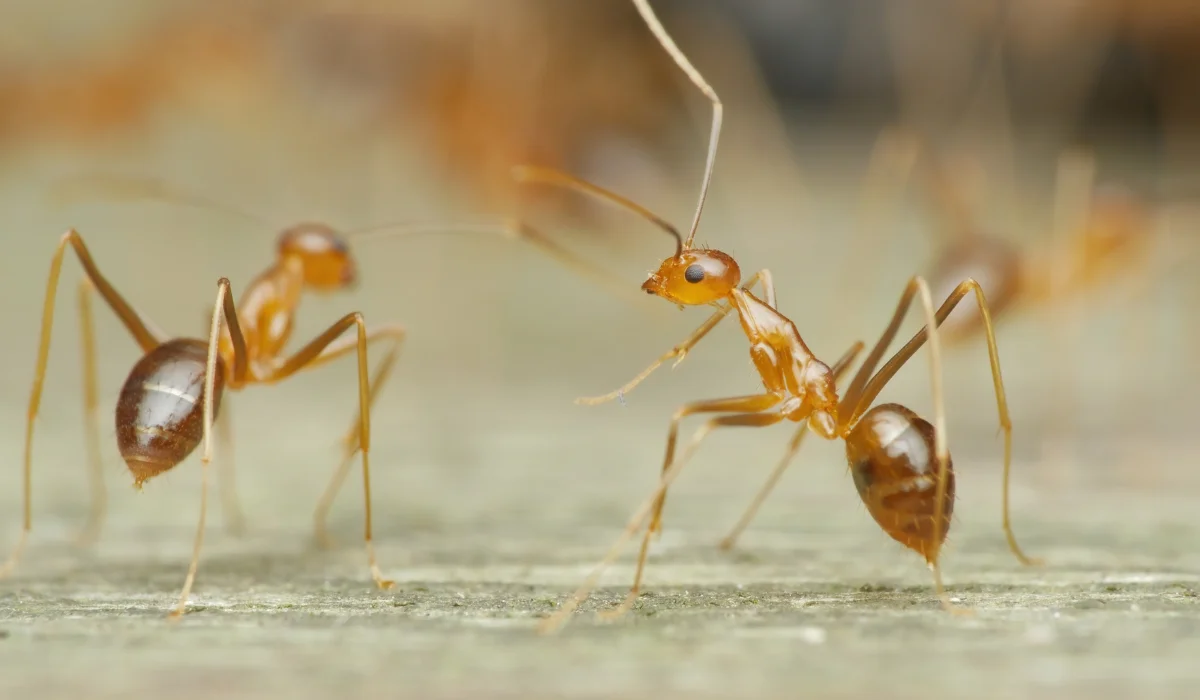
Correct identification matters because several Louisiana ant species can look similar from standing height. Crazy ants are generally about 1/8 inch long, with yellowish-brown to reddish-brown coloring. Their legs and antennae look relatively long for their body size.
Movement offers one of the better clues. Crazy ants tend to run quickly and change direction often instead of maintaining the narrow, orderly ant trails many homeowners expect. The University of Texas at Austin also notes that these invasive ants can develop large populations and form colonies with multiple queens.
Crazy Ants Compared With Other Louisiana Ant Species
Fire ants often lead you back to a recognizable mound in the soil. Carpenter ants are much larger and use different nesting areas. Crazy ants can be harder to trace because their workers may spread through landscaping, debris, and protected objects without one mound explaining all the activity.
| Feature | Crazy Ants |
| Worker size | About 1/8 inch long |
| Color | Yellowish brown to reddish brown |
| Movement | Fast and irregular |
| Ant trails | Broad and less orderly than many common species |
| Colony structure | May contain multiple queens |
| Visible activity | Large numbers can move across landscaping and structures |
If you are unsure which ant species you have, avoid choosing a treatment based on color alone. Professional ant control starts with identification because colony structure, nesting habits, and food preferences influence what works.
Where Crazy Ant Colonies Hide and Feed
A crazy ant infestation may cover more ground than you expect. Instead of depending on one obvious ant nest, colonies can use protected spaces scattered around the yard. Flowerpots, landscape timbers, boards, stones, fallen limbs, loose bark, garden materials, and outdoor equipment can all provide shelter.
Landscaping Can Provide Food Sources
Worker ants do not stay close to the ground. They may travel up shrubs, tree trunks, exterior walls, and fences while searching for food. Some plant-feeding insects, including aphids and scale insects, produce a sugary liquid called honeydew that ants can feed on.
If ants repeatedly move up the same tree or shrub, the main nest may not be there at all. The workers may simply be following a reliable food source. That is one reason crazy ant control often involves inspecting more than the place where you first saw the ants.
Signs You May Have a Crazy Ant Infestation
A handful of ants outdoors does not automatically mean you have a serious problem. Repeated activity across several parts of the property tells you more. Check flower beds, the foundation, stored items, trash areas, utility locations, and places where plumbing or wiring enters the home.
Watch what happens after you disturb an area. If large numbers return quickly, or workers keep entering the same opening, an established population may be using nearby shelter. Ants appearing indoors in several rooms can also point to exterior activity that has expanded toward the structure.
| What You Notice | What It May Suggest |
| Large numbers of fast-moving ants | A sizable population may be established nearby |
| Activity in several areas | Ants may be using multiple nesting or feeding sites |
| Workers entering the same gap | The opening may be part of a regular route indoors |
| Ants underneath pots or stored items | A protected nesting area may be nearby |
| Heavy activity near moisture | Water and shelter may be supporting the population |
| Ants return after an area is disturbed | The larger colony may still be active nearby |
Crazy ants have also been documented around electrical equipment and utility areas. That does not mean they should simply be described as attracted to electricity. If large numbers are moving into an electrical box, HVAC component, or similar equipment, avoid taking it apart yourself and have the activity inspected.
How to Reduce Crazy Ant Activity Around Your Property
The best time to spot moisture problems is after a hard rain. Walk the property while wet areas are still easy to see. Check whether water collects beside the foundation, underneath downspouts, around outdoor faucets, or in low sections of the yard.
Fix leaking hoses or faucets, keep gutters clear, and correct drainage where water repeatedly collects. Deep, wet mulch should not stay piled against the foundation. That kind of protected area gives ants moisture, cover, and easy access to cracks or crevices along the structure.
Remove Shelter and Close Entry Points
Clear leaf piles, unused boards, bags, containers, and other materials sitting directly on damp ground. Move flowerpots occasionally and check underneath them for worker ants or nesting activity. Trim shrubs that press against the house so more sunlight and airflow can reach the ground.
Inside, store food in closed containers and clean spills promptly. Check doors, windows, pipes, utility penetrations, and other access points for gaps. These steps can make your property less useful to ants, but they may not eliminate a large colony that already occupies several ant nests around the yard.
When Crazy Ants in Louisiana Need Professional Control
Established crazy ants in Louisiana can be difficult to manage because the workers you see may represent only a small portion of the population. Colonies can use several protected locations and may contain multiple queens. Treating one visible group of ants may reduce activity in that spot without reaching the rest of the colony.
Professional crazy ant control becomes more useful when ants are active across several areas, keep entering the home, appear around utility equipment, or return after you correct obvious moisture and shelter problems. A full inspection can also distinguish crazy ants from fire ants, carpenter ants, and other ants in Louisiana that require a different approach.
LaJaunie’s Pest Control includes ants in its residential pest-control program. Its documented service process covers the exterior base of the home, windows, doors, garages, cracks, crevices, access points, and shrubs and trees close to the structure. That wider inspection is useful when the ants visible on a patio or kitchen floor are only one part of a larger outdoor population.
If crazy ants in Louisiana keep returning around your yard or making their way indoors, contact LaJaunie’s Pest Control to schedule service. LaJaunie’s serves homeowners in Thibodaux, Houma, New Orleans, and communities across Southeast Louisiana.