



Flies in Louisiana can become hard to ignore once warm weather settles in. You may notice a few around the patio after dinner, then find more near the kitchen trash, sink, or back door the next day. In South Louisiana, fly season often feels long because warm conditions give many common flies more time to feed, reproduce, and move between outdoor areas and the house.
The useful question isn’t simply how to get rid of flies. You first need to know which fly you are dealing with and where it is coming from. House flies, fruit flies, drain flies, and blow flies all show up around Louisiana homes, but their breeding sites are different.
That distinction saves time. A fly problem near a bathroom drain calls for a different inspection than flies gathering around garbage cans or a fruit bowl. Once you know what the activity points to, fly control becomes much more focused.
Why Flies in Louisiana Become More Active in Warm Weather
Warm temperatures speed up development for many flies in Louisiana. House flies are a good example because they can move through their life cycle quickly when food, moisture, and suitable breeding material are available.
According to the University of Florida IFAS, house flies can complete their life cycle in about seven to 10 days under favorable warm conditions. A female commonly lays around 75 to 150 eggs in a batch and may produce five or six batches during her life.
That helps explain why a small source can turn into a noticeable fly infestation in a short time. Moist food waste, a dirty outdoor trash container, or animal waste near the house may support developing flies for days before adults begin showing up around doors and windows.
| House Fly Biology | Typical Figure |
| Eggs per batch | About 75 to 150 |
| Egg batches per female | Often 5 to 6 |
| Life cycle in favorable warm conditions | About 7 to 10 days |
| Common breeding material | Moist, decaying organic matter |
Fly season in Louisiana also overlaps with months when people spend more time moving between patios, garages, outdoor kitchens, and air-conditioned rooms. That creates plenty of chances for outdoor flies to get close to the house and enter through an open door or damaged screen.
Common Flies in Louisiana Homes
Common flies in Louisiana don’t all behave alike. You can often narrow down the problem by looking at the fly’s size, where it rests, and what it gathers around.
House Flies
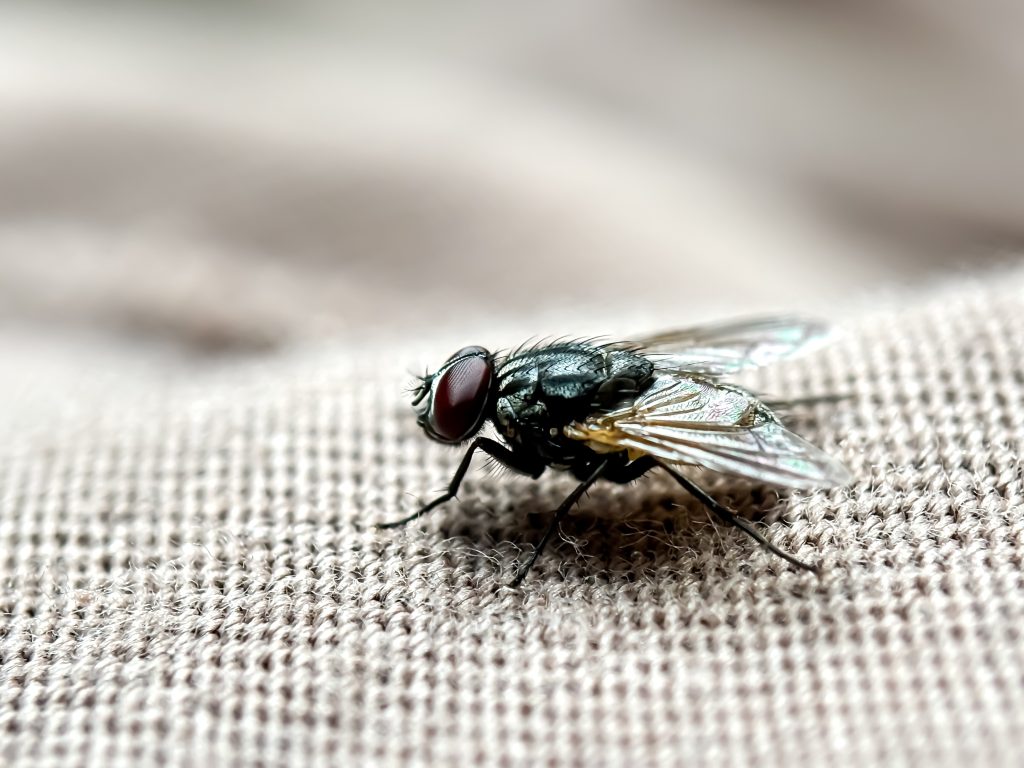
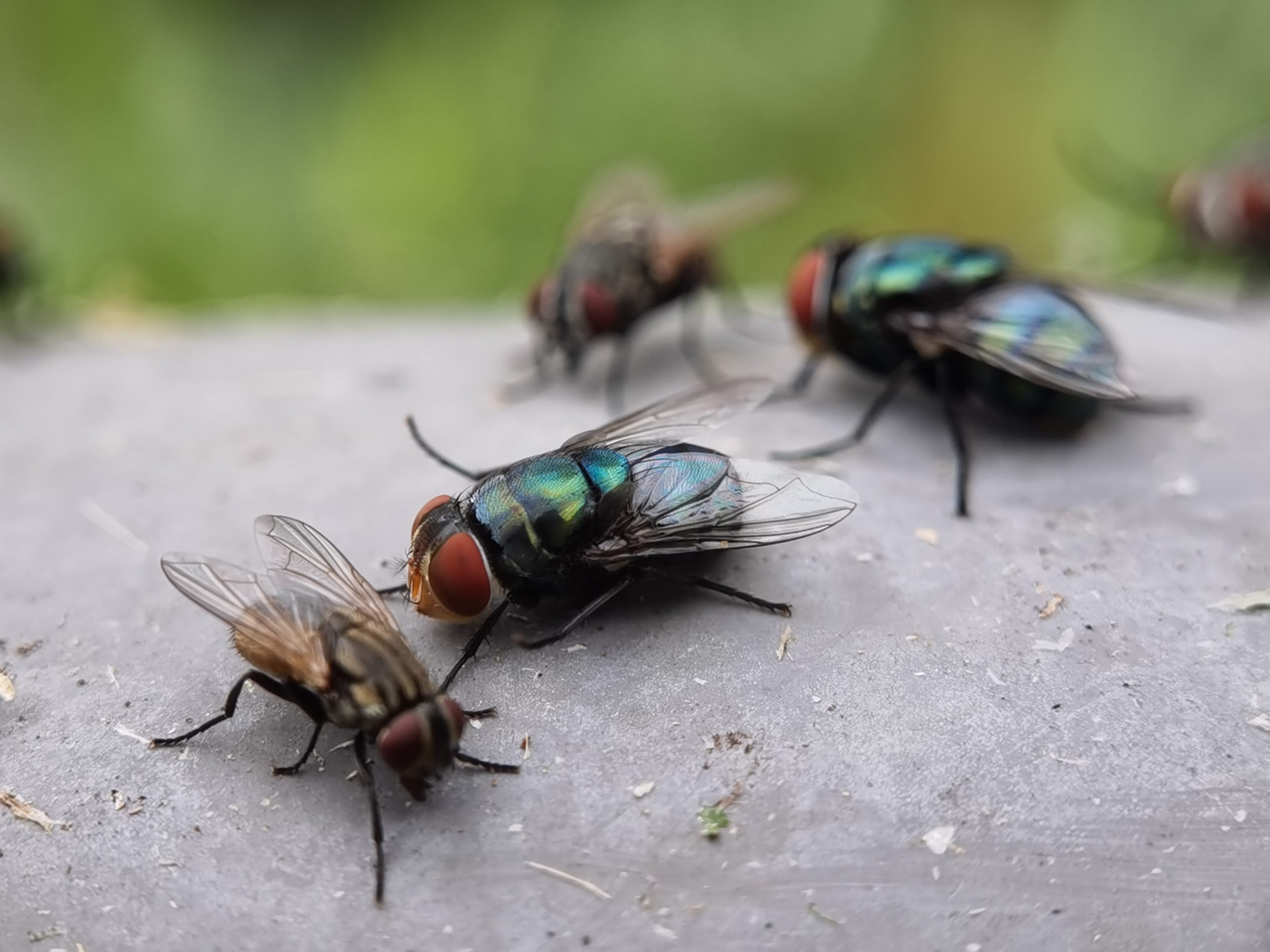
House flies are medium-sized gray flies often seen around windows, garbage, food areas, and doors. Outdoors, they breed in moist organic matter such as food waste and animal waste.
One house fly inside doesn’t tell you much. If new flies keep appearing every day, inspect outdoor trash, pet areas, and nearby entry points as well as the room where you see them.
Fruit Flies
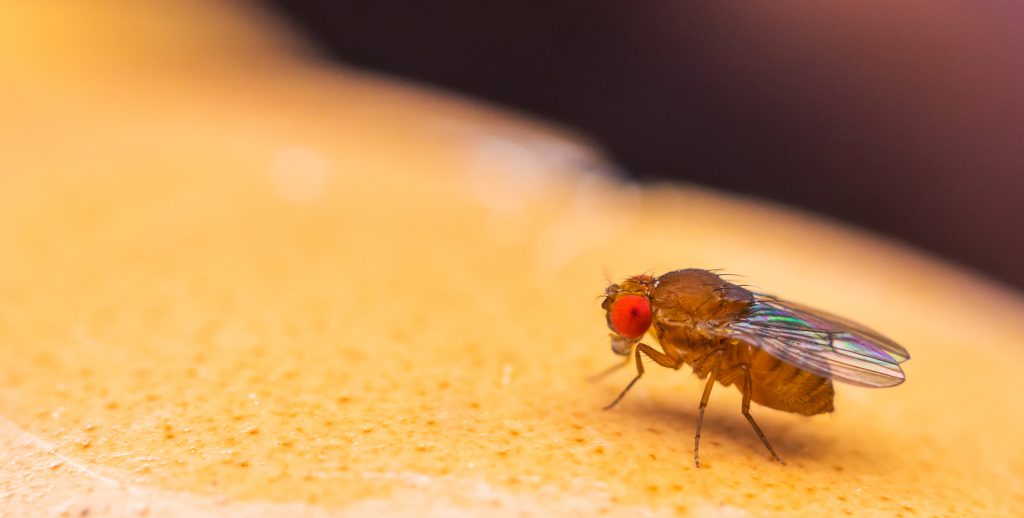
Fruit flies are much smaller and tend to hover around fermenting food or drink residue. Overripe produce is a common source, but spills, recycling bins, bottles, cans, and garbage disposals can also keep them active.
If flies in the house continue after you throw away old fruit, look under appliances and around recycling. A small amount of forgotten residue can support activity longer than you might expect.
Drain Flies
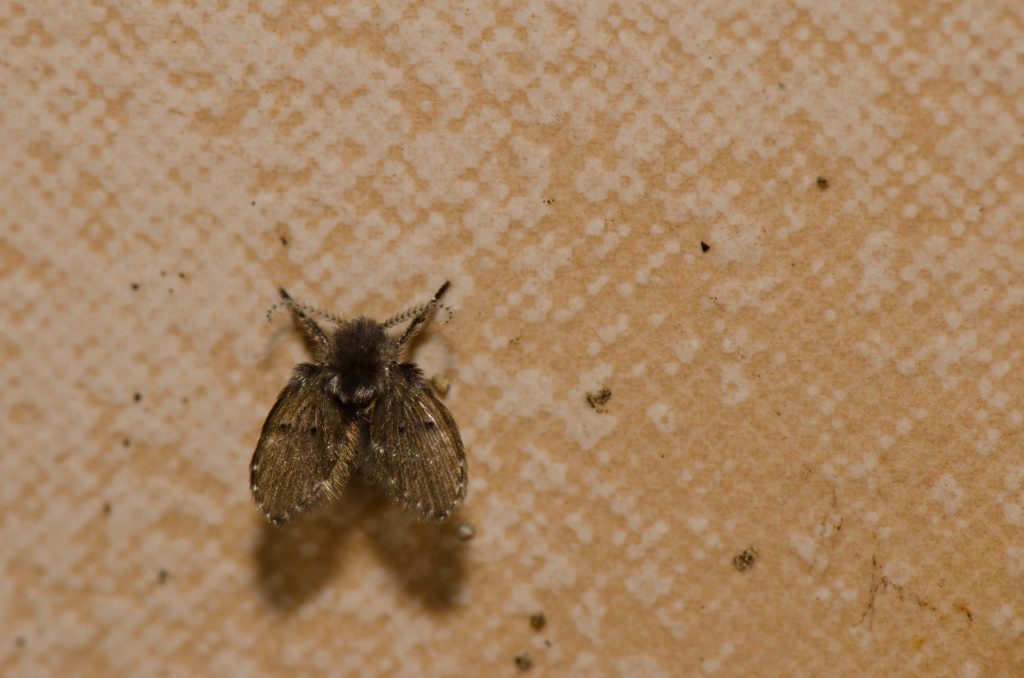
Drain flies are small, fuzzy, and weak fliers. You often see them resting on walls near sinks, tubs, floor drains, or other damp areas.
The Virginia Cooperative Extension explains that drain fly larvae develop in organic material found in drains and other wet locations. Slow drains, standing water, unused plumbing fixtures, and leaks should all be checked when these flies keep returning.
Blow Flies
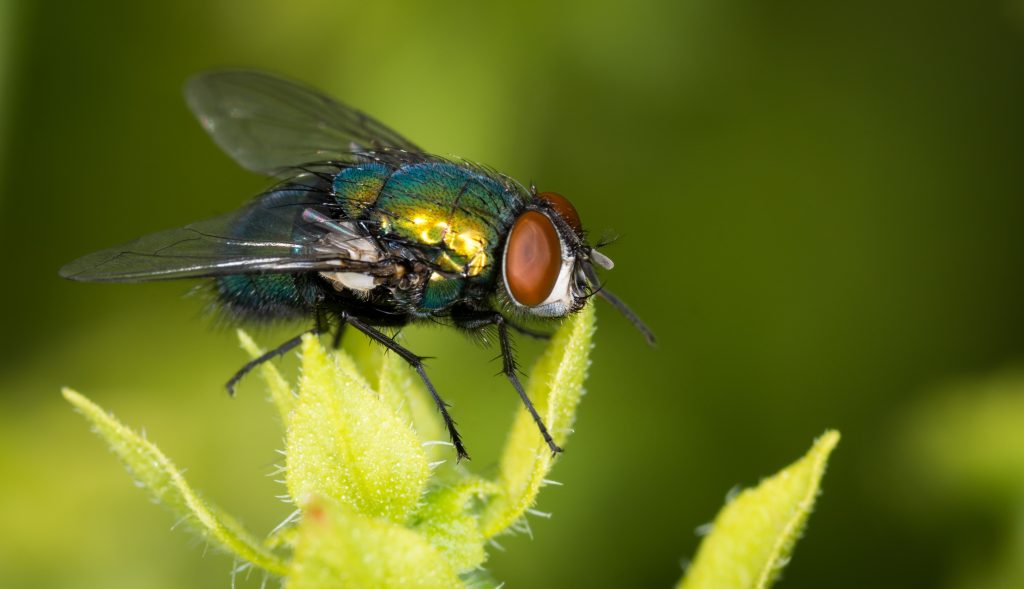
Blow flies are larger and may have a shiny blue or green appearance. They are often associated with animal material, garbage, or other decaying organic matter.
If several appear indoors without an obvious trash problem, inspect hidden areas such as attics, crawl spaces, or wall spaces. A dead rodent or other animal can attract flies even when you can’t see the source.
| Fly Type | What You May Notice | Where to Check First |
| House flies | Medium gray flies near windows or food | Garbage, pet waste, doors, outdoor waste |
| Fruit flies | Tiny flies around food or drinks | Produce, recycling, spills, disposal |
| Drain flies | Small fuzzy flies near sinks or walls | Drains, leaks, standing water |
| Blow flies | Larger flies, sometimes metallic | Garbage, animal remains, hidden decay |
Where a Fly Infestation Usually Starts
The place where adult flies gather can help you find a breeding source, but it doesn’t always point straight to it. Flies move toward light, food odors, moisture, and open space, so they may travel away from where they developed.
Start with anything that has recently become damp, dirty, or easy to overlook. Food waste can leak into the bottom of a trash can. Sugary residue can collect inside recycling. Produce can spoil behind other items on the counter. A slow drain can hold organic buildup below the surface.
Outside, check the areas closest to doors and windows. Pet waste, dirty garbage cans, compost, leftover food from outdoor meals, and other decaying material can attract Louisiana flies close enough to enter whenever someone opens the door.
Use the Location to Narrow Your Search
You don’t need to inspect every room at once. Where flies gather gives you a practical starting point.
| Where Flies Gather | What to Inspect |
| Kitchen sink | Drain buildup, disposal, leaks, food residue |
| Fruit bowl or pantry | Overripe produce, forgotten vegetables |
| Recycling | Bottles, cans, sugary residue |
| Indoor trash | Leaking bags, food scraps, dirty container |
| Pet area | Waste, spilled food, dirty bowls |
| Patio or back door | Outdoor waste, damaged screens, door gaps |
| Bathroom | Drains, leaks, unused plumbing |
| Attic or one wall area | Hidden animal matter or another source of decay |
Watch what happens after you remove the suspected source. If fly numbers drop over the next several days, you are likely looking in the right place. If activity stays the same, inspect another likely breeding area instead of repeating the same cleanup.
How to Prevent Flies During Louisiana Fly Season
Fly prevention starts with ordinary household habits, but warm Louisiana weather makes timing matter. Food scraps, drink residue, and garbage become attractive to flies faster when they sit in a hot garage, outdoor bin, or patio area.
Empty kitchen trash regularly and keep containers covered. Rinse bottles and cans before putting them into recycling. Clean sugary spills before they dry, and check produce before it starts to soften or ferment. If fruit flies remain after the counters are clean, inspect under the trash can and nearby appliances.
Outside, keep garbage can lids closed and wash containers when residue builds up. Pick up pet waste regularly, especially near patios, doors, and play areas. Removing food waste and other breeding material reduces the number of flies gathering close to the house in the first place.
Keep Drains and Wet Areas Clean
Drain flies require more than wiping the sink. Larvae can develop in organic buildup farther inside the drain where normal surface cleaning doesn’t reach.
Check slow plumbing, leaks, standing water, and fixtures that receive little use. An unused bathroom or refrigerator drain pan may deserve more attention than a busy kitchen sink if that is where fly activity keeps returning.
Seal Doors and Windows
Sanitation won’t stop flies that keep entering from outside. Check screens for tears, replace worn door sweeps, and look for gaps around doors and windows.
Focus first on entrances near patios, garages, outdoor trash, and food-preparation areas. If outdoor fly pressure is already high, even a small opening can become a regular route indoors.
When Cleaning Alone Doesn’t Fix a Fly Problem
A fly problem that keeps returning usually means the breeding material is still present or the original source was misidentified. At that point, adding more traps may reduce adult flies without explaining where the next ones are coming from.
Recurring drain flies can point to organic buildup or a plumbing issue below the visible surface. Blow flies appearing from one section of the home may lead to hidden animal remains. House flies clustering near the same doorway can send your search outside toward trash, pet waste, or another nearby source.
Businesses in Southeast Louisiana face similar problems on a larger scale. Restaurants, commercial kitchens, and food businesses have floor drains, dumpsters, delivery doors, food waste, and steady foot traffic. Several breeding sites can be active at the same property.
Species identification becomes especially useful when the obvious cleaning steps have already been done. Knowing the fly gives you a shorter list of breeding sites to inspect and helps determine whether the next step is sanitation, plumbing repair, exclusion, source removal, or professional fly control.
Getting Professional Fly Control in Louisiana
Recurring flies can be difficult to solve when the breeding source is inside a drain, behind an appliance, outdoors, or in a part of the structure you can’t easily inspect. If cleaning, drain maintenance, and sealing entry points have not changed the activity, a professional inspection can help identify what was missed.
LaJaunie’s Pest Control provides general pest control across Southeast Louisiana that covers flies. We adjust service based on the type of pest and where it is active. We can use traps where appropriate and treat other hot spots.
If flies keep returning to your home or business, contact LaJaunie’s Pest Control to schedule service. Professional fly control is most useful when it finds the breeding source, addresses the conditions supporting it, and reduces the chance of the same problem returning.