A Louisiana fruit fly problem can begin with something small. A peach softens on the counter, juice dries under a recycling bin, or an onion spoils at the back of a cabinet. Soon, adult fruit flies start hovering around the kitchen, and the same few insects seem to reappear no matter how often you swat them.
The reason is simple. A Louisiana fruit fly infestation is usually connected to fermenting food, drink residue, or another moist organic source. Removing the flies you can see may reduce activity for a short time, but lasting fruit fly control depends on finding the breeding site.
That means looking beyond the fruit bowl. Kitchens, garbage areas, recycling containers, patios, and commercial food spaces can all support fruit flies when food residue is left behind. Once you know where to look, prevention becomes much easier.
What Attracts a Louisiana Fruit Fly to Your Property?
A Louisiana fruit fly is attracted to ripe or fermenting material rather than clean, intact food alone. Overripe fruit is one of the most familiar sources, but vegetables, spilled drinks, food scraps, and residue inside trash cans can create the same problem.
The source isn’t always obvious. A tomato may split underneath other produce, or liquid from a garbage bag may collect at the bottom of the can. Bottles and cans waiting for recycling can also hold small amounts of beer, wine, soda, or juice.
Outdoor areas belong in the inspection too. Fallen fruit, compost, dirty garbage containers, and food residue around patios can attract small flies near the home. For businesses, waste areas and beverage stations may create similar conditions.
| Common Source | Why It Attracts Fruit Flies | Where It Often Gets Missed |
| Overripe fruit | Sugars begin fermenting as produce breaks down | Beneath fruit bowls and baskets |
| Spoiling vegetables | Hidden produce can decay for days | Pantry corners and cabinet shelves |
| Trash cans | Moist food waste can leak past the liner | Lid, rim, sides, and bottom |
| Recycling | Drink containers may retain sugary residue | Bottles, cans, and bin bottoms |
| Food spills | Small spills can sit outside normal cleaning areas | Beneath appliances and cabinets |
| Fallen fruit | Damaged fruit breaks down outdoors | Beneath trees and near patios |
The common thread is fermentation and moisture. Fruit flies don’t need a large pile of waste. A small amount in the right place can be enough to keep activity going.
How to Identify a Louisiana Fruit Fly Around Your Home
Fruit flies are easy to confuse with other small flies. That matters because each pest has different breeding sites, and treating the wrong area wastes time.
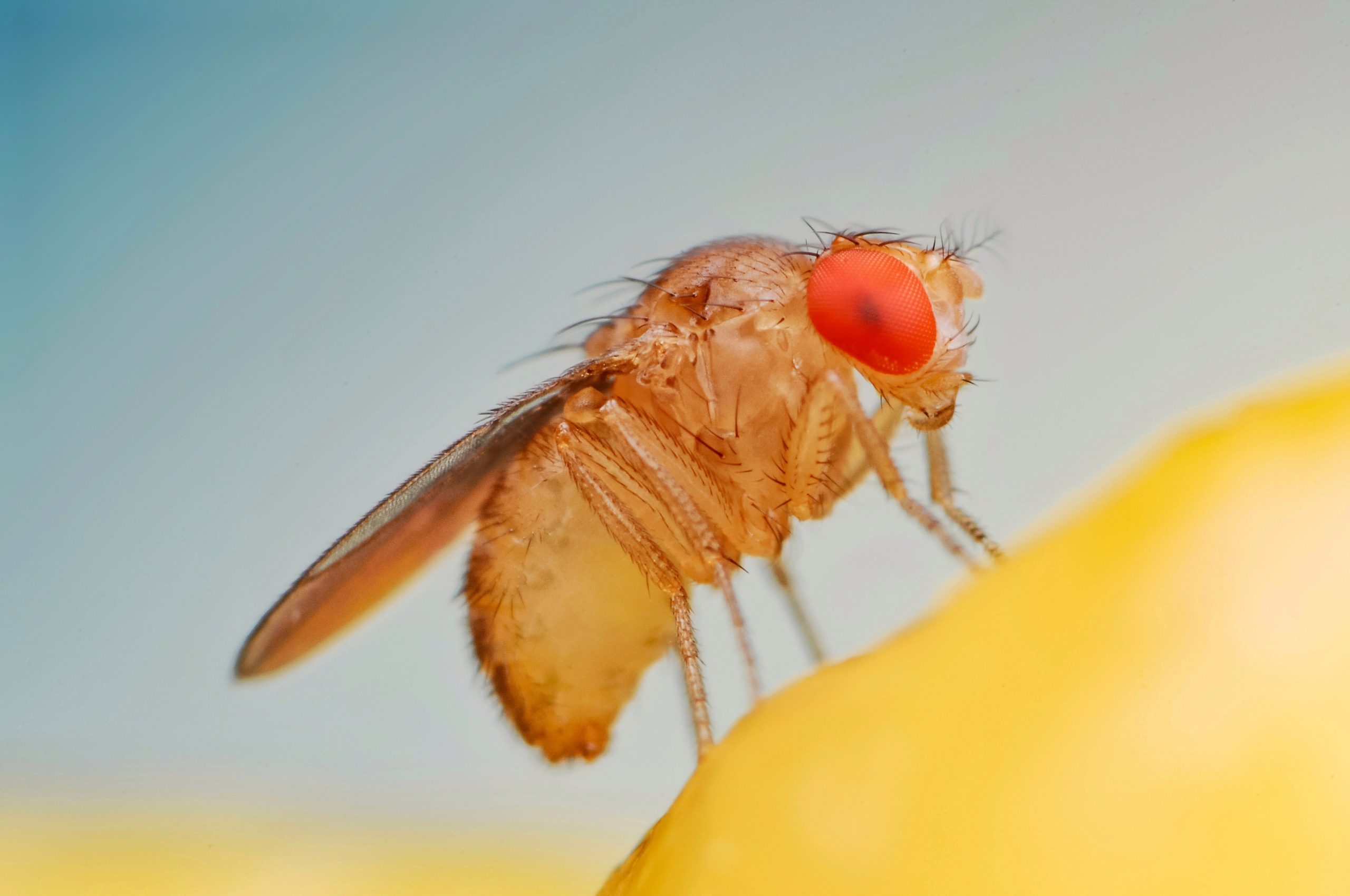
Common adult fruit flies are about 1/8 inch long and often have tan or brownish bodies. The University of Kentucky Entomology reports that females can lay about 500 eggs and that the fruit fly life cycle may be completed in roughly eight to 10 days under favorable conditions.
Those numbers explain why a fruit fly problem can grow quickly when suitable breeding material stays in place. Fruit fly eggs and fruit fly larvae are easy to miss because they develop in or around the moist organic material the adults have chosen.
Louisiana Fruit Fly vs. Drain Fly and Fungus Gnat
Seeing small flies around a sink doesn’t prove you have fruit flies. Drain flies are more closely associated with organic buildup in drains and wet plumbing areas, while fungus gnats are commonly linked to damp potting soil.
Location gives you a useful clue. Fruit flies tend to gather around produce, drinks, trash, and recycling. Drain flies are more likely to stay close to plumbing, while fungus gnats often remain around houseplants.
| Small Fly | Typical Clue | First Place to Inspect |
| Fruit fly | Activity around fruit, drinks, trash, or recycling | Food storage and waste areas |
| Drain fly | Fuzzy, moth-like appearance near plumbing | Slow drains and organic drain buildup |
| Fungus gnat | Slender dark fly near indoor plants | Damp potting soil |
| Phorid fly | Small fly that often runs before flying | Hidden decaying organic material |
If the insects don’t match the breeding source you expected, stop and reassess. Cleaning every drain won’t solve a fruit fly infestation coming from a forgotten bag of potatoes.
Where Fruit Flies Breed Around Homes and Businesses
Fruit flies usually stay close to the material supporting them, but their breeding sites can be surprisingly easy to miss. A clean countertop doesn’t rule out a source nearby.
Kitchens and Food Storage Areas
Start with ripe fruit and vegetables, then widen the search. Check underneath bowls, behind countertop appliances, and inside cabinets where potatoes, onions, tomatoes, or other produce are stored.
Garbage and recycling deserve a closer look as well. Replacing a trash bag doesn’t remove residue that leaked underneath it. Wash the container itself, including the lid and rim, and rinse bottles or cans before they sit in recycling.
Fermenting fruits, vegetables, and other moist organic material are common development sites, according to Cornell College of Agriculture and Life Sciences. That makes hidden food residue just as relevant as visible produce.
Commercial Kitchens and Food Preparation Areas
Commercial kitchens have more possible breeding locations because food and drinks move through the space all day. Bar mats, beverage stations, floor edges, mop areas, garbage rooms, and spaces below equipment can hold enough residue to support small flies.
Food preparation areas should be checked beyond the surfaces staff clean between orders. A cooler or storage rack can hide liquid underneath it even while the exposed floor looks clean.
Restaurants, cafés, bars, and similar businesses should also check outdoor waste areas. Repeated activity in the same part of the building can help narrow the search for the source.
Outdoor Areas
Fruit fly breeding isn’t limited to indoor kitchens. Fallen fruit, compost, leaking garbage bags, and dirty outdoor cans can all support activity around a property.
Pick up fallen fruit before it sits for long periods. Keep garbage containers closed, and wash them when sticky material collects inside. These steps reduce attractive sources close to doors and windows.
How to Get Rid of a Louisiana Fruit Fly Infestation
Getting rid of a Louisiana fruit fly infestation is less about chasing adult flies and more about removing what supports the next generation. A trap may catch visible adults, but the population can continue if fruit fly larvae are still developing nearby.
Remove the Breeding Source
Check ripe fruit, vegetables, food scraps, and stored produce first. Discard spoiled items and clean the surface underneath them rather than simply moving the food somewhere else.
Next, inspect trash cans, recycling, beverage areas, and the space beneath small appliances. If the fruit fly problem keeps returning to the same room, work outward from the area with the most activity.
Clean Containers and Hidden Spill Areas
Wash garbage cans after leaks or spills instead of relying only on a fresh liner. Rinse drink containers before recycling, especially bottles or cans that held beer, wine, juice, or soda.
Pull movable appliances away from walls when food or beverages are prepared nearby. A thin layer of dried juice beneath a refrigerator or cabinet can be easy to miss during routine cleaning.
Use a Fruit Fly Trap for Monitoring
A fruit fly trap can help reduce adult fruit flies and show you where activity is strongest. Apple cider vinegar is commonly used in household traps because the fermented odor attracts them.
The trap should act as a monitoring tool, not the entire treatment plan. If it keeps filling day after day, another breeding source is likely still present.
| Action | What It Helps With | Its Limitation |
| Removing spoiled produce | Eliminates an obvious breeding source | doesn’t address hidden residue |
| Washing trash cans | Removes leaked food waste | Another source may exist nearby |
| Rinsing recycling | Reduces drink residue | Must be done consistently |
| Cleaning under equipment | Reaches hidden spills | Heavy equipment may be difficult to move |
| Using a fruit fly trap | Captures adults and shows activity patterns | doesn’t remove eggs or larvae elsewhere |
How to Prevent Fruit Flies From Returning
Preventing fruit flies is easier when storage and sanitation become part of the normal routine. The goal is to remove the conditions fruit flies use before adult activity becomes noticeable again.
Store Produce With Spoilage in Mind
Check fruits and vegetables when you bring groceries home and again as they ripen. Refrigerate suitable produce when appropriate, use damaged items promptly, and clean bowls or baskets before residue builds up.
Don’t forget pantry produce. Potatoes, onions, and similar foods can sit untouched for days, which makes them easy to overlook until they begin to break down.
Keep Trash and Recycling Clean
Empty food waste regularly, but check the container after the bag is gone. Wash sticky material from the sides, rim, and bottom rather than covering the smell with another liner.
Rinse beverage containers before storing them for recycling. For homes and businesses in Southeast Louisiana, the same principle applies to outdoor waste cans and patio areas where food or drinks are served.
Pay Attention When the Pattern Changes
A continuing small-fly problem after thorough cleaning may mean the original identification was wrong. Activity shifting toward drains, potted plants, or another damp location is useful information.
At that point, repeating the same fruit fly treatment is unlikely to help. The next step should be identifying the fly and finding the breeding condition connected to it.
When Professional Louisiana Fruit Fly Control Makes Sense
Professional fruit fly control becomes useful when sanitation, source removal, and monitoring don’t stop the activity. A hidden breeding source may be involved, or the insects may be drain flies, fungus gnats, or another small fly that needs a different approach.
LaJaunie’s Pest Control serves homes and businesses throughout Southeast Louisiana and can identify the fly, inspect likely breeding areas, and choose a treatment based on what is actually present. This is especially useful in commercial kitchens and food preparation areas, where equipment, drains, storage, and waste zones can make the source harder to trace.
If fruit flies keep returning after you have cleaned the obvious areas, contact LaJaunie’s Pest Control for an inspection. The value of professional pest control isn’t simply catching more adult flies. It’s finding the condition that allows the infestation to restart and addressing the problem at its source.