



Wood roaches and American cockroaches can both appear as large brown roaches around Louisiana homes, but their normal habitats are different.
Wood roaches are primarily outdoor insects associated with trees, leaf litter, bark, and decaying wood. They sometimes fly or wander indoors but generally do not establish household infestations. American cockroaches can also live outdoors, but in Louisiana they are strongly associated with sewers, drainage systems, crawl spaces, damp structural areas, and other protected environments that can support persistent activity around buildings.
That means the best identification clues are not color alone. Size, markings, flight behavior, where you found the roach, and whether you are seeing multiple life stages all matter.
Wood Roach vs. American Cockroach: Quick Comparison
| Feature | Wood Roach | American Cockroach |
| Scientific group | Parcoblatta species | Periplaneta americana |
| Typical adult size | Roughly 0.5-0.8 inch, depending on species | About 1⅜-2⅛ inches |
| Color | Light tan to dark mahogany brown, depending on species | Reddish-brown |
| Main marking | Some species have a pale translucent margin around the thorax and wings | Pale or yellowish margin surrounding a darker center on the pronotum |
| Wings | Adult males usually have developed wings; females may have shortened wings | Adult males and females have developed wings |
| Flight | Males commonly fly and may come to lights | Adults are capable of flight, especially in warm conditions |
| Normal habitat | Leaf litter, logs, bark, trees, woodpiles, wooded areas | Sewers, drainage systems, crawl spaces, basements, tree hollows, mulch, woodpiles |
| Indoor breeding | Unusual | Possible where conditions support a population |
| Most useful clue | Outdoor origin combined with smaller size and light attraction | Much larger body combined with reddish color and characteristic pronotum |
Louisiana homeowners should also remember that “wood roach” is a group rather than one single species. The LSU AgCenter identifies at least six and possibly eight Parcoblatta species in Louisiana, with the Pennsylvania wood roach among the most frequently encountered.
What Is A Wood Roach?
Wood cockroaches in the genus Parcoblatta are native outdoor cockroaches.
They live in environments rich in decaying organic material, including:
- forest leaf litter
- beneath loose bark
- rotting logs
- woodpiles
- trees
- other damp outdoor debris
LSU AgCenter reports that Louisiana wood roaches range roughly from 0.5 to 0.8 inch long depending on the species. Their color can range from light tan to darker mahogany brown. LSU AgCenter rural cockroach guide
The Pennsylvania wood roach, Parcoblatta pensylvanica, is especially useful as an identification example because LSU describes it as the most common and frequently encountered wood-roach species in Louisiana.
Why Wood Roaches Come Inside
Wood roaches do not normally seek kitchens or bathrooms as places to establish colonies.
They may enter because:
- an adult male flies toward exterior lighting
- a door or window is open
- gaps allow access around the exterior
- firewood is carried inside
- the home sits near wooded habitat
- leaf litter or decaying wood is close to the structure
Finding one indoors therefore has a different meaning from finding a reproducing household cockroach population.
What Does An American Cockroach Look Like?
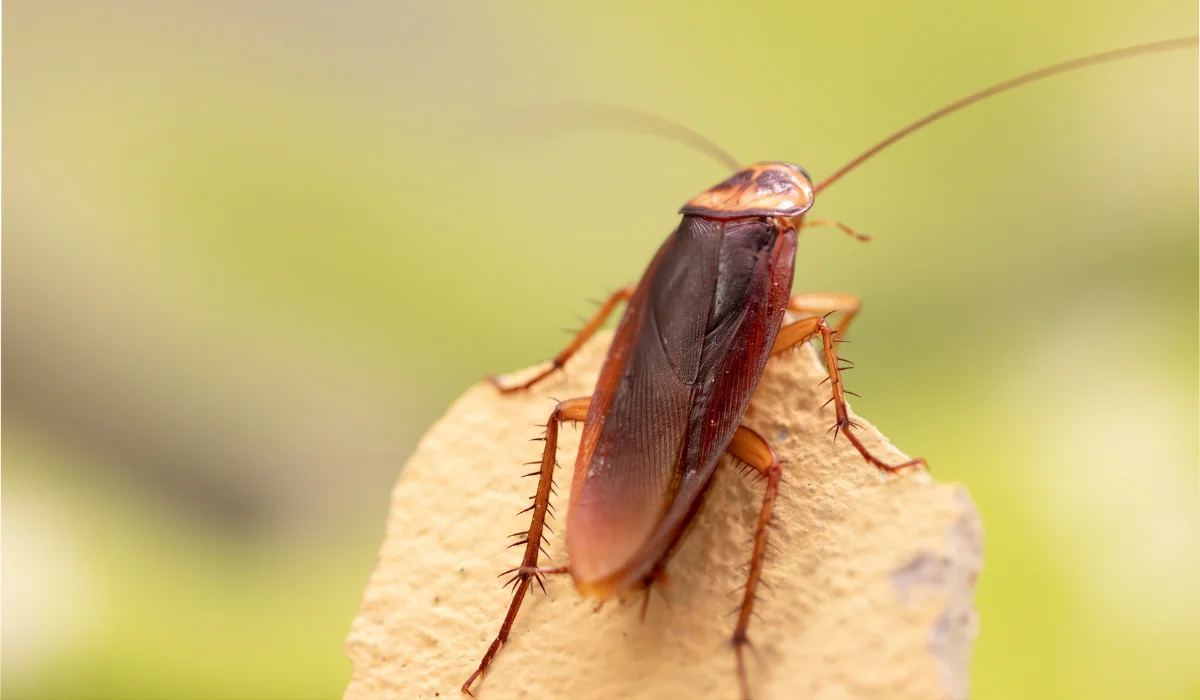
American cockroaches are substantially larger.
The LSU AgCenter reports adult body lengths of roughly 1⅜ to 2⅛ inches, making them the largest cockroach species that commonly infest Louisiana structures.
Adults are reddish-brown with long antennae, spiny legs, and developed wings. The pronotum behind the head has pale brown or yellowish edges surrounding a darker center.
LaJaunie’s has a dedicated guide to American cockroaches in Louisiana for homeowners who want a deeper look at that species.
Where American Cockroaches Live In Louisiana
Calling the American cockroach simply an “indoor roach” misses an important part of its behavior.
The LSU AgCenter guide to Louisiana peridomestic cockroaches identifies American cockroaches as the most frequently encountered member of Periplaneta in Louisiana. LSU notes that they primarily inhabit sewer and drainage systems and explore aboveground at night.
They can also occur around:
- manholes
- crawl spaces
- basements
- tree hollows
- mulch
- woodpiles
- drains
- utility areas
- other warm, humid shelter
Those populations can enter homes through structural openings or connections with drainage and utility systems.
Where You Find The Roach Matters
A roach’s location can be as informative as its appearance.
| Where You Found It | More Consistent With | What To Check Next |
| Porch light or exterior door at night | Wood roach, especially a flying male | Look for nearby wooded habitat, leaf litter, and exterior lighting |
| Firewood brought indoors | Wood roach | Inspect stored wood and keep future firewood outside until needed |
| Leaf litter or beneath bark | Wood roach | Usually normal outdoor habitat |
| Floor drain or utility room | American cockroach | Inspect drains, moisture, plumbing routes, and nearby voids |
| Crawl space or damp basement | American cockroach | Look for moisture, entry gaps, droppings, and additional activity |
| Kitchen with one large adult near a door | Either species or another outdoor/peridomestic roach | Do not diagnose an infestation from one adult alone |
| Same interior area with adults and nymphs | Established cockroach activity becomes more likely | Inspect harborages and consider professional identification |
| Multiple large roaches emerging from drains or wall openings | American cockroach activity is more plausible | Trace the entry route and inspect connected damp or sewer areas |
The location is not proof by itself, but it helps determine what evidence to look for next.
Does A Flying Roach Mean It Is A Wood Roach?
No.
Flight can support an identification, but it should not decide it.
Adult male wood roaches are known for flying and are often attracted to lights at night. That makes a smaller brown cockroach flying around a porch light a reasonable candidate for Parcoblatta.
American cockroaches can also fly. LSU AgCenter notes that adults are capable of flight at higher temperatures and can glide under cooler conditions.
So a large roach taking flight during a Louisiana summer is not enough to identify it as a wood roach.
Does One American Cockroach Mean You Have An Infestation?
Not necessarily.
An adult American cockroach may enter from an exterior harborage, sewer, drain, crawl space, or nearby utility environment.
A stronger indication of established activity is finding several types of evidence together, such as:
- repeated sightings in the same area
- nymphs
- adults and juveniles together
- egg cases
- concentrated droppings
- a consistent hiding or travel route
- continued activity after obvious entry points are addressed
This distinction is especially important in South Louisiana because American cockroaches commonly live close to buildings without necessarily breeding in the occupied rooms where homeowners eventually see them.
Do Wood Roaches Infest Houses?
Wood roaches generally do not behave like household-infesting cockroach species.
Parcoblatta wood cockroaches are beneficial decomposers in natural habitats that occasionally enter houses and typically dehydrate and die relatively quickly indoors.
Their presence indoors is usually a nuisance and an exclusion problem rather than evidence of a colony reproducing behind kitchen cabinets.
Repeated wood-roach sightings should therefore lead you to inspect the exterior environment and entry routes first.
Are American Cockroaches A Health Concern?
American cockroaches deserve a different level of attention when they are repeatedly entering occupied areas.
Cockroaches that move between decaying organic material, sewer or drainage environments, and human living areas can mechanically transfer microorganisms to other surfaces. Cockroach proteins can also contribute to indoor allergen exposure.
The LSU AgCenter discusses these concerns in its Louisiana cockroach guidance and emphasizes that control depends on identifying the species because cockroaches differ considerably in behavior and habitat.
That does not mean one American cockroach crossing a garage floor has contaminated an entire house. The concern increases when activity is persistent around food, food-contact surfaces, or occupied indoor spaces.
How To Reduce Wood Roaches Around Your Home
If the insects appear to be wood roaches, focus on the outside environment and the route they are using to enter.
Helpful steps include:
Move Firewood Away From The Structure
Avoid keeping firewood stacked directly against exterior walls.
Bring in only the amount needed for immediate use rather than storing large quantities indoors.
Reduce Leaf And Wood Debris Near Entry Points
Wood roaches naturally occupy decomposing organic material.
Keeping accumulated leaf litter, bark, rotting logs, and similar material away from doors and the immediate foundation area can reduce the number living close to entry points.
Seal Gaps
Inspect:
- door sweeps
- screens
- window frames
- utility penetrations
- siding gaps
- foundation openings
Exclusion is particularly useful when the insects are accidental outdoor visitors rather than indoor breeders.
Consider Exterior Lighting
Because male wood roaches can be attracted to light, reducing unnecessary bright exterior lighting near entrances may help limit nighttime encounters.
How To Reduce American Cockroach Activity
American cockroach control starts with finding the source rather than treating only the adult roach you can see.
Check for:
- leaking pipes
- damp crawl spaces
- drains
- sewer or plumbing connections
- damaged door seals
- gaps around utility penetrations
- moist mulch against the home
- accumulated organic debris
- exterior hiding areas
LaJaunie’s current cockroach-control service specifically distinguishes German cockroach infestations from non-German cockroaches. Its current service information describes inspection, perimeter treatment, granular baiting, and targeted crack-and-crevice treatment for non-German cockroach activity.
Which Response Makes Sense?
| What You Are Seeing | Likely Priority | Practical Response |
| One small-to-medium roach after opening a door at night | Possible wood roach | Remove it, monitor, and check exterior lighting and entry gaps |
| Wood roaches appearing after firewood is brought inside | Exterior-source issue | Store firewood outside and inspect material before bringing it indoors |
| Several wood roaches around porch lights | Outdoor population near structure | Reduce attraction and improve exclusion |
| One large American cockroach near a drain | Possible peridomestic visitor | Inspect drains, moisture, and connected entry routes |
| Repeated large adults in the same interior area | Persistent American cockroach activity possible | Investigate source and harborages |
| Adults plus nymphs or egg cases indoors | Reproduction near or within the structure is more likely | Consider professional inspection and targeted control |
| You cannot distinguish the species | Identification problem | Photograph or retain a specimen safely and have it identified before treating |
The important difference is that wood-roach management usually centers on exclusion and outdoor habitat, while recurring American cockroach activity often requires tracing moisture, drainage, structural, and exterior harborages.
What About Store-Bought Cockroach Products?
Avoid treating every cockroach sighting with the same product.
A pesticide label determines where and how a product can legally and safely be applied. The correct treatment also depends on whether the roach is reproducing indoors, entering from outside, or moving through a drainage or structural system.
If you have already used sprays, dusts, or baits before contacting a pest-control company, tell the technician what was applied and where. That information can affect how a treatment program is planned.
Other Cockroaches You May Find In Louisiana
Wood and American cockroaches are only two of the species Louisiana homeowners encounter.
Other possibilities include:
- German cockroaches
- brown-banded cockroaches
- smoky brown cockroaches
- Australian cockroaches
- Asian cockroaches
- Oriental cockroaches
- other outdoor or peridomestic species
LaJaunie’s Louisiana cockroach identification guide compares several of these species and their typical habitats.
If the identification is uncertain, size or color alone may not be enough.
When Professional Cockroach Control Makes Sense
Professional help becomes more useful when:
- large cockroaches appear repeatedly indoors
- you are finding nymphs as well as adults
- activity keeps returning around drains or plumbing
- several rooms are involved
- you cannot determine where the roaches are entering
- moisture or crawl-space conditions are difficult to inspect
- you cannot confidently distinguish the species
LaJaunie’s provides cockroach control for Louisiana homes. Starting with identification allows the treatment to address the actual source rather than assuming that every large brown roach is reproducing inside the home.
Need Help Identifying A Large Cockroach?
Wood roaches and American cockroaches require different conclusions even when both look like large brown roaches.
A wood roach indoors often points to exterior habitat, firewood, lighting, or an entry gap. Repeated American cockroach activity calls for a closer look at drains, moisture, exterior shelter, crawl spaces, plumbing routes, and other possible harborages.
If you continue finding cockroaches or cannot tell which species is present, contact LaJaunie’s Pest Control to discuss the activity and the appropriate cockroach-control option for your property.
Frequently Asked Questions
What Is The Easiest Way To Tell A Wood Roach From An American Cockroach?
Size is one of the quickest clues. Louisiana wood roaches in the genus Parcoblatta are generally much smaller, while adult American cockroaches can exceed two inches. American cockroaches also have a characteristic pale margin around the darker center of the pronotum behind the head.
Are Wood Roaches Common In Louisiana?
Yes. LSU AgCenter reports at least six and possibly eight Parcoblatta species in Louisiana. They normally live outdoors in leaf litter, bark, logs, and other areas containing decaying plant material.
Can Wood Roaches Reproduce Inside My House?
They are not considered typical indoor-infesting cockroaches. They occasionally enter homes but are adapted to outdoor habitats and generally do not establish household populations.
Do American Cockroaches Live In Sewers?
Yes. LSU AgCenter identifies sewer and drainage systems as major American cockroach habitat in Louisiana. They may also live in other warm, humid exterior or structural environments.
Does Seeing Several American Cockroaches Mean They Are Breeding Inside?
Not automatically. Repeated adults can enter from nearby sewer, drainage, exterior, or crawl-space populations. Finding nymphs, egg cases, and several life stages concentrated indoors is stronger evidence that reproduction is occurring nearby.