



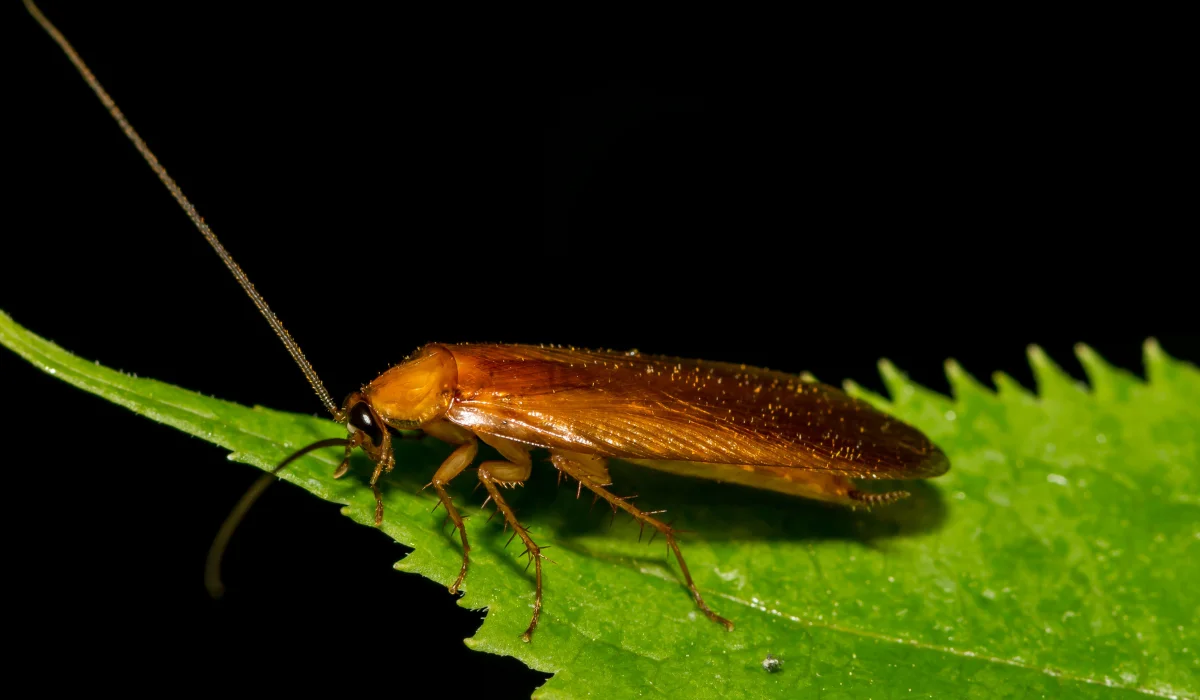
That large brown roach you spot in the garage may leave you wondering what it is and how many more are inside. The wood roach Louisiana homeowners often encounter is typically less alarming than the sighting itself. These roaches are closely tied to outdoor areas and sometimes wander into homes from nearby shelter.
That matters in South Louisiana, where firewood, damp leaves, mulch, shaded crawl spaces, and mature landscaping can sit only a few feet from a door or foundation opening. A roach that spends most of its time outdoors does not have far to travel when those conditions meet the side of the house.
The location of the sighting gives you a useful clue. One large roach beside a garage door does not point to the same problem as several small roaches showing up night after night around a refrigerator. Learn where Louisiana wood roaches hide helps you decide what to inspect first and whether the problem starts indoors or outside.
Where Wood Roaches Hide Around South Louisiana Homes
A wood roach in Louisiana is much more closely associated with outdoor shelter than a German cockroach. According to Penn State Extension, wood roaches normally live outdoors in wooded environments rather than establishing the type of indoor populations associated with common household roaches.
Around your home, similar shelter can develop in surprisingly ordinary places. Firewood stacked beside siding creates dark gaps between logs. Leaves stay wet beneath shrubs. Old landscape timbers rest against damp soil. Mulch can remain moist under a shaded porch even after the exposed yard dries.
Outdoor Hiding Places Worth Checking
You do not need to search every corner of the property after a single sighting. Spend your time where wood, moisture, shade, and the structure come together.
| Area Around Your Home | Why Roaches May Shelter There | What to Look For |
| Firewood piles | Narrow spaces stay dark and protected | Wood touching siding or sitting directly on soil |
| Mulch beds | Mulch holds moisture close to ground level | Deep mulch against the foundation |
| Leaf buildup | Wet leaves provide cover | Corners, drains, porches, and fence lines |
| Fallen wood | Bark and decaying material provide shelter | Branches, stumps, scrap lumber, and timbers |
| Crawl space perimeter | Shade and moisture persist beneath the home | Leaks, debris, damaged access covers |
| Storage sheds | Stored outdoor items create undisturbed hiding areas | Lumber, cardboard, door gaps, and floor edges |
South Louisiana weather can keep these protected pockets damp long after the rest of the yard dries. After a summer rain, the driveway may be dry by afternoon while the bottom of a woodpile or the leaves behind an air-conditioning unit still hold moisture. Those are the areas worth examining first.
Where Wood Roaches Hide After They Get Indoors
A Louisiana wood roach that crosses indoors often turns up close to the route it used to enter. Garages, utility rooms, crawl space entrances, exterior doors, and rooms along outside walls make more sense as starting points than bedrooms in the middle of the house.
Garages are especially easy to overlook. The main door opens directly outside, seals wear down, and lawn equipment or stored materials move back and forth between the yard and garage. A gap at the bottom corner of the door can connect outdoor hiding places with protected indoor space.
What the Sighting Location Can Tell You
Where you find a roach does not identify the species on its own. It does, however, tell you where to begin looking for shelter and access.
| Where You Found the Roach | Inspect This Area | Look for This Entry Route |
| Garage floor | Garage perimeter and stored items | Worn bottom seal or corner gap |
| Back door | Porch and nearby landscaping | Damaged sweep or weather stripping |
| Utility room | Exterior plumbing and wiring | Openings around pipes or cables |
| Crawl space entrance | Foundation and soil below the house | Loose cover or structural opening |
| Window | Wall and vegetation outside | Torn screen or frame gap |
| Covered patio | Planters, leaves, and storage | Threshold or wall opening |
An isolated adult beside an exterior door deserves a different response from repeated activity throughout the house. If you begin seeing smaller roaches or roaches in several rooms far from the exterior, another species may be involved.
How to Identify a Wood Roach in Louisiana
Louisiana woods cockroaches are reddish-brown to black and generally 1 to 1½ inches long. They are also described as somewhat rounder than several other cockroach types found in the region.
The measurements help narrow down what you are seeing. German cockroaches are far smaller at roughly ½ to ⅝ inch, while American cockroaches measure about 1¼ to 2⅛ inches. An adult wood roach can therefore overlap in size with some larger outdoor roaches, so size works best when you combine it with appearance and location.
Louisiana Wood Roach vs. Other Common Roaches
| Roach Type | Approximate Size | Common Appearance | Where to Focus Your Inspection |
| Louisiana woods cockroach | 1 to 1½ inches | Reddish-brown to black, generally rounder | Outdoor shelter and nearby entry points |
| German cockroach | ½ to ⅝ inch | Light brown or tan with 2 dark stripes | Kitchens, appliances, and cabinets |
| American cockroach | 1¼ to 2⅛ inches | Reddish-brown with a lighter marking behind the head | Warm, damp structural areas |
| Australian cockroach | About 9/10 to 1¼ inches | Dark brown with yellow markings | Exterior areas and warm parts of structures |
| Smokybrown cockroach | 1¼ to 1½ inches | Dark reddish-brown to nearly black | Damp outdoor shelter near the building |
Why the Species Changes the Answer
German cockroaches are strongly associated with indoor populations. Repeatedly finding small tan roaches around a refrigerator, dishwasher, cabinet hinges, or food storage area calls for a different inspection than finding one large dark roach beside a patio door.
With a wood roach, Louisiana homeowners should give more attention to the edge of the house. A garage, porch, crawl space, utility wall, or foundation line may reveal a direct connection to damp leaves, wood, mulch, or another outdoor hiding place.
Why Wood Roaches Get Close Enough to Enter
Finding a wood roach Louisiana homeowners commonly associate with indoor infestations may actually say more about the yard than the kitchen. Moisture and shelter close to the structure shorten the distance an outdoor roach has to travel before reaching a doorway, vent, garage, or wall opening.
A dripping hose bib can keep soil wet against the foundation. A clogged gutter can dump water into leaves or mulch below. Firewood stacked against the siding creates protected spaces only inches from the wall. None of these conditions guarantees an indoor roach problem, but each makes the exterior more suitable for activity.
Moisture Around the Foundation
Take a look outside after rain rather than only during dry weather. Watch where downspouts discharge, check whether water collects beside the slab or crawl space, and look under thick vegetation for areas that stay wet.
Fix leaking pipes, faucets, and hoses, keeping gutters and downspouts clear, and reducing water around the foundation. The same guidance recommends sealing exterior openings and checking the garage door for visible gaps.
Shelter Close to the Walls
Firewood does not have to disappear from your property. It simply should not create a direct bridge between roach habitat and your exterior wall. The same idea applies to scrap lumber, fallen branches, thick leaf piles, and old landscape material.
Move these items away from doors and foundation walls when practical. Pay particular attention to areas that remain shaded for most of the day, since they tend to dry more slowly than exposed parts of the yard.
How to Keep Wood Roaches Outside
Keeping a wood roach in Louisiana outdoors usually starts with several small corrections rather than one major project. Match those corrections to the place where the activity occurs. A garage sighting calls for a garage inspection, while a roach at the back door makes the threshold and nearby landscaping more useful places to spend your time.
Distance is one of the simplest changes. Moving a firewood stack away from the wall breaks the direct connection between outdoor shelter and the structure. Clearing wet leaves from the base of the house does the same thing without requiring you to remove normal landscaping.
Permanent moisture fixes are more useful than repeatedly drying the same spot. Repair a leaking fixture, correct a drainage problem, or clear a gutter that continually sends water toward the foundation. Then inspect door sweeps, screens, utility penetrations, and garage seals for openings.
The Texas A&M AgriLife Extension includes moisture reduction, sanitation, habitat changes, and exclusion among the main approaches to cockroach management. For wood roaches around South Louisiana homes, those steps address the conditions that bring outdoor activity close to the building.
Signs That the Problem May Be Something Else
One large adult near a porch door can fit the pattern of an outdoor roach wandering inside. Several roaches in multiple rooms deserve more scrutiny, especially when you see smaller individuals that suggest different life stages are present indoors.
Do not keep treating the problem as a wood roach simply because the first insect looked large and brown. American, smokybrown, German, and other cockroach species behave differently. Correct identification keeps you from spending time on the woodpile when the real source is somewhere else.
Getting Help With Wood Roaches in South Louisiana
If your search for “wood roach Louisiana” started with one roach beside an exterior door, begin by tracing the shortest route back outside. Look for firewood, wet leaves, mulch, drainage issues, crawl space conditions, or gaps around the nearest doorway and utility openings. Those clues can tell you more than the sighting alone.
Recurring activity is different. If roaches keep appearing after you address obvious shelter and entry points, or you cannot confidently tell which species you are seeing, a professional inspection can identify where the activity starts and which areas need attention.
LaJaunie’s Pest Control serves homeowners throughout South Louisiana and covers non-German cockroaches through its general pest-control program. Technicians inspect exterior walls, windows, doors, garages, attics, cracks, crevices, and other common access areas as part of the service process. To have recurring roach activity identified and inspected, contact LaJaunie’s Pest Control.