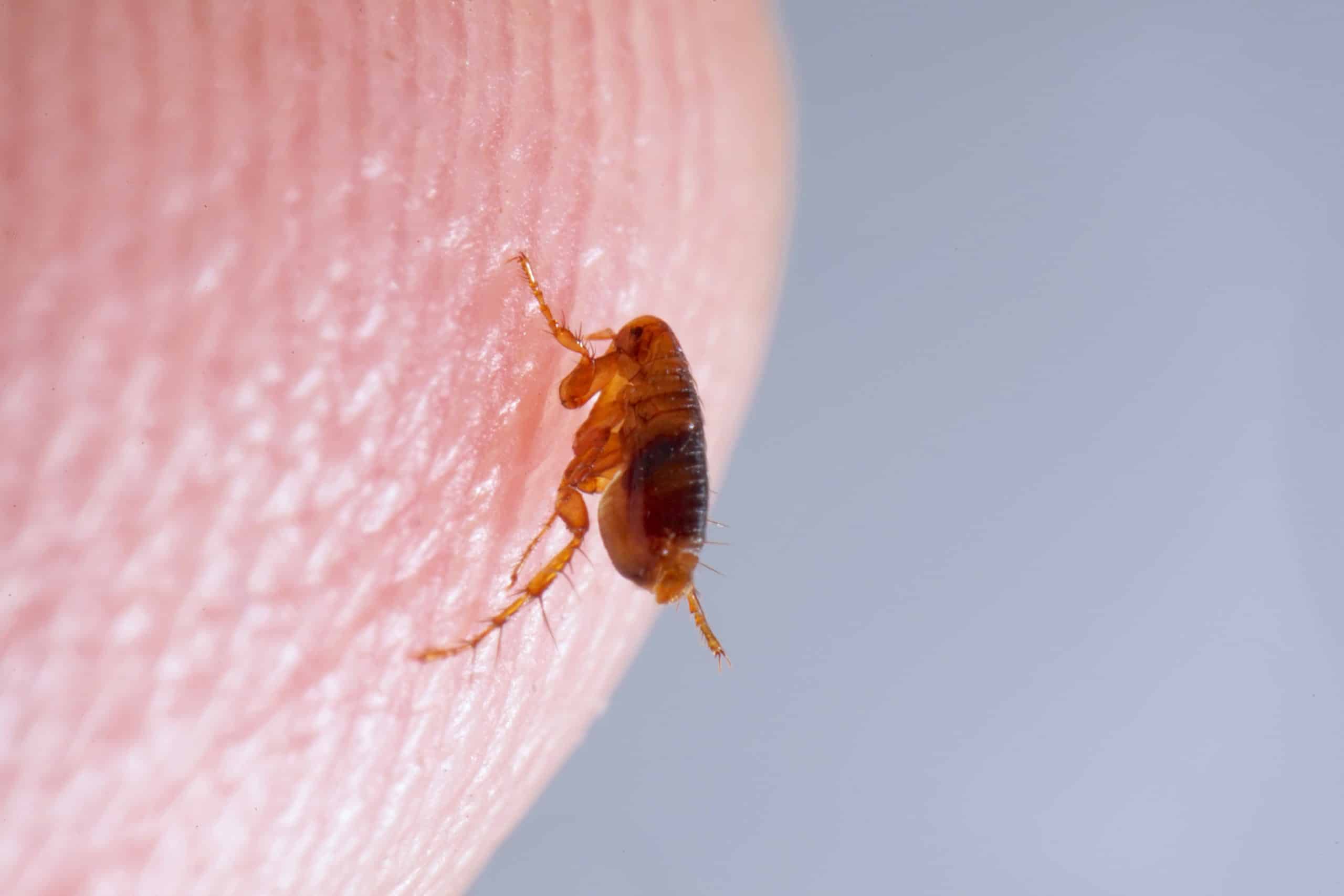




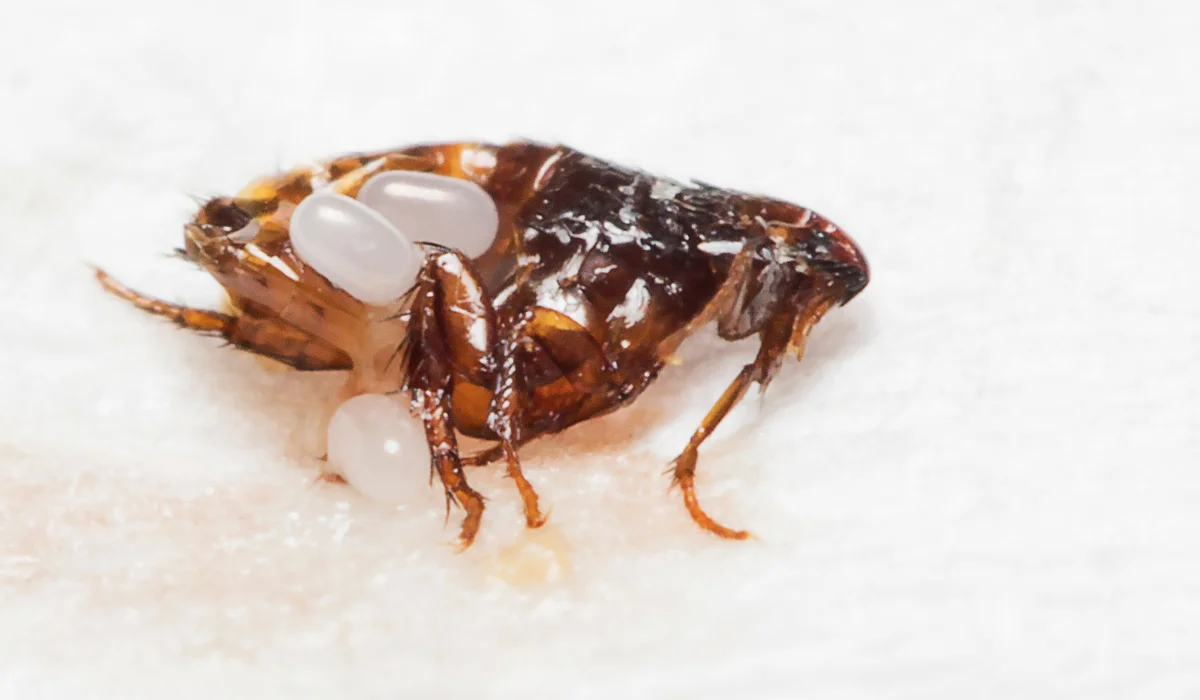
If you start getting itchy bites while driving or notice your pet scratching after a car ride, fleas may have found their way into your vehicle. Adult fleas can ride in on pets, while eggs can fall into carpet, floor mats, seat seams, and other protected areas.
Knowing how to get rid of fleas in your car means looking beyond the adult fleas you can see. Eggs, larvae, and pupae can remain hidden in the vehicle, which is why cleaning only the seats or removing a few adult fleas may not solve the problem.
A thorough approach includes cleaning the vehicle, checking your pet, and figuring out whether fleas are also active around your home or yard. Here’s how to work through the car step by step and reduce the chance of fleas coming back.
Key Takeaways
- Fleas can hide in floor mats, carpet, seat seams, pet blankets, and other fabric inside a vehicle.
- Thorough vacuuming and heat-based cleaning can help remove fleas and developing life stages.
- Only use flea-control products that are specifically labeled for the type of application you plan to make.
- Louisiana’s warm, humid conditions can support flea development, so acting quickly is especially helpful.
- If fleas keep returning to your car, your pet, home, or yard may be the source.
How to Get Rid of Fleas in Your Car Step by Step
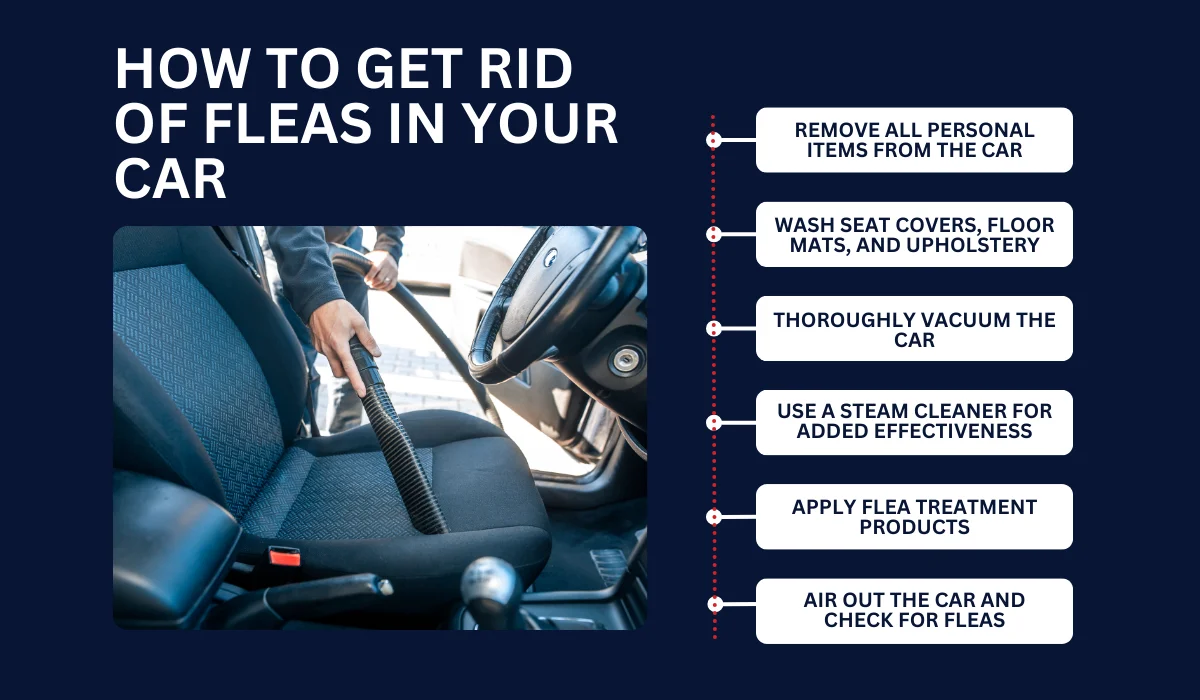
Getting rid of fleas in your car starts with removing as many adult fleas, eggs, larvae, and pupae as you can through cleaning. Treat the entire vehicle rather than focusing only on the seat where your dog or cat normally rides.
Flea eggs do not necessarily stay on the animal. They can fall into carpeting, floor mats, the trunk, and narrow spaces underneath the seats. Working methodically through the vehicle helps you reach those less obvious hiding places.
Step 1: Remove Personal Items From the Vehicle
Take bags, toys, pet supplies, blankets, electronics, and other loose belongings out of the car. Fabric items can hold fleas or eggs and reintroduce them after you finish cleaning.
Wash washable fabrics according to their care instructions. Keep cleaned items outside the car until the rest of the vehicle has been cleaned and checked.
Step 2: Wash Removable Seat Covers and Floor Mats
Remove washable seat covers, pet blankets, and fabric floor mats. Use the hottest wash and dry settings that the material can safely handle.
For carpeted mats or upholstery that cannot go into a washing machine, follow the manufacturer’s cleaning directions. Spend extra time on the areas where your pet regularly sits, sleeps, or enters the vehicle.
Step 3: Vacuum the Entire Car
Vacuuming is one of the most useful steps when learning how to get rid of fleas in your car. Vacuum the seats, carpets, trunk, floorboards, seat tracks, seams, and spaces underneath every seat.
Move adjustable seats forward and backward so you can reach hidden areas. When you finish, empty the vacuum canister outdoors or seal and discard the vacuum bag so fleas and debris do not remain inside your home.
Step 4: Use Steam Where the Material Allows It
Steam can help reach carpeting, fabric seams, and other areas that are difficult to clean with a vacuum alone. Move the steam cleaner slowly across compatible surfaces instead of making quick passes.
Check your vehicle manufacturer’s care instructions before using steam around leather, electronics, adhesives, headliners, or other sensitive materials. Let the interior dry completely afterward to prevent excess moisture from becoming another problem.
Step 5: Apply a Vehicle-Appropriate Flea Treatment When Needed
After cleaning, you may decide to use a flea-control product. Read the entire label first and make sure it specifically permits the type of application you are considering.
Do not assume that a household flea bomb or fogger can safely be used inside a vehicle. Cars contain upholstery, electronics, ventilation systems, and potential ignition sources. Follow every direction regarding treated surfaces, ventilation, drying time, and reentry.
If fleas are also active inside your house or yard, treating the car alone may not solve the problem. Learn more about how professional flea control addresses indoor and outdoor infestations.
Step 6: Air Out the Vehicle and Inspect It Again
After cleaning and any label-approved treatment, ventilate the vehicle according to the product directions. Make sure the carpets, upholstery, and other surfaces are completely dry before putting pet bedding or personal belongings back inside.
Then inspect the vehicle again. Check beneath the seats, along carpet edges, inside the trunk, and anywhere your pet regularly rests. Continued activity may mean another flea life stage has developed or new fleas are entering the car from somewhere else.
Why Louisiana Heat and Humidity Matter When Fleas Get Into a Car
Louisiana’s warm, humid climate can create favorable conditions for flea development. Temperature and moisture influence how fleas progress through their life cycle, which is one reason flea activity can continue for long stretches of the year.
A parked vehicle may become extremely hot during a Louisiana summer, but you should not depend on that heat to eliminate an infestation. Temperatures are not uniform throughout the vehicle. Carpet, seat cushions, the trunk, and shaded crevices may not experience the same conditions as a dashboard sitting in direct sunlight.
If you live in Baton Rouge, New Orleans, Thibodaux, Houma, or another nearby community, address flea activity as soon as you notice it. This is especially important when a pet regularly moves between your yard, house, and vehicle. Cleaning the car without checking those other areas can allow new fleas to start the problem again.
How to Spot Fleas in Your Car
Fleas are small and move quickly, so you may notice the effects of their presence before you actually see one. Itchy bites around your ankles or lower legs can be one clue, especially when they occur during or shortly after time in the vehicle.
Pay attention to your pets as well. Increased scratching, biting, or grooming after car rides can signal flea activity. Look closely at seat seams, floor mats, carpet edges, and areas underneath the seats.
| Signs | What You May Notice |
|---|---|
| Flea bites | Small, itchy red bumps, often around the ankles or lower legs |
| Adult fleas | Tiny, dark insects that move or jump quickly |
| Flea debris | Small dark specks in carpeting or pet-resting areas |
| Increased scratching | A pet scratching, biting, or grooming more than usual |
| Activity in fabrics | Fleas or debris around mats, blankets, seams, or carpet edges |
If you are unsure whether fleas are causing the problem, use a flea comb to check your pet and ask your veterinarian about an appropriate flea-prevention plan.
How to Keep Fleas From Coming Back to Your Car
Keeping fleas out of your vehicle starts with finding their source. If your dog or cat has fleas, cleaning the car without addressing the pet can lead to another infestation the next time you travel together.
Start With Your Pet’s Flea Prevention
Ask your veterinarian about flea prevention that fits your pet. Consistent prevention is one of the most effective ways to stop fleas from re-entering your vehicle after treatment.
Wash Pet Bedding and Travel Items Regularly
Wash pet bedding, blankets, and any washable travel accessories on a routine basis. These items can hold flea eggs and larvae, which may reintroduce fleas into your car even after cleaning.
Use Washable Barriers in the Vehicle
A washable seat cover can make routine cleaning much easier when your pet rides in the car often. It helps limit how much hair, debris, and potential flea material reaches the upholstery.
Check Your Pet After Outdoor Exposure
Inspect your pet after time outdoors, especially in areas where wildlife or stray animals may be present. Fleas can move between hosts, so exposure in the yard or neighborhood can quickly lead to re-infestation in the car.
Maintain Routine Cleaning Habits
Regular cleaning helps you catch problems early. Vacuum beneath the seats, wash pet blankets, and remove built-up debris instead of waiting until you notice bites or visible flea activity.
What One Driver Learned From a Flea Infestation
Freelance writer Wilson McCabe first realized he had fleas in his car after he started getting bitten while driving. By the time he identified the infestation, people who rode in the vehicle were also leaving with fleas.
His experience is a good example of why a flea problem should not be ignored. It also shows why treatment choices matter. Before using a fogger or similar product in a vehicle, confirm that the label permits that use and follow every safety instruction.

I first found out that I had fleas in my car when I started getting bit while I was driving. By the time I had figured out that I had a flea infestation, it was too late.
The infestation was so bad that anyone who entered my car left with fleas, and they were spreading into people’s homes. A friend suggested that I fog my car, so I bought a fogger, and after a day, I was flea-free!
- Wilson McCabe, Freelance Writer
WHAT TO DO IF FLEAS KEEP COMING BACK IN YOUR CAR
If you thoroughly clean your vehicle and fleas continue to return, the car may not be the main source. Your pet, pet bedding, garage, home, or yard can introduce new fleas each time you get into the vehicle.
At that point, it makes sense to look at the broader infestation. Professional flea control can help identify whether the problem is indoors, outdoors, or both, then focus treatment on the areas where fleas are actually developing.
LaJaunie’s flea-control process includes inspection of indoor and outdoor flea hot spots and a two-week follow-up for home and yard treatments. You can learn more about LaJaunie’s flea control services if the problem extends beyond the vehicle.
Knowing how to get rid of fleas in your car is only part of the solution when the infestation reaches your home or yard. Addressing the source along with the vehicle gives you a better chance of stopping the cycle instead of repeatedly cleaning the same spaces.
FAQs About Fleas in Cars
Can Fleas Live in a Hot Car During a Louisiana Summer?
Yes. A vehicle can become extremely hot during a Louisiana summer, but heat is not distributed evenly throughout the interior. Fleas and developing life stages may remain protected in carpet, upholstery, floor mats, or shaded crevices. Clean the vehicle thoroughly instead of relying on outdoor temperatures alone.
How Long Can Fleas Live in a Car Without a Pet?
It depends on the flea’s life stage and the conditions inside the vehicle. Adult fleas rely on blood meals, but eggs, larvae, and pupae can remain in protected areas after a pet leaves. That is why vacuuming, cleaning fabrics, and checking the source of the infestation are so important.
How Long Should You Leave a Flea Bomb in a Car?
There is no universal time because you should not use a fogger in a vehicle unless the product label specifically permits it. If vehicle use is allowed, follow the label exactly for application time, ventilation, reentry, and ignition-source precautions. Never substitute general household fogger instructions for vehicle-specific directions.
Can Fleas Move From Your Car Into Your House?
Yes. Fleas can move between your vehicle and home on pets, blankets, bags, clothing, and other belongings. If you notice flea activity in both places, treat the problem as a connected infestation. Cleaning only the car may provide temporary relief while the original source remains active.