

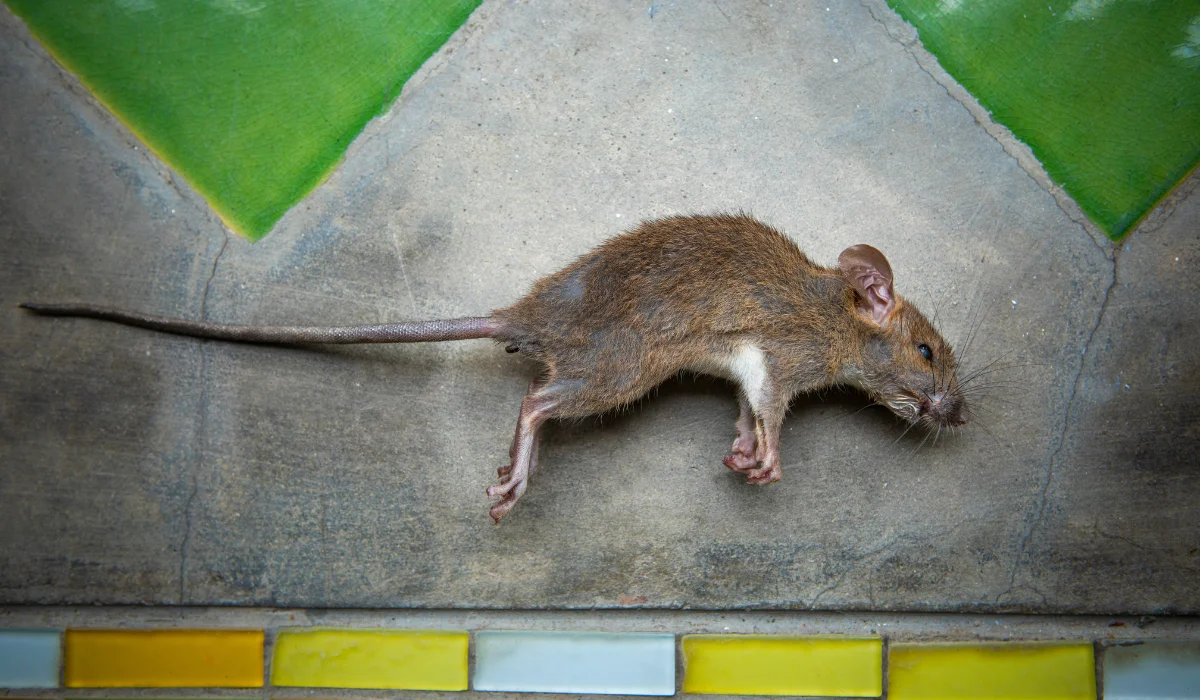
There’s nothing quite like the smell of a dead rat. Whether it’s stuck in your attic, crawl space, air duct, or behind a wall, the odor can spread quickly through nearby rooms. That sour, sickly, dead mouse smell can linger for weeks if you don’t take action. If you want to know how to get rid of dead rat smell, the most effective first step is finding and removing the source when it is safe and accessible.
For homeowners in South Louisiana, locating that source is not always simple. Raised homes, tight crawl spaces, attic voids, AC openings, and wall cavities give rats plenty of places to hide. Some rat carcasses are found in air ducts, mice in dryer vents, and other animals inside ceiling voids while investigating odor complaints.
This guide explains how to get rid of dead rat smell, what to do if the animal is inside a wall, how long the odor may last, and when a hidden carcass or active rodent problem calls for professional help.
Key Takeaways
- Find and remove the source when possible. A dead rat will keep producing odor while it remains in the home, so removal is the fastest way to shorten the problem.
- Treat the source instead of covering the smell. Ventilation, activated charcoal, and odor-neutralizing cleaners can help after removal, while air fresheners only mask the odor.
- A hidden carcass may require a more detailed inspection. Rats can die inside walls, attics, ducts, and crawl spaces where the source is difficult to reach.
- Look for signs of continuing rodent activity. Fresh droppings, scratching, gnaw marks, or repeated odor can mean the dead animal is only one part of the problem.
First, Locate the Source
If you’re lucky, the dead rat may be in an accessible area like the attic or under the house. If you have a dead rat smell in a wall, finding the exact source gets harder.
Start by following the odor to the area where it is strongest. Look for droppings, nesting material, gnaw marks, or greasy travel marks nearby. Check air ducts, crawl spaces, behind appliances, attic corners, and openings around pipes or AC lines.
This is also where local field experience helps. In the New Orleans area, LaJaunie’s rodent control team commonly finds entry points around poorly sealed AC openings, damaged wood beneath raised homes, roof ridges, fascia gaps, and roof vents. Roof rats can also use trees and utility lines to reach the upper parts of a home.
The smell alone does not confirm the source, but when it appears with droppings, gnawing, or scratching sounds, a closer rodent inspection is warranted.
Remove the Dead Rodent
Once you find the dead rat, here’s how to safely remove it:
1. Gear up: Wear rubber gloves, a mask, and old clothes. You don’t want any direct contact.
2. Bag it up: Place the carcass in a plastic bag, seal it, and double-bag it. Throw it away in your outdoor trash can right away.
3. Clean up thoroughly: Use a disinfectant or a DIY mix of bleach and water (1:10 ratio) to clean the affected area. This helps kill germs and eliminate remaining odors.
After removing the carcass, clean and disinfect the affected area carefully. The Centers for Disease Control and Prevention (CDC) recommends specific precautions when cleaning up after rodents, including avoiding cleanup methods that can stir contaminated material into the air.
If the dead animal is unreachable behind drywall, inside ductwork, or near electrical or plumbing components, avoid cutting into the area unless you know what is behind the surface. In those situations, locating the animal may be safer with professional inspection equipment.
How to Get Rid of Dead Rodent Smell
Even after the carcass is gone, the smell of a dead rat can linger. The key is not just to cover up the odor, but to neutralize it at the source.
Here are some effective odor removal methods:
1. Ventilate the Space
Open windows and let fresh air circulate through the affected area. Use fans to push the odor out and draw in clean air.
2. Use Odor Absorbers
Common options include:
- Baking soda: Place bowls of baking soda near the source.
- Activated charcoal: This is one of the most effective odor absorbers and works well in closed spaces.
- Coffee grounds: A natural deodorizer that works surprisingly well.
- Commercial odor eliminators: Look for odor-neutralizing sprays or gels specifically designed for pet or dead animal smells.
- Air fresheners: While not a long-term solution, they can help mask the smell temporarily, especially in high-traffic areas.
3. Try Enzyme Cleaners
These cleaners break down organic matter at the molecular level and can help with decomposing body smells. They’re especially useful for cleaning absorbent surfaces like wood or drywall.
4. Install an Air Purifier
An air purifier with a HEPA filter and activated carbon can help remove particles and smells from the air, especially helpful in bedrooms or living areas.
How to Get Rid of Dead Rat Smell in a Wall
A dead rat smell in a wall can be especially frustrating because the animal may be only a few inches away but still inaccessible. Start by narrowing down where the odor is strongest and checking for nearby signs of rodent activity, such as droppings, scratching, or openings around pipes and utility lines.
If you can identify the wall cavity and reach it safely, removing the carcass will shorten the odor problem. Avoid cutting several holes into drywall just to chase the smell, especially when wiring, plumbing, or HVAC components may be nearby.
When the animal cannot be reached, the odor usually fades as decomposition runs its course. LaJaunie’s service team notes that when technicians cannot physically locate a dead animal, odor-neutralizing treatment may be used to help control the smell and associated fly activity while the source breaks down.
Can’t Find the Source of the Dead Mouse Smell?
If you can’t locate the dead rodent, you may be stuck with the smell until it decomposes completely, which can take weeks. Ventilation, activated charcoal, odor-neutralizing products, and air filtration can make the space more comfortable while the odor fades.
A hidden source does not always sit directly behind the place where you smell it. Airflow can carry odor from an attic, duct, wall void, or crawl space into another room.
This is where a more detailed inspection can help. Call a pest control expert who can track down hidden carcasses. LaJaunie’s technicians have found rat carcasses in air ducts, mice in dryer vents, and squirrels in ceiling voids. For raised South Louisiana homes, inspectors may also use crawl bots to check areas beneath the structure that are difficult to reach.
How South Louisiana Conditions Affect Dead Rat Odor
South Louisiana’s heat and high humidity can make decomposition odors more noticeable inside enclosed walls, attics, and crawl spaces. Warm, damp conditions support biological breakdown, while limited airflow can hold the odor inside the structure.
Humidity is especially relevant in raised homes and crawl spaces where damp wood, utility openings, and shaded areas may give rodents sheltered travel routes. Louisiana’s warm, humid climate is documented in the NOAA Louisiana State Climate Summary.
Rodent pressure also changes with the seasons. Cooler weather often sends mice and rats toward protected indoor spaces, but roof rats remain active throughout the year and can enter through roof vents, fascia gaps, AC openings, or damaged areas beneath raised homes.
Preventing It From Happening Again
Once you’ve handled the immediate problem, you’ll want to make sure it doesn’t happen again. Preventing a future dead rodent smell means stopping infestations before they start.
Here’s how:
- Seal entry points: Check for gaps around pipes, vents, rooflines, and door frames.
- Clean up food sources: Store food in sealed containers, and keep pet food off the floor.
- Inspect your attic and crawl spaces: Look for nesting material or droppings.
- Schedule regular pest control treatments. Ongoing service helps catch infestations early and prevent rats from dying inside your home again.
In South Louisiana homes, pay close attention to AC penetrations, roof vents, fascia, gaps around doors and windows, and damaged wood beneath raised structures. These are among the areas LaJaunie’s rodent inspectors commonly check when looking for entry routes
When to Call a Professional
Removing a dead rodent is one thing. Finding one inside a wall, attic void, duct, or tight crawl space can be another.
If you’re hearing scratching at night, finding fresh droppings, noticing repeated odor, or smelling something you cannot locate, a rodent inspection can help determine whether there is one carcass or continuing activity.
LaJaunie’s rodent control services include inspection for entry points and rodent evidence, while the our wildlife work can include deceased animal removal, exclusion, crawl-space inspection, and attic work when needed.
That experience can be useful in South Louisiana homes where technicians may need to inspect under raised structures with a crawl bot or trace rodent activity through attics, AC openings, fascia, and roof voids.
Getting Rid of Dead Rat Smell in Your Louisiana Home
The smell of a dead rat is easiest to resolve when you can locate and remove the source. If the animal is hidden inside a wall, attic, air duct, or crawl space, the odor may linger until the carcass can be reached or decomposition finishes.
If you are dealing with repeated rodent activity, the next step is finding how the animals are getting inside. That may mean checking AC openings, rooflines, fascia, crawl spaces, or other gaps around the structure.
If you cannot locate the source, LaJaunie’s Pest Control can inspect the affected areas and determine what is accessible. Contact us to schedule an inspection.
Frequently Asked Questions
Dead rat smell: how long does it last?
Dead rat smell can last from several days to a few weeks. The timeline depends on the size of the animal, heat, humidity, airflow, and whether the carcass can be removed. Odor may last longer if decomposition fluids soak into insulation, drywall, wood, or other absorbent materials.
What should I do about a dead rat in wall smell?
Start by finding where the odor is strongest and checking nearby areas for droppings, scratching, or rodent entry points. Avoid cutting random holes into drywall. If the animal cannot be reached safely, an inspection can help locate the wall cavity and determine whether removal is practical.
Can you get rid of dead rat smell without finding the rat?
You can reduce the smell with ventilation, activated charcoal, odor-neutralizing cleaners, and carbon filtration, but these methods do not remove the source. If the carcass is inaccessible, the odor normally fades as decomposition continues. A professional inspection may still locate it in an attic, crawl space, duct, or wall void.
Why does dead rat smell get worse in hot or humid weather?
Warm, humid conditions can speed biological decomposition and make odor stronger inside enclosed spaces. South Louisiana homes may also have damp crawl spaces, wall voids, or attics with limited airflow, which can allow the smell to remain noticeable for longer periods.