

Diatomaceous earth for ants can work when ants cross a dry, properly applied layer. It damages the protective outer layer of their bodies, which leads to moisture loss. However, it only affects ants that come into contact with it, so it may reduce visible activity without reaching the colony itself. It tends to work best for light ant activity in dry, protected areas. Outdoors, Louisiana humidity, rain, and damp soil can reduce how well it performs, especially around patios, foundations, and gardens.
If you are seeing only a few ants along a baseboard or entry point, diatomaceous earth may be worth trying. If ants keep returning, you see several active trails, or you are dealing with fire ants or carpenter ants, professional ant treatment can be more effective because it focuses on the colony and the conditions causing the activity.
Key Takeaways
- Diatomaceous earth can kill ants when they cross a dry, properly applied layer, but it may not eliminate the colony.
- Louisiana rain and humidity can reduce its effectiveness outdoors, so dry and protected areas usually work best.
- Apply only a light layer along active trails and entry points, and follow the product label for safe use.
- Persistent fire ant, carpenter ant, or recurring indoor ant activity may require professional ant control.
Does Diatomaceous Earth Work on Fire Ants and Carpenter Ants?
Diatomaceous earth can kill individual fire ants that cross a dry application, but treating workers on the surface may not eliminate the colony living underground. Fire ants are common in Louisiana, and established colonies can extend well beyond the visible mound.
Carpenter ants create a different problem because they may nest in wood, wall voids, or other structural areas. If you repeatedly see large ants indoors, especially near damp or damaged wood, killing the ants you can see may not address the nest.
Species identification matters because different ants behave differently. If you are not sure what type of ant you have, a professional inspection can help determine whether you are dealing with a simple trail or an established colony.
How to Use Diatomaceous Earth to Get Rid of Ants
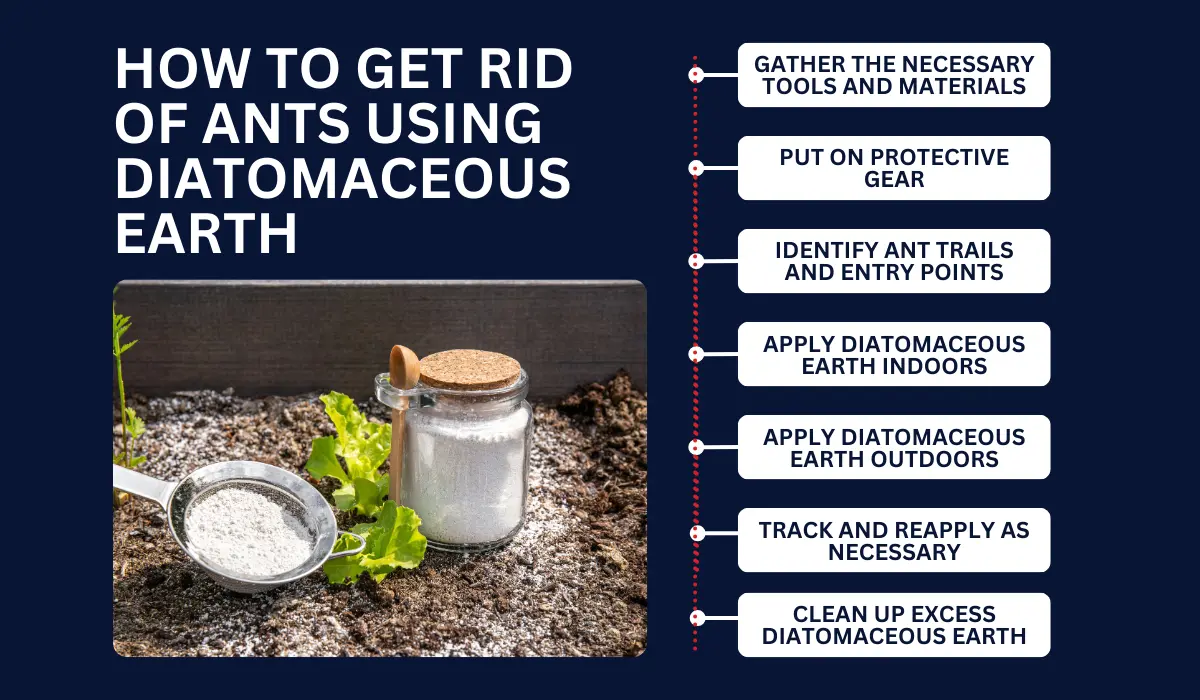
Using diatomaceous earth for ants can be an effective option for small, localized ant problems. The key is applying a thin layer in dry areas where ants are already traveling.
According to the National Pesticide Information Center, diatomaceous earth works by absorbing oils and fats from an insect’s outer layer, which causes the insect to dry out. Always follow the directions on the product label before applying it inside or outside your home.
Step 1: Gather the Necessary Tools and Materials
Begin by collecting everything you need for the job. Use diatomaceous earth that is labeled for the intended pest-control application, along with a hand duster or other applicator recommended on the label.
You should also have gloves, eye protection, and an appropriate mask available. Diatomaceous earth is a fine powder, so avoiding unnecessary airborne dust helps reduce irritation.
Step 2: Put on Protective Gear
Before applying the powder, put on the protective equipment recommended on the product label. Fine dust can irritate your eyes, skin, and respiratory system.
Apply the material carefully rather than shaking or pouring it from a height. This helps keep dust out of the air and makes it easier to place the product where ants are traveling.
Step 3: Identify Ant Trails and Entry Points
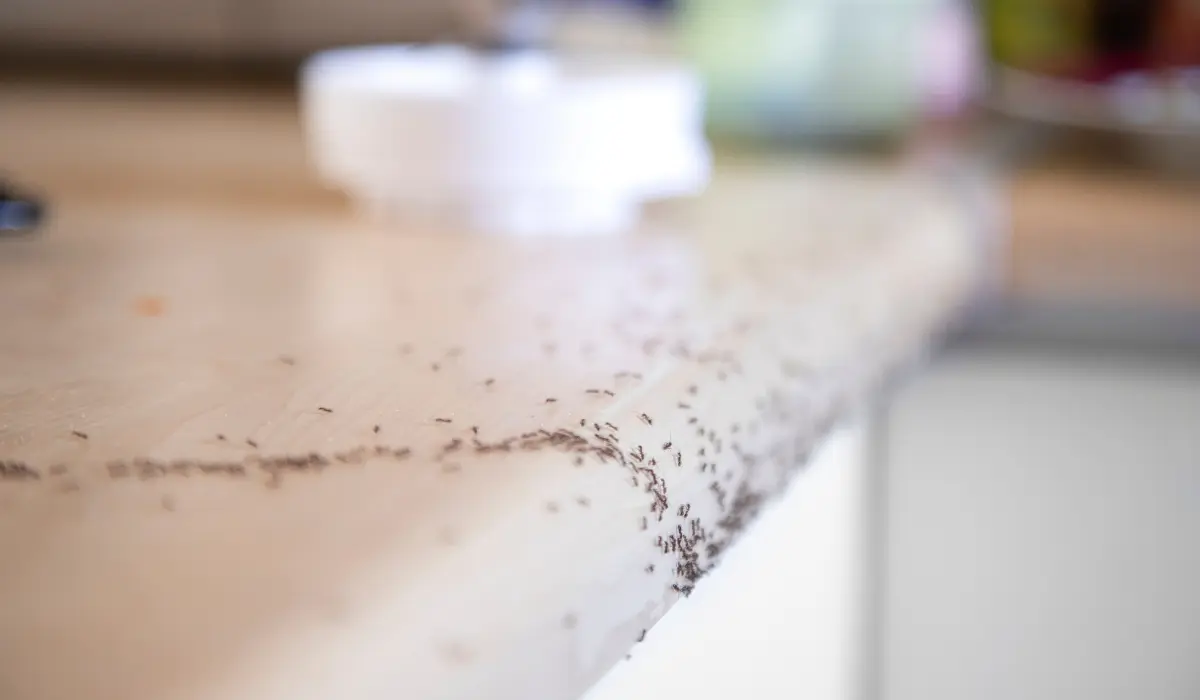
Ants leave pheromone trails that help other ants follow the same route. Look along baseboards, window sills, door frames, plumbing penetrations, and other cracks where ants may be entering.
Finding the active path allows you to target the application instead of spreading diatomaceous earth across areas where ants are not traveling.
Step 4: Apply Diatomaceous Earth Indoors
Sprinkle a thin layer along ant trails and appropriate entry points indoors. Avoid applying thick piles because ants may simply walk around them.
Keep the material away from food-preparation surfaces, pet dishes, toys, and other places where it could be easily disturbed.
Step 5: Apply Diatomaceous Earth Outdoors
For outdoor use, focus on dry, protected areas near entry points and other places where you have seen ant activity. Apply it according to the product label.
Louisiana weather matters here. Rain, heavy dew, irrigation, and high humidity can leave the material damp or caked, which can reduce how well it works.
Step 6: Track and Reapply as Necessary
Check treated areas over the next several days. If ants return or the material becomes wet or disturbed, reapply it only as directed on the label.
Outdoor applications in South Louisiana may need more frequent monitoring because wet weather can affect the condition of the powder.
Step 7: Clean Up Excess Diatomaceous Earth
Once the ant activity has stopped, clean up material that no longer needs to remain in place. Follow the label instructions and avoid creating airborne dust during cleanup.
If ants return soon after cleanup, check the entry route again instead of repeatedly adding more material to the same area.
How Long Does Diatomaceous Earth Take to Kill Ants?
Diatomaceous earth does not kill ants immediately. Ants need enough contact with a dry application for the material to damage their protective outer layer and cause moisture loss, so results can take hours or several days.
The bigger issue is whether the colony has been affected. You may kill worker ants crossing a treated baseboard while other ants continue coming from a nest inside a wall, beneath the soil, or elsewhere around your property.
If you still see active trails after several days, check whether the material has become wet, caked, or disturbed. If the application is still dry and ants continue returning, the colony may be located somewhere the dust cannot reach.
How Louisiana Humidity Affects Diatomaceous Earth for Ants
Louisiana humidity can limit how well diatomaceous earth for ants performs outdoors. The material works best when it stays dry and loose enough to make contact with an ant’s body.
That can be difficult in South Louisiana, where heavy dew, afternoon rain, irrigation, and damp soil are common. An application around an exposed foundation or patio may not remain dry for long.
Protected areas tend to be more practical than exposed outdoor surfaces. If you find yourself reapplying after every rain while ants continue returning, the problem may be better addressed by identifying the colony and treating the source.
Common Mistakes to Avoid When Using Diatomaceous Earth
One common mistake is using the wrong type of diatomaceous earth. Pool-grade material should not be substituted for a product labeled for household pest applications. Always check the label before use.
Applying too much can also reduce effectiveness. A thick ridge of powder may cause ants to change direction instead of crossing it, while a light application is more likely to contact their bodies.
Moisture is another issue, especially in Louisiana. Applying diatomaceous earth to wet soil, damp surfaces, or areas exposed to frequent rain can reduce how well it works.
Skipping follow-up checks can also leave you guessing. Monitor the treated area for several days and look for new trails, wet material, or activity coming from another entry point.
Diatomaceous Earth vs. Professional Ant Treatment
Diatomaceous earth can be useful when ant activity is light, you know where the ants are traveling, and the application area can stay dry. It is a contact-based method, so its results depend on ants crossing the treated area.
Professional ant treatment takes a broader approach. A technician can inspect entry points, the exterior of the home, interior problem areas, and other places where ants may be nesting or gaining access. LaJaunie’s residential pest-control service includes ants and fire ants, which makes this approach more appropriate when activity keeps returning.
That does not mean every ant sighting needs professional service. If a small DIY application solves the problem, there may be nothing more to do. If the same trail keeps coming back, the colony may be outside the reach of diatomaceous earth.
Is It Time to Call an Expert?
Sometimes, using diatomaceous earth is not enough. If ants keep coming back after repeated applications, you are seeing several active trails, or you suspect fire ants or carpenter ants, the colony may be outside the areas you can treat yourself.
Whether you are in Baton Rouge, New Orleans, or another South Louisiana community, professional ant control can help identify the species, locate likely nesting areas, and address the conditions that are keeping ants active.
If recurring ant activity is becoming difficult to manage, LaJaunie’s Pest Control can help. Learn more about LaJaunie’s ant control services or contact us to schedule service and get help with the source of the problem.
Diatomaceous Earth for Ants: FAQs
Does diatomaceous earth kill ants?
Yes. Diatomaceous earth can kill ants that cross a dry application by damaging their protective outer layer and causing moisture loss. It does not automatically eliminate the colony, so you may continue seeing ants if the nest is located somewhere the material cannot reach.
How long does diatomaceous earth take to kill ants?
Diatomaceous earth does not work instantly. Depending on how much contact ants have with the dry material, you may notice results within several hours or a few days. If activity continues, check whether the application has become wet or whether ants are using another route.
Is diatomaceous earth safe for pets?
Diatomaceous earth should still be handled carefully around pets. Fine dust can irritate the eyes, skin, and respiratory system, so keep pets away from loose material and follow the product label. Avoid unnecessary exposure to diatomaceous earth dust. Apply only the amount needed, and do not place it where pets can sniff, lick, roll in, or track through it.